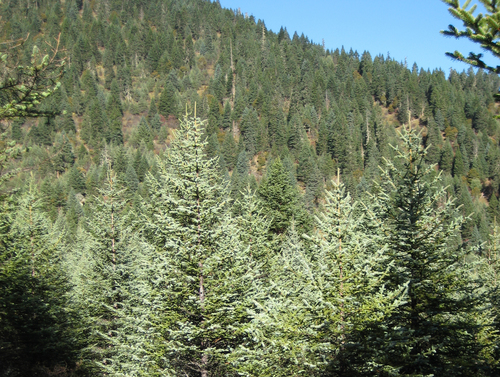
Picea engelmannii
Parry ex Engelm.
Mountain spruce, Engelmann spruce, Columbian spruce
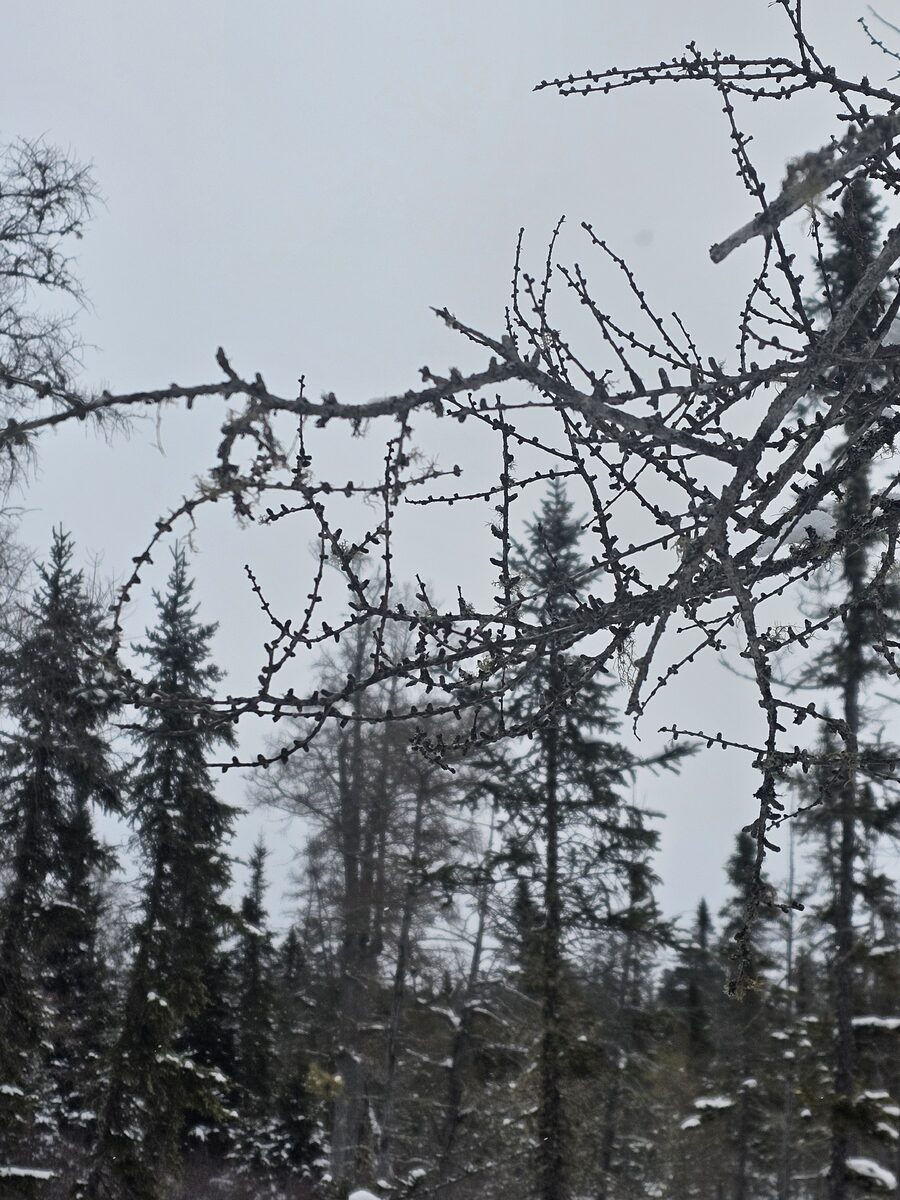
iNaturalist· cc-by-nc
(c) Steve Ganley, some rights reserved (CC BY-NC), uploaded by Steve Ganley
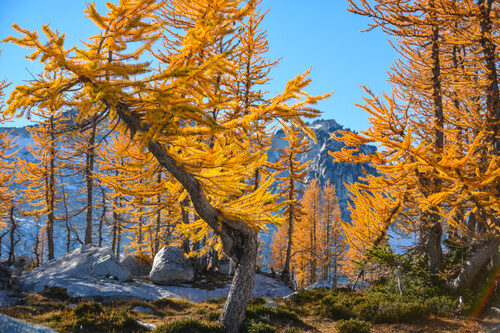
iNaturalist· cc-by-nc
(c) Neil O. Frakes, some rights reserved (CC BY-NC), uploaded by Neil O. Frakes
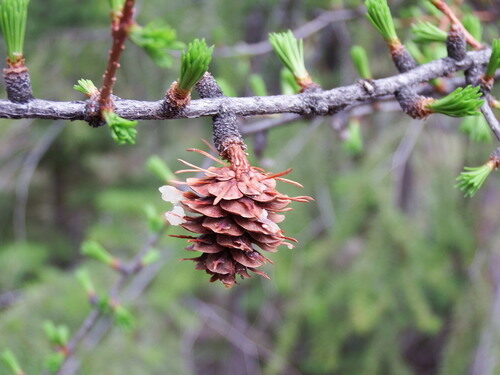
iNaturalist· cc-by
(c) Sam Beaumont, some rights reserved (CC BY), uploaded by Sam Beaumont
Summary
Source: WikipediaPicea engelmannii, with the common names Engelmann spruce, mountain spruce, and silver spruce, is a species of spruce native to western North America. It is highly prized for producing distinctive tone wood for acoustic guitars and other instruments, it is mostly a high-elevation mountain tree but also appears in watered canyons.
Description
A large tree. It grows to 35 m tall. The trunk is 90 cm across. It can be 60 m high and 2 m across. The bark is broken into large, loose coarse scales. The leaves are curved and somewhat flexible. They are 15-25 mm long. The tip can be pointed or blunt. They are bluish-green but often coated with a white layer. There are lines of white dots on all sides. The leaves have a smell when crushed. The seed cones are narrowly oval and 3-7 cm long. They are shiny. The scales are yellow brown and flexible. They are loose fitting and taper at both ends. They have irregular teeth. The cones open in autumn and are shed during winter. They often retain some seeds. The seeds are dark brown and 2-4 mm long.
Edible Uses
Young male catkins can be eaten raw or cooked and used as a flavouring. Immature female cones are edible when cooked — the central portion becomes sweet and syrupy when roasted; the cones reach about 5cm in length. The inner bark can be dried and ground into a powder, then used as a soup thickener or added to cereals when making bread, though it is considered an emergency food for use when nothing else is available. The seed is raw-edible but only 2–4mm long, making it too small and fiddly to be worth collecting except in desperate circumstances. Young shoot tips make a refreshing tea that is rich in vitamin C.
Traditional Uses
The inner bark or cambium is eaten fresh or dried. The tender shoots stripped of their needles are boiled and eaten. The needles are used for tea. The sap is eaten.
Medicinal Uses
An infusion of the bark has been used to treat respiratory complaints including TB. A decoction of the leaves and gum has been used in the treatment of cancer — it was said that if this remedy failed, nothing would work — and the same decoction was also used for coughs. The ashes of the twigs, mixed with oil, can be applied as an ointment or salve on damaged skin. Pitch obtained from the trunk has been used to treat eczema.
Distribution
It is a cool temperate plant. It grows in the mountains. It occurs between 1000-2000 m altitude in Canada. It is shade tolerant. It suits hardiness zones 1-8.
Where It Grows
Australia, Canada, North America, USA,
Cultivation
Likes abundant moisture at the roots, if grown in drier areas it must be given a deep moist soil. Tolerates poor peaty soils. Succeeds in wet cold and shallow soils but is not very wind-firm in shallow soils. Prefers a pH between 4 to 6. Dislikes shade. Intolerant of atmospheric pollution. Resists wind exposure to some degree. Plants have a shallow root system and are easily wind-blown. Often planted for its timber in N. Europe. Trees are of moderate growth after a slow start, older trees often averaging over 40cm a year. Trees grow better and faster in the north of Britain than in the south. This is not an easy tree to grow in Britain, it prefers a continental climate and, although the dormant tree is very cold hardy, the new growth in spring is very susceptible to damage by late frosts in this country. Quite long-lived in its native range, with specimens 500 - 600 years old. Seed production commences around the age of 20 - 25 years, with excellent crops every 2 - 6 years. Closely related to P. glauca, this species also hybridizes with P sitchensis in the south of its range. Plants are strongly outbreeding, self-fertilized seed usually grows poorly. They hybridize freely with other members of this genus. Trees should be planted into their permanent positions when they are quite small, between 30 and 90cm. Larger trees will check badly and hardly put on any growth for several years. This also badly affects root development and wind resistance. In some upland areas, especially over granitic or other base-poor soils, growth rate and health have been seriously affected by aluminium poisoning induced by acid rain. The crushed foliage is often said to be foetid but after the first sniff the scent is sweet and like menthol or camphor. Plants are susceptible to damage by the green spruce aphid.
Propagation
Sow fresh seed in autumn in a cold frame to benefit from natural stratification, or sow stored seed as early in the year as possible under the same conditions. Light shade is preferable. Keep seed moist and cool during storage. Prick out seedlings into individual pots once large enough to handle and overwinter them in a greenhouse or cold frame. Plant out into permanent positions in early summer the following year, or grow on in an outdoor nursery bed for a further season. Spring frost protection may be needed. Semi-ripe terminal shoot cuttings, 5–8cm long, taken in August in a frame, protected from frost, root in spring. Mature terminal shoot cuttings, 5–10cm long, taken September/October in a cold frame, take 12 months to root. Soft to semi-ripe wood cuttings taken in early summer in a frame are slow but reliable.
Other Uses
The bark is a source of tannin. Branches and roots have been shredded, pounded, and made into cord and rope (likely using the bark specifically). The bark has also been used to make baskets and small utensils. The wood is close-grained, light, soft, and not particularly strong; it is used for lumber, construction, fuel, and charcoal, and is valued in the pulp industry for paper production.
Production
Trees can live to 300 years old.
Notes
There are between 30 and 40 species of Picea.
References (10)
- Cundall, P., (ed.), 2004, Gardening Australia: flora: the gardener's bible. ABC Books. p 1040
- Hibbert, M., 2002, The Aussie Plant Finder 2002, Florilegium. p 233
- Farrar, J.L., 1995, Trees of the Northern United States and Canada. Iowa State University press/Ames p 100
- Lord, E.E., & Willis, J.H., 1999, Shrubs and Trees for Australian gardens. Lothian. p 86
- MacKinnon, A., et al, 2009, Edible & Medicinal Plants of Canada. Lone Pine. p 30
Show all 10 references Hide references
- Moerman, D. F., 2010, Native American Ethnobotany. Timber Press. p 398
- Plants for a Future, The Field, Penpol, Lostwithiel, Cornwall, PL22 0NG, UK. http://www.scs.leeds.ac.uk/pfaf/
- Porsild, A.E., 1974, Rocky Mountain Wild Flowers. Natural History Series No. 2 National Museums of Canada. p 36
- Trans. Acad. Sci. St. Louis 2:212. 1863
- Turner, N. J., 1988, Ethnobotany of Coniferous Tress in Thompson and Lillooet Interior Salish of British Colombia. Economic Botany 42(2) :177-194