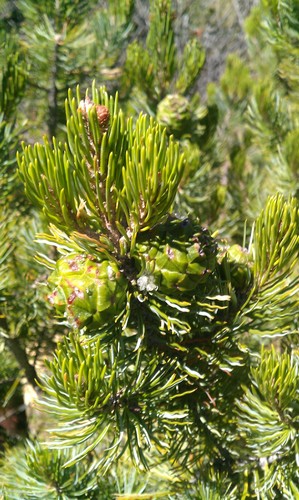
Picea mariana
(Mill.) Britton. et al.
Black spruce, Bog spruce, Swamp spruce
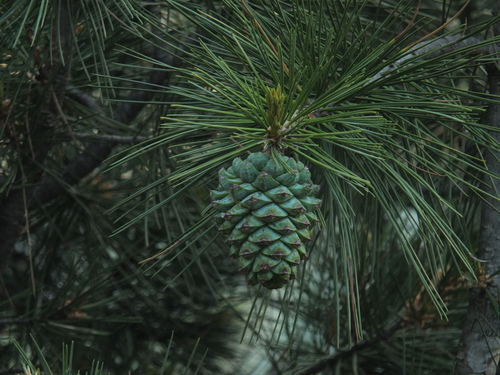
iNaturalist· cc-by-sa
(c) Douglas Goldman, some rights reserved (CC BY-SA), uploaded by Douglas Goldman
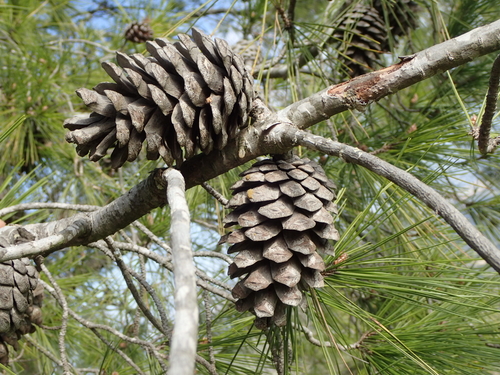
iNaturalist· cc-by-nc
(c) Ellie Johnson, some rights reserved (CC BY-NC), uploaded by Ellie Johnson
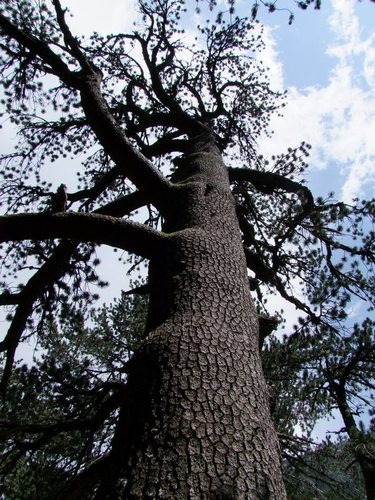
iNaturalist· cc-by-nc
(c) daniel_benoit, some rights reserved (CC BY-NC)
Summary
Source: WikipediaPicea mariana, the black spruce, is a North American species of spruce tree in the pine family. It is widespread across Canada, found in all 10 provinces and all 3 territories. It is the official tree of Newfoundland and Labrador and is that province's most abundant tree. Its range extends into northern parts of the United States: in Alaska, the Great Lakes region, and the upper Northeast. It is a frequent part of the biome known as taiga or boreal forest. The Latin specific epithet mariana means "of the Virgin Mary".
Description
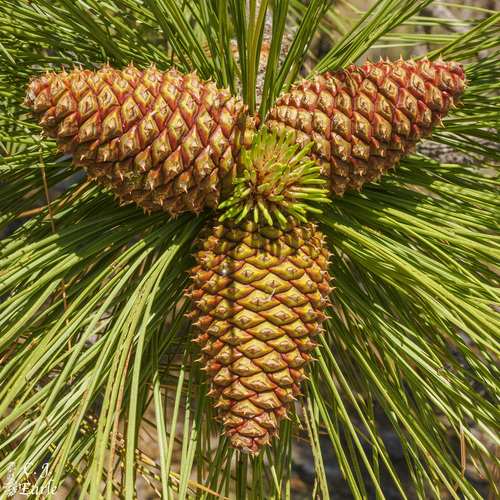
A medium sized tree. It can grow 20-30 m high and have a trunk 30-60 cm across. The bark is red brown. The leaves are single and straight. They are 8-15 mm long. They are dull greyish green and have a blunt tip. The needles are densely set along the twig. The side needles are at right angles and the upper needles point forward. The seed cones are oval and 2-3 cm long. They are deep purple to red when young. They develop purple brown with age. The stalk is short and covered with scales. The scales fit tightly and are brittle. They have irregular teeth along the edge. Cones can remain on the tree for up to 30 years. Open cones are almost round. Cones are often at the top of the tree. The seed are dark and 2 mm long.
Edible Uses
Young male catkins can be eaten raw or cooked and used as a flavouring. Immature female cones are edible when cooked — the central portion becomes sweet and syrupy when roasted; the cones measure 1–4cm in diameter. The inner bark is edible cooked, usually harvested in spring; it can be dried and ground into a powder to thicken soups or added to cereals when making bread, though it is an emergency food used only when all else fails. The seed is raw-edible but only 2–4mm long and too small and fiddly to be worthwhile except in desperation. Young shoot tips make a refreshing tea rich in vitamin C, and a separate tea can also be made from the needles and bark. A gum collected from the bark is used for chewing — hardened blobs make excellent chewing gum and should be aged for three or more days before use; the best gum comes from the southern side of the tree. Another source describes 'spruce gum' as a resinous exudation collected from the branches. The tree is also a source of spruce oil used commercially for flavouring. Young twigs boiled with molasses and sugar, then fermented, produce spruce beer, which is ready to drink within a week and considered a good source of minerals and vitamins.
Traditional Uses
It has been used to produce spruce beer. The sap and twigs are boiled with molasses or maple sugar and fermented. The gum is used for chewing gum. It is also the source of spruce oil used for flavouring.
Medicinal Uses
A poultice of the inner bark has been applied to inflammations. Inner bark tea is a folk remedy for kidney stones, stomach problems, and rheumatism. An infusion of the roots and bark has been used for stomach pains, trembling, and fits. Trunk resin is used as a poultice and salve on sores to promote healing, and mixed with oil it can dress purulent wounds, bad burns, skin rashes, scabies, and persistent scabs. Chewing the resin is said to aid digestion. A decoction of the gum or leaves has been used for respiratory infections and kidney problems. An infusion of the leaves has been used as a bath or rub for dry skin and sores. A decoction of the young twigs has been used for coughs, and a decoction of the cones taken internally for diarrhoea or used as a gargle for sore throats. The cones have also been chewed to treat a sore mouth and toothaches.
Distribution
It is a cool temperate plant. It grows in wetlands. It often grows on organic soils. It is somewhat shade tolerant. It is damaged by flooding and fire. It suits hardiness zones 1-8.
Where It Grows
Alaska, Australia, Canada, Europe, Germany, North America, USA,
Cultivation
Plants seed quickly after fires. Trees are easy to transplant. Often attached branches in contat with soil form roots and these layers can be planted. This forms a clump of trees.
Propagation
Sow fresh seed in autumn in a cold frame to benefit from natural stratification, or sow stored seed as early in the year as possible under the same conditions. Light shade is preferable. Keep seed moist and cool during storage. Prick out seedlings into individual pots once large enough to handle and overwinter in a greenhouse or cold frame. Plant out into permanent positions in early summer the following year, or grow on in an outdoor nursery bed for a further season. Spring frost protection may be needed. Semi-ripe terminal shoot cuttings, 5–8cm long, taken in August in a frame, protected from frost, root in spring. Mature terminal shoot cuttings, 5–10cm long, taken September/October in a cold frame, take 12 months to root. Soft to semi-ripe wood cuttings taken in early summer in a frame are slow but reliable. Lower branches frequently layer naturally in the wild.
Other Uses
A yellow-orange dye is obtained from the cones. Various native North American tribes used the long roots to make string for stitching canoe bark and sewing baskets. Trunk pitch has been used as a sealing material on canoe hulls. The wood is light, soft, and not strong, weighing 28lb per cubic foot. As a smaller tree than other spruces it is not a major lumber source, but it is used for boxes, crates, fuel, and paper pulp.
Production
A slow growing tree. It grows more quickly in drier upland sites. It can live for 200 years.
Notes
There are between 30 and 40 species of Picea. It is the tree emblem of Newfoundland Province of Canada.
References (16)
- Beckstrom-Sternberg, Stephen M., and James A. Duke. "The Foodplant Database." http://probe.nalusda.gov:8300/cgi-bin/browse/foodplantdb.(ACEDB version 4.0 - data version July 1994)
- Brickell, C. (Ed.), 1999, The Royal Horticultural Society A-Z Encyclopedia of Garden Plants. Convent Garden Books. p 794
- Coombes, A.J., 2000, Trees. Dorling Kindersley Handbooks. p 64
- Cundall, P., (ed.), 2004, Gardening Australia: flora: the gardener's bible. ABC Books. p 1040
- Facciola, S., 1998, Cornucopia 2: a Source Book of Edible Plants. Kampong Publications, p 169
Show all 16 references Hide references
- Farrar, J.L., 1995, Trees of the Northern United States and Canada. Iowa State University press/Ames p 106
- Grandtner, M. M., 2008, World Dictionary of Trees. Wood and Forest Science Department. Laval University, Quebec, Qc Canada. (Internet database http://www.wdt.qc.ca)
- Hedrick, U.P., 1919, (Ed.), Sturtevant's edible plants of the world. p 494 (Possibly as Picea nigra)
- Hibbert, M., 2002, The Aussie Plant Finder 2002, Florilegium. p 233
- Kermath, B. M., et al, 2014, Food Plants in the Americas: A survey of the domesticated, cultivated and wild plants used for Human food in North, Central and South America and the Caribbean. On line draft. p 655
- Little, E.L., 1980, National Audubon Society Field Guide to North American Trees. Alfred A. Knopf. p 284
- Moerman, D. F., 2010, Native American Ethnobotany. Timber Press. p 400
- Plants for a Future database, The Field, Penpol, Lostwithiel, Cornwall, PL22 0NG, UK. http://www.scs.leeds.ac.uk/pfaf/
- Porsild, A.E., 1974, Rocky Mountain Wild Flowers. Natural History Series No. 2 National Museums of Canada. p 36
- Prelim. cat. 71. 1888
- MacKinnon, A., et al, 2009, Edible & Medicinal Plants of Canada. Lone Pine. p 30