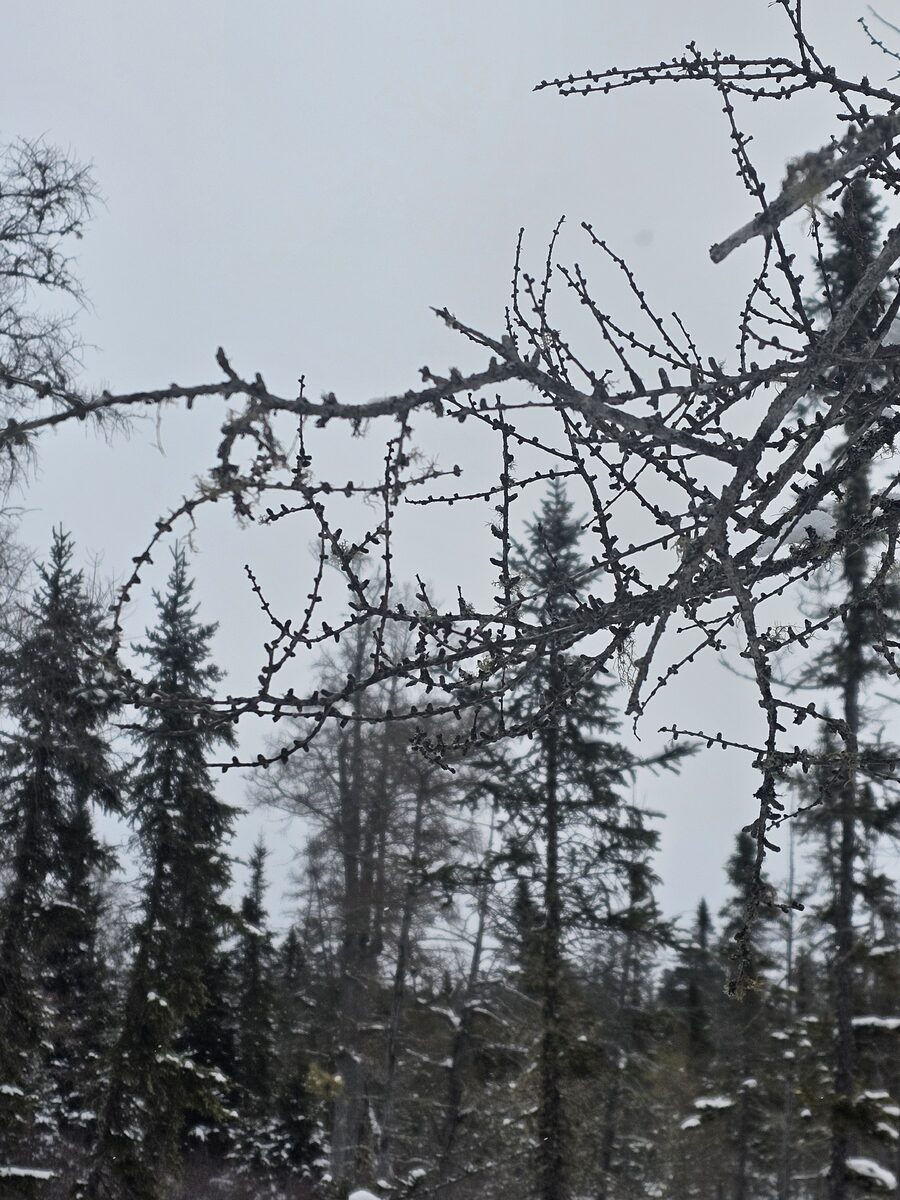
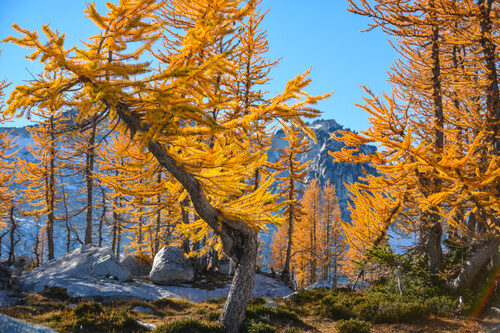
Picea jezoensis
(Siebold. & Zucc.) Carrière
Yezo spruce, Yeddo spruce
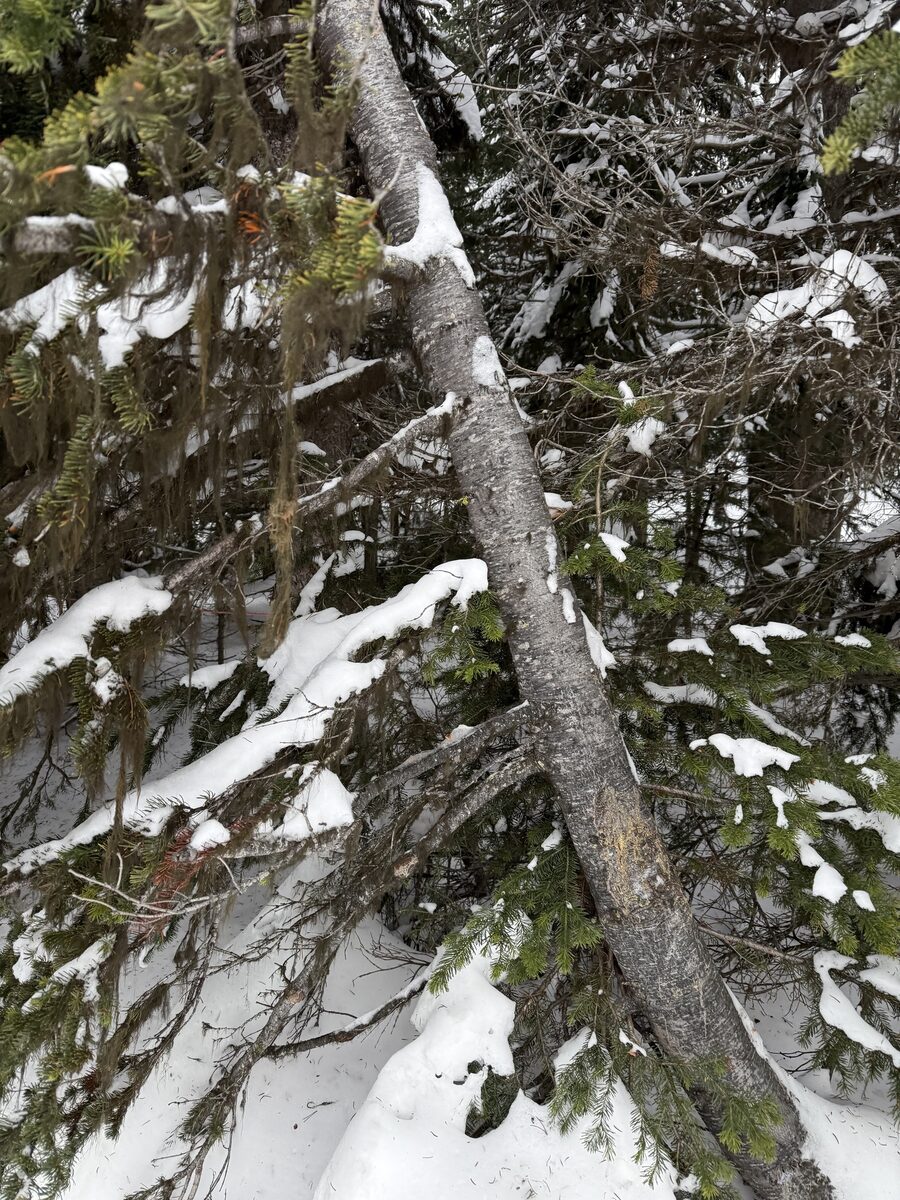
iNaturalist· cc-by-nc
(c) Alexander Yakovlev, some rights reserved (CC BY-NC), uploaded by Alexander Yakovlev
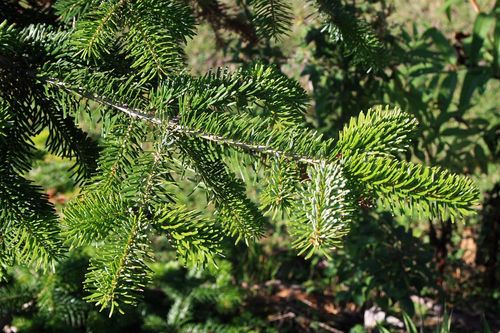
iNaturalist· cc-by-sa
(c) harum.koh, some rights reserved (CC BY-SA), uploaded by harum.koh
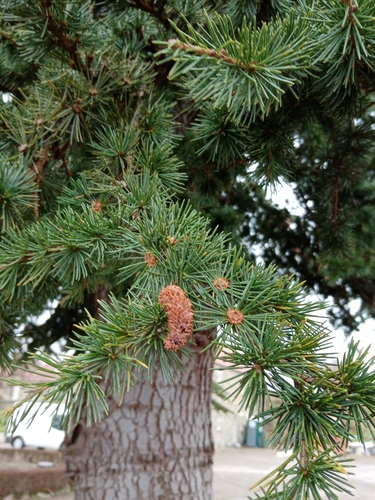
iNaturalist· cc-by-nc
(c) Karina Zaytseva, some rights reserved (CC BY-NC), uploaded by Karina Zaytseva
Summary
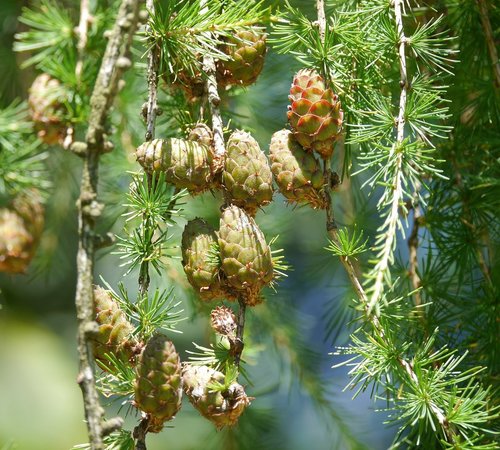
Source: WikipediaPicea jezoensis (sometimes misspelled Picea yezoensis), the dark-bark spruce, Ezo spruce, Yezo spruce, or Jezo spruce, is a large evergreen tree growing to 30–50 m tall and with a trunk diameter of up to 2 m. It is native to northeast Asia, from the mountains of central Japan and the Changbai Mountains on the China-North Korea border, north to eastern Siberia, including the Sikhote-Alin, Kuril Islands, Sakhalin and Kamchatka. It is found in cold but humid temperate rain forests, and nowhere does its range extend more than 400 km from the Pacific Ocean. The specific epithet jezoensis derives from Ezo, an old name for Hokkaido and other islands north of the Japanese island of Honshu, where the species is found. The bark is thin and scaly, becoming fissured in old trees. The crown is broad conic. The shoots are pale buff-brown, glabrous (hairless) but with prominent pulvini. The leaves are needle-like, 15–20 mm long, 2 mm broad, flattened in cross-section, dark green above with no stomata, and blue-white to white below with two dense bands of stomata. The cones are pendulous, slender cylindrical, 4–7 cm long and 2 cm broad when closed, opening to 3 cm broad. They have thin, flexible scales 12–18 mm long. They are green or reddish, maturing pale brown 5–6 months after pollination. The seeds are black, 3 mm long, with a slender, 6–8 mm long pale brown wing. There are two geographical subspecies, treated as varieties by some authors, and as distinct species by others: Picea jezoensis subsp. jezoensis (Ezo spruce). All of the range except as below, south to Hokkaidō, Japan. Shoots very pale buff-brown, almost white; stomatal bands blue-white; cones pale brown with flexible scales. Picea jezoensis subsp. hondoensis (Mayr) P. A. Schmidt (Hondo spruce). An isolated southern population on high mountains in central Honshū, Japan. Shoots buff-brown to orange-brown, less often very pale; stomatal bands bright white; cones orange-brown with stiffer scales. Ezo spruce is very closely related to Sitka spruce (Picea sitchensis), which replaces it on the opposite side of the north Pacific. They, particularly subsp. jezoensis, can be difficult to distinguish, with the absence of stomata on the upper surface of the leaves of P. jezoensis being the best feature. Its leaves are also somewhat blunter, less sharply spine-tipped, than Sitka Spruce.
Description
A tree. It grows 50 m tall. The trunk is 1.5 m across. The bark is initially brown and smooth but becomes dark purplish grey and rough and cracked with maturity. The crown is like a pyramid. The leaves are directed forward on the upper side of the small branches. They are spreading on the lower side. They are slightly curved and flattened. They are 1-2 cm long by 1.5-2 mm wide. The seed c ones are green, red or purple brown. They are narrow and oval. They are 3-7 cm long by 2-3.5 cm wide. The seeds are oval or wedge shaped and about 3 mm by 2 mm.
Edible Uses
Young male catkins can be eaten raw or cooked and used as a flavouring. Immature female cones are edible when cooked — the central portion becomes sweet and syrupy when roasted. The inner bark can be dried and ground into a powder for use as a soup thickener or bread additive, though it is an emergency food used only when nothing else is available. The seed is raw-edible but too small and fiddly to be worth collecting except in desperate circumstances. Young shoot tips make a refreshing tea rich in vitamin C.
Medicinal Uses
The young shoot tips provide a tea rich in vitamin C. The species also has vulnerary properties.
Distribution
It is a warm temperate plant. They grow in the mountains and river basins between 300-1700 m altitude in N China. It suits hardiness zones 8-10. In Hobart Botanical gardens.
Where It Grows
Asia, Australia, China, Japan, Korea, Manchuria, Russia, Siberia, Tasmania,
Cultivation
Plants are grown from seed.
Propagation
Sow fresh seed in autumn in a cold frame to benefit from natural stratification, or sow stored seed as early in the year as possible under the same conditions. Light shade is preferable. Keep seed moist and cool during storage. Prick out seedlings into individual pots once large enough to handle and overwinter in a greenhouse or cold frame. Plant out into permanent positions in early summer the following year, or grow on in an outdoor nursery bed for a further season. Spring frost protection may be needed. Semi-ripe terminal shoot cuttings, 5–8cm long, taken in August in a frame, protected from frost, root in spring. Mature terminal shoot cuttings, 5–10cm long, taken September/October in a cold frame, take 12 months to root. Soft to semi-ripe wood cuttings taken in early summer in a frame are slow but reliable.
Other Uses
A resin obtained from the trunk is used medicinally. Tannin is obtained from the bark, and an essential oil is obtained from the leaves. The wood is soft, light, elastic, and flexible; it is used for interior finishes, furniture, construction, machines, and poles, and is also valued in the pulp industry for paper production.
Notes
There are between 30 and 40 species of Picea.
Synonyms
Also Known As
Yu lin yun shan
References (7)
- Coombes, A.J., 2000, Trees. Dorling Kindersley Handbooks. p 63
- Cundall, P., (ed.), 2004, Gardening Australia: flora: the gardener's bible. ABC Books. p 1040
- Fu Liguo, Li Nan, Mill, R.R., Pinaceae. Flora of China.
- Hibbert, M., 2002, The Aussie Plant Finder 2002, Florilegium. p 233
- Lord, E.E., & Willis, J.H., 1999, Shrubs and Trees for Australian gardens. Lothian. p 86
Show all 7 references Hide references
- Plants for a Future database, The Field, Penpol, Lostwithiel, Cornwall, PL22 0NG, UK. http://www.scs.leeds.ac.uk/pfaf/
- Traite gen. conif. 255. 1855