Piliostigma thonningii
(Schumach.) MIlne-Redh.
Camel's foot leaf tree
iNaturalist· cc-by-nc-sa
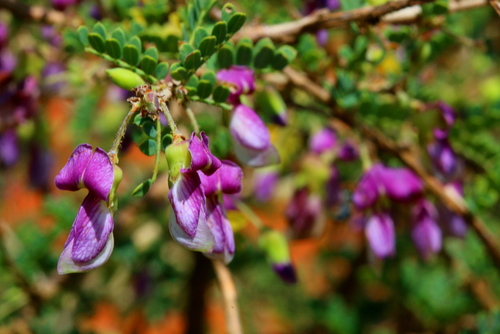
(c) Rob Palmer, some rights reserved (CC BY-NC-SA), uploaded by Rob Palmer
iNaturalist· cc-by
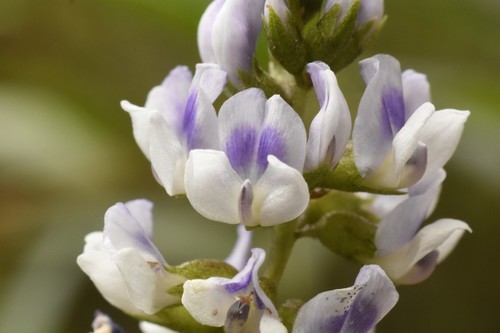
(c) Mathew Rees, some rights reserved (CC BY)
Summary
Source: WikipediaPiliostigma thonningii is a species of flowering plants in the legume family, Fabaceae. It belongs to the subfamily Cercidoideae. Common names of this tree include camel's foot tree, monkey bread, monkey biscuit tree, "Rhodesian Bauhinia" or "wild bauhinia" (previously placed in that genus).
Description
It is a leafy shrub or a spreading tree. It loses its leaves during the year. It can grow to 12 m tall. The leaves are broad and lobed. The bark is rough and brown. The leaves are simple and can be 20 cm across. The tip of the leaf has lobes and the base of the leaf has notches. The veins spread out from this notch. The upper surface of the leaf is green and the lower surface a lighter colour and with red veins. The leaves are on thick stalks. The male and female flowers are carried separately. The male heads have fewer flowers than the female. The flower buds are fat and oval. They are velvety and in long strings on sturdy stalks. The flowers are 2.5 cm wide. Only one or two flowers open at one time in a bunch. They hang downwards and drop off easily. The pods are large and woody. They are up to 23 cm long by 8 cm wide. They are green but turn brown. They are covered with tiny raised lines. The pods do not break open but fall off. The pods and seeds are edible
Edible Uses
The pods and seeds are eaten, particularly when dried and when food is scarce. The young leaves are chewed to relieve thirst. The bark and dried leaves are brewed into tea. The pods are especially enjoyed chewed by children.
Traditional Uses
The pods and seeds are eaten when food is scarce. They are dried. The young leaves are chewed to relieve thirst. The bark can be used to make tea. The dried leaves are used for tea.
Medicinal Uses
The bark can be used to make tea, and the young leaves are chewed to relieve thirst.
Known Hazards
None mentioned.
Distribution
A tropical plant. It grows in open woodland and often near streams. It grows in the Sahel. In Ethiopia it grows at low and medium altitudes especially between 900-1,700 m altitude. It cannot stand cold temperatures or frost and is tolerant of drought. It grows in areas with an annual rainfall between 400-1,200 mm. It can grow in arid places. It also grows on termite mounds. It grows in the lowlands. It grows in Miombo woodland in Africa.
Where It Grows
Africa, Angola, Benin, Botswana, Burkina Faso, Burundi, Cameroon, Central Africa, Chad, Congo DR, Côte d'Ivoire, East Africa, Eswatini, Ethiopia, Gambia, Ghana, Guinea, Guinée, Guinea-Bissau, Ivory Coast, Kenya, Malawi, Mali, Mozambique, Namibia, Niger, Nigeria, Sahel, Senegal, Sierra Leone, South Africa, Southern Africa, South Sudan, Sudan, Swaziland, Tanzania, Togo, Uganda, West Africa, Zambia, Zimbabwe,
Cultivation
Plants can be grown from seeds. The seeds are removed from a dry pod by breaking it open with a hammer. The seeds are put in hot water and soaked overnight. Then they are planted. Seeds germinate in 5-10 days. Seedlings are transplanted when the first adult leaves appear.
Propagation
Seed - it has a hard seedcoat and benefits from scarification before sowing in order to speed up and improve germination. This can usually be done by pouring a small amount of nearly boiling water on the seeds (being careful not to cook them!) and then soaking them for 12 - 24 hours in warm water. By this time they should have imbibed moisture and swollen - if they have not, then carefully make a nick in the seedcoat (being careful not to damage the embryo) and soak for a further 12 hours before sowing. Suckers.
Other Uses
A fibre from the inner bark is used to make string, ropes and cloth. A red-brown dye can be obtained from the macerated bark. A blue dye can be obtained from the seeds and pods. A black dye is obtained from the roasted seed. The bark contains up to 18% tannins. The roots are a source of tannins. The inner bark is said to contain a gum that sweels in water and so can be used for caulking boats etc. The unripe seedpods are used as a soap substitute. The ashes of the plant are used for making soap. The seeds contain oil. No more information is given. The heartwood is pinkish to dark brown; the sapwood is light brown. The wood is straight-grained. It is used for poles, grain mortars, tool handles, spoons and bedsteads. The wood is used for fuel. A pioneer species within its native area, where it tends to colonize clearings and fallows. Since it is a legume, and fixes atmospheric nitrogen, it might be a useful species to use when restoring woodland or setting up a woodland garden. A deep rooting species that produces considerable amounts of leaf litter, it can be used in soil protection initiatives. The use of the leaf litter as a mulch enhances soil fertility because the leaves decompose slowly. The tree competes very little with maize if left in fields and pollarded to reduce shade.
Production
It grows slowly. Fruit are produced during the rainy season.
Other Information
The pod is especially chewed by children.
Notes
Also as Caesalpinaceae.
Synonyms
Also Known As
Abu khamira, Baique, Bamhoun, Banguin-gnaanga, Barque, Barquedje, Barqueie, Boa, Bongue, Budandepe, Bufara, Bupande, Canna, Chitimbe, Cibumbe, Citimbo, Conono, Dabdi, Dawrake, Epamambo, Epandando, Epapai, Fara, Ihabahaba, Impukui, Kaghril, Kalkalla, Kalur, Kameelspoor, Kapokolec, Kargo, Khuf el jamal, Kifumbe, Kota karita, Mac'a, M'bukui mukui, Macaquece, Mansanca, Mansonca, Mchekeche, Mchekwa, Nchekwa, Mogoropo, Mokolokote, Monkey bread, Mubaba, Mudhombo, Muhuku, Mukuura, Musakasa, Musekesa, Musekese, Mussequessa, Mutukutu, N'tangre, N'toncre, Ogali, Olofoo, Opitipata, Pac, Panu-di-kankora, Pouunque, Qalqala, Titimbe, Untoncre, Yekallo wanza
References (82)
- Abbiw, D.K., 1990, Useful Plants of Ghana. West African uses of wild and cultivated plants. Intermediate Technology Publications and the Royal Botanic Gardens, Kew. p 41, 48
- Achigan-Dako, E, et al (Eds), 2009, Catalogue of Traditional Vegetables in Benin. International Foundation for Science.
- Addis, G., Asfaw, Z & Woldu, Z., 2013, Ethnobotany of Wild and Semi-wild Edible Plants of Konso Ethnic Community, South Ethiopia. Ethnobotany Research and Applications. 11:121-141
- Asfaw, Z. and Tadesse, M., 2001, Prospects for Sustainable Use and Development of Wild Food Plants in Ethiopia. Economic Botany, Vol. 55, No. 1, pp. 47-62
- Assefa, A. & Abebe, T., 2010, Wild Edible Trees and Shrubs in the Semi-arid Lowlands of Southern Ethiopia. Journal of Science and Development 1 (1) 2010
Show all 82 references Hide references
- Assogbadjo, A. E. et al, 2013, Specific Richness and Cultural Importance of Wild Edible Trees in Benin. Acta Hort. 979, ISHS 2013
- Baidu-Forson, J.J., et al ,2014,. Assessment of agrobiodiversity resources in the Borotse flood plain, Zambia. CGIAR Research Program on Aquatic Agricultural Systems. Penang, Malaysia. Working Paper: AAS-2014-12.
- Balemie, K., & Kebebew, F., 2006, Ethnobotanical study of wild edible plants in Derashe and Kucha Districts, South Ethiopia. Journal of Ethnobiology and Ethnomedicine.
- Belem, M., et al, 2017, Strategy of Conservation and Protection of Wild Edible Plants Diversity in Burkina Faso. ANADOLU 27 (2) 2017, 82- 90
- Berihun, T. & Molla, E., 2017, Study on the Diversity and Use of Wild Edible Plants in Bullen District Northwest Ethiopia. Hindawi Journal of Botany. Article ID 8383468
- Bonou, A., et al, 2013, Valeur economique des Produits Forestiers Non Ligneux (PFNL) au Benin. Editions Universitaires Europeennes p 90
- Bruschi, P., et al, 2014, Traditional use of plants in a rural community of Mozambique and possible links with Miombo degradation and harvesting sustainability. Journal of Ethnobiology and Ethnomedicine. 2014, 10:59
- Bunderson, W. T. et al, 2002, Common Agroforestry Species in Malawi. Malawi Agroforestry Extension Project, Pubication No. 46, Lilongwe. p 24
- Belem, B., et al, 2007, Use of Non Wood Forest Products by local people bordering the “Parc National Kaboré Tambi”, Burkina Faso. The Journal of Transdisciplinary Environmental Studies vol. 6, no. 1 p 9
- Bekele-Tesemma A., Birnie, A., & Tengnas, B., 1993, Useful Trees and Shrubs for Ethiopia. Regional Soil Conservation Unit. Technical Handbook No 5. p 354
- Beskr. Guin. pl. 203. 1827 (As Bauhinia thonningii)
- Bircher, A. G. & Bircher, W. H., 2000, Encyclopedia of Fruit Trees and Edible Flowering Plants in Egypt and the Subtropics. AUC Press. p 55 (As Bauhinia thonningii)
- BROKENSHA & RILEY,
- Burkill, H. M., 1985, The useful plants of west tropical Africa, Vol. 3. Kew.
- Dalziel, J. M., 1937, The Useful plants of west tropical Africa. Crown Agents for the Colonies London.
- Dansi, A., et al, 2008, Traditional leafy vegetables and their use in the Benin Republic. Genet Resour Crop Evol (2008) 55:1239–1256
- Drummond, R. B., 1981, Common Trees of the Central Watershed Woodlands of Zimbabwe, National Herbarium Salisbury. p 74
- Ethiopia: Famine Food Field Guide. http://www.africa.upenn.edu/faminefood/category1.htm
- Fowler, D. G., 2007, Zambian Plants: Their Vernacular Names and Uses. Kew. p 31)
- Fox, F. W. & Young, M. E. N., 1982, Food from the Veld. Delta Books. p 226
- Gallagher, D. E., 2010, Farming beyond the escarpment: Society, Environment, and Mobility in Precolonial Southeastern Burkina Faso. PhD University of Michigan.
- Goode, P., 1989, Edible Plants of Uganda. FAO p 30 (As Filiostigma)
- Grivetti, L. E., 1980, Agricultural development: present and potential role of edible wild plants. Part 2: Sub-Saharan Africa, Report to the Department of State Agency for International Development. p 47, 72
- Grubben, G. J. H. and Denton, O. A. (eds), 2004, Plant Resources of Tropical Africa 2. Vegetables. PROTA, Wageningen, Netherlands. p 564
- Guinand, Y., & Lemessa, D., 2000, Wild-food Plants in Southern Ethiopia. University of Pennsylvania - African Studies Center. UN-EUE Addis Ababa.
- Harris, F. M. A. and Mohammed, S., 2003, Relying on Nature: Wild Foods in Northern Nigeria. Ambio Vol. 32 No. 1. p 25-30
- Hooker's Icon. Pl. 35: t. 3460. 1947
- INFOODS:FAO/INFOODS Databases (As Bauhinia thonningii)
- INFOODS:FAO/INFOODS Databases
- Jardin, C., 1970, List of Foods Used In Africa, FAO Nutrition Information Document Series No 2.p 28, 95, 155
- Kakeya, 1976,
- Katende, A.B., Birnie, A & Tengnas B., 1995, Useful Trees and Shrubs for Uganda. Identification, Propagation and Management for Agricultural and Pastoral Communities. Technical handbook No 10. Regional Soil Conservation Unit, Nairobi, Kenya. p 494
- Kidane, B., et al, 2014, Ethnobotany of Wild and Semi-wild Edible Fruit Species used by Maale and Ari Ethnic Communities in South Ethiopia. Ethnobotany Research and Applications. Vol. 12, 1546-3465-12-455
- Kristensen, M and Lykke, A. M., 2003, Informant-Based Valuation of Use and Conservation Preferences of Savanna Trees in Burkina Faso. Economic Botany, Vol 57, No. 2, pp. 203-271
- Latham, P., 2004, Useful Plants of Bas-Congo province. Salvation Army & DFID p 223
- Le Houerou, H. N., (Ed.), 1980, Browse in Africa. The current state of knowledge. International Livestock Centre for Africa, Ethiopia. p 162
- Long, C., 2005, Swaziland's Flora - siSwati names and Uses http://www.sntc.org.sz/flora/
- Lulekal, E., et al, 2011, Wild edible plants in Ethiopia: a review on their potential to combat food insecurity. Afrika Focus - Vol. 24, No 2. pp 71-121
- Magwede, K., van Wyk, B.-E., & van Wyk, A. E., 2019, An inventory of Vhavenḓa useful plants. South African Journal of Botany 122 (2019) 57–89
- Malaisse, F., 1997, Se nourrir en floret claire africaine. Approche ecologique et nutritionnelle. CTA., p 67
- Mannheimer, C. A. & Curtis. B.A. (eds), 2009, Le Roux and Muller's Field Guide to the Trees and Shrubs of Namibia. Windhoek: Macmillan Education Namibia. p 148
- Maroyi, A., 2011, The Gathering and Consumption of Wild Edible Plants in Nhema Communal Area, Midlands Province, Zimbabwe. Ecology of Food and Nutrition 50:6, 506-525
- Maroyi, A. & Cheikhyoussef, A., 2017, Traditional knowledge of wild edible fruit in southern Africa: A comparative use patterns in Namibia and Zimbabwe. Indian Journal of Traditional Knowledge. 16(3): 385-392
- Mashile, S. P., et al, 2019, Indigenous fruit plants species of the Mapulana of Ehlanzeni district in Mpumalanga province, South Africa. South African Journal of Botany 122 (2019) 180–183
- Maundu, P. et al, 1999, Traditional Food Plants of Kenya. National Museum of Kenya. 288p
- Maydell, H. von, 1990, Trees and shrubs of the Sahel: their characteristics and uses. Margraf. p 351
- Mbuya, L.P., Msanga, H.P., Ruffo, C.K., Birnie, A & Tengnas, B., 1994, Useful Trees and Shrubs for Tanzania. Regional Soil Conservation Unit. Technical Handbook No 6. p 388
- Mengistu, F. & Hager, H., 2008, Wild Edible Fruit Species Cultural Domain, Informant Species Competence and Preference in Three Districts of Amhara Region, Ethiopia. Ethnobotany Research & Applications 6:487-502
- Menninger, E.A., 1977, Edible Nuts of the World. Horticultural Books. Florida p 98
- Mpasiwakomu, R. A., 2017, The Diversity and Utilization of Wild Edible and Medicinal Plant Species found in Uvinza Miombo Woodlands, Tanzania. M. Sc. thesis University of Tanzania.
- Mutie, F. M., et al, 2023, Important Medicinal and Food Taxa (Orders and Families) in Kenya, Based on Three Quantitative Approaches. Plants 2023, 12, 1145
- Njana, M. A., et al, 2013, Are miombo woodlands vital to livelihoods of rural households? Evidence from Urumwa and surrounding communities, Tabora, Tanzania. Forests, Trees and Livelihoods, 22:2, 124-140
- Oryema, C., et al, 2013, Edible wild fruit species of Gulu District, Uganda. International Journal of Biology and Biological Sciences Vol 2(4) pp 068-082
- Palgrave, K.C., 1996, Trees of Southern Africa. Struik Publishers. p 284 (As Bauhinia thonningii)
- Palmer, E and Pitman, N., 1972, Trees of Southern Africa. Vol. 2. A.A. Balkema, Cape Town p 873
- Peters, C. R., O'Brien, E. M., and Drummond, R.B., 1992, Edible Wild plants of Sub-saharan Africa. Kew. p 123
- Prins, H. & Maghembe, J. A., 1994, Germination studies on seed of fruit trees indigenous to Malawi. Forest Ecology and Management 64:111-125
- Roodt, V., 1998, Trees & Shrubs of the Okavango Delta. Medicinal Uses and Nutritional value. The Shell Field Guide Series: Part 1. Shell Botswana. p 195
- Royal Botanic Gardens, Kew (1999). Survey of Economic Plants for Arid and Semi-Arid Lands (SEPASAL) database. Published on the Internet; http://www.rbgkew.org.uk/ceb/sepasal/internet [Accessed 26th April 2011]
- Ruffo, C. K., Birnie, A. & Tengnas, B., 2002, Edible Wild Plants of Tanzania. RELMA p 522
- Ruiters-Welcome, A. K., 2019, Food plants of southern Africa. Ph.D. thesis. Univ. of Johannesburg p 59
- Savill, P. S. & Fox, J. E. D., Trees of Sierra Leone. p 64
- Schmidt, E., Lotter, M., & McCleland, W., 2007, Trees and shrubs of Mpumalanga and Kruger National Park. Jacana Media p 188
- Scudder, 1971,
- Shumsky, S., et al, 2014, Institutional factors affecting wild edible plant (WEP) harvest and consumption in semi-arid Kenya. Land Use Policy 38(2014) 48-69
- Swaziland's Flora Database http://www.sntc.org.sz/flora
- Tebkew, M., et al, 2018, Uses of wild edible plants in Quara district, northwest Ethiopia: implication for forest management. Agriculture and Food Security (2018) 7:12
- Tredgold, M.H., 1986, Food Plants of Zimbabwe. Mambo Press. p 116
- van Wyk, B, van Wyk, P, and van Wyk B., 2000, Photographic guide to Trees of Southern Africa. Briza. p 232
- van Wyk, Ben-Erik, 2019, The diversity and multiple uses of southern African legumes. Australian Systematic Botany, 2019, 32, 519–546
- Venter, F & J., 2009, Making the most of Indigenous Trees. Briza. p 234
- von Katja Rembold, 2011, Conservation status of the vascular plants in East African rain forests. Dissertation Universitat Koblenz-Landau p 157
- Walsh, M., 2009, The Use of Wild and Cultivated Plants as famine Foods on Pemba Island, Zanzibar. Études océan Indien. 42-43
- Wehmeyer, A. S, 1986, Edible Wild Plants of Southern Africa. Data on the Nutrient Contents of over 300 species
- Welcome, A. K. & Van Wyk, B.-E., 2019, An inventory and analysis of the food plants of southern Africa. South African Journal of Botany 122 (2019) 136–179
- www.worldagroforestrycentre.org/treedb/
- www.zimbabweflora.co.zw 2011