Albizia odoratissima
(L. f.) Benth.
Black siris, Fragrant albizia
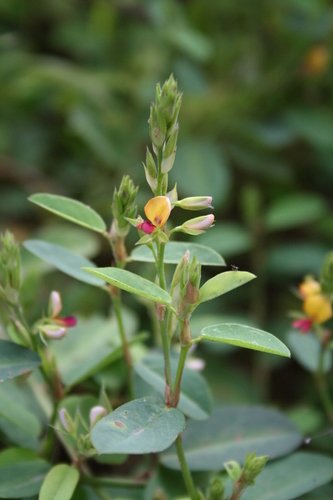
iNaturalist· cc-by-nc
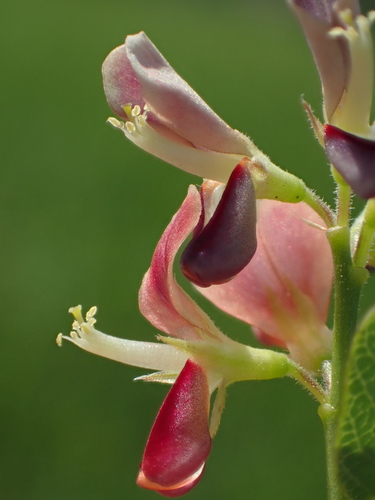
(c) Shiwalee Samant, some rights reserved (CC BY-NC), uploaded by Shiwalee Samant
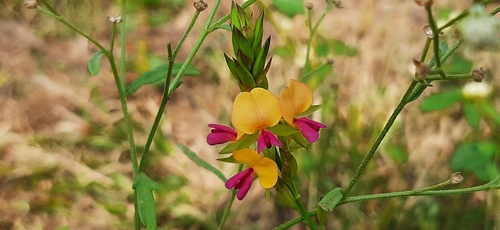
iNaturalist· cc-by-nc
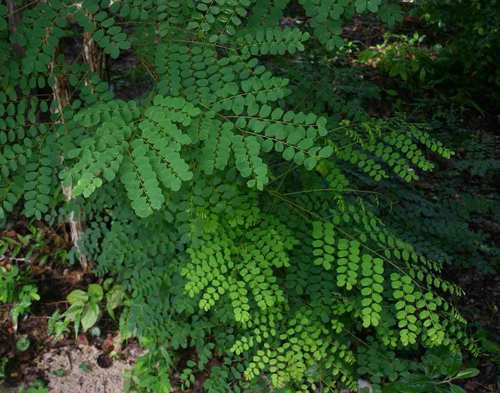
(c) Rujuta Vinod, some rights reserved (CC BY-NC), uploaded by Rujuta Vinod
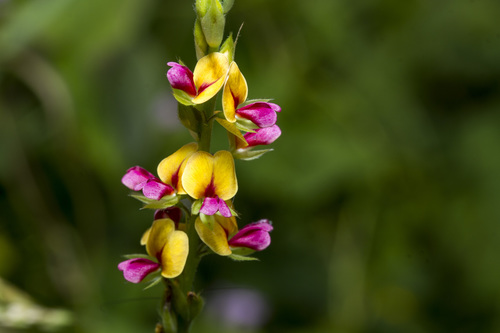
iNaturalist· cc-by-nc
(c) Shiwalee Samant, some rights reserved (CC BY-NC), uploaded by Shiwalee Samant
Summary
Source: WikipediaAlbizia odoratissima, a member of the family Fabaceae, is a fast-growing, deciduous tree reaching 15 to 25 m (49 to 82 ft) in height, a diameter of 120–150 cm (47–59 in), and native to large parts of India (where it is known as கருவாகை, Kali siris or black siris), Bangladesh, Bhutan, Nepal, Myanmar, Laos, Thailand, Vietnam, Sri Lanka (where it is known as Ceylon rosewood) and China. It is one of the top nitrogen-fixing trees. The species' wide range of habitat, usefulness and rapid growth of about 1 m (3 ft) in height annually, has led to an extensive distribution in the tropics and occasionally in the temperate zones, despite young plants' being susceptible to frost. It has become naturalised over large swathes of Tropical Africa, extending from Kenya down the east coast through Tanzania, Malawi and Zimbabwe as far south as Mozambique, and is grown in Johannesburg, South Africa. It has also become feral in Central America and Florida in the United States. It will tolerate a wide range of soil types, but does best on moist, well-drained, loamy soils, and can occur from sea level to about 1,800 m (5,906 ft), with an annual rainfall of 600–3,000 mm (24–118 in). Albizia odoratissima has an attractive dark brown to black heartwood, often striped, durable and dense. It seasons with few problems, and works and polishes well, finding applications in structural timber, furniture and agricultural implements. In Bangladesh large areas of tea and coffee plantations are shaded by this species, while the foliage makes good cattle fodder. The species is liable to genetic degradation due to the 'extensive felling of phenotypically superior trees for commercial purposes.' The fragrant flowers are white withering to a pale orange, appearing in large terminal clusters. Mature pods are reddish-brown, thin and flat, from 13–20 cm (5.1–7.9 in) long and 2–4 cm (0.79–1.57 in) wide, and contain eight to twelve reddish-brown seeds, each weighing about 0.5 g (0.018 oz). The bark is dark grey with horizontal lenticels. Leaves are bipinnately compound, downy, with three to nine pairs of pinnae and ten to thirty pairs of pinnules. Seeds germinate readily with a high viability, but are often damaged by Bruchidius beetles of the family Chrysomelidae.
Description
A tree. The bark is grey with patches. The leaves are alternate. The stalk of the leaf has a black gland near the base. The leaves are 10-20 cm long with 3-8 pairs of pinnae. These are 5-9 cm long and each have 8-20 pairs of leaflets. These leaflets are 1.7-2.5 cm long by 5-10 mm wide. The flower heads are solitary. The flowers are pale yellow. The fruit is a pod 10-30 cm long and 1.7-3.5 cm wide. These are reddish-brown. There are 8-12 seeds.
Edible Uses
The bark is fermented to make a drink called 'Basi' in the Philippines. Leaves are also edible.
Traditional Uses
The bark is used for a fermented drink called "Basi" in the Philippines.
This uses section is brief — help expand it
Known Hazards
The bark is used as a fish poison.
Distribution
It is a tropical plant. It is best in well composted, moist, well-drained soil. It needs a protected, sunny position. It is sensitive to drought and frost. In southern China it grows in thin forests from sea level to 1,500 m above sea level.
Where It Grows
Africa, Andaman Is., Asia, Australia, Bangladesh, Bhutan, China, East Africa, Himalayas, India*, Indochina, Indonesia, Kenya, Laos, Malawi, Mauritius, Mozambique, Myanmar, Nepal, Nigeria, Northeastern India, Pacific, Pakistan, Philippines, SE Asia, Sikkim, Southern Africa, Sri Lanka*, Tanzania, Thailand, Vietnam, Zimbabwe,
Cultivation
Plants are grown from seeds.
Propagation
Seed - to break dormancy the seed can be soaked in cool water for 1 hour, in 80 deg C water for two minutes, or in boiling water for 30 seconds. Removed from the water, moist seed is stored overnight and then sown the following morning. Seedlings emerge within a week. Fresh seed may have a germination rate of 99%. Germination of year-old seed decreases to 55-65%. Sow 2 - 3 seeds in each container at a depth of 5 - 20 mm and cover with a thin layer of sand.
Other Uses
The tree produces an insoluble gum which is mixed with other gums and used as an extender. A brown dye is obtained from the wood. The heartwood of mature trees is a beautiful dark brown colour. The wood is hard, close-grained, 20 - 40% stronger than teak. A premium quality wood, it is suitable for panelling and furniture. It is also used for carts, wheels, farm implements and construction timbers. A valuable fuel wood, dead and defective branches from shade trees are a major source of fuel. Black siris is an excellent companion tree. It fixes atmospheric nitrogen through a symbiotic relationship with bacteria on the root. The tree utilizes the subsoil moisture and nutrients not available to plants and protects them from hail and rainstorms. It is used in reforestation programmes and is also planted for soil conservation. It produces a well-developed root system that decreases erosion. It is planted as a pioneer species in northern Thailand in reforestation projects to restore native woodland - it is planted in degraded woodland and open areas in a mix with various other species that all have the ability to grow fast; produce dense, weed-suppressing crowns; and attract seed-dispersing wildlife, particularly birds and bats. The tree has contributed 16 kgs/ha of nitrogen from 655 kgs of dry weight leaf litter in trials and provides organic matter and soil nutrients to the rhizosphere of understory plants. Tree canopies decrease soil desiccation and suppress weed growth. Its presence in tea monoculture reduces the incidence of tea pests, particularly red spider mites and scarlet mites.
Notes
There are 145-150 Albizia species. They grow in the tropics and subtropics. Also as Mimosaceae.
Synonyms
Also Known As
Bilvara, Chikunda, Chinduga, Du salen, Hophoan thom, Kakur siris, Kala siris, Kalo, Kalo-siris, Kasuvagei, Khang hung, Len, Mai-kying-lwai, Mai-tawn, Meik-kye, Puli vaga, Sarasio, Taing-magyi, Thit-magyi, Xu'a
References (18)
- Ambasta S.P. (Ed.), 2000, The Useful Plants of India. CSIR India. p 25
- Badwar, R. R., & Fernandez, R. R., 2011, Edible Wild Plants of the Himachal Pradesh State by IHBT, Himalayas, Daya Publishing House,. Delhi, India
- Bhardwaj, J. & Seth, M. K., 2017, Edible wild plant resources of Bilaspur, Hamirpur and Una districts of Himachal Pradesh, India. International Journal of Botany Studies. Volume 2; Issue 6; p 09-17
- Bircher, A. G. & Bircher, W. H., 2000, Encyclopedia of Fruit Trees and Edible Flowering Plants in Egypt and the Subtropics. AUC Press. p 17
- Bodkin, F., 1991, Encyclopedia Botanica. Cornstalk publishing, p 62
Show all 18 references Hide references
- Brown, W.,
- Facciola, S., 1998, Cornucopia 2: a Source Book of Edible Plants. Kampong Publications, p 151
- Flora of Pakistan. www.eFloras.org
- Gangwar, A. K. & Ramakrishnan, P. S., 1990, Ethnobotanical Notes on Some Tribes of Arunachal Pradesh, Northeastern India. Economic Botany, Vol. 44, No. 1 pp. 94-105
- Gardner, S., et al, 2000, A Field Guide to Forest Trees of Northern Thailand, Kobfai Publishing Project. p 160
- ILDIS Legumes of the World http:www;ildis.org/Legume/Web
- Kew Plants of the World Online
- London J. Bot. 3:88. 1844
- Savita, et al, 2006, Studies on wild edible plants of ethnic people in east Sikkim. Asian J. of Bio Sci. (2006) Vol. 1 No. 2 : 117-125
- Uphof,
- Van Sam, H. et al, 2004, Trees of Laos and Vietnam: A Field Guide to 100 Economically or Ecologically Important Species. Blumea 29 (2004) 201-349
- Wild edible plants of Himachal Pradesh
- World Checklist of Useful Plant Species 2020. Royal Botanic Gardens, Kew