Albizia procera
(Roxb.) Benth.
Forest Siris, Brown Albizia
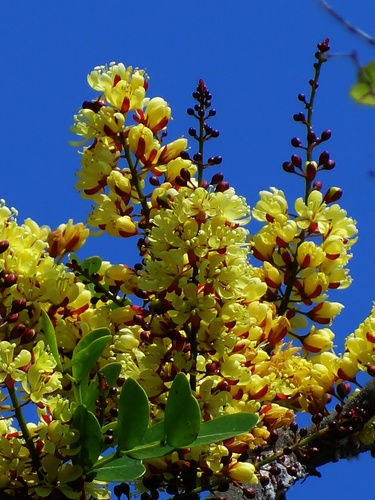
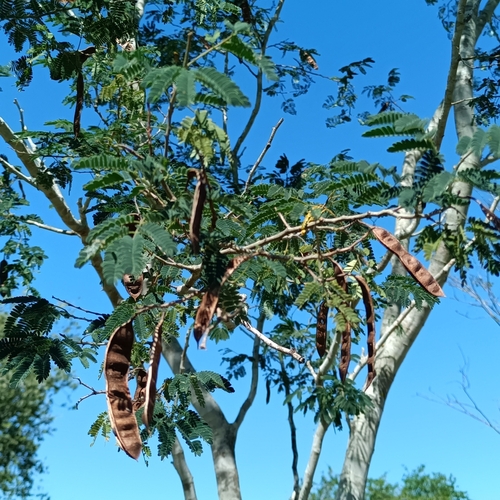
iNaturalist· cc-by-nc
(c) Rujuta Vinod, some rights reserved (CC BY-NC), uploaded by Rujuta Vinod
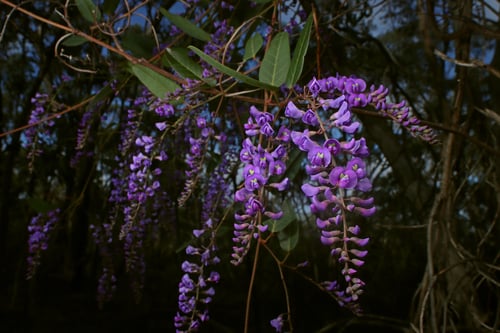
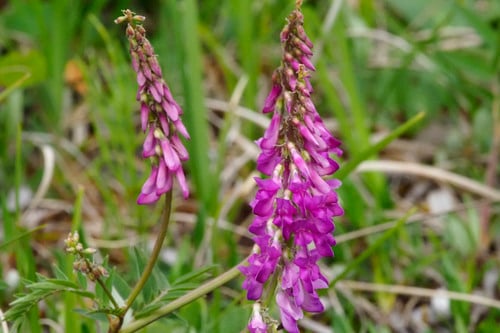
iNaturalist· cc-by-nc
(c) ylopez2, some rights reserved (CC BY-NC)
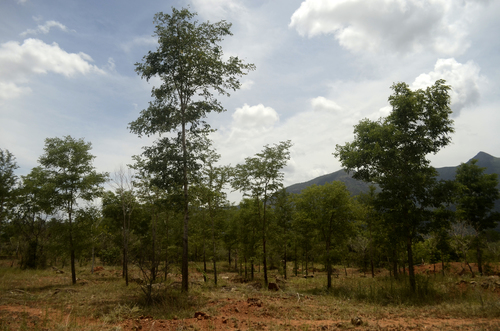
iNaturalist· cc-by-nc
(c) Ian Cowan, some rights reserved (CC BY-NC), uploaded by Ian Cowan
Summary
Source: WikipediaAlbizia procera, commonly known as white siris or karoi tree, is a species of large tree found natively in southeast Asia and India. It is most commonly found in open forests, but may also be found on the margins of rain forests and in monsoon and gallery forests. It is considered an invasive species in South Africa. The genus name Albizia honors the Florentine naturalist Filippo del Albizzi, while the species name is derived from the Latin word 'procerus', meaning 'very tall or high'.
Description
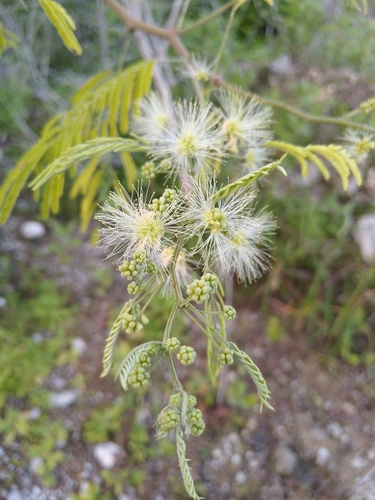
An erect medium sized tree. They are 10 to 25 m high. The twigs sometimes have hairs. The leaves are about 40 cm long and the pinnae are 6 to 10 in number and 15 to 20 cm long. The leaflets are 12 to 20 cm long. The flower is yellowish white in round heads at the ends of small branches. The pods are oblong, thin, smooth and flattened. They contain 8 to 10 seeds.
Edible Uses
The cooked leaves are eaten as a vegetable. In times of scarcity, the inner bark can be ground into a powder, mixed with flour, and eaten. The pods are also an edible part of the plant.
Traditional Uses
The young leaves are edible cooked. In times of famine the bark is ground into flour and eaten.
This uses section is brief — help expand it
Medicinal Uses
White siris is commonly used in traditional medicine and has been the subject of some research, with a number of active compounds identified. All parts of the plant are reported to show anti-cancer activity. The roots contain alpha-spinasterol and a saponin reported to have spermicidal activity at a dilution of 0.008%. A decoction of the bark is given for rheumatism and haemorrhage, and is also considered useful for problems of pregnancy and stomach-ache. The leaves are poulticed onto ulcers.
Known Hazards
A. procera is cultivated for timber or as fuel in Asia, Africa and the Americas. In India, the leaves are considered good fodder for animals such as cows, sheep, goats, and elephants. The wood makes good charcoal, and the resin is a good substitute for gum arabic. The leaves are said to be insecticidal, while the bark may be used to make fish poison.
Distribution
It is a tropical plant. They are common in forests throughout the Philippines. It grows in Nepal at 300-1100 m altitude. In Java it grows from the lowlands up to 1,200 m above sea level. It is damaged by frost. It suits warm tropical places near the coast. It can grow in arid places. In Yunnan.
Where It Grows
Africa, Asia, Australia, Bangladesh, Brazil, Cambodia, Caribbean, Central America, China, Cuba, Dominican Republic, East Africa, East Timor, Egypt, Fiji, Himalayas, India, Indochina, Indonesia, Jamaica, Laos, Mauritius, Myanmar, Nepal, North Africa, North America, Pacific, Pakistan, Panama, Papua New Guinea, PNG, Philippines, Puerto Rico, Sao Tome and Principe, SE Asia, Sikkim, South Africa, Southern Africa, South America, Sri Lanka, Sudan, Taiwan, Thailand, Timor-Leste, Uganda, USA, Vietnam, West Indies, Zimbabwe,
Cultivation
Plants are grown from seeds. It can also be grown from cuttings.
Propagation
Fresh seed germinates at a rate of 90–100%. Seed stored for 4–5 months or longer should be soaked in boiling water for 5 seconds, removed from heat, soaked in cool water overnight, and sown immediately — this treatment doubles the germination rate. Manual scarification of the seed coat before boiling may further assist germination. Direct field sowing has proved more successful than planting from a nursery, provided there is adequate soil moisture and regular weeding and soil loosening are carried out. Line sowing to facilitate weeding has given excellent results. Healthy seedlings produce a thick, long taproot. Seed storage behaviour is orthodox. Clean seed can be stored at room temperature for 10 months with minimal viability loss, though germination can drop below 50% after storage. Seeds survive 10 or more years at room temperature, and viability is maintained for over 3 years in hermetic storage at room temperature with 13 ± 2% moisture content. Stem and root cuttings propagate successfully provided they are not taken during the peak of the rainy or dry season. Vegetative propagation also occurs through layering, and root suckers are readily produced when roots are exposed.
Other Uses
Agroforestry Uses: The tree is widely planted for its good soil-binding capacity and is occasionally cultivated as shade for tea and coffee plantations, where it also serves as a wind and firebreak. It is popular for rehabilitating seasonally dry, eroded, and degraded soils. Its ability to grow on dry, sandy, stony, and shallow soils makes it useful for reforestation of difficult sites, with good survival and rapid early growth recorded on both saline and alkaline soils. It is widely used in agroforestry systems. Other Uses: The bark can be used as a tanning material and is used in India for tanning and dyeing, though its low tannin content (12–17%), considerable weight loss in drying, and difficult harvesting limit its importance. When injured, the stem exudes a reddish-brown gum chemically similar to, and used as a substitute for, gum arabic. The leaves have insecticidal and piscicidal properties. Branches and twigs are used by tea planters as stakes for laying out tea gardens, and split well for this purpose. The species is popular along field borders. Pods and fallen leaves represent potential energy sources; if pods of the related A. lebbeck can yield 10 barrels of ethanol per hectare, this species could likely do the same. The timber has a large amount of non-durable yellowish-white sapwood. The heartwood is hard and heavy, light or dark brown with light and dark bands, and its broadly interlocked grain makes it more suitable for large-section uses such as panels and tabletops. It seasons and polishes well and is used for construction, furniture, veneer, cabinet work, flooring, agricultural implements, moulding, carts, carriages, cane crushers, carvings, boats, oars, oil presses, and rice pounders. It is resistant to several termite species. The wood is suitable for paper pulp; bleached pulp in satisfactory yields (50.3%) can be prepared by the sulphate process, suitable for writing and printing paper (mean fibre length 0.9 mm, mean fibre diameter 0.021 mm). The calorific value of dried sapwood is 4870 kcal/kg and heartwood 4865 kcal/kg. Excellent charcoal (39.6%) can be prepared from the wood, and it is widely used as fuel.
Other Information
The bark is ground and used as a famine food. It is sold on local markets in Laos.
Notes
There are 145-150 Albizia species. They grow in the tropics and subtropics. Also as Mimosaceae.
Synonyms
Also Known As
Akleng-parang, Bellate, Doon siris, Karo, Karunthagara, Kayun, Kinhai, Konda vagei, Koroi, Mai-tawn, Phak thon, Pu wu, Safed Siris, Seto siris, Sibok, Silver bark rain tree, Sit, Tella chinduga, Thit-pyu, Tram kang, Vang-fek, Weru, White siris, Women’s Tongues
References (49)
- Ambasta S.P. (Ed.), 2000, The Useful Plants of India. CSIR India. p 26
- Angami, A., et al, 2006, Status and potential of wild edible plants of Arunachal Pradesh. Indian Journal of Traditional Knowledge 5(4) October 2006, pp 541-550
- Argent, G et al, nd, Manual of the Larger and More important non Dipterocarp Trees of Central Kalimantan Indonesia. Volume 2 Forest Research Institute, Samarinda, Indonesia. p 348
- Aryal, K. P., et al, 2018, Diversity and use of wild and non-cultivated edible plants in the Western Himalaya. Journal of Ethnobiology and Ethnomedicine (2018) 14:10
- Bircher, A. G. & Bircher, W. H., 2000, Encyclopedia of Fruit Trees and Edible Flowering Plants in Egypt and the Subtropics. AUC Press. p 17
Show all 49 references Hide references
- Burkill, I.H., 1966, A Dictionary of the Economic Products of the Malay Peninsula. Ministry of Agriculture and Cooperatives, Kuala Lumpur, Malaysia. Vol 1 (A-H) p 84
- Calvert, G., 2010, The Burdekin Delta Tree Guide. Lower Burdekin Landcare Association., Inc., Ayr p 17
- Cooper, W. and Cooper, W., 2004, Fruits of the Australian Tropical Rainforest. Nokomis Editions, Victoria, Australia. p 306
- Cribb, A.B. & J.W., 1976, Wild Food in Australia, Fontana. p 135
- Das, S. and Mohiuddin, M., 2012, Gender role in Home Garden Management in the Indigenous Community: A case study in Bandarban Hill District, Bangladesh. International Journal of Social Forestry. 5(1):22-37
- Doran, J.C., & Turnbull, J.W. (Eds), 1997, Australian Trees and Shrubs: species for land rehabilitation and farm plantings in the tropics. ACIAR Monograph No 24. p 238
- Elliot, W.R., & Jones, D.L., 1982, Encyclopedia of Australian Plants suitable for cultivation. Vol 2. Lothian. p 170
- Flora of Australia Volume 12, Mimosaceae (excl. Acacia) Caesalpiniaceae. Melbourne: CSIRO Australia (1998) p 29, 31
- French, B., 1986, Food Plants of Papua New Guinea, Asia Pacific Science Foundation p 306 (As Albizia sp.)
- Gardner, S., et al, 2000, A Field Guide to Forest Trees of Northern Thailand, Kobfai Publishing Project. p 159
- Havel, J.J., 1975, Forest Botany, Volume 3 Part 2 Botanical taxonomy. Papua New Guinea Department of Forests, p 104
- Hearne, D.A., & Rance, S.J., 1975, Trees for Darwin and Northern Australia. AGPS, Canberra p 17, Pl 1 & Colour Pl 3
- Hedrick, U.P., 1919, (Ed.), Sturtevant's edible plants of the world. p 32
- Holliday, I., 1989, A Field Guide to Australian Trees. Hamlyn. p 40
- ILDIS Legumes of the World http:www;ildis.org/Legume/Web
- Jackes, B.R., 2001, Plants of the Tropics. Rainforest to Heath. An Identification Guide. James Cook University. p 64
- Jones D, L, 1986, Ornamental Rainforest Plants in Australia, Reed Books, p 148
- Kachenchart, B., et al, 2008, Phenology of Edible Plants at Sakaerat Forest. In Proceedings of the FORTROP II: Tropical Forestry Change in a Changing World. Bangkok, Thailand.
- Kenneally, K.E., Edinger, D. C., and Willing T., 1996, Broome and Beyond, Plants and People of the Dampier Peninsula, Kimberley, Western Australia. Department of Conservation and Land Management. p 136
- Krishen P., 2006, Trees of Delhi, A Field Guide. DK Books. p 289
- London J. Bot. 3:89. 1844
- Luczaj, L., et al, 2021, Wild food plants and fungi sold in the markets of Luang Prabang, Lao PDR. Journal of Ethnobiology and Ethnomedicine (2021) 17:6
- Martin, F.W. & Ruberte, R.M., 1979, Edible Leaves of the Tropics. Antillian College Press, Mayaguez, Puerto Rico. p 197
- Ochse, J.J. et al, 1931, Vegetables of the Dutch East Indies. Asher reprint. p 362
- Monsalud, M.R., Tongacan, A.L., Lopez, F.R., & Lagrimas, M.Q., 1966, Edible Wild Plants in Philippine Forests. Philippine Journal of Science. p 486
- Paczkowska, G . & Chapman, A.R., 2000, The Western Australian Flora. A Descriptive Catalogue. Western Australian Herbarium. p 329
- Palgrave, K.C., 1996, Trees of Southern Africa. Struik Publishers. p 221
- Peekel, P.G., 1984, (Translation E.E.Henty), Flora of the Bismarck Archipelago for Naturalists, Division of Botany, Lae, PNG. p 207, 204
- Pham-Hoang Ho, 1999, An Illustrated Flora of Vietnam. Nha Xuat Ban Tre. p 829
- Phon, P., 2000, Plants used in Cambodia. © Pauline Dy Phon, Phnom Penh, Cambodia. p 21
- Powell, J.M., Ethnobotany. In Paijmans, K., 1976, New Guinea Vegetation. Australian National University Press. p 108 (As Albizia sp.)
- Royal Botanic Gardens, Kew (1999). Survey of Economic Plants for Arid and Semi-Arid Lands (SEPASAL) database. Published on the Internet; http://www.rbgkew.org.uk/ceb/sepasal/internet [Accessed 27th April 2011]
- Siemonsma, J. S. & Kasem Piluek, eds. 1993. Vegetables. In: Plant Resources of South-East Asia (PROSEA) 8:312
- Singh, H.B., Arora R.K.,1978, Wild edible Plants of India. Indian Council of Agricultural Research, New Delhi. p 78
- Slik, F., www.asianplant.net
- Sukarya, D. G., (Ed.) 2013, 3,500 Plant Species of the Botanic Gardens of Indonesia. LIPI p 117
- Sundriyal, M. & Sundriyal, R. C., 2004, Structure, Phenology, Fruit Yield, and Future Prospects of some Prominent Wild Edible Plant Species of the Sikkim Himalaya, India. Journal of Ethnobiology 24(1): 113-138
- Sutjaritjai, N., et al, 2019, Traditional Uses of Leguminosae among the Karen in Thailand. Plants 2019, 8, 600 p 4
- Townsend, K., 1994, Across the Top. Gardening with Australian Plants in the tropics. Society for Growing Australian Plants, Townsville Branch Inc. p 73
- Van Sam, H. et al, 2004, Trees of Laos and Vietnam: A Field Guide to 100 Economically or Ecologically Important Species. Blumea 29 (2004) 201-349
- Verdcourt, B., 1979, Manual of New Guinea Legumes. Botany Bulletin No 11, Division of Botany, Lae, Papua New Guinea. p 187
- Wheeler, J.R.(ed.), 1992, Flora of the Kimberley Region. CALM, Western Australian Herbarium, p 338
- World Checklist of Useful Plant Species 2020. Royal Botanic Gardens, Kew
- www.worldagroforestrycentre.org/treedb/