Phytolacca dioica
(L.) Moq.
Ombu tree
iNaturalist· cc-by
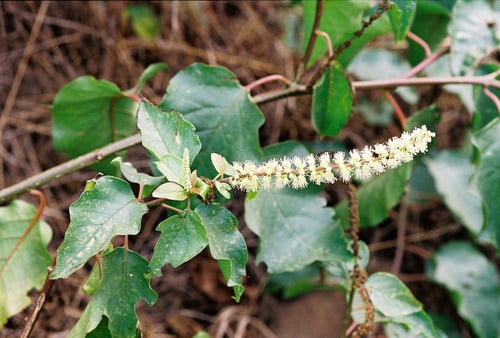
(c) Romi Galeota Lencina, some rights reserved (CC BY), uploaded by Romi Galeota Lencina
iNaturalist· cc-by
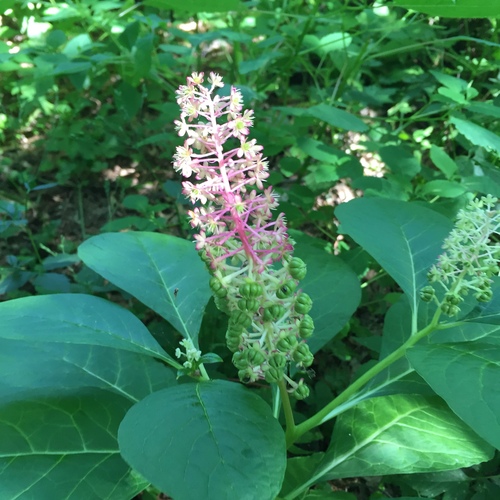
(c) Thomaz Ricardo Favreto Sinani, some rights reserved (CC BY), uploaded by Thomaz Ricardo Favreto Sinani
iNaturalist· cc-by-nc-sa
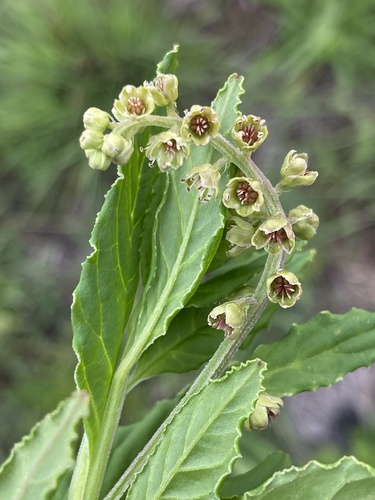
(c) ecos de pedra, some rights reserved (CC BY-NC-SA)
Summary
Source: WikipediaPhytolacca dioica, commonly known as ombú in Spanish and umbu in Portuguese, is a massive evergreen tree in the pokeweed family Phytolaccaceae, native to the Pampas of South America. As its specific epithet suggests, it is dioecious, with male and female flowers on separate plants. The flowers are pollinated by the butterfly Doxocopa laurentia. It has an umbrella-like canopy that spreads to a diameter of 12 to 15 m (39 to 49 ft) and can attain a height of 12 to 18 m (39 to 59 ft). This upper growth springs up from a tuberous caudex, which can reach up to 14 m (46 ft) girth. Because it is derived from herbaceous ancestors, its trunk consists of anomalous secondary thickening rather than true wood. As a result, the ombú grows fast but its wood is soft and spongy enough to be cut with a knife. These properties have led it to be used in the art of bonsai, as it is easily manipulated to create the desired effect. Since the sap is poisonous, the ombú is not grazed by cattle and is immune to locusts and other pests. For similar reasons, the leaves are sometimes used as a laxative or purgative. It is a symbol of Uruguay, Rio Grande do Sul and Argentina, and of gaucho culture, as its canopy is quite distinguishable from afar and provides comfort and shelter from sun and rain. This tree is classified in the same genus as the North American pokeweed. The species is also cultivated in Southern California as a shade tree. Ombú has been declared as a minor invasive species (category 3) in South Africa, where it is widely planted.
Description
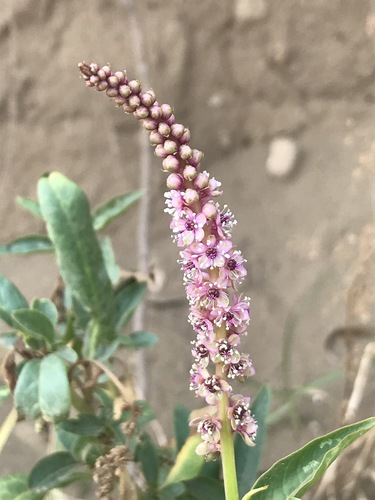
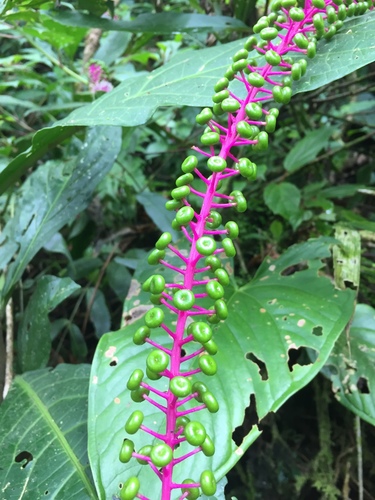
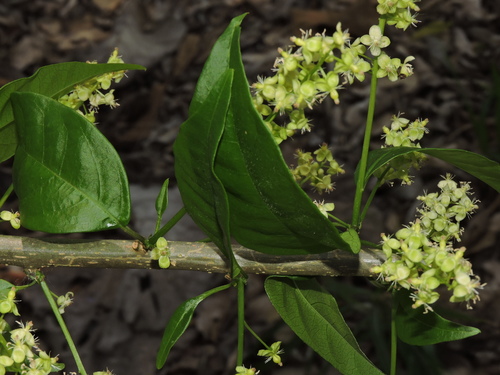
A large tree. It is evergreen. It grows to 15-20 m high. The crown is dense and spreading. The trunk can be 2 m across. It is swollen at the base. The roots come to the surface and put out suckers. The leaves are green and narrowly oval and taper to the tip. They are simple and 10 cm long. The leaf stalks are narrow. Male and female flowers are separate on separate plants. The flowers are along branched stalks and often hang downwards. These are 10 cm long. The male flowers have 20-30 stamens. The fruit are fleshy berries. They are yellow and have 7-10 cells. The fruit are 1.2 cm across.
Edible Uses
Young leaves and shoots must be cooked before eating and are used as a vegetable — raw leaves should not be eaten, and only young leaves should be used as they become toxic with age. The fruits are made into jellies or jams and used as a red food colouring. Some caution is advised regarding toxicity.
Traditional Uses
CAUTION: The fruit are poisonous. The attractive smell encourages children to eat them with poisonous results. The young leaves and shoots are cooked and eaten as a vegetable. The fruit are made into jellies and jams. They are also used to give red colour to wines.
Medicinal Uses
None known
Known Hazards
The leaves are poisonous. They are said to be alright to eat when young, the toxins developing as they grow older. Other parts of the plant, including the fruit, are likely to be poisonous. The seeds, leaf and root contain saponins. Although poisonous, saponins are poorly absorbed by the human body and so most pass through without harm. Saponins are quite bitter and can be found in many common foods such as some beans. They can be removed by carefully leaching in running water. Thorough cooking, and perhaps changing the cooking water once, will also normally remove most of them. However, it is not advisable to eat large quantities of raw foods that contain saponins. Saponins are much more toxic to some creatures, such as fish, and hunting tribes have traditionally put large quantities of them in streams, lakes etc in order to stupefy or kill the fish.
Distribution
A tropical plant. It can tolerate salty air near sea-sides. It needs mild climates and is damaged by severe frosts. It is drought tolerant. It can grow in an average, well-drained soil. It needs full sun. In Argentina it grows from sea level to 1,500 m above sea level. In Melbourne Botanical Gardens. It suits hardiness zones 10-11.
Where It Grows
Africa, Argentina, Asia, Australia, Bolivia, Botswana, Brazil*, Colombia, East Africa, Ecuador, Eswatini, Hawaii, India, Indonesia, Mediterranean, North America, Pacific, Paraguay, Peru, SE Asia, South Africa, Southern Africa, South America*, Swaziland, Uruguay, USA, Zimbabwe,
Cultivation
Plants are grown from seed. The ripe fruit are harvested from the tree and allowed to decompose for a few days before removing the seed. The seeds are washed out in running water and dried lightly. Seed can be stored for about 1 year. Fresh seed should be planted. They germinate in 8-16 days. Seedlings can be transplanted into the field after 4 months. Trees can be grown from cuttings.
Propagation
Sow seed in autumn or spring in a cold frame. Prick seedlings into individual pots when large enough to handle and grow on in a greenhouse for their first winter, then plant out in late spring or early summer after the last expected frosts. With sufficient seed, an outdoor sowing in a seedbed in early spring is worthwhile; grow plants on for their first year and transplant the following spring. Divide in March or October using a sharp spade or knife, ensuring each section has at least one growth bud. Larger divisions can go straight into permanent positions; smaller ones are better potted up and grown on in light shade in a cold frame until well established before planting out in late spring or early summer.
Other Uses
A red ink is obtained from the fruit.
Production
The tree grows rapidly. They can be 4-5 m tall in 2 years.
Notes
There are 25 Phytolacca species.