Phytolacca acinosa
Roxb.
Sweet belladonna, Indian pokeweed
iNaturalist· cc-by-nc
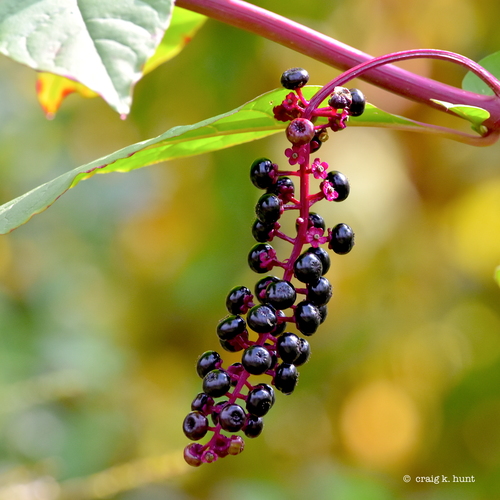
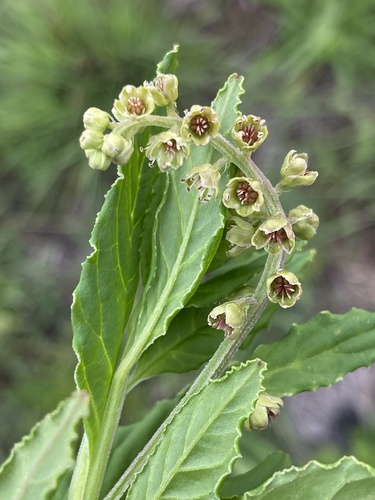
(c) Zdeňka Nováková, some rights reserved (CC BY-NC), uploaded by Zdeňka Nováková
iNaturalist· cc-by-nc
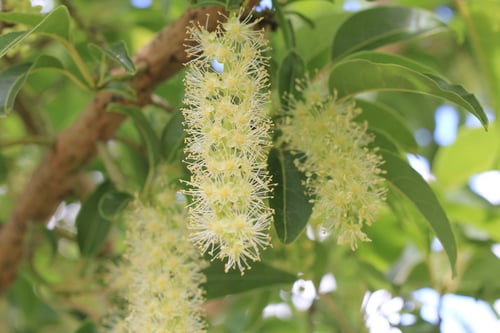
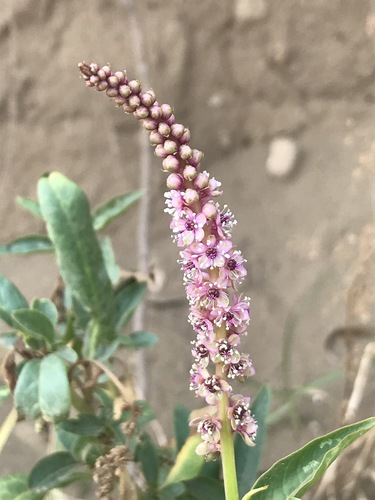
(c) Jeremy Barker, some rights reserved (CC BY-NC), uploaded by Jeremy Barker
iNaturalist· cc-by-nc-sa
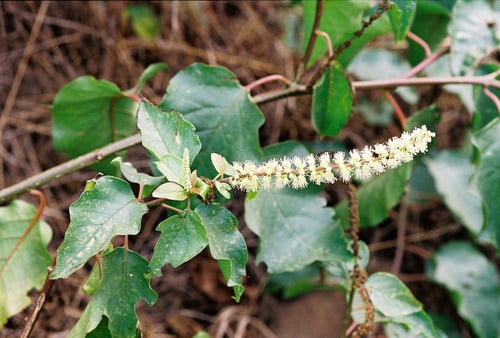
(c) Hans-Jürgen Becker, some rights reserved (CC BY-NC-SA)
Summary
Source: WikipediaPhytolacca acinosa, the Indian pokeweed, is a species of flowering plant in the family Phytolaccaceae. It is native to temperate eastern Asia; the Himalayas, most of China, Vietnam to Japan, and has been widely introduced to Europe. The species was originally described by William Roxburgh in 1814.
Description
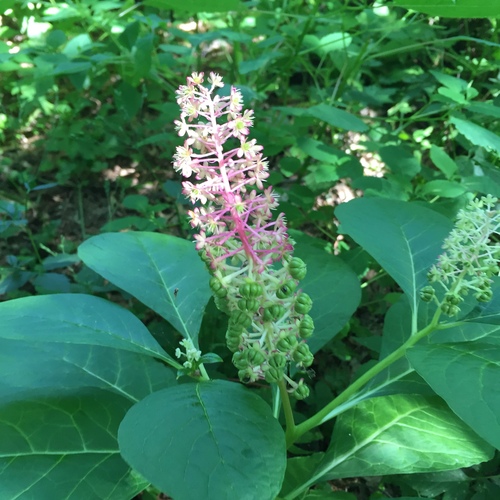
A herb. It is soft and juicy. It grows 1.5 m tall. The roots are thick and fleshy. The stems have grooves along them. They can be green or red-purple. The leaves have stalks. These are 1.5-3 cm long. The leaves are 12-26 cm long by 5-10 cm wide. They are oval and narrowed towards the leaf stalk. The flowers have stalks. The flowers are greenish. The fruit is a berry which is 7 mm across and purplish black when mature.
Edible Uses
Young leaves must be cooked before eating and are used as spinach. Only use young leaves, as they become toxic with age. Young shoots make an excellent-flavoured asparagus substitute. The root must be cooked and leeched first; only the white root of the white-flowered form should be eaten.
Traditional Uses
The tender leaves and shoots are cooked as a green vegetable. They are cooked twice changing the water in between. They are used in curries. They are also used in stir fries. CAUTION: The root is toxic. The fruit are poisonous. The root is sliced then boiled and soaked in changes of water and steamed before eating. The fruit are occasionally used as a flavouring.
Medicinal Uses
The root is antiasthmatic, antibacterial, antidote, antifungal, antitussive, diuretic, expectorant, laxative and vermifuge. The plant has an interesting chemistry and was being investigated as a potential anti-AIDS drug (as of 1995). It contains potent anti-inflammatory agents, antiviral proteins and substances that affect cell division — compounds toxic to many disease-causing organisms, including the water snails that cause schistosomiasis. Internally, the root treats urinary disorders, nephritis, oedema and abdominal distension. Externally, it is applied to boils, carbuncles and sores. Roots are harvested in autumn and dried for later use. All parts of the plant are toxic; this remedy should be used with caution and preferably under the supervision of a qualified practitioner.
Known Hazards
All parts of the plant are toxic to human and mammals, with reported poisoning cases. This is due to the presence of saponins and alkaloids (phytolaccatoxin and phytolaccagenin).
Distribution
It is a temperate plant. In Nepal it grows between 2200-3200 m altitude. It grows in the shade of forest trees. It grows in wetlands. In China it grows in valleys in forest understories in moist fertile lands from 500-3400 m altitude. It grows in Yunnan. It occurs in Sichuan.
Where It Grows
Africa, Asia, Bhutan, China, East Africa, Europe, France, Germany, Himalayas, India, Indochina, Japan, Korea, Laos, Mediterranean, Myanmar, Nepal, North America, Northeastern India, NW India, Pakistan, SE Asia, Sikkim, Slovenia, Tibet, Vietnam,
Cultivation
An easily grown plant, succeeding in most soils, though preferring a moisture retentive fertile soil in full sun or partial shade. Plants can be grown in quite coarse grass, which can be cut annually in the autumn. This species is not hardy in the colder areas of the country, it tolerates temperatures down to between -5 and -10°c. The young growth in spring can be damaged by late frosts. Often self sows when in a suitable position. Cultivated for its edible leaves in India. It is said that there are two forms of this plant, one with red flowers that has a poisonous root, whilst another with white flowers that has a white edible root. This white form is said to be cultivated for its edible root in parts of China (I wonder if this is a mis-identification for another species? It could also be P. esculenta, which according to one report is a synonym of P. acinosa esculenta and is said to have an edible root). Plants seem to be immune to the predations of rabbits.
Propagation
Sow seed in autumn or spring in a cold frame. Prick seedlings into individual pots when large enough to handle and grow on in a greenhouse for their first winter, then plant out in late spring or early summer after the last expected frosts. With sufficient seed, an outdoor sowing in a seedbed in early spring is worthwhile; grow plants on for their first year and transplant the following spring. Divide in March or October using a sharp spade or knife, ensuring each section has at least one growth bud. Larger divisions can go straight into permanent positions; smaller ones are better potted up and grown on in light shade in a cold frame until well established before planting out in late spring or early summer.
Other Uses
A red ink is obtained from the fruit.
Other Information
It is a commercially cultivated vegetable. It is sold in local markets.
Notes
There are 25 Phytolacca species. It is used in medicine.
Nutrition
| Part | Moisture | kJ | kcal | Protein | Vit A | Vit C | Iron | Zinc |
|---|---|---|---|---|---|---|---|---|
| Leaves | 7 | — | — | 27.3 | — | — | 17 | — |
Synonyms
Also Known As
Azijska barvilnica, Gekha, Indian pokeberry, Jaiong, Jalga, Jarag, Jarak, Jaringe sag, Jaringo, Jariongo sag, Jarka, Jarko, Jharka, Jirrag, Kafal, Kanbo, Lubar sag, Matazor, Mye-mye-gang-pu-mon, Narail, Ni zhuo mo, Olita, Poke root, Rinsag, Sarangum, Sarangun, Shang lu, Tashi gangkha, Tuoqiong
References (53)
- Ambasta, S.P. (Ed.), 2000, The Useful Plants of India. CSIR India. p 453
- Arora, R. K., 2014, Diversity in Underutilized Plant Species - An Asia-Pacific Perspective. Bioversity International. p 44
- Aryal, K. P. et al, 2009, Uncultivated Plants and Livehood Support - A case study from the Chepang people of Nepal. Ethnobotany Research and Applications. 7:409-422
- Aryal, K. P., et al, 2018, Diversity and use of wild and non-cultivated edible plants in the Western Himalaya. Journal of Ethnobiology and Ethnomedicine (2018) 14:10
- Burkill, I.H., 1966, A Dictionary of the Economic Products of the Malay Peninsula. Ministry of Agriculture and Cooperatives, Kuala Lumpur, Malaysia. Vol 2 (I-Z) p 1752
Show all 53 references Hide references
- Cao, Y., et al, 2020, Ethnobotanical study on wild edible plants used by three trans-boundary ethnic groups in Jiangcheng County, Pu’er, Southwest China. Journal of Ethnobiology and Ethnomedicine (2020) 16:66
- Dangol, D. R. et al, 2017, Wild Edible Plants in Nepal. Proceedings of 2nd National Workshop on CUAOGR, 2017.
- DARLINGTON & AMMAL,
- Dobriyal, M. J. R. & Dobriyal, R., 2014, Non Wood Forest Produce an Option for Ethnic Food and Nutritional Security in India. Int. J. of Usuf. Mngt. 15(1):17-37
- Facciola, S., 1998, Cornucopia 2: a Source Book of Edible Plants. Kampong Publications, p 168
- Flora of China @ efloras.org Volume 5
- Fl. ind. ed. 1832, 2:458. 1832
- Ghimire, S. K., et al, 2008, Non-Timber Forest Products of Nepal Himalaya. WWF Nepal p 109
- Hedrick, U.P., 1919, (Ed.), Sturtevant's edible plants of the world. p 494
- http://www.botanic-gardens-ljubljana.com/en/plants
- Hu, Shiu-ying, 2005, Food Plants of China. The Chinese University Press. p 382
- Joshi, N., et al, 2007, Traditional neglected vegetables of Nepal: Their sustainable utilization for meeting human needs. Tropentag 2007. Conference on International Agricultural Research for Development.
- Joshi, N. & Siwakoti, M., 2012, Wild Vegetables Used by Local Community of Makawanpur District and Their Contribution to Food Security and Income Generation. Nepal Journal of Science and Technology Vol. 13, No. 1 (2012) 59-66
- Ju, Y., et al, 2013, Eating from the wild: diversity of wild edible plants used by Tibetans in Shangri-la region, Yunnan, China, Journal of Ethnobiology and Ethno medicine 9:28
- Kays, S. J., and Dias, J. C. S., 1995, Common Names of Commercially Cultivated Vegetables of the World in 15 languages. Economic Botany, Vol. 49, No. 2, pp. 115-152
- Khakurel, D., et al, 2021, Foods from the wild: Local knowledge, use pattern and distribution in Western Nepal. PLOS ONE.
- Khan, M. & Hussain, S., 2014, Diversity of wild edible plants and flowering phenology of district Poonch (J & K) in the northwest Himalaya. Indian Journal of Sci, Res. 9(1): 032-038
- Kumar, P. D., et al, 2015, Ethnobotanical Knowledge and Usage of Wild Plants in Theog Forest Division, Himachal Pradesh, North Western Himalaya. The Journal of Ethnobiology and Traditional Medicine. Photon 124(2015) 922-935
- Li, S., et al, 2020, Monpa, memory, and change: an ethnobotanical study of plant use in Mêdog County, South-east Tibet, China. Journal of Ethnobiology and Ethnomedicine. (2020) 16:5 p 20
- Lim, T. K., 2015, Edible Medicinal and Non Medicinal Plants. Volume 9, Modified Stems, Roots, Bulbs. Springer p 65
- Lu De-quan, Larsen, K., Phytolaccaceae. Flora of China
- Luo, B., et al, 2019, Wild edible plants collected by Hani from terraced rice paddy agroecosystem in Honghe Prefecture, Yunnan, China. Journal of Ethnobiology and Ethnomedicine 15:56
- Manandhar, N.P., 2002, Plants and People of Nepal. Timber Press. Portland, Oregon. p 361
- Manju, S., and Sundriyal, R. C., 2001, Wild Edible Plants of the Sikkim Himalaya: Nutritive Values of Selected Species. Economic Botany 55(3): 377-390
- Martin, F.W. & Ruberte, R.M., 1979, Edible Leaves of the Tropics. Antillian College Press, Mayaguez, Puerto Rico. p 212
- Masoodi, H. U. R. & Sundriyal, R. C., 2020, Richness of non-timber forest products in Himalayan communities—diversity, distribution, use pattern and conservation status. Journal of Ethnobiology and Ethnomedicine 16:56
- Mehta, P. S. et al, 2010, Native plant genetic resources and traditional foods of Uttarakhand Himalaya for sustainable food security and livelihood. Indian Journal or Natural products and Resources. Vol 1(1), March 2010 pp 89-96
- Mukhia, P.K., et al, 2013, Wild plants as Non Wood Forest Products used by the rural community of Dagana, a southern foothill district of Bhutan, SAARC Journal, 27 pages
- Patiri, B. & Borah, A., 2007, Wild Edible Plants of Assam. Geethaki Publishers. p 113
- Pham-Hoang Ho, 1999, An Illustrated Flora of Vietnam. Nha Xuat Ban Tre. p 716
- Plants for a Future database, The Field, Penpol, Lostwithiel, Cornwall, PL22 0NG, UK. http://www.scs.leeds.ac.uk/pfaf/
- Polunin, O., & Stainton, A., 2006, Flowers of the Himalaya, Oxford India Paperbacks. p 341
- Rana, D., et al, 2019, Ethnobotanical knowledge among the semi-pastoral Gujjar tribe in the high altitude (Adhwari’s) of Churah subdivision, district Chamba, Western Himalaya. Journal of Ethnobiology and Ethnomedicine (2019) 15:10
- Rana, P. K., et al, 2014, Uses of Local Plant Biodiversity among the Tribal Communities of Pangi Valley of District Chamba in Cold Desert Himalaya, India. The Scientific World Journal. Volume 2014, Article ID 753289, 15 pages
- READ,
- Sarma, H., et al, 2010, Updated Estimates of Wild Edible and Threatened Plants of Assam: A Meta-analysis. International Journal of Botany 6(4): 414-423
- Sawian, J. T., et al, 2007, Wild edible plants of Meghalaya, North-east India. Natural Product Radiance Vol. 6(5): p 420
- Sharma, P., et al, 2013, Wild edibles of Murari Devi and surrounding areas in Mandi district of Himachal Pradesh, India. International Journal of Biodiversity and Conservation. Vol. 5(9), pp. 580-592, September 2013
- Singh, H.B., Arora R.K.,1978, Wild edible Plants of India. Indian Council of Agricultural Research, New Delhi. p 32
- Sundriyal, M., et al, 1998, Wild edibles and other useful plants from the Sikkim Himalaya, India. Oecologia Montana 7:43-54
- Sundriyal, M., et al, 2004, Dietary Use of Wild Plant Resources in the Sikkim Himalaya, India. Economic Botany 58(4) pp 626-638
- Tanaka,
- Thakur, D., et al, 2017, Why they eat, what they eat: patterns of wild edible plants consumption in a tribal area of Western Himalaya. Journal of Ethnobiology and Ethnomedicine (2017) 13:70
- Thapa, Laxmi, 2009, The Research Project on Edible Wild Plants of Bhutan and Their Associated traditional Knowledge. http:hdl.handle.net/10091/2919
- Tsherig, K., 2012, Edible Wild Plants of Bhutan and their contribution to Food and Nutrition Security. Ministry of Ag. and Forests, Bhutan. www.fao.org
- World Checklist of Useful Plant Species 2020. Royal Botanic Gardens, Kew
- Xu, You-Kai, et al, 2004, Wild Vegetable Resources and Market Survey in Xishuangbanna, Southwest China. Economic Botany. 58(4): 647-667.
- Zhang, Y., et al, 2014, Diversity of wetland plants used traditionally in China: a literature review. Journal of Ethnobiology and Ethnomedicine. 10:72