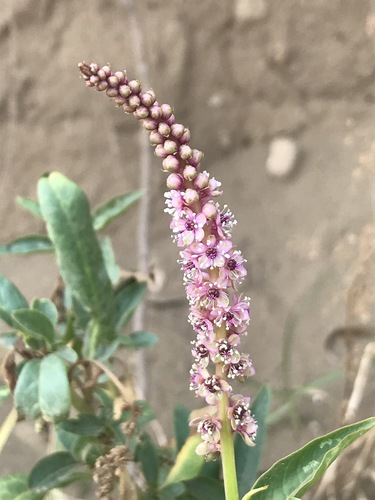
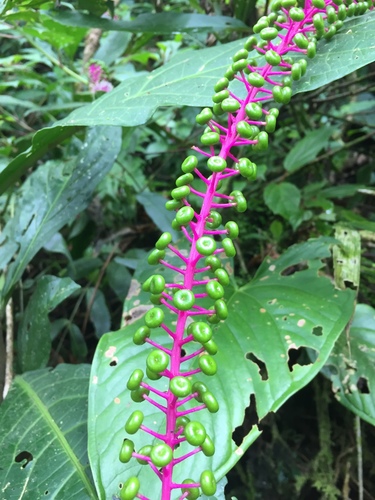
Phytolacca esculenta
van Houtte
American grape
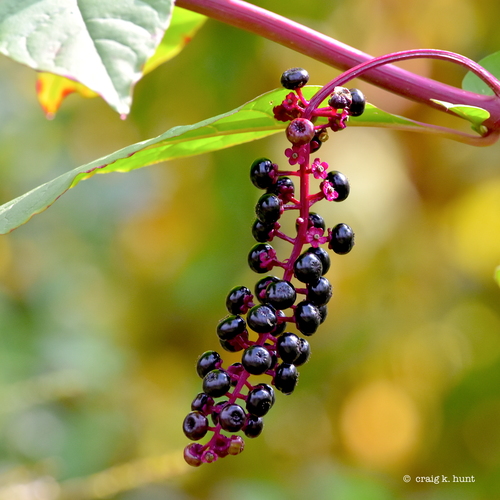
iNaturalist· cc-by-nc
(c) Mark Nofsinger, some rights reserved (CC BY-NC)
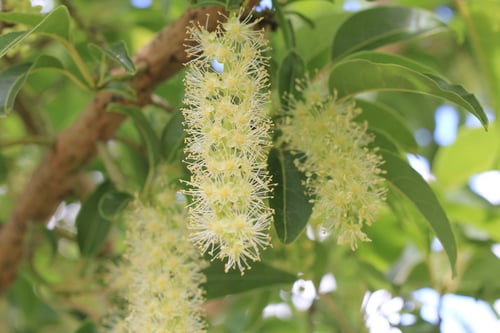
iNaturalist· cc-by-nc
(c) Шварёва Василиса Андреевна, some rights reserved (CC BY-NC)
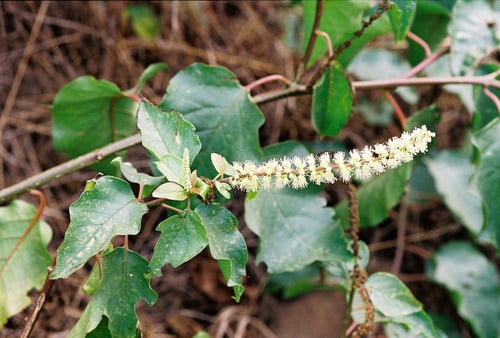
iNaturalist· cc-by-nc
(c) Шварёва Василиса Андреевна, some rights reserved (CC BY-NC)
Summary
Phytolacca esculenta is a hardy perennial reaching 1 m tall with hermaphroditic flowers blooming July to August and seeds ripening August to September. It adapts to light sandy, medium loamy, and heavy clay soils with mildly acidic to mildly alkaline pH. The plant thrives in semi-shade or full sun with preference for moist soil and is hardy to UK zone 6.
Description
Phytolacca esculenta is a hardy perennial reaching 1 m tall with hermaphroditic flowers blooming July to August and seeds ripening August to September. It adapts to light sandy, medium loamy, and heavy clay soils with mildly acidic to mildly alkaline pH. The plant thrives in semi-shade or full sun with preference for moist soil and is hardy to UK zone 6.
Edible Uses
Young leaves must be cooked before eating and are used as spinach — only young leaves should be used as they become toxic with age. The root is also eaten cooked.
Traditional Uses
The leaves are cooked and eaten. They are also roasted in oil or put into soups. The roots are also eaten.
This uses section is brief — help expand it
Medicinal Uses
The roots contain saponins and are abortifacient, antiasthmatic, antibacterial, antifungal, anti-inflammatory, antiphlogistic, antitussive, diuretic, expectorant, hypotensive and purgative. A decoction is used to treat oedema, beri-beri, lumbago, rheumatism, abdominal distension and numbness of the throat. Use with caution given the plant's toxicity.
Known Hazards
The leaves are poisonous. They are said to be alright to eat when young, the toxins developing as they grow older.
Distribution
A tropical plant.
Where It Grows
Africa, Asia, China, Guinea, Guinée, Indochina, Japan, Korea, SE Asia, Vietnam, West Africa,
Cultivation
An easily grown plant, succeeding in most soils, though preferring a moisture retentive soil in full sun or partial shade. We have found the plants to be very tolerant of drought. Plants can be grown in quite coarse grass, which can be cut annually in the autumn. The young growth in spring can be damaged by late frosts. There is sme disagreement over the correct name for this species with some authorities saying that it is no more than a synonym for P. acinosa, whilst others give it specific status. There are reports that there is a white flowered plant, which could either be this species or a form of P. acinosa which is said to be non-toxic and to have an edible root. See P. acinosa for more details. Plants seem to be immune to the predations of rabbits.
Propagation
Sow seed in autumn or spring in a cold frame. Prick seedlings into individual pots when large enough to handle and grow on in a greenhouse for their first winter, then plant out in late spring or early summer after the last expected frosts. With sufficient seed, an outdoor sowing in a seedbed in early spring is worthwhile; grow plants on for their first year and transplant the following spring. Divide in March or October using a sharp spade or knife, ensuring each section has at least one growth bud. Larger divisions can go straight into permanent positions; smaller ones are better potted up and grown on in light shade in a cold frame until well established before planting out in late spring or early summer.
Other Uses
A red ink is obtained from the fruit.
Other Information
It is a commercially cultivated vegetable.
Notes
There are 25 Phytolacca species.
Synonyms
Also Known As
Jarigong, Jiangliusheng, Thuongluc rau
References (11)
- Altschul, S.V.R., 1973, Drugs and Foods from Little-known Plants. Notes in Harvard University Herbaria. Harvard Univ. Press. Massachusetts. no. 931
- Arora, R. K., 2014, Diversity in Underutilized Plant Species - An Asia-Pacific Perspective. Bioversity International. p 44
- Chen, B. & Qiu, Z., Consumer's Attitudes towards Edible Wild Plants, Ishikawa Prefecture, Japan. p 24 www.hindawi.com/journals/ijfr/aip/872413.pdf
- Facciola, S., 1998, Cornucopia 2: a Source Book of Edible Plants. Kampong Publications, p 168
- Kang, Y., et al, 2012, Wild food plants and wild edible fungi in two valleys on the Qinling Mountains (Shaanxi, central China) Journal of Ethnobiology and Ethnomedicine; 9:26
Show all 11 references Hide references
- Kays, S. J., and Dias, J. C. S., 1995, Common Names of Commercially Cultivated Vegetables of the World in 15 languages. Economic Botany, Vol. 49, No. 2, pp. 115-152
- Kim, H. & Song, M., 2013, Ethnobotanical analysis for traditional knowledge of wild edible plants in North Jeolla Province (Korea). Genetic. Resour. Crop Evol. (2013) 60:1571-1585
- Lim, T. K., 2015, Edible Medicinal and Non Medicinal Plants. Volume 9, Modified Stems, Roots, Bulbs. Springer p 65 (As acinosa var. esculenta)
- Martin, F.W. & Ruberte, R.M., 1979, Edible Leaves of the Tropics. Antillian College Press, Mayaguez, Puerto Rico. p 212
- Pham-Hoang Ho, 1999, An Illustrated Flora of Vietnam. Nha Xuat Ban Tre. p 716
- Plants for a Future database, The Field, Penpol, Lostwithiel, Cornwall, PL22 0NG, UK. http://www.scs.leeds.ac.uk/pfaf/