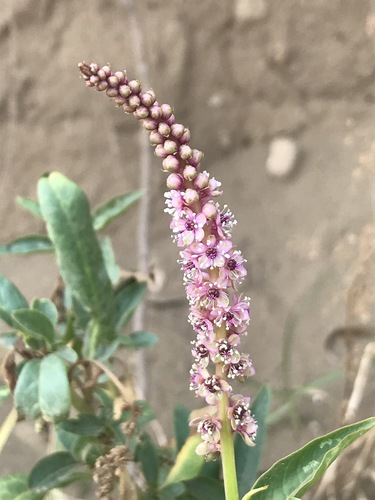
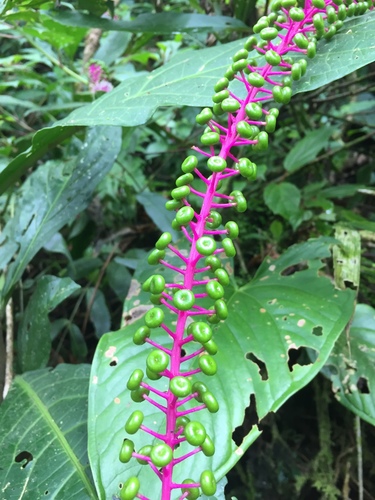
Phytolacca dodecandra
L'Her.
Pokeberry
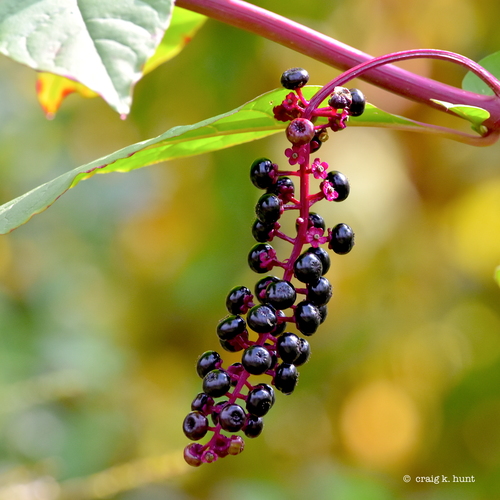
iNaturalist· cc-by-nc
(c) Scamperdale, some rights reserved (CC BY-NC)
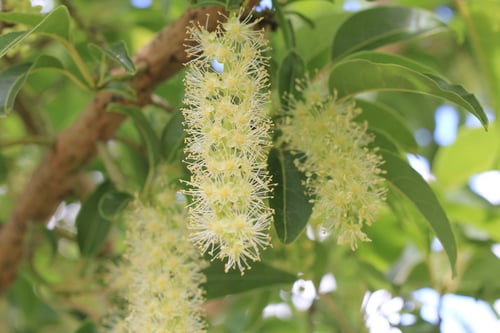
iNaturalist· cc-by-nc
(c) Geoff Nichols, some rights reserved (CC BY-NC), uploaded by Geoff Nichols
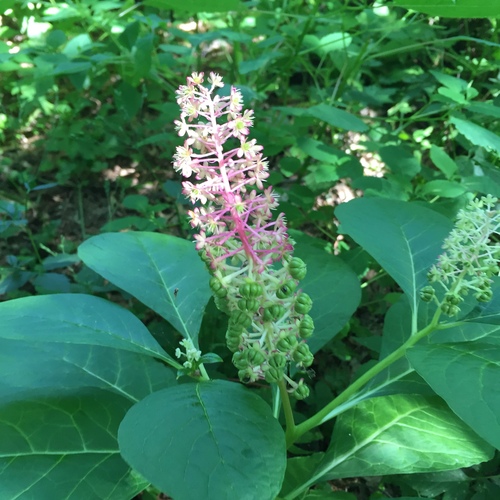
iNaturalist· cc-by-nc
(c) Miguel A. Casado, some rights reserved (CC BY-NC), uploaded by Miguel A. Casado
Summary
Source: WikipediaPhytolacca dodecandra, commonly known as endod, gopo berry, or African soapberry, is a trailing shrub or climber native to Tropical Africa, Southern Africa, and Madagascar. It is dioecious, with male and female flowers on separate plants. Morphologically, it is highly variable. Endod (as it is known in Amharic or shibti in Tigrigna ) has been selected and cultivated by Africans for centuries, particularly in Ethiopia and Eritrea. It is used as a soap and shampoo as well as a poison to stun fish. Endod is lethal to snails - a fact discovered by Ethiopian scientists - and may be effective controlling schistosomiasis. After Aklilu Lemma, an Ethiopian scientist, demonstrated endod's potency to American scientists, they took out a patent, hoping to sell endod as a biological control for the Zebra mussel, a pest in the Great Lakes of the US and Canada. In Ethiopia, two types of "endod" (Phytolacca dodecandra) are known to grow and, while the tree's bark and roots are very poisonous if eaten, the leaves and berries of the tree have been traditionally used by villagers in laundering clothes. The two principal varieties are the Arabe variety, with pinkish to red berries; and the Ahiyo variety, with yellow-green to green berries. The Arabe type has a higher saponin content and better molluscicidal activity than the Ahiyo type (Lugt, 1977). Five species of "endod" are endemic to Ethiopia, but the efficacy of the saponins found in the berries of four of the trees are best when used in their fresh state. One tree produces berries that are efficacious in either their fresh or dry state and are sold in the local marketplaces. The leaves and berries of the endod were first crushed to a powder before being applied to laundry. When mixed with water, they produce a rich lather. Clothes washed in the solution are made supple and scented by its fragrance.
Description
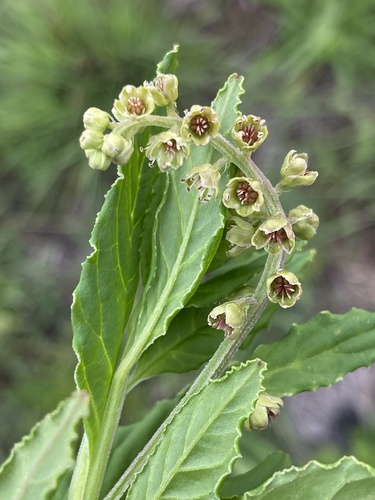
A woody climber or a spreading shrub. The stems are slender and can be 5-8 m long. The leaves are alternate. They are 9-12 cm long. They are oval and taper to the tip. They are wedge shaped or rounded at the base. The flowering stalks are long and erect. They are white to creamy-green.
Edible Uses
Young leaves and stems are eaten cooked. Opinion on the safety of the leaves varies considerably — in some parts of Africa they are used in soups and as a vegetable, while in other areas they are considered poisonous and reportedly have caused deaths. The fruits are eaten in parts of Africa; each fleshy fruit, up to 15mm in diameter, consists of 4–5 one-seeded berries. Leaf or fruit extract is sometimes added to drinks and foods as a stimulant and is also used to curdle milk.
Traditional Uses
The young leafy shoots are cooked and eaten. They are finely cut before cooking. Older leaves are poisonous. Caution: The leaves are poisonous to animals. (Often animals forget to cook their food!)
Medicinal Uses
Various parts of this plant are widely used in traditional African medicine to treat a broad range of ailments, despite the plant's known toxicity. Studies have confirmed the presence of numerous medically active compounds. Leaves, fruits and roots contain triterpenoid glycosides (saponins) that cause haemolysis of red blood cells. On a dry weight basis, fruit pulp contains 25% saponins; lipids including palmitic acid, oleic acid, stearic acid and a non-saponifiable bright orange waxy material; sugars; starches; pectins and gums; and a water-insoluble fraction. Roots contain phytolaccoside or esculentoside-type saponins with demonstrated anti-inflammatory activity. Aqueous root extract shows fungicidal activity against Trichophyton mentagrophytes. Hydroalcoholic extracts of aerial parts show significant activity against Staphylococcus aureus, Pseudomonas aeruginosa and Histoplasma capsulatum var. Farciminosum (which causes epizootic lymphangitis). Leaf extract showed moderate activity against coxsackie virus in vitro. Butanol fruit extracts inhibit the growth of Trichomonas vaginalis (though fermented fruits were inactive), and also showed spermatocidal properties in vitro and blastocidal activity when injected directly into the uterus of rabbits; oral administration of a water extract of aerial parts did not show significant effects on reproduction in mice. Leaves and stems produce the antiviral protein dodecandrin, a ribosome-inactivating protein (RIP) similar to pokeweed antiviral protein (PAP) from Phytolacca americana. Extracts of roots, leaves, fruits and seeds are abortifacient, anthelmintic, diuretic, emetic, laxative, purgative and sudorific, used to treat oedema, diarrhoea and abdominal pain. Leaves and leaf sap are cicatrizing, haemostatic, laxative and rubefacient. A decoction is given to newborns as a gentle laxative. Mashed leaves eaten with banana act as a stimulant and tonic, especially after childbirth. Boiled leaves with chicken are given to children with asthma and tuberculosis. The sap or fresh, dried or powdered leaves are applied to wounds and skin conditions including ringworm, scabies, eczema, psoriasis, leprosy, boils and vitiligo. Leaf sap is used as eye drops for conjunctivitis and river blindness, and as ear drops for otitis. Ground leaves are applied to tumours. Fruit infusion or root decoction is taken to induce abortion and to treat venereal diseases, bilharzia, rabies, malaria, sore throat, other respiratory problems, rheumatic pain and jaundice. Crushed roots and fruits are applied to ringworm, scabies, eczema, psoriasis, leprosy, boils and vitiligo. Root decoction is drunk to induce vomiting as part of treatment for enlarged glands. Macerated leaves or root bark treat epilepsy. A root infusion is taken to treat infertility.
Known Hazards
Very poisonous. Eating the fruits or leaves may cause acute poisoning, resulting in nausea, bloody diarrhoea, intense congestion of the stomach and intestines, vomiting, weakness, weak and irregular pulse, dilated pupils, swelling of the mucous membrane in the mouth and stupor; death may occur within a few days. Although the solutions of crushed fruits kill a range of aquatic life forms, including small fish, leeches, mosquito larvae, other stages of the bilharzia life-cycle (miracidia and cercariae), zebra mussels and tadpoles, the active ingredients are easily biodegradable and are eliminated from the water within 48 hours. Insect larvae and tadpoles are not affected at the concentrations that kill fish and snails.
Distribution
A tropical plant. It grows in mid altitude and mountain rainforest. It suits humid locations. It grows between 600-2,800 m above sea level. It often grows on termite mounds.
Where It Grows
Africa, Botswana, Cameroon, Central Africa, Congo DR, Congo R, East Africa, Eritrea, Ethiopia, Ghana, Guinea, Guinée, America, Madagascar, Malawi, Mozambique, Nigeria, Rwanda, Sao Tome and Principe, Sierra Leone, South Africa, Southern Africa, Tanzania, West Africa, Zambia, Zimbabwe,
Cultivation
A plant of the tropics. It grows best in areas with an annual rainfall of about 1,400mm and a distinct dry period. In areas with high evapotranspiration, especially at lower elevations (below 1,500 metres) partial shade should be available so that the plants do not burn and wilt. Prefers a sunny position. Full shade substantially lowers both fruit yield and saponin concentration. The plant is found in the wild in humid, weakly acidic soils that contain high levels of organic matter. In some areas the plant can flower and fruit all year round, though in others it tends to have two flowering periods a year. Annual fruit yield increases with the age of the plant up to about 15 years, with the greatest increase occurring between the first and third year. In a field trial in Ethiopia, different cultivars yielded from 1,050 - 2,750 kg/ha of dried fruits, with a saponin content of 20 - 25%. The yield of dry fruits can increase to 3,000 kg/ha in the fourth year after planting, slowly rising to a maximum of about 4,000 kg/ha. The content of saponins varies seasonally: fruits harvested during the dry season just before the onset of the rains have the highest content.. The harvested fruits must be dried immediately after collection in the open under shade or in the sun. Whole and powdered fruits can be stored at room temperature for up to 4 years without losing potency. Crushed fresh fruits or solutions prepared from them lose their potency within a few days. While grinding the dried fruits care should be taken protect the eyes from the irritating dust. Young plants establish well and grow away quickly. From seed, they commence flowering when only two years old, whilst from cuttings they flower when only 6 months old. A well-established plant has only a few but long roots that reach great depths. Several highly molluscicidal and productive cultivars have been selected, and agronomic trials of the plant have been effected in eastern and southern Africa. A dioecious species - both male and female forms need to be grown if fruit and seeds are required.
Propagation
Germination can be improved by scarification with sand; seed takes about 14 days to germinate. Fruits can be stored for up to one year without loss of viability, but germination declines by 14% after 4 years of storage. Cuttings of non-woody shoots with 2–3 nodes, taken from the top or middle of the plant, can also be used; rooting occurs with or without plant growth regulators.
Other Uses
The plant is used as a hedge in Ethiopia. A red dye is obtained from the berries; in Zimbabwe the fruits are most commonly used to colour house floors. A yellow dye is obtained from the leaves. The fruits are rich in saponins — when dried, powdered and mixed with water they yield a foaming detergent traditionally used for washing clothes and the body. Fruits are harvested when fully grown but still green, as saponin content is highest at this stage; ripe fruits are difficult to harvest as they fall and are taken by birds. Soap has also been made from the ashes of burnt plants and from fresh leaves. Saponins in unripe fruits have strong molluscicidal activity against a range of water snails, are readily soluble in water and easy to isolate. These properties are exploited to destroy snails that carry vectors of human diseases such as bilharzia (schistosomiasis), offering a cheaper and less toxic alternative to synthetic molluscicides; however, the saponins are not active against snail egg clusters. To release molluscicidal saponins (which require contact with an enzyme in the seed), fruits must be finely crushed before soaking in water. Molluscicidal potency remains stable across a wide pH range (5–9), in the presence of various concentrations of organic and inorganic matter, and after UV irradiation. In acute mammalian toxicity tests, fruit extracts were classified as non-toxic or slightly toxic, except that they can cause severe eye irritation — eye protection is recommended during fruit crushing and handling of dry powders. Ecotoxicity tests showed crushed fruits are no more toxic than currently recommended synthetic molluscicides, and toxicological studies found no mutagenic or carcinogenic properties. Two application methods are used for snail control: first, a slurry of dried ground fruits in water, diluted with river water before application by siphoning from a barrel into rivers when water levels are low and snails are concentrated; second, extraction of the active principles for use in larger water bodies such as lakes requiring sprayers — drying, powdering and soaking the fruits overnight, then using butanol to produce an extract that will not block spray nozzles. Green unripe fruits contain more active saponins than ripe ones. Application of fruit and leaf extract reduced damage by maize stalk borer larvae (Busseola fusca), though two applications were insufficient for complete protection against second-generation larvae. Stems are used as ties in hut and fence construction. The plant is generally not used as firewood, as the smoke is believed to reduce male sexual ability.
Notes
There are 25 Phytolacca species. The berry can be used to control snails causing schistosomiasis.
Nutrition
| Part | Moisture | kJ | kcal | Protein | Vit A | Vit C | Iron | Zinc |
|---|---|---|---|---|---|---|---|---|
| Leaves | 79 | 292 | 70 | 18 | — | — | — | — |
| Shoots boiled | 92.9 | 84 | 20 | 2.3 | 870 | 82 | 1.2 | 0.2 |
Synonyms
Also Known As
Anamamy be, Indod, Lisasingo, Lisingo, Lisilingo, Mayoko, Okomofo, Tidi, Tiri
References (24)
- Bekele-Tesemma A., Birnie, A., & Tengnas, B., 1993, Useful Trees and Shrubs for Ethiopia. Regional Soil Conservation Unit. Technical Handbook No 5. p 352
- Burkill, H. M., 1985, The useful plants of west tropical Africa, Vol. 4. Kew.
- Commentat. Soc. Regiae Sci. Gott. 12:27. 1796 (As Phytolacca abyssinica)
- Dalziel, J. M., 1937, The Useful plants of west tropical Africa. Crown Agents for the Colonies London.
- Ferns, Useful Tropical Plants.
Show all 24 references Hide references
- Food Composition Tables for use in Africa FAO http://www.fao.org/infoods/directory No. 753, 754
- Fowler, D. G., 2007, Zambian Plants: Their Vernacular Names and Uses. Kew. p 53
- Grubben, G. J. H. and Denton, O. A. (eds), 2004, Plant Resources of Tropical Africa 2. Vegetables. PROTA, Wageningen, Netherlands. p 564
- Jardin, C., 1970, List of Foods Used In Africa, FAO Nutrition Information Document Series No 2.p 94
- Latham, P., 2004, Useful Plants of Bas-Congo province. Salvation Army & DFID p 222
- Liengola, I. B., 2001, A contribution to the study of native edible plants by the Turumbu and Lokele of the Tshopo District, Province Orientale, D. R. Congo. Syst. Geogr. Pl. 71:687-698
- Lulekal, E., et al, 2011, Wild edible plants in Ethiopia: a review on their potential to combat food insecurity. Afrika Focus - Vol. 24, No 2. pp 71-121
- Malaisse, F., 1997, Se nourrir en floret claire africaine. Approche ecologique et nutritionnelle. CTA., p 67
- Martin, F.W. & Ruberte, R.M., 1979, Edible Leaves of the Tropics. Antillian College Press, Mayaguez, Puerto Rico. p 212 and p 211 (As Phytolacca abyssinica)
- Molla, A., Ethiopian Plant Names. http://www.ethiopic.com/aplants.htm
- Nkeoua, G. & Boundzanga, G. C., 1999, Donnees sur les produits forestieres non ligneux en Republique du Congo. FAO. p 33
- Peters, C. R., O'Brien, E. M., and Drummond, R.B., 1992, Edible Wild plants of Sub-saharan Africa. Kew. p 160
- PROTA
- Razanameharizaka, J., et al, 2022, Catalogue Legumes Traditionnels de Madagascar. Université d’Antananarivo, Antananarivo (101), Madagascar. Vol. 1. p 50
- Stirp. nov. 143, t. 69. 1791
- Termote, C., et al, 2011, Eating from the wild: Turumbu, Mbole and Bali traditional knowledge of non-cultivated edible plants, District Tshopo, DRCongo, Gen Resourc Crop Evol. 58:585-618
- Thiselton-Dywer, W.T., (Ed.), 1913, Flora of Tropical Africa. Vol VI-section 1. Reeve, p 97
- White, F., Dowsett-Lemaire, F. and Chapman, J. D., 2001, Evergreen Forest Flora of Malawi. Kew. p 430
- World Checklist of Useful Plant Species 2020. Royal Botanic Gardens, Kew