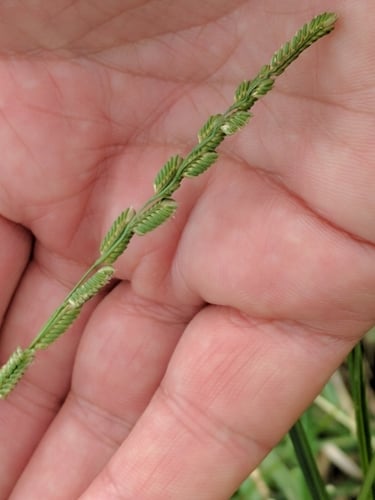
Phalaris brachystachys
Link
True canary grass
iNaturalist· cc-by-nc
(c) Uriah Resheff, some rights reserved (CC BY-NC), uploaded by Uriah Resheff
iNaturalist· cc-by-nc-sa
(c) יאיר אור, some rights reserved (CC BY-NC-SA), uploaded by יאיר אור
iNaturalist· cc-by-nc
(c) bobasil, some rights reserved (CC BY-NC), uploaded by bobasil
Summary
Source: WikipediaPhalaris brachystachys, the confused canary-grass or shortspike canarygrass, is an annual grass with growth habits and cultural requirements similar to Phalaris aquatica. It is native to the Mediterranean region. It grows most actively during the spring and fall, while resting during the heat of midsummer and the short cool days of winter. It also must be protected from heavy freezes. Some Phalaris species contain gramine, which can cause brain damage, other organ damage, central nervous system damage and death in sheep. While at least one strain showed an extremely strong occurrence of N,N-DMT as the sole alkaloid, other strains indicated the presence of 5-MeO-DMT as well. Strongly positive human bioassays have been reported using some clones.
Description
A grass in the Poaceae family native to the Mediterranean region.
This description is brief — help expand it
Edible Uses
The seeds are eaten as a cereal.
Distribution
It is a Mediterranean plant.
Where It Grows
Africa, Mediterranean, Morocco, North Africa,
Notes
There are about 15 Phalaris species.
Synonyms
References (2)
- Jardin, C., 1970, List of Foods Used In Africa, FAO Nutrition Information Document Series No 2.p 7
- Neues J. Bot. 1(3):134. 1806