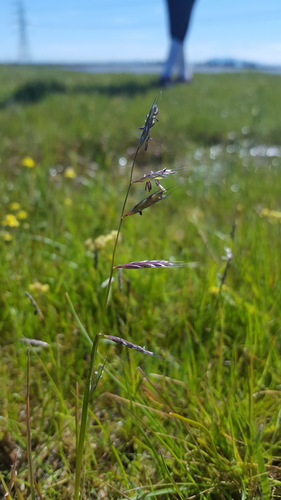
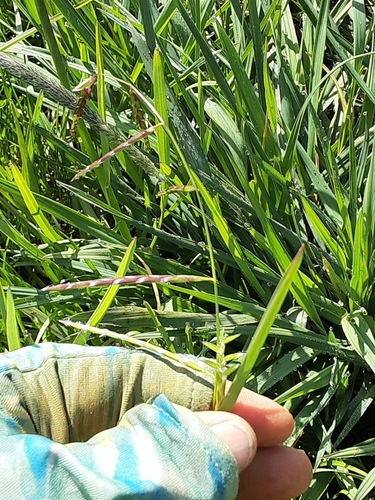
Pennisetum cereale
Trin.
wikimedia· cc-by-sa
Wikimedia Commons - Saisumanth532
wikimedia· cc0
Wikimedia Commons - Friedrich Haag
Summary
Perennial species with hermaphroditic wind-pollinated flowers. Grows in light sandy or medium loamy, well-drained soils with mildly acidic to basic pH. Requires full sun, tolerates dry to moist soil conditions.
Description
Perennial species with hermaphroditic wind-pollinated flowers. Grows in light sandy or medium loamy, well-drained soils with mildly acidic to basic pH. Requires full sun, tolerates dry to moist soil conditions.
Edible Uses
The seed is edible raw or cooked, with a mild nutty flavour. It is normally ground into a flour and used as a cereal.
Medicinal Uses
None known
Distribution
It is a temperate plant.
Where It Grows
Asia, China,
Cultivation
We have very little information on this species and do not know if it will succeed outdoors in Britain. The following notes are based on the general needs of the genus. Requires a light well-drained soil in a sunny position. Succeeds in dry soils.
Propagation
Seed should be sown in spring in a greenhouse, barely covered. Germination usually takes place within 3 weeks. Prick seedlings out into individual pots when large enough to handle and grow on in the greenhouse through the first winter. Plant out into permanent positions in late spring or early summer, after the last expected frosts. Divide in spring; larger divisions can go directly into permanent positions, while smaller divisions are better potted up and grown on in light shade in a cold frame until well established before planting out in late spring or early summer.
Other Uses
None known Special Uses
Notes
There are about 100 Pennisetum species.
References (1)
- Plants for a Future database, The Field, Penpol, Lostwithiel, Cornwall, PL22 0NG, UK. http://www.scs.leeds.ac.uk/pfaf/ (As Pennisetum cereale)