Cymbopogon procerus
(R. Br.) Domin.
East India lemon grass, Scentgrass
iNaturalist· cc-by-nc-nd
(c) Zig Madycki, some rights reserved (CC BY-NC-ND), uploaded by Zig Madycki
iNaturalist· cc-by-nc-nd
(c) Zig Madycki, some rights reserved (CC BY-NC-ND), uploaded by Zig Madycki
iNaturalist· cc-by-nc-nd
(c) Zig Madycki, some rights reserved (CC BY-NC-ND), uploaded by Zig Madycki
Description
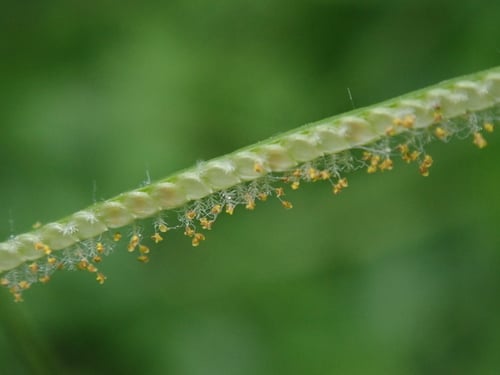
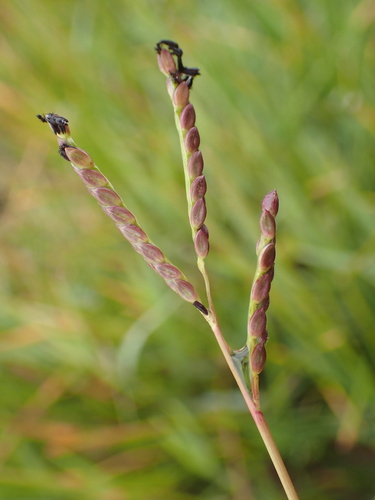
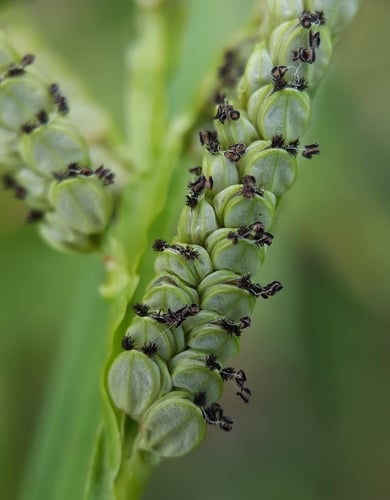
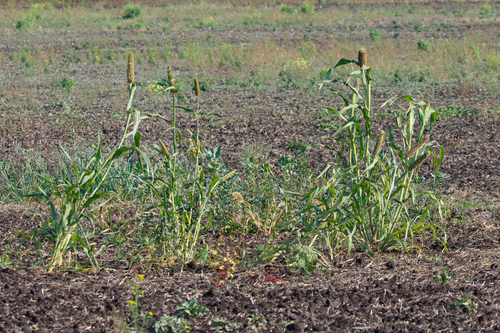
A tufted grass which keeps growing from year to year. It has stout erect stems. They can be 15.-3 m high. They grow from a thick rhizome. The leaf blades are flat and rigid. They are blue-green underneath. They are 8-17 mm wide. The flowering stalk is 15-45 cm long. The spikelets are clustered. The crushed leaves have a citrus smell.
Edible Uses
The leaves are used medicinally.
Medicinal Uses
The leaves are used as medicine.
Distribution
It is a tropical plant. It suits inland areas and hot climates in Australia. It is usually on rocky outcrops. It grows on well drained soil.
Where It Grows
Asia, Australia, India,
Notes
There are 60 Cymbopogon species. It is probably used as medicine.
Synonyms
References (4)
- Biblioth. Bot. 85:273. 1915
- Paczkowska, G. & Chapman, A.R., 2000, The Western Australian Flora. A Descriptive Catalogue. Western Australian Herbarium. p 100
- Petheram, R.J. and Kok, B., 2003, Plants of the Kimberley Region of Western Australia. UWA Press p 105
- Seidemann J., 2005, World Spice Plants. Economic Usage, Botany, Taxonomy. Springer. p 129 (As Cymbopogon exaltatus)