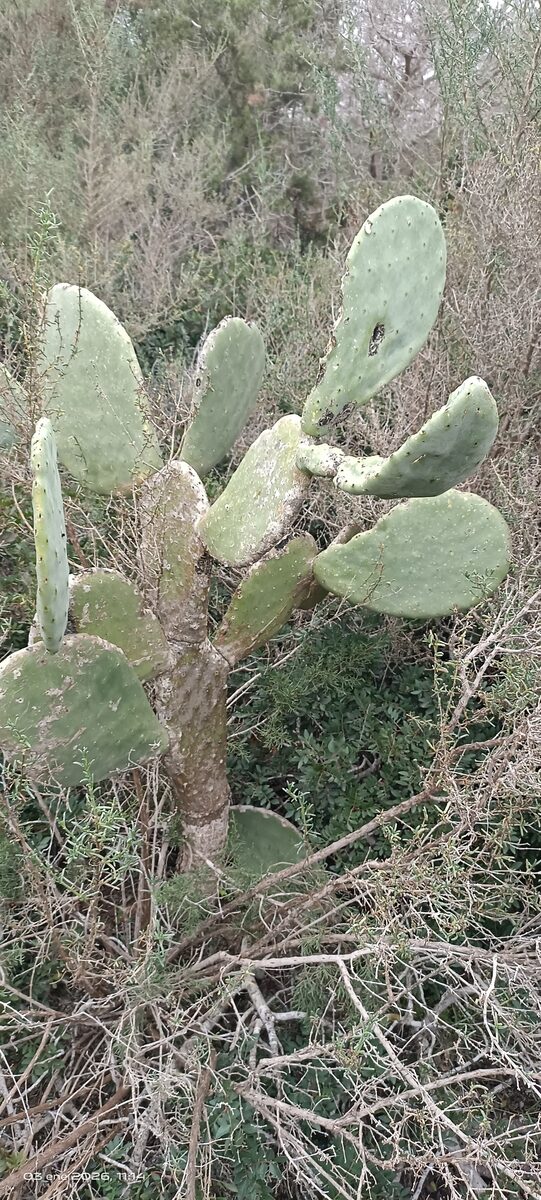
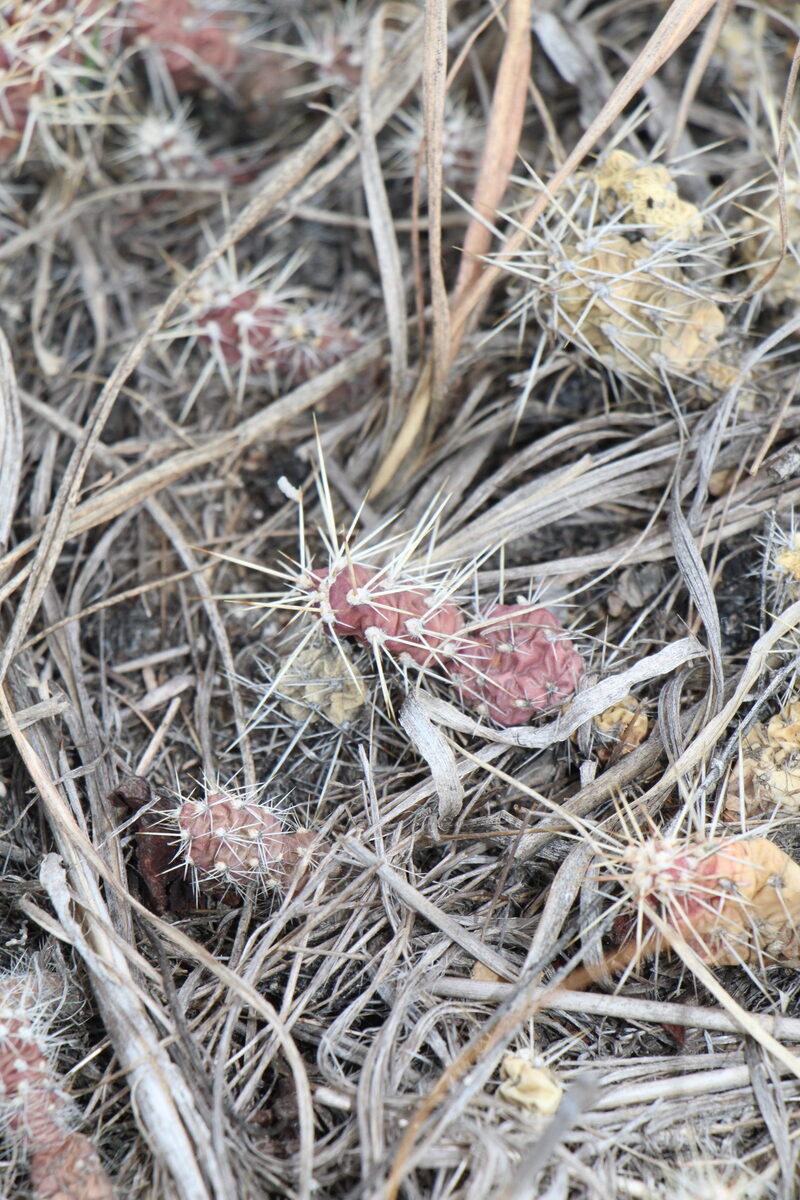
Leuenbergeria bleo
(Kunth) Lode
Bleo, Orange rose-cactus
iNaturalist· cc-by-nc-sa
(c) Mateo Hernandez Schmidt, some rights reserved (CC BY-NC-SA), uploaded by Mateo Hernandez Schmidt
iNaturalist· cc-by-nc
(c) David Torres, some rights reserved (CC BY-NC)
iNaturalist· cc-by-nc
(c) David Torres, some rights reserved (CC BY-NC)
Summary
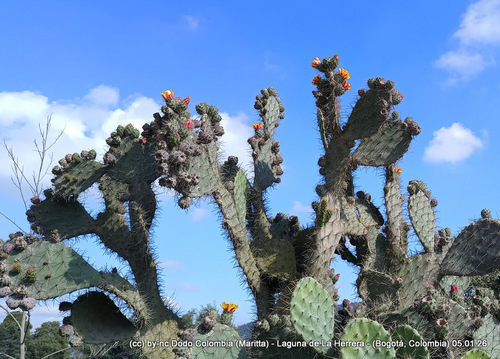
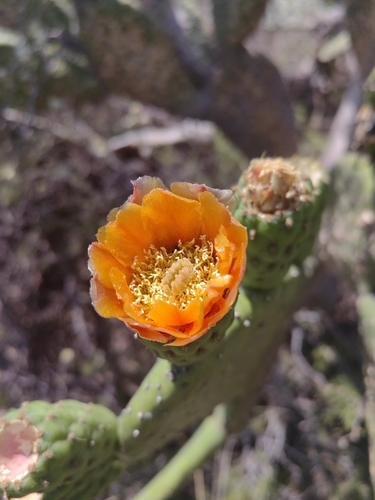
Source: WikipediaLeuenbergeria bleo, formerly Pereskia bleo, (rose cactus, leaf cactus) is a leafy cactus, native to the shady, moist forests of Central America, that grows to a woody, prickly shrub about 2 m tall with large, orange flowers resembling rose blossoms.
Description
A cactus. It is a clambering shrub. It loses some of its leaves. It is thorny. It grows 3-6 m high. The stems are dark green when young. There are spines in clusters of 6. The leaves are oblong. They are rubbery and 8-18 cm long. The tips are tapered. The edges are wavy. The leaf stalks are 5 cm long. The flowers are pink or orange. They occur singly and are 8 cm across. The fruit are top shaped. The ripen yellow.
Edible Uses
Leaves - cooked and eaten as a vegetable. A juice made from the leaves is drunk in the morning to revitalize the body. Fruit - raw. A sour flavour. The yellow fruit is a turbinate, truncate berry 40 - 70mm long and 40 - 70mm in diameter with a wall around 10mm thick.
Traditional Uses
The leaves are eaten as a salad.
This uses section is brief — help expand it
Medicinal Uses
In Malaysia, the leaves are used to treat cancer, high blood pressure, diabetes and diseases associated with rheumatism and inflammation. They are also used as a remedy for the relief of gastric pain, ulcers and for revitalizing the body. The leaves are either consumed raw or made into a concoction brewed from fresh leaves. Methanolic extracts of the plant have been found to induce apoptosis in breast carcinoma cells.
Known Hazards
The plant is thorny.
Distribution
A tropical plant. It suits places with seasonally moist and dry climates. It needs sandy, well-drained soil. It can tolerate some salt. In Panama and Colombia it grows along streams up to 500 m altitude. It grows in plant hardiness zones 10-12.
Where It Grows
Asia, Central America, Colombia, Indochina, Indonesia, Malaysia, Mexico, Nicaragua, North America, Panama, Pantropical, SE Asia, South America, Thailand, Venezuela, Vietnam,
Cultivation
It can be grown from cuttings. It can be used for hedges.
Propagation
Seed - fresh seed can be slow to germinate, it is best to sow seed that is between several months to 2 years old and this should germinate after a few days. Even when five years old, seed can have a 50% germination rate. Easily grown from cuttings of half-ripe wood, taken during the dry season. Easily grown from cuttings of half-ripe wood.
Other Uses
The crushed leaves are used to clarify water, the abundant mucilage in the plant apparently being the active agent of this process. We have no specific description of the wood for this species, but the general description for the wood from Pereskia species (sensu lato) is as follows:-The wood is yellow, without difference between softwood and heartwood. The texture is medium, soft grain, straight fibre, with no characteristic odour or taste, The plant is sometimes as a hedge. Cuttings around 100cm long are taken during the dry season and placed fairly close to each other to form a living fence of spiny canes. This soon develops into an impenetrable, stock-proof hedge.
Synonyms
Also Known As
Auguja de arra, Bleo de chupa, Chupa, Chupa melon, Clarol, Dieplong, Guamacho, Najii, Naju de culebra, Naju de esoubas, Pipchuelo
References (12)
- Anderson, E.F., 2001, The Cactus Family, Timber Press. p 567 (As Pereskia bleo)
- Burkill, I.H., 1966, A Dictionary of the Economic Products of the Malay Peninsula. Ministry of Agriculture and Cooperatives, Kuala Lumpur, Malaysia. Vol 2 (I-Z) p 1712 (As Pereskia bleo)
- Engel, D.H., & Phummai, S., 2000, A Field Guide to Tropical Plants of Asia. Timber Press. p 132 (As Pereskia bleo)
- Grandtner, M. M. & Chevrette, J., 2013, Dictionary of Trees, Volume 2: South America: Nomenclature, Taxonomy and Ecology. Academic Press p 490 (As Pereskia bleo)
- Hedrick, U.P., 1919, (Ed.), Sturtevant's edible plants of the world. p 471 (As Pereskia bleo)
Show all 12 references Hide references
- http://www.botanic-gardens-ljubljana.com/en/plants (As Pereskia bleo)
- Llamas, K.A., 2003, Tropical Flowering Plants. Timber Press. p 167 (As Pereskia bleo)
- Martin, F.W. & Ruberte, R.M., 1979, Edible Leaves of the Tropics. Antillian College Press, Mayaguez, Puerto Rico. p 180 (As Pereskia bleo)
- Murilla, E., et al, 2010, Screening of vegetables and fruits from Panama for rich sources of lutein and zeaxanthin. Food Chemistry 122: 167-172 (As Pereskia bleo)
- Ochse, J.J. et al, 1931, Vegetables of the Dutch East Indies. Asher reprint. p 91(As Pereskia bleo)
- Prodr. 3:475. 1828 (As Pereskia bleo)
- World Checklist of Useful Plant Species 2020. Royal Botanic Gardens, Kew