Pachycereus pecten-aboriginum
(Engelm.) Britton & Rose
Hairbrush cactus
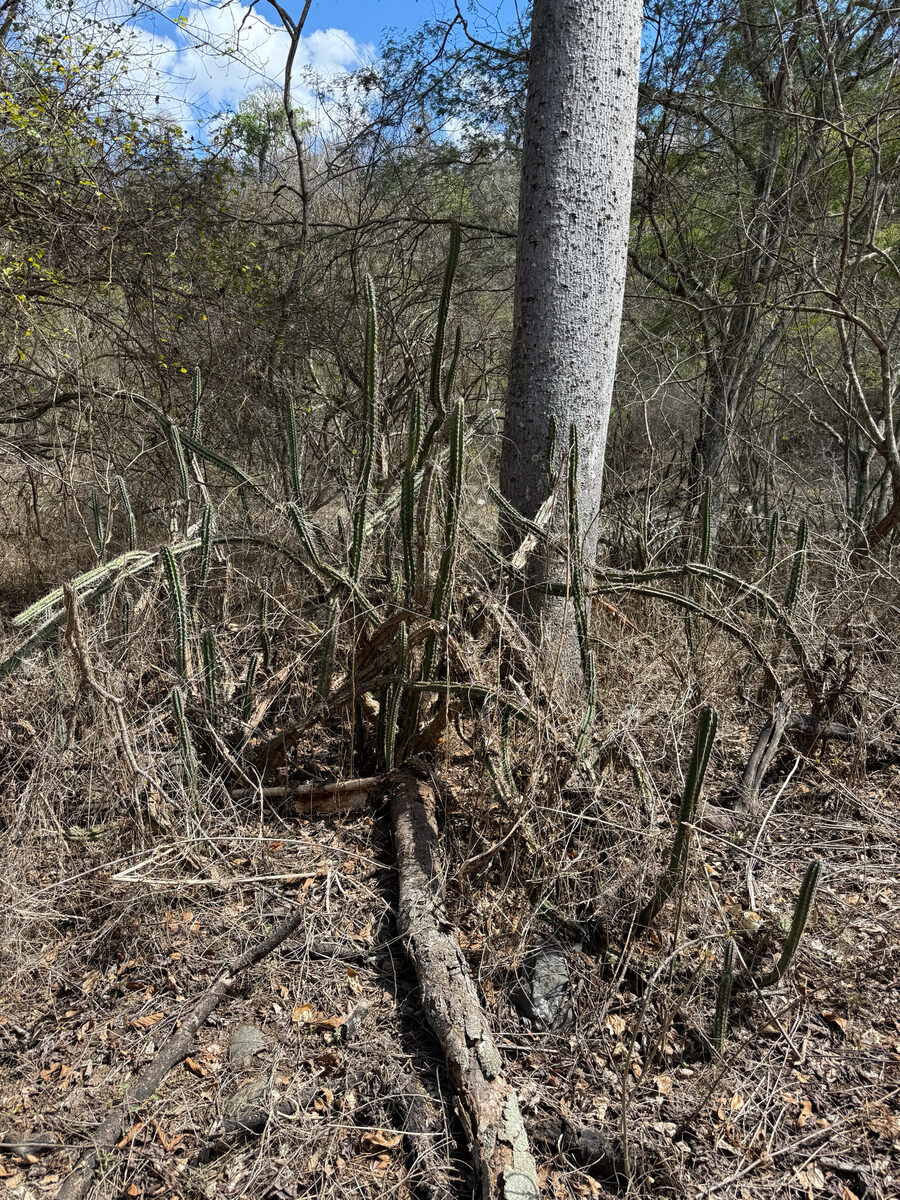
iNaturalist· cc-by-nc
(c) Howard G Charing, some rights reserved (CC BY-NC)
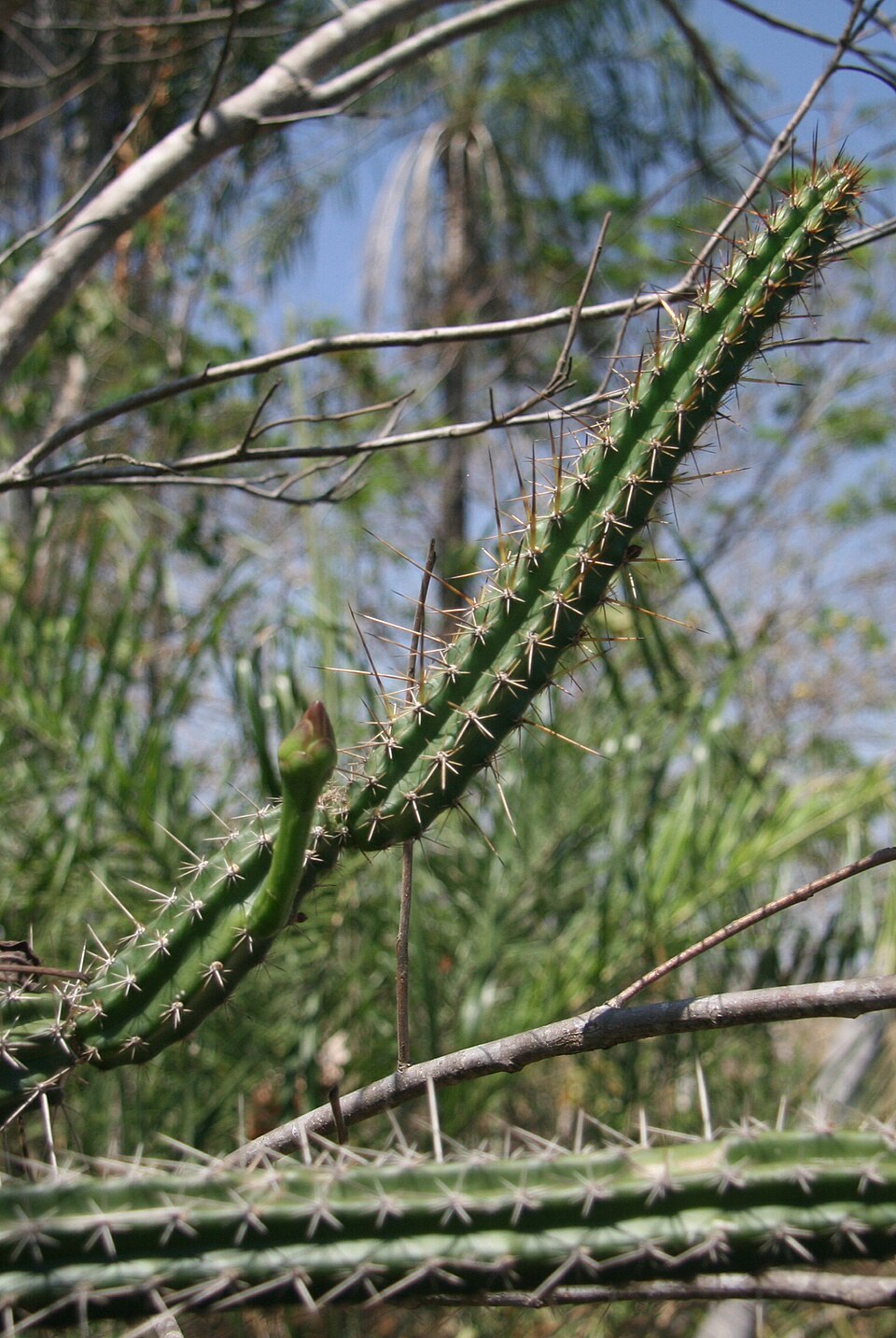
iNaturalist· cc-by-nc
(c) Carlos Domínguez-Rodríguez, some rights reserved (CC BY-NC)
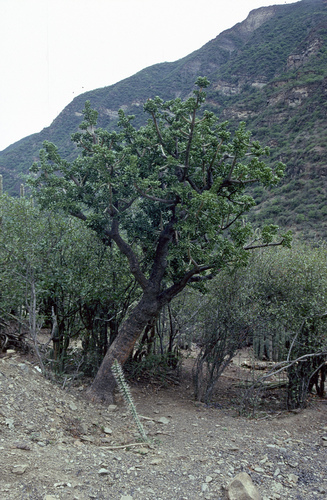
iNaturalist· cc-by-nc
(c) Carlos Domínguez-Rodríguez, some rights reserved (CC BY-NC)
Summary
Source: WikipediaPachycereus pecten-aboriginum (commonly known as hairbrush or Indian comb) is a columnar cactus plant native to Mexico. They can grow up to 15 m (49 ft) high. The trunk of this species is 1.2 to 5.0 m tall and the fruits are large and burr-like. The specific name, pecten-aboriginum, is from the Latin, and means "native combs". It was inspired by the use of the fruits as hair combs.
Description
A branched cactus. It forms columns and is deep-green. It grows about 8 m high and 30 cm across. There are 10-12 rounded ribs. The spine spots are large and grey white. They are close together and have 8-9 brown spines which radiate. There are one or two spines in the centre. The flowers are about 8.5 cm long. They are white but reddish on the outside. The fruit are dry and 6-7.5 cm across. They are covered with yellow wool and bristles.
Edible Uses
The seeds are ground into a meal and used in the preparation of cakes. The seeds are boiled in order to separate them from the pulp, then ground into a powder. This can be used with corn when making tortillas, or can be boiled again, producing a thick, nourishing oily paste. The ovoid seeds are 3 - 4.7mm long and 2 - 3.4mm wide. Fruit. The flesh becomes dry as the fruit matures. Eaten fresh, although it is not as fleshy as that of several other species that grow in the area. The red pulp and inner rind are cooked into a jelly or jam, known as 'miel de hecho'. The fruit is sometimes cooked to prepare a concentrated syrup or a type of wine. The reddish to dark reddish, globose fruits are 43 - 55mm long and 40 - 60cm in diameter, covered in abundant spines. A sacred narcotic drink is sometimes prepared from the young branches.
Traditional Uses
The seeds are ground into a meal and used for making cakes. The fruit are also eaten. They can also be used for jam.
This uses section is brief — help expand it
Medicinal Uses
The Mayo used the cactus as an herbal remedy. Pieces of the flesh were applied to wounds to inhibit bleeding. The cactus flesh was cooked in salted water and the solution was applied to infected wounds three times daily, followed by a sulfathiazole powder. The juice was consumed as an herbal tonic and to treat sore throat.
Known Hazards
None known Baja California Sur, Chiapas, Chihuahua, Guerrero, Jalisco, Michoacán, Nayarit, Oaxaca, Sinaloa, Sonora, Zacatecas
Distribution
It is a tropical and subtropical plant. It needs full sun. It needs a temperature above 10°C. It suits hardiness zones 9-11.
Where It Grows
Central America, Mexico, North America, Slovenia, USA,
Cultivation
Pachycereus pecten-aboriginum is a plant of dry areas in the subtropics and tropics, where it is found at elevations from near sea level to more than 1,000 metres. Requires a sunny position, though young plants appreciate a little shade. Requires a well-drained, circum-neutral soil. Established plants are very drought tolerant. The ripe fruits sometimes hang on the plant for several months.
Other Uses
The burr-like fruits can be used as combs. The fruits, which have a dry flesh and are covered with yellow wool and long yellow bristles, are 60 - 75mm in diameter. The long spines are trimmed off on one side in order to make the brush easier to hold The stems are used for construction in traditional houses. They are used for making benches, beds, and beams for roofs and doorwaysp1986] The stems are used for fuel. The wood can also be used as a torch. The plant is cultivated as a hedge in Mexico.
Notes
There are 9 Pachycereus species. They occur naturally in Mexico.
Synonyms
Also Known As
Aborigine's comb, Cardon barbon, Cardon hecho hecho, Chik, Echo, Etcho, Gosto-trnastoplodni debeli steber, Hecho, Indian's comb
References (13)
- Anderson, E.F., 2001, The Cactus Family, Timber Press. p 535
- Anderson, M., 2002, The World Encyclopedia of Cacti and Succulents. Hermes House, New York. p 99 (Genus)
- Etherington, K., & Imwold, D., (Eds), 2001, Botanica's Trees & Shrubs. The illustrated A-Z of over 8500 trees and shrubs. Random House, Australia. p 508
- Facciola, S., 1998, Cornucopia 2: a Source Book of Edible Plants. Kampong Publications, p 66
- Felger, R.S., Ancient Crops for the Twenty first century, in Rickie, G.A., (ed), 1979, New Agricultural Crops, AAAS Selected Symposium 38. Westview Press, Colarado. p 10
Show all 13 references Hide references
- Grandtner, M. M., 2008, World Dictionary of Trees. Wood and Forest Science Department. Laval University, Quebec, Qc Canada. (Internet database http://www.wdt.qc.ca)
- http://www.botanic-gardens-ljubljana.com/en/plants
- Innes, C. and Glass, C., 1997, The Illustrated Encyclopedia of Cacti. Sandstone Books. p 227
- Kermath, B. M., et al, 2014, Food Plants in the Americas: A survey of the domesticated, cultivated and wild plants used for Human food in North, Central and South America and the Caribbean. On line draft. p 601
- Martin, F. W., et al, 1987, Perennial Edible Fruits of the Tropics. USDA Handbook 642 p 89
- Martin, P. S. et al, (Eds.), 1998, Gentry's Rio Mayo Plants. The Tropical Deciduous Forest & Environs of Northwest Mexico. University of Arizona Press. p 280
- Pio-Leon, J. F., et al, 2017, Prioritizing Wild Edible Plants of potential new crops based on Deciduous Forest traditional knowledge by a Rancher community. Botanical Sciences 95(1): 47-59
- World Checklist of Useful Plant Species 2020. Royal Botanic Gardens, Kew