Pachycereus pringlei
(S. Watson) Britton & Rose
Cardon, Elephant cactus
iNaturalist· cc-by-nc
(c) Mark Fishbein, some rights reserved (CC BY-NC), uploaded by Mark Fishbein
iNaturalist· cc-by-sa
(c) Stephen Marlett, some rights reserved (CC BY-SA)
iNaturalist· cc-by-nc
(c) Davidpc, some rights reserved (CC BY-NC), uploaded by Davidpc
Summary
Source: WikipediaPachycereus pringlei (also known as Mexican giant cardon or elephant cactus) is a species of large cactus native to northwestern Mexico, in the states of Baja California, Baja California Sur, and Sonora. It is commonly known as cardón, a name derived from the Spanish word cardo, meaning "thistle"; additionally, it is often referred to as sabueso (or "bloodhound"), which is possibly an early Spanish interpretation of the native Seri term for the plant, xaasj. Large stands of this cactus still exist, but many have been destroyed as land has been cleared for cultivation in Sonora. Climate change will likely affect the future distribution of numerous plant species, including Pachycereus pringlei, which can be attributed to alterations in precipitation and temperature. The cactus fruits were always an important food for the Seri people, in Sonora; the dried cactus columns themselves could be used for construction purposes, as well as for firewood. A symbiotic relationship with bacterial and fungal colonies, on its roots, allows P. pringlei to grow on bare rock, even where no soil is available at all; the cactus has the distinction of being lithophytic as needed. The root's bacterial colonies can fix nitrogen from the air and break down the rock to expose hidden sources of nutrients. The cactus even evolved to maintain this symbiotic bacteria within its seeds, serving to benefit by taking it on as part of its very physical biology.
Description
A branched upright cactus. It is tree like. It grows 13 m tall and with a main trunk 60 cm across. The mature branches have few spines. There are 10-16 rounded ribs. They bear flowers which are white and 8 cm long. They are bell or funnel shaped. They open at night. The colour of the fruit pulp can vary.
Edible Uses
The seeds are eaten roasted, toasted and ground into an oily paste mixed with salt. The fruit is eaten fresh or preserved and used for drinks; ripe and unripe fruit are mixed together to extract juice for sticky cakes. The flowers are eaten fresh.
Traditional Uses
The seeds are eaten roasted. They are also toasted an ground and mixed with salt as an oily paste. The fruit can be eaten fresh or preserved. They are also used for a drink. Ripe and unripe fruit are mixed together and the juice extracted to makes sticky cakes. The flowers are eaten fresh.
Medicinal Uses
The stem is often used medicinally in northwest Mexico, especially as an external application on wounds with or without bleeding, sores and insect bites. Other conditions in which its use is indicated are: diabetes, kidney conditions, cardiac weakness, as well as being used to reduce inflammation and fever. The stem can be macerated, roasted or used as an infusion, and is administered locally or orally as the case may be. Stem sections from which the spines have been removed are heated in hot coals and applied as a poultice to ease rheumatic joints. The heated stem is also applied to an aching tooth and is said to bring immediate relief, though the tooth might fall out afterwards. This is probably the plant which was described by Clavigero (Historia de la California, 1789) under the name 'cardon.' Among other notes, he remarks that 'the missionaries found a method of utilizing the branches, for from a piece about two palms long they extracted by crushing the juice, which they boiled down, thus obtaining a balsam which is good for wounds and bruises'. A jelly made from the fruit is used as a treatment for dysentery.
Distribution
A tropical plant. It grows on rocky hillsides and deep alluvail soil, It needs bright light. It needs a temperature above 10°C. It will not tolerate frost. Melbourne Botanical Gardens. Adelaide Botanical Gardens. It suits hardiness zones 10-12.
Where It Grows
Asia, Australia, Central America, Indonesia, Mexico*, North America, SE Asia, USA,
Cultivation
It can be grown from seeds or cuttings.
Propagation
Seed - Cuttings are possible, but are difficult to root.
Other Uses
The juice of the fruit, mixed with charcoal, is used in tatooing. The stems are used for making huts. The dried stems are used for making fences, doors, beds, beams etc. Containers have been fashioned from portions of the stems that have reacted to holes made in them by woodpeckers. The dried stems are used for fuel. The plant is used as a living fence in Mexico. The prickly stems make a stock-proof barrier.
Other Information
It is cultivated.
Synonyms
Also Known As
Cardon gigante, Cardon pelon, Kaktus gajah meksiko, Mexican giant cactus, Pringle pachycereus, Sagueso, Sahuaso, Thistle cactus
References (18)
- Anderson, E.F., 2001, The Cactus Family, Timber Press. p 55, 536
- Andersohn, G., 1983, Cacti and Succulents. EP Publishing. p 68, 237
- Anderson, M., 2002, The World Encyclopedia of Cacti and Succulents. Hermes House, New York. p 99
- Contr. U.S. Natl. Herb. 12:422. 1909
- Cundall, P., (ed.), 2004, Gardening Australia: flora: the gardener's bible. ABC Books. p 970
Show all 18 references Hide references
- Facciola, S., 1998, Cornucopia 2: a Source Book of Edible Plants. Kampong Publications, p 66
- Felger, R.S., Ancient Crops for the Twenty first century, in Rickie, G.A., (ed), 1979, New Agricultural Crops, AAAS Selected Symposium 38. Westview Press, Colarado. p 10
- Grandtner, M. M., 2008, World Dictionary of Trees. Wood and Forest Science Department. Laval University, Quebec, Qc Canada. (Internet database http://www.wdt.qc.ca)
- Hibbert, M., 2002, The Aussie Plant Finder 2002, Florilegium. p 217
- Innes, C. and Glass, C., 1997, The Illustrated Encyclopedia of Cacti. Sandstone Books. p 228
- Kermath, B. M., et al, 2014, Food Plants in the Americas: A survey of the domesticated, cultivated and wild plants used for Human food in North, Central and South America and the Caribbean. On line draft. p 601
- Martin, F. W., et al, 1987, Perennial Edible Fruits of the Tropics. USDA Handbook 642 p 89
- Moerman, D. F., 2010, Native American Ethnobotany. Timber Press. p 375
- Pio-Leon, J. F., et al, 2017, Prioritizing Wild Edible Plants of potential new crops based on Deciduous Forest traditional knowledge by a Rancher community. Botanical Sciences 95(1): 47-59
- Segura, S. et al, 2018, The edible fruit species in Mexico. Genet Resour Crop Evol (2018) 65:1767–1793
- Sukarya, D. G., (Ed.) 2013, 3,500 Plant Species of the Botanic Gardens of Indonesia. LIPI p 1038
- Wiersema, J. H. & Leon, B., 2013, World Economic Plants. A Standard Reference CRC Press. 2nd Ed. p 487
- World Checklist of Useful Plant Species 2020. Royal Botanic Gardens, Kew
More from Cactaceae
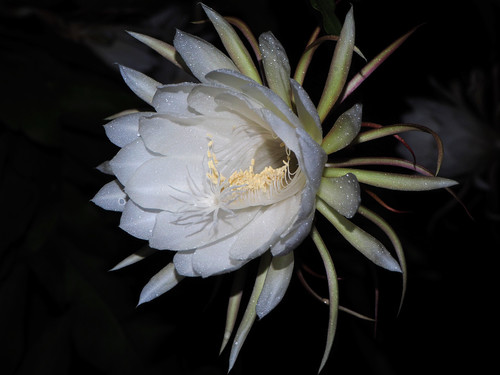
Epiphyllum oxypetalum
Dutchman's pipe cactus, Queen of the night
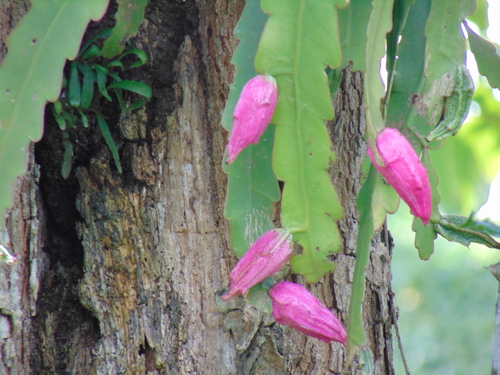
Epiphyllum phyllanthus
Alligator tail
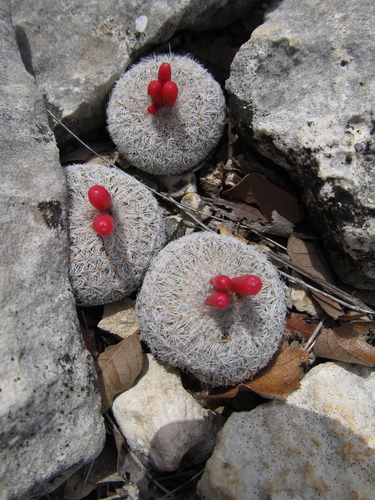
Epithelantha micromeris
Common button cactus
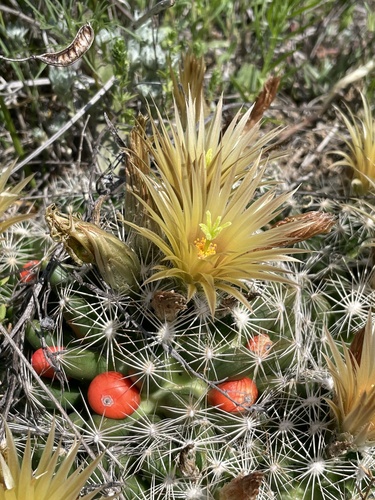
Escobaria missouriensis var. missiouriensis
Missouri foxtail cactus
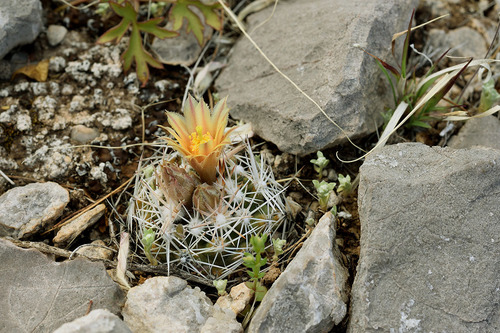
Escobaria robbinsorum
Cochise pincushion cactus, Cochise foxtail cactus
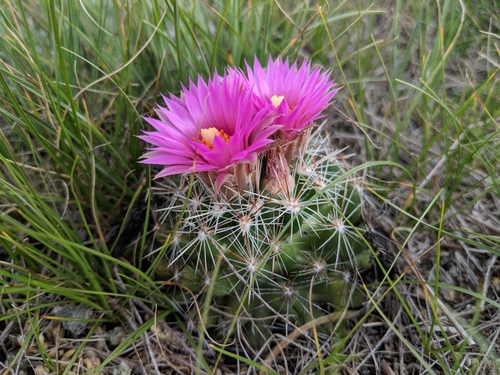
Escobaria vivipara
Cushion cactus, Ball cactus