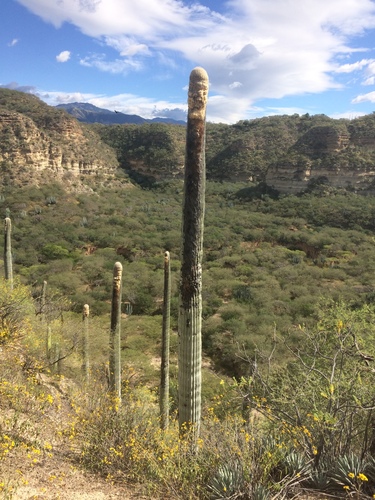
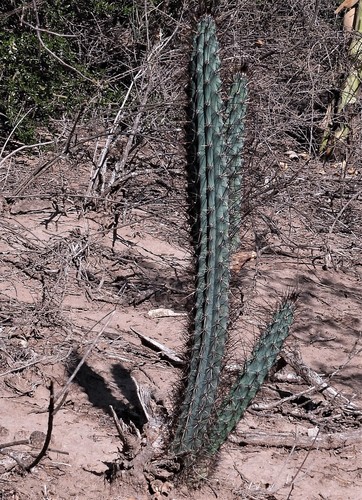
Pachycereus schottii
(Engelm.) D. R. Hunt
Senita, Whisker cactus, Totem cactus
iNaturalist· cc-by-nc
(c) rwcannon57, some rights reserved (CC BY-NC)
iNaturalist· cc-by-nc
(c) rwcannon57, some rights reserved (CC BY-NC)
iNaturalist· cc-by-nc
(c) rwcannon57, some rights reserved (CC BY-NC)
Description
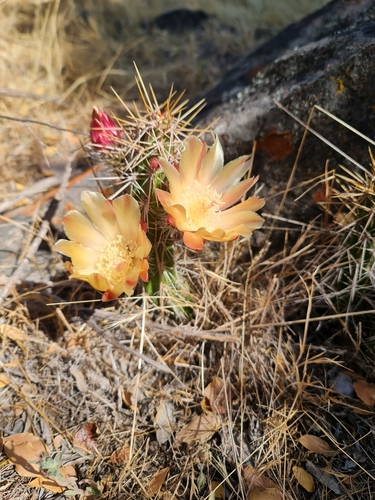
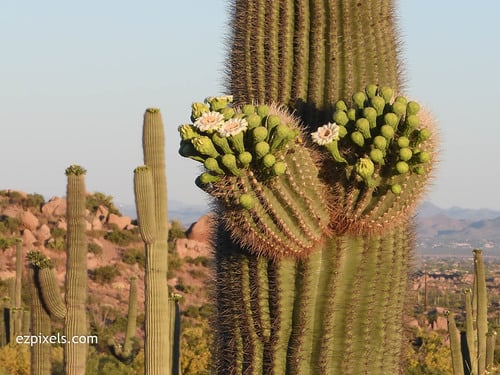
A cactus. It is shrubby or treelike. It can form thickets of up to 100 stems. The stems are 1-3 m high. They are yellow-green and 5-10 cm across. There are 4-13 ribs. There are 1-3 central spines that are 1-3 cm long and 3-15 spines around these that are 0.5-1.5 cm long. There are false heads which can be 5 cm to 100 cm long and they have flexible grey spines. The flowers are funnel shaped on this false head and they open at night. They are white to pink and 4 cm long by 3 cm wide. The fruit are round, red and fleshy. They are 1-3 cm across.
Edible Uses
The round red fleshy fruit are eaten.
Distribution
A subtropical plant.
Where It Grows
Mexico, North America, USA,
Synonyms
Also Known As
Cina, Garambuyo, Sina, Sinita, Tuna barbona, Viejo
References (4)
- Anderson, E.F., 2001, The Cactus Family, Timber Press. p 55, 536
- Bradleya 5:93. 1987
- Kermath, B. M., et al, 2014, Food Plants in the Americas: A survey of the domesticated, cultivated and wild plants used for Human food in North, Central and South America and the Caribbean. On line draft. p 601
- www.desert-tropicals.com