Cercidium microphyllum
(Torr.) Rose & I. M. Johnst.
Foothill palo verde, Small-leaved palo verde
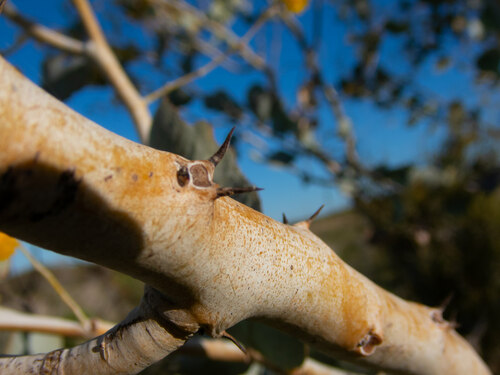
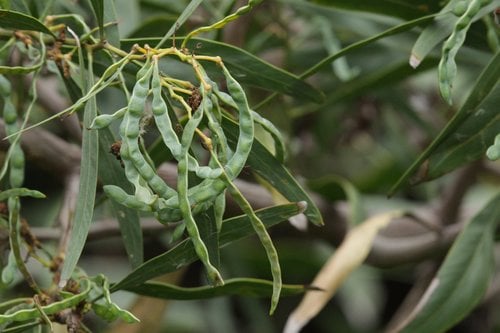
iNaturalist· cc-by-nc
(c) Andrea A Michaels, some rights reserved (CC BY-NC)
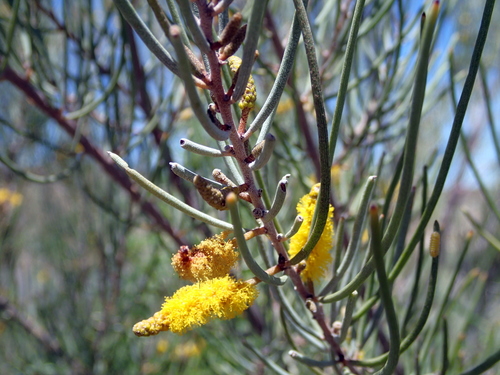
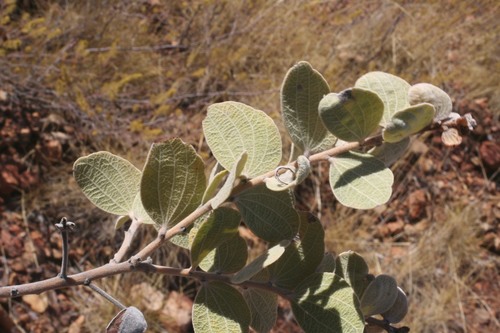
iNaturalist· cc-by-nc
(c) theslowloris, some rights reserved (CC BY-NC)
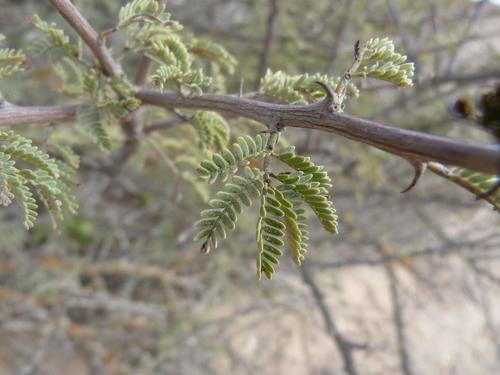
iNaturalist· cc-by
(c) Rachel Stringham, some rights reserved (CC BY)
Summary
Source: WikipediaA deciduous tree growing to 4 m tall and 6 m wide at a slow rate. Hardy to UK zone 9. Tolerates light sandy, medium loamy, and heavy clay soils, preferring well-drained conditions and nutritionally poor soil. Suitable for mildly acid to basic pH. Requires full sun and tolerates both dry and moist conditions with good drought tolerance.
Description
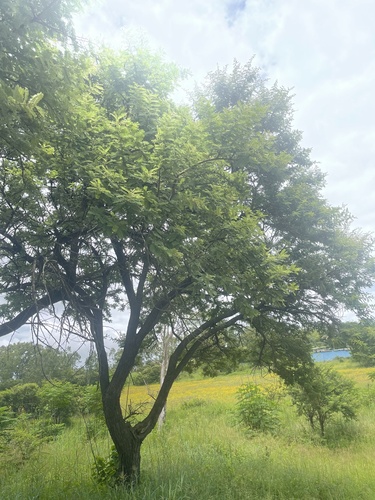
A tree. It is upright and branches often. It grows about 5 m tall. The leaves are yellowish-green. Leaves can be shed in hot dry periods. The bark is green and can use sunlight for photosynthesis. The flowers are at the end of the branches. The fruit are soft pods 4-8 cm long. They are depressed between the seeds.
Edible Uses
Seeds, pods, and flowers are edible. The dried seeds were traditionally roasted, often until almost burnt, then ground into a powder and made into a mush or cakes. They are generally viewed as a famine food, used when better options were unavailable. The seeds are rich in protein, containing around 22% protein, 50% carbohydrate, and 18% fat. Dried powdered seed has a digestibility rating of 76%, rising to 85% when cooked, which is higher than many commonly eaten legumes. The seeds contain antinutritional factors including trypsin inhibitors, phenols, alkaloids, and haemagglutinin, but not at concentrations high enough to pose a major nutritional problem; these factors are soluble in saline solutions and can be removed by soaking or cooking. Seedpods are 35–110mm long and 7–9mm wide, containing 1–4 brown, sub-globose seeds 8–10mm long and 5–7mm wide. Immature pods are moist, green, and fibrous with a pea-like flavor, though less fleshy than those of blue paloverde; the constricted form around the seeds limits edible material, and the pod tips may be sharp. Cooking improves flavor but does not fully eliminate stringiness. Mature beans, once soaked and boiled, soften and resemble ordinary white beans in flavor, though they may develop a slimy texture; changing the cooking water helps reduce this. Careful sorting is needed as insect damage is common.
Traditional Uses
The seeds are eaten fresh or ground and mixed with mesquite meal. The young pods are boiled with meat. The flowers are also eaten.
This uses section is brief — help expand it
Medicinal Uses
None known.
Distribution
It is a subtropical plant. It grows in the Sonoran Desert.
Where It Grows
Mexico*, North America, USA,
Cultivation
Plants can be grown from seeds. Seedlings need water for the first 2-3 months.
Propagation
Sow seed after acid scarification in 95% sulfuric acid for 30 minutes to 1 hour, followed by a 15-minute rinse in cool to tepid water. Sow immediately after treatment.
Other Uses
The wood is hard and heavy. The Seri people of northwestern Mexico, who call the tree ziipxöl, strung the seeds into necklaces. Suitable for use as a small multi-branched tree or large background shrub in xeric and native desert gardens.
Production
It is slow growing. Trees can live for several hundred years.
Notes
Also as Caesalpinaceae.
Synonyms
Also Known As
Yellow paloverde, Ziipxol
References (10)
- Beckstrom-Sternberg, Stephen M., and James A. Duke. "The Foodplant Database." http://probe.nalusda.gov:8300/cgi-bin/browse/foodplantdb.(ACEDB version 4.0 - data version July 1994) (As Parkinsonia microphylla)
- Etkin, N.L. (Ed.), 1994, Eating on the Wild Side, Univ. of Arizona. p 71
- Facciola, S., 1998, Cornucopia 2: a Source Book of Edible Plants. Kampong Publications, p 67
- Felger, R.S., Ancient Crops for the Twenty first century, in Rickie, G.A., (ed), 1979, New Agricultural Crops, AAAS Selected Symposium 38. Westview Press, Colarado. p 10
- Grandtner, M. M., 2008, World Dictionary of Trees. Wood and Forest Science Department. Laval University, Quebec, Qc Canada. (Internet database http://www.WDT.QC.ca)
Show all 10 references Hide references
- I. M. Johnston, Contr. Gray Herb. 70:66. 1924
- Kermath, B. M., et al, 2014, Food Plants in the Americas: A survey of the domesticated, cultivated and wild plants used for Human food in North, Central and South America and the Caribbean. On line draft. p 208
- Moerman, D. F., 2010, Native American Ethnobotany. Timber Press. p 378 (As Parkinsonia microphylla)
- Tozer, F., 2007, The Uses of Wild Plants. Green Man Publishing. p 60
- Wikipedia (As Parkinsonia microphylla)