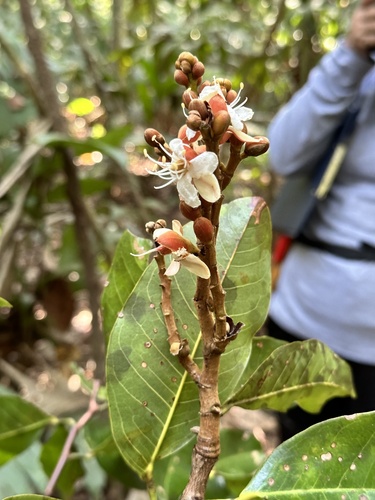
Centrosema macrocarpum
Benth.
iNaturalist· cc-by
(c) Alexis López Hernández, some rights reserved (CC BY), uploaded by Alexis López Hernández
iNaturalist· cc-by
(c) Alexis López Hernández, some rights reserved (CC BY), uploaded by Alexis López Hernández
iNaturalist· cc-by
(c) Alexis López Hernández, some rights reserved (CC BY), uploaded by Alexis López Hernández
Description
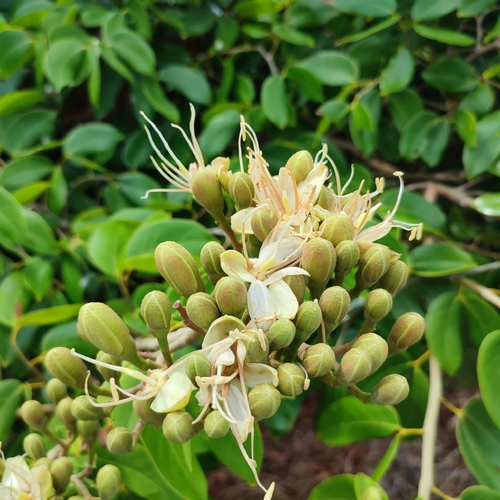
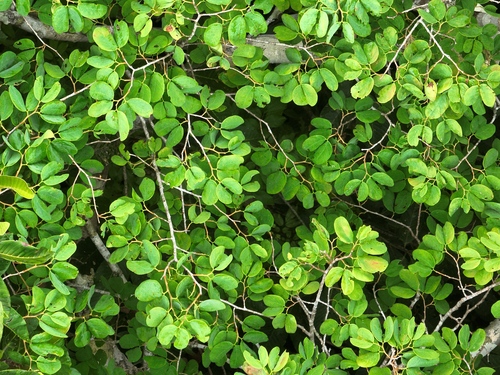
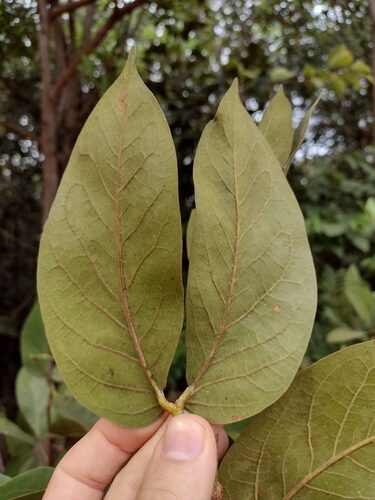
A trailing herb. It has a taproot and slender stems. The young stems have greyish hairs. The leaves have 3 leaflets. The leaflets are oval. They are rounded at the base and taper at the tip. The central leaflet is largest and 8-13 cm long by 3-8 cm wide. The flowers are in groups in the axils of leaves. There can be 30 flowers in pairs. The petals are cream with a purple centre. The pod is 30 cm long and 1 cm wide. There are 25 seeds. They are 5 mm long by 3 mm wide. They are yellowish-brown.
Edible Uses
Both the seeds and leaves are edible.
Distribution
A tropical plant. It can grow in low fertility on well drained soils. It can tolerate acid conditions and soils with high aluminium.
Where It Grows
Bolivia, Brazil, Central America, Colombia, Costa Rica, Ecuador, El Salvador, French Guiana, Guyana, Honduras, Mexico, Panama, Peru, South America, Venezuela,
Notes
There are 45 Centrosema species. Also as Papilionaceae.
References (2)
- Ann. Nat. Hist. 3:436. 1839
- Hedrick, U.P., 1919, (Ed.), Sturtevant's edible plants of the world. p 179