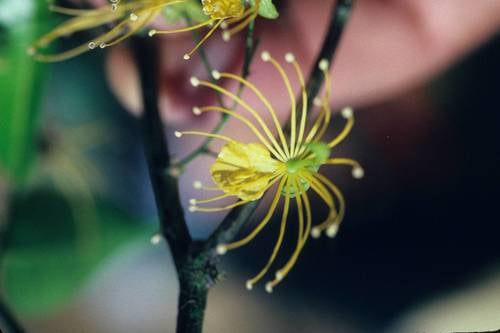
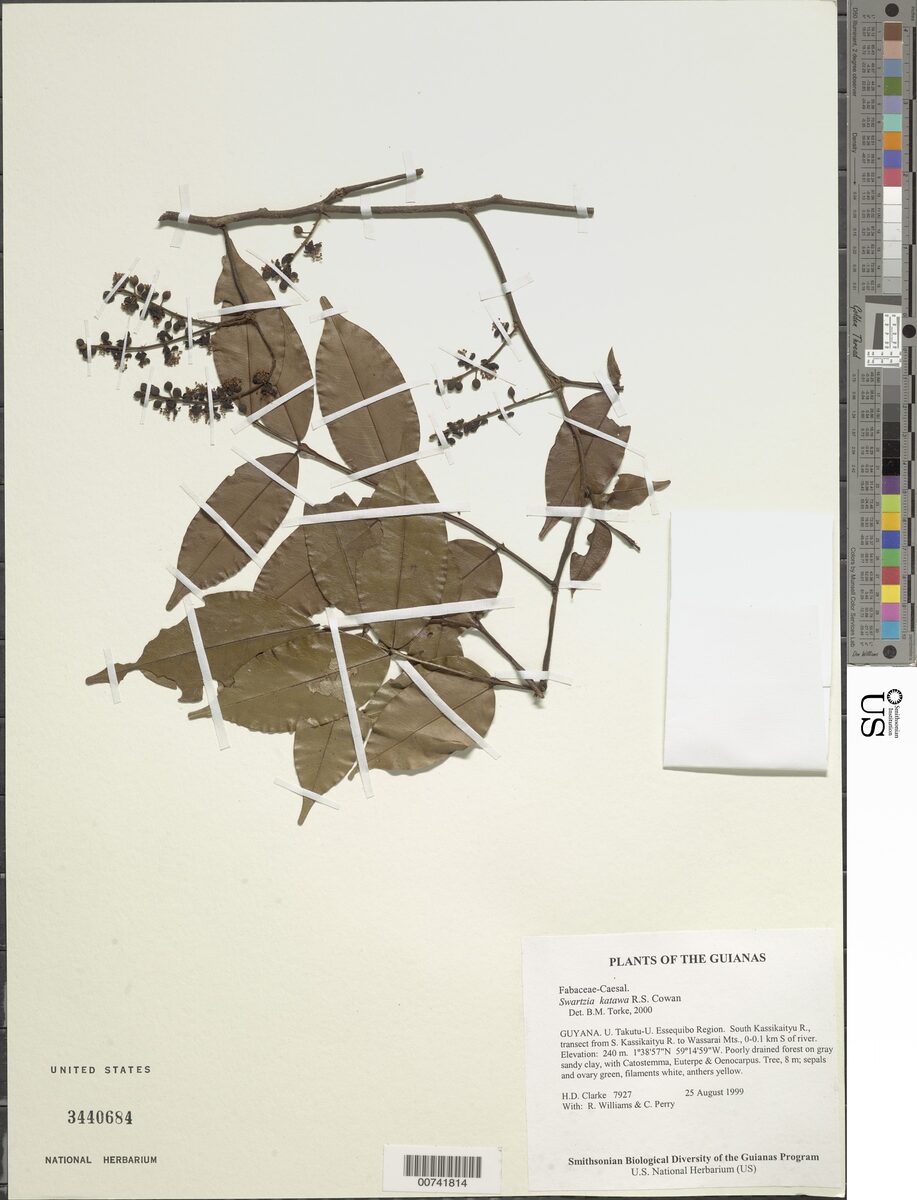
Centrosema plumieri
(Turpin ex Pers.) Benth.
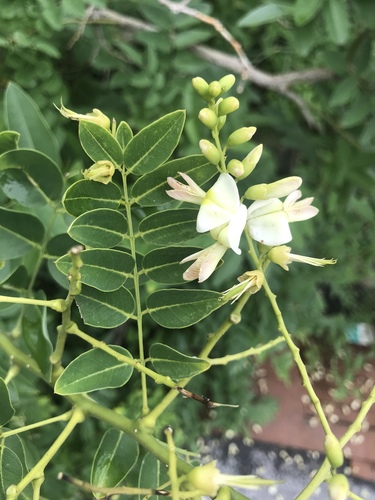
iNaturalist· cc-by-nc
(c) odenwaelder, some rights reserved (CC BY-NC), uploaded by odenwaelder
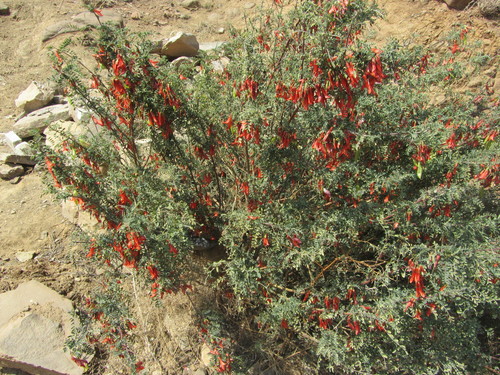
iNaturalist· cc-by-nc
(c) Luís A. Funez, some rights reserved (CC BY-NC)
Description
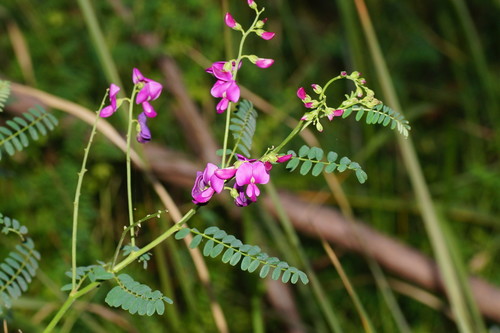
A vine. It is twining. It grows 5 m long. The stems are smooth, cylinder shaped and green. The leaves are alternate and have 3 leaflets. The leaflets are 4-11 cm long by 3-8 cm wide. The edges are wavy. The upper surfaces are shiny and sunken over the veins. The lower surfaces are dull and hairy. The end leaflet is D shaped. The side leaflets are narrowly oval. The leaf stalks are 6-10 cm long. The flowers occur singly or in pairs in axils near the ends of branches. They are at the end of long stalks. They are pink to red. The pods is flattened and narrow. They are 10-15 cm long by 1 cm wide. There is a long tip at the end. The edges are thickened.
Edible Uses
Leaves - cooked and eaten as a vegetable.
Distribution
It is a tropical plant. It grows at lower altitudes in moist locations.
Where It Grows
Africa, Asia, Australia, Belize, Benin, Bolivia, Brazil, Caribbean, Colombia, Congo DR, Congo R, Costa Rica, Cuba, Dominican Republic, Ecuador, El Salvador, Gabon, Ghana, Guatemala, Guiana, Guianas, Guyana, Haiti, Honduras, India, Indonesia, Jamaica, Kenya, Malaysia, Mauritius, Mexico, Nauru, Nicaragua, Nigeria, Panama, Papua New Guinea, PNG, Paraguay, Peru, Philippines, Puerto Rico, Reunion, Sao Tome and Principe, South America, Sri Lanka, Suriname, Tanzania, Trinidad-Tobago, Venezuela, West Africa, West Indies,
Cultivation
Plants are not adapted to acid soils. They are reasonably shade tolerant. The mature yield of biomass from a hectare can be up to 16 tonnes. This species performed better than C. pubescens in trials in Florida. This species has a symbiotic relationship with certain soil bacteria, these bacteria form nodules on the roots and fix atmospheric nitrogen. Some of this nitrogen is utilized by the growing plant but some can also be used by other plants growing nearby.
Other Uses
A shade-tolerant cover crop in plantations of cocoa, rubber, coconut and oil palm, though it has now been largely replaced by the related C. pubescens. Plants nodulate well, fixing good amounts of atmospheric nitrogen, They are used as green manure in sugar cane and in grassland improvement.
Synonyms
References (2)
- Achigan-Dako, E, et al (Eds), 2009, Catalogue of Traditional Vegetables in Benin. International Foundation for Science.
- Kew Plants of the World Online