Ceratonia siliqua
L.
Carob
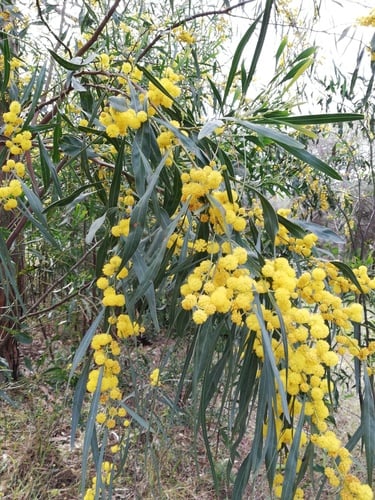
iNaturalist· cc-by-nc
(c) Marco Grandis, some rights reserved (CC BY-NC)
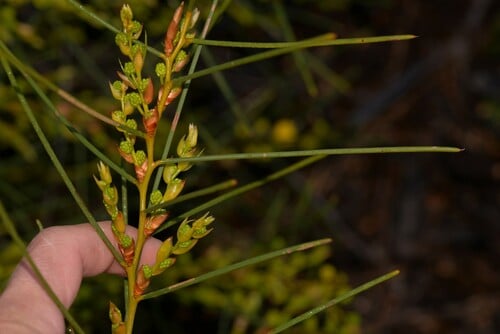
iNaturalist· cc-by-nc
(c) Marco Grandis, some rights reserved (CC BY-NC)
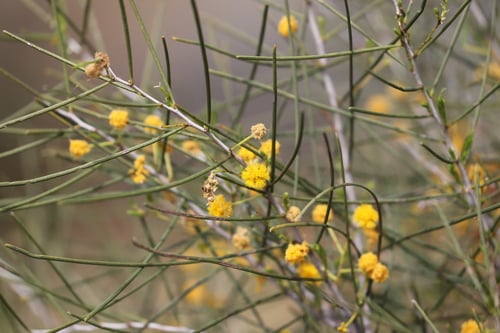
iNaturalist· cc-by-nc
(c) Rieff Perçuku, some rights reserved (CC BY-NC)
Summary
Source: WikipediaCeratonia siliqua is an evergreen tree reaching 15 m tall at medium growth rate. Hardy to UK zone 8 and frost tender, it remains in leaf year-round and flowers August to October. The dioecious plant is pollinated by wasps and flies and fixes nitrogen. It grows in light sandy or medium loamy well-drained soils, tolerates very alkaline pH, requires full sun, and withstands drought and strong winds though not maritime exposure.
Description
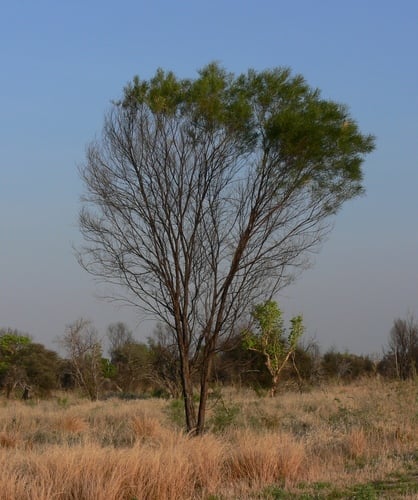
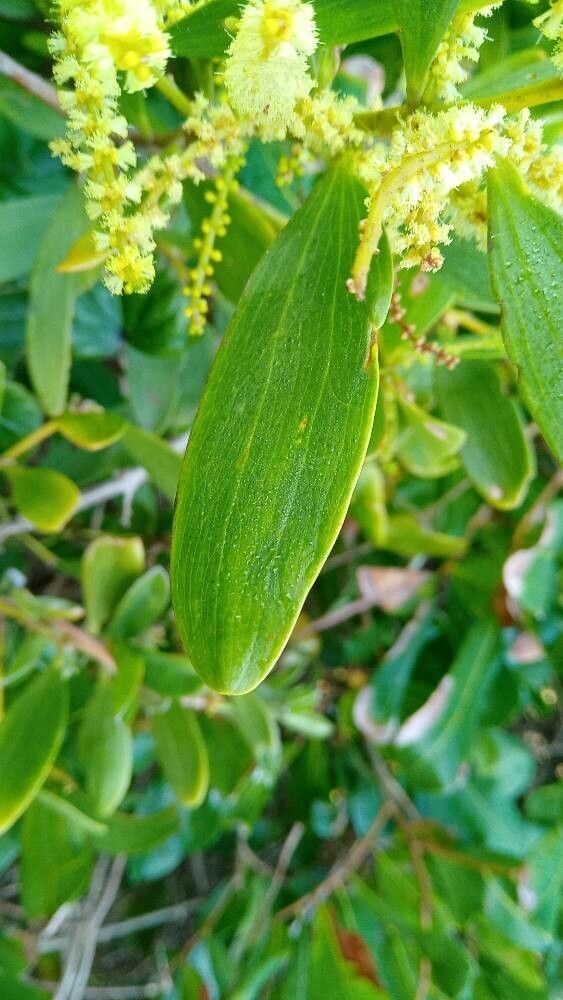
An evergreen tree. It grows 12-15 m tall. It spread to 4 m across. It has a dark green round crown of compound leaves. These almost hide the trunk. The trunk is short, erect and thick. The leaves are leathery. The tree flowers in autumn. Male and female flowers are on separate trees. They grow in flower clusters on the previous year's growth. The flowers are small and red. The pods develop in spring. The flat pods are 30 cm long and 2.5 cm wide. They are thick, brown rough and leathery. The seed are constant in size and were used for the carat weight (200 mg). There are several cultivated varieties.
Edible Uses
Seedpods can be eaten raw or ground into a powder. They are filled with a sweet, saccharine pulp that can be eaten green or dried. Though very sweet, the pulp is fibrous; it is used as a chocolate substitute in cakes and drinks and is rich in sugars and protein. The pods contain approximately 55% sugars, 10% protein, and 6% fat. The seeds are rich in protein; a flour made from them is approximately 60% protein, free from sugar and starch, suitable for baking, and can also serve as a chocolate substitute. An edible gum extracted from the seed acts as a substitute for Gum Tragacanth, functioning as a stabilizer, thickening agent, and egg substitute. Roasted seeds can be used as a coffee substitute.
Traditional Uses
The seed pods can be eaten green or dried. They are sweet. The pulp can be used as a chocolate substitute. They are used for jam. The seed can be ground to make flour. An edible gum can be extracted from the seed. It is a thickening agent and egg substitute. The roasted seed is a coffee substitute. The leaves can be used as a green vegetable. Caution: The leaves are probably purgative. Caution: The pods contain tannin and can be toxic in large amounts.
Medicinal Uses
The pulp in the seedpods is nutritious, sweet-tasting due to its high sugar content, and mildly laxative. Used in decoction, the same pulp is astringent and treats diarrhoea while gently cleansing and relieving irritation in the gut. The seedpods are also used in treating coughs. A flour made from ripe seedpods is demulcent and emollient and is used in the treatment of diarrhoea. The seed husks are astringent and purgative. The bark is strongly astringent, and a decoction of it is used to treat diarrhoea.
Distribution
It is a subtropical plant. It is native to Arabia. It suits warm temperate zones. It tends to grow in rocky places near the sea shore. It needs a well drained moderately fertile soil. It does well on calcareous soils. It can grow in alkaline soils. It is commonly seen on deep chalky soils where the limestone is cracked. It is very drought resistant. It suits hot and semi-arid regions. It grows in areas with an annual rainfall between 310-4,030 mm. It can tolerate some salt spray. The deep roots find moisture. It is frost tender. Symbiotic relationships with soil bacteria enable it to fix nitrogen. It can grow in arid places. It does not fruit well in high rainfall areas. It grows in Miombo woodland in Africa. In Brisbane Botanical Gardens. It suits hardiness zones 8-11.
Where It Grows
Africa, Albania, Algeria, Angola, Arabia, Argentina, Asia, Australia, Balkans, Britain, Bulgaria, Canada, Canary Islands, Cape Verde, Caribbean, Caucasus, Central Africa, Chad, China, Colombia, Comoros, Crete, Croatia, Cyprus, East Africa, Egypt, Ethiopia, Europe, Fiji, France, Gibraltar, Greece, Hawaii, India, Indonesia, Iran, Iraq, Israel, Italy, Jordan, Kenya, Lebanon, Libya, Malawi, Malta, Marquesas, Mauritius, Mediterranean*, Mexico, Middle East, Monaco, Morocco, Mozambique, Namibia, New Zealand, North Africa, North America, Pacific, Pakistan, Palestine, Peru, Portugal, Reunion, Russia, Saudi Arabia, SE Asia, Serbia, Sicily, Sinai, Slovenia, Somalia, South Africa, Southern Africa, South America, Spain, Sudan, Syria, Tasmania, Tanzania, Trinidad-Tobago, Tunisia, Turkey, Türkiye, Uganda, USA, Yemen, Yugoslavia, Zambia, Zimbabwe,
Cultivation
Requires a very sunny position in any well-drained moderately fertile soil. Does well in calcareous, gravelly or rocky soils. Tolerates salt laden air. Tolerates a pH in the range 6.2 to 8.6. The tree is very drought resistant, thriving even under arid conditions, the roots penetrating deep into the soil to find moisture. This species is not very hardy in Britain but it succeeds outdoors in favoured areas of S. Cornwall, tolerating temperatures down to about -5°c when in a suitable position. The young growth in spring, even on mature plants, is frost-tender and so it is best to grow the plants in a position sheltered from the early morning sun. The carob is frequently cultivated in warm temperate zones for its edible seed and seed pods. Mature trees in a suitable environment can yield up to 400 kilos of seedpods annually. There are named varieties with thicker pods. Seeds are unlikely to be produced in Britain since the tree is so near (if not beyond) the limits of its cultivation. The seed is very uniform in size and weight, it was the original 'carat' weight of jewellers. This species has a symbiotic relationship with certain soil bacteria, these bacteria form nodules on the roots and fix atmospheric nitrogen. Some of this nitrogen is utilized by the growing plant but some can also be used by other plants growing nearby. Pods are typically harvested in Autumn. It flowers in Spring. Carob grows at a moderate pace, reaching maturity in about 5-6 years.
Propagation
Pre-soak seed for 24 hours in warm water before sowing; if it has not swollen, repeat soaking until it does. Sow in a greenhouse in April. Germination should occur within two months. Prick seedlings out into individual deep pots as soon as they are large enough to handle, and grow them on in a greenhouse for at least their first winter. Plant out into permanent positions in late spring or early summer after the last expected frosts, and provide cold protection for their first few winters outdoors.
Other Uses
Carob is used as a shade tree and for erosion control; its pods can serve as animal feed and the tree can improve soil fertility. A flour made from the seedpods is used in the cosmetic industry to make face-packs. Tannin is obtained from the bark. The flowers are rich in nectar and pollen, attracting pollinators including bees. The pods provide food for wildlife, particularly mammals and some birds, and the tree's dense foliage offers shelter and nesting opportunities for birds and small animals. Leaf litter contributes habitat for insects and other organisms. The rough bark and accumulated leaf litter provide overwintering and shelter sites for invertebrates. The wood is hard and lustrous; it is highly valued by turners and is also used for marquetry and walking sticks.
Production
It is very slow growing. Mature trees can yield 400 kg of seedpod per year. Fruit are produced after 10-12 years when grown from seed. Trees bear fruit in the fifth or sixth year after grafting. Trees can remain productive for 80-100 years. Pods are usually shaken off the tree. They are sun dried for 1-2 days.
Other Information
It is a cultivated food crop.
Notes
Biblical references Luke 15:16. There is only one (2) Ceratonia species. Chemical composition: Protein (crude) = 6.1% (dry). Fat = 2.6% (dry). Fibre (crude) = 2.2% (dry). Ash (insoluble) = 5.1% (dry). Carbohydrate (insoluble): Starch = 1.4% (dry). Sucrose = 0.8% (dry). D-glucose = 0.4% (dry). D-fructose = 0.2% (dry). Amino acids (g [16g N]-1): Aspartic acid = 5.9g. Threonine = 2.5g. Serine = 3.0g. Glutamic acid = 7.8g. Proline = 11.6g. Glycine = 7.4g. Alanine = 3.3g. Cysteine = 1.0g. Methionine = 0.7g. Isoleucine = 2.2g. Leucine = 3.8g. Tyrosine = 2.3g. Phenylalanine = 2.5g. Lysine = 3.0g. Histidine = 1.7g. Arginine = 4.3g. Minerals: Sulphur = 0.10% (dry). Potassium = 0 .09% (dry). Magnesium = 0.09% (dry). Calcium = 0.23% (dry). Na = 0.01% (dry). K = 1.48% (dry). Zinc = 17 mg/kg-1 (dry). Iron = 203 mg/kg -1 (dry). Manganese = 16 mg/kg-1 (dry). Copper = 7 mg/kg-1 (dry). Aluminium = 128 mg/kg-1 (dry). Also as Caesalpinaceae.
Nutrition
| Part | Moisture | kJ | kcal | Protein | Vit A | Vit C | Iron | Zinc |
|---|---|---|---|---|---|---|---|---|
| Seed | 6.9 | 1534 | 367 | 4.8 | — | — | — | — |
| Pods | 11.2 | 753 | 180 | 6.5 | — | — | 20.3 | 1.7 |
| Flour | 11.2 | 753 | 180 | 1.4 | — | — | — | — |
| Leaves | — | — | — | — | — | — | — | — |
Synonyms
Also Known As
Algaroba, Algarroba, Algarrobo, Alkharoub, Carrubio, Charoupia, Garrofer, Harip, Harnup, Jarup, Karroub, Keciboynuzu, Kharnub, Kharroub, Locust bean, Locust tree, Rogac, Rožič, St John’s bread, Taratsia, Tikida
References (83)
- ABDELMLUTI,
- Al-Qura'n, S. A., 2010, Ethnobotanical and Ecological Studies of Wild Edible Plants in Jordan. Libyan Agriculture Research Center Journal International 1(4):231-243
- Ali-Shtayeh, M. S., et al, 2008, Traditional knowledge of wild edible plants used in Palestine (Northern West Bank): A comparative study. J Ethnobiol Ethnomed. 4: 13
- Ambasta S.P. (Ed.), 2000, The Useful Plants of India. CSIR India. p 116
- Arora, R. K., 2014, Diversity in Underutilized Plant Species - An Asia-Pacific Perspective. Bioversity International. p 101
Show all 83 references Hide references
- Asfaw, Z. and Tadesse, M., 2001, Prospects for Sustainable Use and Development of Wild Food Plants in Ethiopia. Economic Botany, Vol. 55, No. 1, pp. 47-62
- Batlle, I. and J. Tous. 1997. Carob tree. Ceratonia siliqua L. Promoting the conservation and use of underutilized and neglected crops. 17. Institute of Plant Genetics and Crop Plant Research, Gatersleben/International Plant Genetic Resources Institute, Rome, Italy.
- Barwick, M., 2004, Tropical and Subtropical Trees. A Worldwide Encyclopedic Guide. Thames and Hudson p 106
- BiaMugla, Turkey). Turk. J. Bot. 28 (2004): 161-174
- Ciftcioglu, C. G., 2015, Sustainable wild-collection of medicinal and edible plants in Lefke region of North Cyprus. Agroforest Syst. Springer
- Dogan, Y., et al, 2004, The Use of Wild Edible Plants in Western and Central Anatolia (Turkey). Economic Botany 58(4) pp. 684-690
- Dogan, Y. et al, 2013, Wild Edible Plants sold in the Local Markets of Izmir, Turkey. Pak. J. Bot. 45(S1): 177-184
- Dolina, K. & Luczaj, L., 2014, Wild food plants used on the Dubrovnik coast (south-eastern Croatia) Acta Soc Bot Pol 83(3):175–181
- Duarte, M. C., et al, 2022, Diversity of Useful Plants in Cabo Verde Islands: A Biogeographic and Conservation Perspective. Plants 2022, 11, 1313 p 12
- Ertug, F, Yenen Bitkiler. Resimli Türkiye Florası -I- Flora of Turkey - Ethnobotany supplement
- Facciola, S., 1998, Cornucopia 2: a Source Book of Edible Plants. Kampong Publications, p 67
- Flora of Australia Volume 12, Mimosaceae (excl. Acacia) Caesalpiniaceae. Melbourne: CSIRO Australia (1998) p 73
- Flora of Pakistan. www.eFlora.org
- Flowerdew, B., 2000, Complete Fruit Book. Kyle Cathie Ltd., London. p 188
- Fowler, D. G., 2007, Zambian Plants: Their Vernacular Names and Uses. Kew. p 80
- Gebhardt, A., 1996, Carob Bean (Ceratonia siliqua) 4. Australian New Crops Newsletter 14.2 No 6.
- Ghanimi, R., et al, 2022, Ethnobotanical study on wild edible plants traditionally used by Messiwa people, Morocco. Journal of Ethnobiology and Ethnomedicine. 18:16
- Gouldstone, S., 1983, Growing your own Food-bearing Plants in Australia. Macmillan p 163
- Gunes, S. et al, 2018, Survey of wild food plants for human consumption in Karaisali (Adana-Turkey). Indian Journal of Traditional Knowledge. Vol. 17(2), April 2018, pp 290-298
- Gurdal, B. & Kultur, S., 2014, The edible and miscellaneous useful plants in Marmaris (Southwest Turkey). İstanbul Ecz. Fak. Derg. / J. Fac. Pharm. Istanbul 44(1) 2014 pp.69-78
- Hadjichambis, A. C., et al, 2007, Wild and semi-domesticated food plant consumption in seven circum-Mediterranean areas. International Journal of Food Sciences and Nutrition. 2007, 1-32.
- Hall, N. et al, 1972, The Use of Trees and Shrubs in the Dry Country of Australia, AGPS, Canberra. p 392
- Heywood, V. H. & Zohary, D.,1995, A Catalogue of the Wild Relatives of Cultivated Plants Native to Europe. Flora Mediterranea 5 - 1995, p 395
- Hibbert, M., 2002, The Aussie Plant Finder 2002, Florilegium. p 63
- Hinnawi, N. S. A., 2010, An ethnobotanical study of wild edible plants in the Northern West Bank "Palestine". An-Najah National University. p 93
- ILDIS Legumes of the World http:www:ildis.org/Legume/Web
- Jardin, C., 1970, List of Foods Used In Africa, FAO Nutrition Information Document Series No 2.p 126
- John, L., & Stevenson, V., 1979, The Complete Book of Fruit. Angus & Robertson p 98
- Kew Plants of the World Online
- Kiple, K.F. & Ornelas, K.C., (eds), 2000, The Cambridge World History of Food. CUP p 1745
- Lazarides, M. & Hince, B., 1993, Handbook of Economic Plants of Australia, CSIRO. p 55
- Lord, E.E., & Willis, J.H., 1999, Shrubs and Trees for Australian gardens. Lothian. p 50
- Lyle, S., 2006, Discovering fruit and nuts. Land Links. p 118
- Macmillan, H.F. (Revised Barlow, H.S., et al) 1991, Tropical Planting and Gardening. Sixth edition. Malayan Nature Society. Kuala Lumpur. p 313
- Mahklouf, M. H., 2019, Ethnobotanical Study of Edible Wild Plants in Libya. European Journal of Ecology. 5(2): 30-40
- Martin, F.W. & Ruberte, R.M., 1979, Edible Leaves of the Tropics. Antillian College Press, Mayaguez, Puerto Rico. p 198
- Martin, F. W., et al, 1987, Perennial Edible Fruits of the Tropics. USDA Handbook 642 p 33
- Morton, J. F., 1987, Fruits of Warm Climates. Wipf & Stock Publishers p 121
- Nassif, F., & Tanji, A., 2013, Gathered food plants in Morocco: The long forgotten species in Ethnobotanical Research. Life Science Leaflets 3:17-54
- Palmeiri, V. S., & Geisa, M. G., 2019, Las plantas comestibles empleadas por las comunidades comechingonas de San Marcos Sierras (Córdoba, Argentina). Primeras aproximaciones. Bol. Soc. Argent. Bot. 54: 295-309.
- Pasta, S., et al, 2020, An Updated Checklist of the Sicilian Native Edible Plants: Preserving the Traditional Ecological Knowledge of Century-Old Agro-Pastoral Landscapes. Frontiers in Plant Science. Volume 11|Article 388
- Plants for a Future database, The Field, Penpol, Lostwithiel, Cornwall, PL22 0NG, UK. http://www.scs.leeds.ac.uk/pfaf/
- Recher, P, 2001, Fruit Spirit Botanical Gardens Plant Index. www.nrg.com.au/~recher/ seedlist.html p 1
- Royal Botanic Gardens, Kew (1999). Survey of Economic Plants for Arid and Semi-Arid Lands (SEPASAL) database. Published on the Internet; http://www.rbgkew.org.uk/ceb/sepasal/internet [Accessed 21st April 2011]
- Ruiters-Welcome, A. K., 2019, Food plants of southern Africa. Ph.D. thesis. Univ. of Johannesburg p 56
- Schuler, S., (Ed.), 1977, Simon & Schuster's Guide to Trees. Simon & Schuster. No. 190
- Segura, S., et al, 2018, The edible fruit species in Mexico. Genet Resour Crop Evol (2018) 65:1767–1793
- Seidemann J., 2005, World Spice Plants. Economic Usage, Botany, Taxonomy. Springer. p 91
- Self, M., 199, Phoenix Seeds catalogue. p 15
- Sfikas, G., 1984, Trees and shrubs of Greece. Efstathiadis Group. Athens. p 94
- Sinclair, V., 1992, The Floral Charm of Cyprus. Interworld Publications. p 155
- Small, E., 2009, Top 100 Food Plants. The world's most important culinary crops. NRC Research Press. p 193
- Smith, A.C., 1985, Flora Vitiensis Nova, Lawaii, Kuai, Hawaii, Volume 3 p 97
- Smith, P.M., 1979, Locust, in Simmonds, N.W., (ed), Crop Plant Evolution. Longmans. London. p 311
- Sp. pl. 2:1026. 1753
- Staples, G.W. and Herbst, D.R., 2005, A tropical Garden Flora. Bishop Museum Press, Honolulu, Hawaii. p 313 (Drawing)
- Sukarya, D. G., (Ed.) 2013, 3,500 Plant Species of the Botanic Gardens of Indonesia. LIPI p 189
- Tankard, G., 1990, Tropical fruit. An Australian Guide to Growing and using exotic fruit. Viking p 106
- van Wyk, B., 2005, Food Plants of the World. An illustrated guide. Timber press. p 126
- van Wyk, Be, & Gericke, N., 2007, People's plants. A Guide to Useful Plants of Southern Africa. Briza. p 36
- Wild Edible Plants in Lebanon. Promoting dietary diversity in poor communities in Lebanon. http://www.wildedibleplants.org/
- Young, J., (Ed.), 2001, Botanica's Pocket Trees and Shrubs. Random House. p 221ova, Lawaii, Kuai, Hawaii, Volume 3 p 97
- Smith, P.M., 1979, Locust, in Simmonds, N.W., (ed), Crop Plant Evolution. Longmans. London. p 311
- Sp. pl. 2:1026. 1753
- Staples, G.W. and Herbst, D.R., 2005, A tropical Garden Flora. Bishop Museum Press, Honolulu, Hawaii. p 313 (Drawing)
- Tankard, G., 1990, Tropical fruit. An Australian Guide to Growing and using exotic fruit. Viking p 106
- Tardio, J., et al, 2006, Ethnobotanical review of wild edible plants in Spain. Botanical J. Linnean Soc. 152, 27-71
- Tukan, S. K., et al, 1998, The use of wild edible plants in the Jordanian diet. International Journal of Food Sciences and Nutrition. 49:225-235
- van Wyk, B., 2005, Food Plants of the World. An illustrated guide. Timber press. p 126
- van Wyk, Be, & Gericke, N., 2007, People's plants. A Guide to Useful Plants of Southern Africa. Briza. p 36
- van Wyk, Ben-Erik, 2019, The diversity and multiple uses of southern African legumes. Australian Systematic Botany, 2019, 32, 519–546
- Welcome, A. K. & Van Wyk, B.-E., 2019, An inventory and analysis of the food plants of southern Africa. South African Journal of Botany 122 (2019) 136–179
- Wiersema, J. H. & Leon, B., 2013, World Economic Plants. A Standard Reference CRC Press. 2nd Ed. p 161
- Wild Edible Plants in Lebanon. Promoting dietary diversity in poor communities in Lebanon. http://www.wildedibleplants.org/
- World Checklist of Useful Plant Species 2020. Royal Botanic Gardens, Kew
- www.worldagroforestrycentre.org/treedb/
- Young, J., (Ed.), 2001, Botanica's Pocket Trees and Shrubs. Random House. p 221
- Zeven, A. C. & de West, J. M. J., 1982, Dictionary of cultivated plants and their regions of diversity. Wageningen. p 113