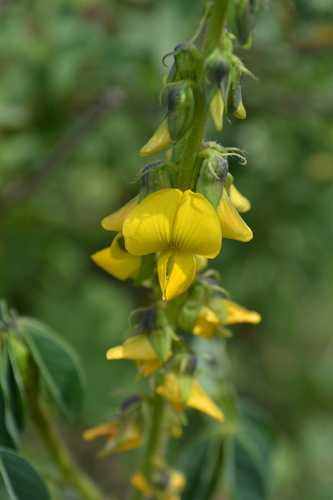
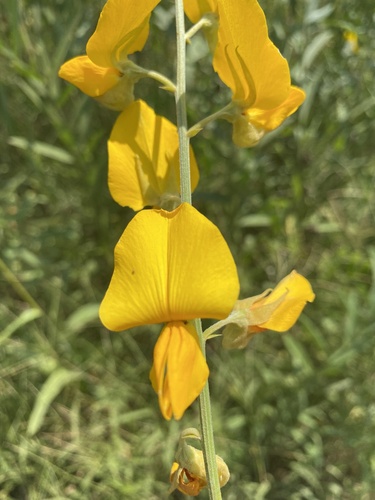
Cercidium floridum
Benth. ex A. Gray
Blue palo verde
iNaturalist· cc-by-nc
(c) Soumil, some rights reserved (CC BY-NC)
iNaturalist· cc-by-nc
(c) arisgongora, some rights reserved (CC BY-NC)
iNaturalist· cc-by-nc
(c) ShawnT Dash, some rights reserved (CC BY-NC)
Description
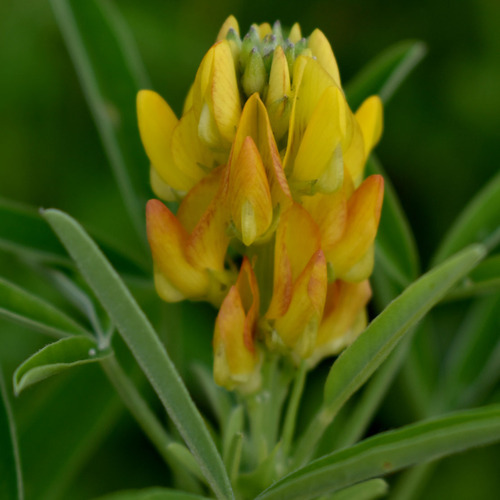
A small tree. It grows to 8-9 m high. It has a short thick trunk. The branches and bark are smooth bluish green. They are spiny. The flowers are golden yellow blossoms.
Edible Uses
The immature seeds and pods are eaten as a vegetable. The dried seeds are ground and made into breads, cakes, and drinks. The leaves are eaten as a green.
Traditional Uses
The immature seeds and pods are eaten as a vegetable. The dried seeds are ground and made into breads, cakes and drinks. The leaves are eaten as a green.
Distribution
It is a subtropical plant. They suit hot, dry areas. It grows up to 1,800 m above sea level. It can grow in arid places.
Where It Grows
Africa, America, Central America, Egypt, Mexico, North Africa, North America, USA,
Cultivation
Plants are grown from seed.
Notes
Also as Caesalpinaceae.
Synonyms
References (15)
- Beckstrom-Sternberg, Stephen M., and James A. Duke. "The Foodplant Database." http://probe.nalusda.gov:8300/cgi-bin/browse/foodplantdb.(ACEDB version 4.0 - data version July 1994) (As Cercidium torreyanum)
- Facciola, S., 1998, Cornucopia 2: a Source Book of Edible Plants. Kampong Publications, p 67
- FAO, 2012, Forest Genetic Resources Situation in Mexico. Final Report of Project TCP/ 3301 p 286
- Felger, R.S., Ancient Crops for the Twenty first century, in Rickie, G.A., (ed), 1979, New Agricultural Crops, AAAS Selected Symposium 38. Westview Press, Colarado. p 10
- Felger, R. S. 1980, Vegetation and Flora of the Gran Desierti, Sonora, Mexico. Desert Plants 2(2). Arizona-Sonora Desert Museum. p 9
Show all 15 references Hide references
- Forest Genetic Resources Situation in Mexico, FAO 2012 Annex 15 p 286
- Grandtner, M. M., 2008, World Dictionary of Trees. Wood and Forest Science Department. Laval University, Quebec, Qc Canada. (Internet database http://www.WDT.QC.ca)
- Kunkel,
- Moerman, D. F., 2010, Native American Ethnobotany. Timber Press. p 378 (As Parkinsonia florida)
- Pio-Leon, J. F., et al, 2017, Prioritizing Wild Edible Plants of potential new crops based on Deciduous Forest traditional knowledge by a Rancher community. Botanical Sciences 95(1): 47-59 (As Parkinsonia florida)
- Pl. wright. 1:58. 1852 (Smithsonian Contr. Knowl. 3, Art. 5)
- Royal Botanic Gardens, Kew (1999). Survey of Economic Plants for Arid and Semi-Arid Lands (SEPASAL) database. Published on the Internet; http://www.rbgkew.org.uk/ceb/sepasal/internet [Accessed 21st April 2011]
- Tozer, F., 2007, The Uses of Wild Plants. Green Man Publishing. p 61
- Uphof,
- Young, J., (Ed.), 2001, Botanica's Pocket Trees and Shrubs. Random House. p 225