Pachira insignis
(Sw.) Savigny
Maranhao nut, Trinidad pachira
iNaturalist· cc-by
(c) Annika Lindqvist, some rights reserved (CC BY), uploaded by Annika Lindqvist
iNaturalist· cc-by-sa
(c) Carlos A. Padrón P., some rights reserved (CC BY-SA), uploaded by Carlos A. Padrón P.
iNaturalist· cc-by-nc
(c) Adrián Vásquez Ávila, some rights reserved (CC BY-NC), uploaded by Adrián Vásquez Ávila
Summary
Source: WikipediaPachira insignis is a tree belonging to the Baobab Subfamily (Bombacoideae) of the Mallow Family (Malvaceae) and native to the tropics of South America and nearby islands (e.g. Trinidad). Its English common names include "wild chestnut" and "wild breadnut". It is best known for its very large flowers; the widest (along with the closely related Pachira aquatica) borne by any tree; up to 70 cm (28 in) diameter. Each of the five yellow petals is up to 35 cm (14 in) in length by up to 5 cm (2.0 in) wide. The stamens are united in the lower third, divided into five subgroups in the middle third and become up to one thousand discrete stamens in the upper third. Pachira insignis has been introduced in many tropical countries and is invasive in the Dominican Republic. Pachira insignis is used for food and medicine. The seeds, young leaves, and flowers are eaten. It is also grown ornamentally and as a shade tree.
Description
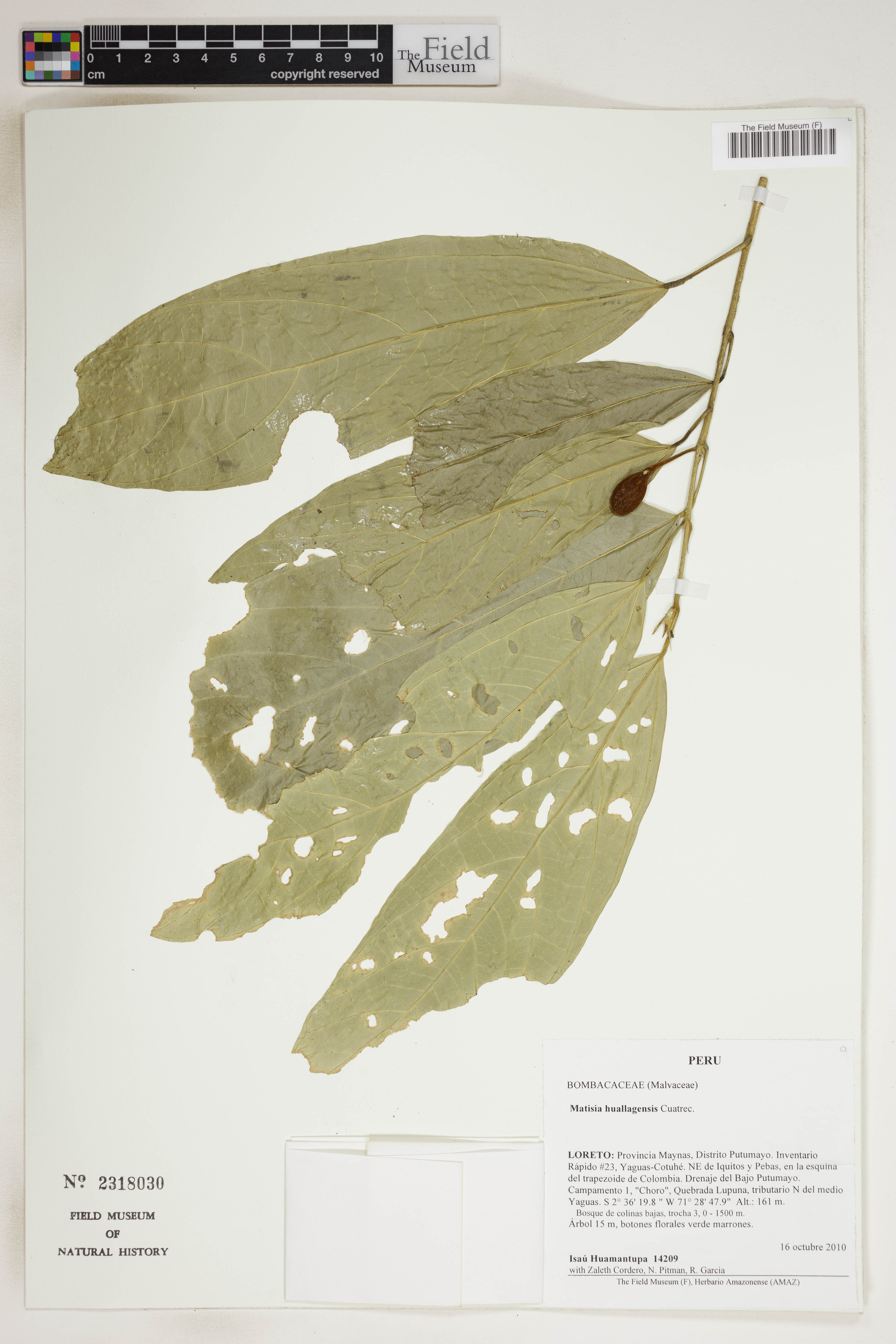
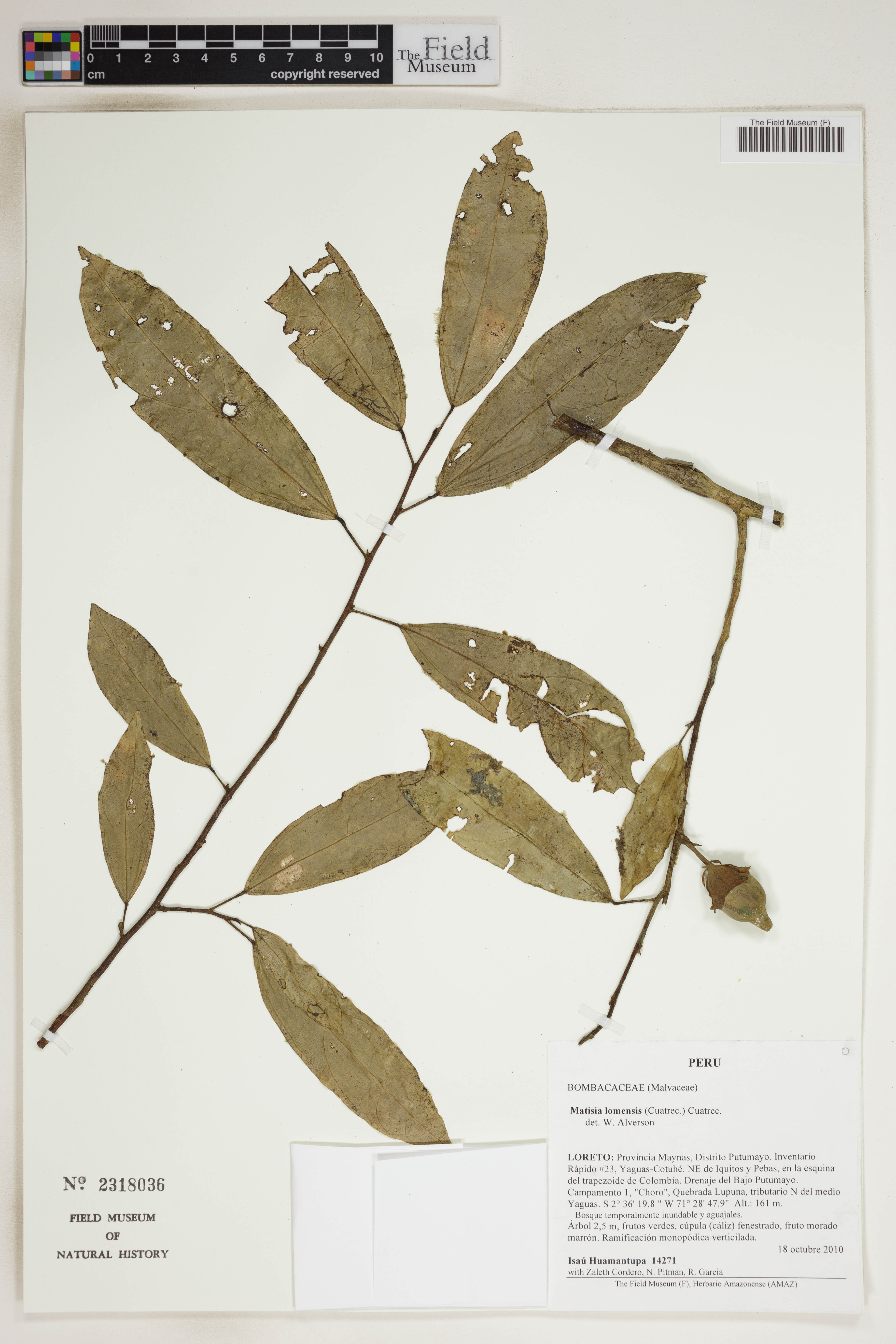
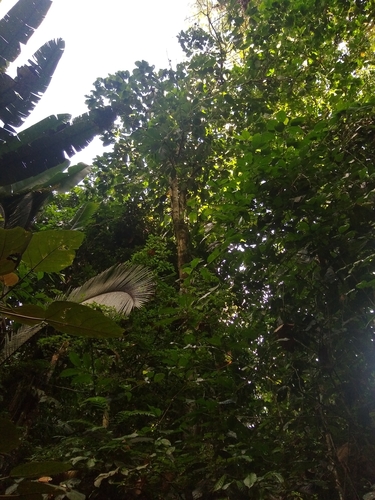
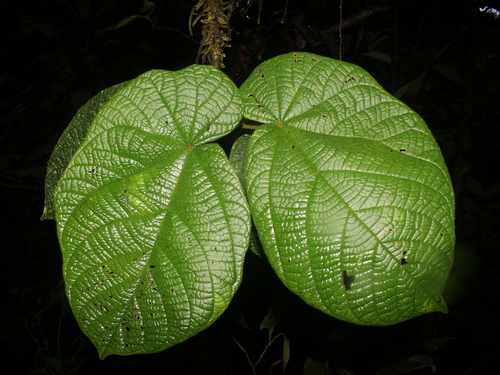
A tree. It grows to 15-30 m high. The leaf has 5-7 leaflets. These are arranged like fingers on a hand. The leaves are large and papery. The flowers are pinkish. The flowers can be 30 cm across. The fruit stalk is thick and 3 cm long. The fruit is a capsule which is oval or pear shaped. It is rusty velvet. It is 18-30 cm long by 12-20 cm wide.
Edible Uses
The seeds can be eaten raw or cooked. Raw, they are said to taste somewhat like peanuts; cooked, they resemble chestnuts. The seeds can be roasted and used like cocoa, or ground into a powder and used as a flour substitute in bread. The seeds contain about 50% oil. Individual seeds can be up to 8cm in diameter and are held in a woody capsule that can reach 30cm in diameter and weigh more than 3 kilos. Young leaves and flowers are also eaten.
Traditional Uses
The young leaves and flowers are eaten. The kernels are eaten after roasting.
This uses section is brief — help expand it
Medicinal Uses
None known.
Distribution
A tropical plant. In Brisbane Botanical Gardens.
Where It Grows
Africa, Amazon, Antilles, Asia, Australia, Bolivia, Brazil, Central America, Colombia, Cuba, Dominican Republic, Ecuador, Ghana, Greater Antilles, French Guiana, Guatemala, Guianas, Guyana, Haiti, Indochina, Mexico, North America, Peru, Puerto Rico, SE Asia, South America*, Sri Lanka, St Lucia, Suriname, Trinidad-Tobago, Venezuela, Vietnam, West Africa, West Indies, Winward Is.,
Cultivation
Plants can be grown from seed.
Propagation
Seed is best sown as soon as it is ripe in a partially shaded position in individual containers. Germination rates are usually extremely good, with seeds sprouting within 10–15 days. Seedlings develop quickly. Cuttings and air layering are also suitable methods.
Other Uses
The wood is light, straight-grained, and coarse-textured — easy to cut but with low resistance to rot. It is a low-value timber used to make toys, boxes, door and panel fillings, and similar items, and is also useful for paper production.
Notes
Also put in the family Bombacaceae. In the subfamily Bombacoideae.
Synonyms
Also Known As
Boesimomow, Kanihiriballi, Mamorana Grande, Mienqua, Munguba, Munguba-preta, Nuni, Pischkande, Trinidad pachira
References (20)
- Barwick, M., 2004, Tropical and Subtropical Trees. A Worldwide Encyclopedic Guide. Thames and Hudson p 306
- Burkill, H. M., 1985, The useful plants of west tropical Africa, Vol. 1. Kew.
- L. A. J. Desrousseaux et al., Encycl. 4:690. 1798
- Facciola, S., 1998, Cornucopia 2: a Source Book of Edible Plants. Kampong Publications, p 51
- Grandtner, M. M., 2008, World Dictionary of Trees. Wood and Forest Science Department. Laval University, Quebec, Qc Canada. (Internet database http://www.wdt.qc.ca)
Show all 20 references Hide references
- Grandtner, M. M. & Chevrette, J., 2013, Dictionary of Trees, Volume 2: South America: Nomenclature, Taxonomy and Ecology. Academic Press p 471
- Hedrick, U.P., 1919, (Ed.), Sturtevant's edible plants of the world. p 459
- Hibbert, M., 2002, The Aussie Plant Finder 2002, Florilegium. p 217
- Kermath, B. M., et al, 2014, Food Plants in the Americas: A survey of the domesticated, cultivated and wild plants used for Human food in North, Central and South America and the Caribbean. On line draft. p 600
- Kew Plants of the World Online
- Martin, F. W., et al, 1987, Perennial Edible Fruits of the Tropics. USDA Handbook 642 p 83 (As Bombax spruceanum)
- Menninger, E.A., 1977, Edible Nuts of the World. Horticultural Books. Florida p 65
- Pham-Hoang Ho, 1999, An Illustrated Flora of Vietnam. Nha Xuat Ban Tre. p 515
- Recher, P, 2001, Fruit Spirit Botanical Gardens Plant Index. www.nrg.com.au/~recher/ seedlist.html p 3
- Roa, J. A. G. & Boada, D. S. G., 2018, Fundación para el Fortalecimiento de la Fruticultura y Plantas Alimenticias no Convencionales en Colombia.
- Smith, N., Mori, S.A., et al, 2004, Flowering Plants of the Neotropics. Princeton. p 57
- Torre, de la L., et al, 2008, Enciclopedia de las Plantas Útiles del Ecuador. Herbario QCA. Pontificia Universidad Católica del Ecuador. p 251
- van Roosmalen, M.G.M., 1985, Fruits of the Guianan Flora. Utrecht Univ. & Wageningen Univ. p 56
- Wickens, G.E., 1995, Edible Nuts. FAO Non-wood forest products. FAO, Rome. p 110
- World Checklist of Useful Plant Species 2020. Royal Botanic Gardens, Kew