Gossypium barbadense
L.
Sea Island Cotton, Egyptian cotton, Brazilian cotton
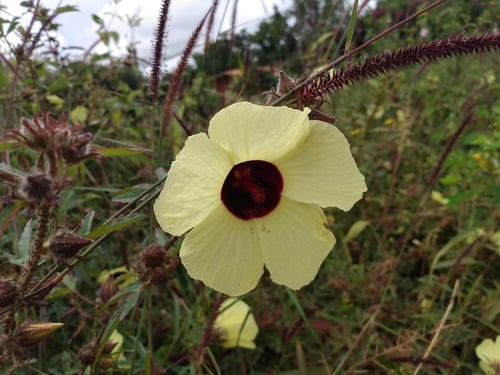
iNaturalist· cc-by-nc
(c) katherine Bravo, some rights reserved (CC BY-NC)
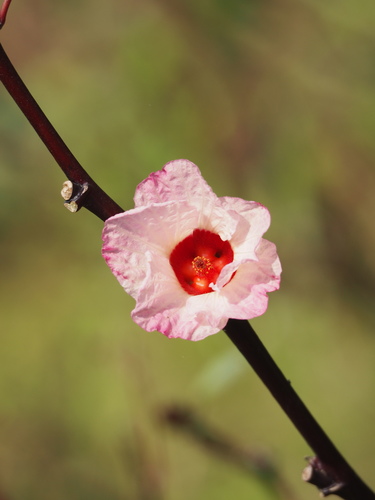
iNaturalist· cc-by-nc
(c) Marco Grandis, some rights reserved (CC BY-NC)
iNaturalist· cc-by-nc
(c) Marco Grandis, some rights reserved (CC BY-NC)
Summary
Source: WikipediaGossypium barbadense is one of several species of cotton. It is in the mallow family. It has been cultivated since antiquity, but has been especially prized since a form with particularly long fibers was developed in the 19th century. Other names associated with this species include Sea Island, Egyptian, Pima, and extra-long staple (ELS) cotton. The species is a tropical, frost-sensitive perennial that produces yellow flowers and has black seeds. It grows as a bush or small tree and yields cotton with unusually long, silky fibers. The native range of this species is Colombia to Peru. It is now cultivated around the world, including China, Egypt, Sudan, India, Australia, Peru, Israel, the southwestern United States, Tajikistan, Turkmenistan and Uzbekistan. It accounts for about a fifth of the world's cotton production.
Description
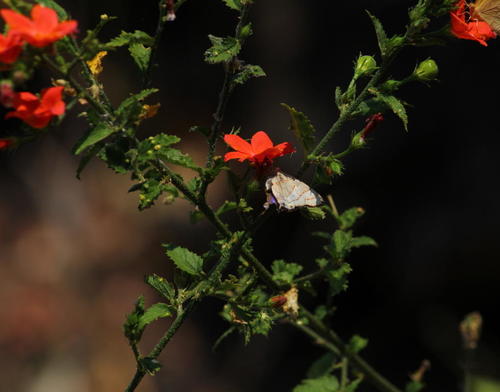
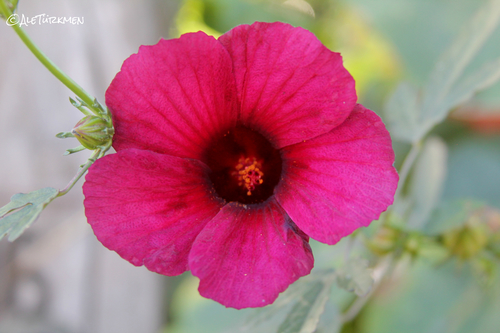
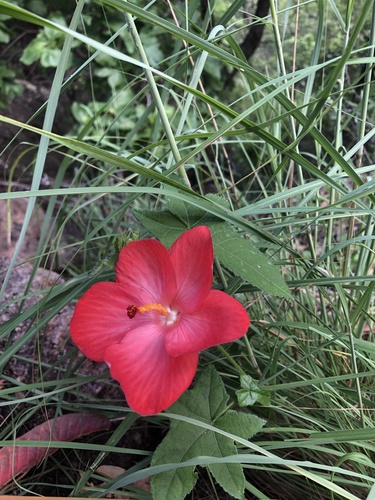
A shrub which keeps growing from year to year. Often it is grown as an annual. It is 1-3 m high. The stems are purplish. The leaves have 3-5 lobes. The flowers are at the ends of branches. They are yellow but change to reddish purple. They are surrounded by a bract which has 3 toothed lobes. The seeds are small and oval. The seeds have large amounts of lint.
Edible Uses
The leaves are probably edible. Seeds can be ground into flour and added to baked goods. Oil pressed from the seeds is used in salads, canned goods, and manufactured into margarine.
Traditional Uses
The oil from the seeds is used in salads, canned foods or manufactured into margarine. The seeds are ground into flour and used in bakery products. The leaves are eaten.
Medicinal Uses
The root is abortifacient, emetic, and emmenagogue. An infusion of the root bark is used to treat difficult or irregular menstruation, and the pulverised roots are used to procure an abortion. The stem bark is used in a preparation to strengthen the womb. The leaves are antipruritic, diuretic, and hypotensive. Leaves of the red variety are used for treating high blood pressure, abdominal cramps and pain, menstrual problems, painful ovaries, and difficult expulsion of afterbirth. Applied externally, the leaves are macerated in oil to make a poultice used to soothe an overheated person. An infusion of the leaf juice treats skin rash and children's cramps, and juice from macerated leaves can be applied as a wash for itchy skin or warmed and used as a medicament for 'bush yaws'. The flower buds are used as an auricular analgesic. Crushed seeds yield a juice given to babies to treat thrush. The seed fibres are laxative and pectoral, used to treat diarrhoea and thrush, and applied externally as a wound dressing. The pressed cotton cake contains gossypol, used clinically as a male contraceptive; gossypol is a toxic polyphenolic bisesquiterpene with potential antifertility and antiviral properties.
Distribution
A tropical and subtropical plant. In China it is grown in frost free areas below 800 m altitude. It suits seasonally moist and dry climates. It suits hardiness zones 10-12. In Yunnan.
Where It Grows
Africa, Asia, Australia, Bahamas, Belize, Bolivia, Burkina Faso, Central America, Central Asia, China, Colombia, Costa Rica, Dominican Republic, East Africa, Ecuador, Egypt, Fiji, Gabon, Grenada, Guadeloupe, Guam, Guiana, Guianas, Guyana, Haiti, Hawaii, Honduras, India, Indochina, Kiribati, Madagascar, Marquesas, Mozambique, Myanmar, Nauru, Nicaragua, Nigeria, North America, Pacific, Panama, Papua New Guinea, PNG, Peru, Puerto Rico, Rotuma, Samoa, Sao Tome and Principe, SE Asia, Sierra Leone, South America, Suriname, Tajikistan, Tanzania, Thailand, USA, Uzbekistan, Venezuela, Vietnam, West Africa, West Indies, Zambia,
Cultivation
It grows best in areas where annual daytime temperatures are within the range 22 - 32°c, but can tolerate 15 - 38?c. It prefers a mean annual rainfall in the range 750 - 1,250mm, but tolerates 500 - 1,500mm. Prefers a very sunny position in a light, fertile soil. Plants can tolerate a range of well-drained soils, including moderate levels of salt. Prefers a pH in the range 5.2 - 7.2, tolerating 5 - 8.5. Requires a position sheltered from strong winds. Suitable for growing indoors. Carbon Farming - Cultivation: regional crop. Management: standard, coppice. Perennial cotton has longer fibres and is considered superior to annual cottons. Perennial cottons are suited to arid and humid conditions while annual cottons were bred for colder climates and for mechanical harvesting. Perennial cottons are cultivated in the tropics on a smaller scale and include Gossypium arboreum burmanicum, Gossypium arboreum indicum, Gossypium arboreum soudanense, Gossypium barbadense braziliense, Gossypium barbadense darwinii, Gossypium herbaceum acerifolium, Gossypium herbaceum africanum, Gossypium hirsutum marie-galante, Gossypium hirsutum punctatum, Gossypium hirsutum taitense. Currently perennial cottons are harvested by hand. Researching perennial cottons varieties and production methods would help develop them as good carbon farming plants and help to alleviate the terrible problems caused by annual cottons.
Propagation
Propagate from herbaceous stem cuttings or from seed sown indoors before the last frost. Allow seedheads to dry on the plant before removing and collecting seeds. Properly cleaned seed can be successfully stored.
Other Uses
The seed floss fibre is the longest of any cotton species, measuring 3–5cm, and is strong and of excellent quality. Cotton fibres are used across a wide range of applications including clothing, rubber-tyre fabrics, pillow and cushion stuffing, surgical dressings, twine, ropes, and carpets. Suitable for carbon farming as an industrial fibre crop. Can be managed as coppice.
Other Information
It is cultivated.
Notes
A tetraploid plant. There are 40 Gossypium species. They grow in the tropics and subtropics. It is a major cotton producing plant.
Synonyms
Also Known As
Algodon, Fai-tet, Hai dao mian, Hasy, Kidney cotton, Nu-wah, Peruvain cotton, Pima cotton, Te baubau
References (32)
- Ambasta, S.P. (Ed.), 2000, The Useful Plants of India. CSIR India. p 244
- Burkill, I.H., 1966, A Dictionary of the Economic Products of the Malay Peninsula. Ministry of Agriculture and Cooperatives, Kuala Lumpur, Malaysia. Vol 1 (A-H) p 1125 (As Gossypium brasiliense)
- Etherington, K., & Imwold, D., (Eds), 2001, Botanica's Trees & Shrubs. The illustrated A-Z of over 8500 trees and shrubs. Random House, Australia. p 350
- Facciola, S., 1998, Cornucopia 2: a Source Book of Edible Plants. Kampong Publications, p 147
- Fowler, D. G., 2007, Zambian Plants: Their Vernacular Names and Uses. Kew. p 45
Show all 32 references Hide references
- Grandtner, M. M., 2008, World Dictionary of Trees. Wood and Forest Science Department. Laval University, Quebec, Qc Canada. (Internet database http://www.wdt.qc.ca)
- Grandtner, M. M. & Chevrette, J., 2013, Dictionary of Trees, Volume 2: South America: Nomenclature, Taxonomy and Ecology. Academic Press p 268
- Kermath, B. M., et al, 2014, Food Plants in the Americas: A survey of the domesticated, cultivated and wild plants used for Human food in North, Central and South America and the Caribbean. On line draft. p 395
- Lazarides, M. & Hince, B., 1993, Handbook of Economic Plants of Australia, CSIRO. p 124
- Llamas, K.A., 2003, Tropical Flowering Plants. Timber Press. p 255
- Martin, F.W. & Ruberte, R.M., 1979, Edible Leaves of the Tropics. Antillian College Press, Mayaguez, Puerto Rico. p 203 (As Gossypium brasiliense)
- McMakin, P.D., 2000, Flowering Plants of Thailand. A Field Guide. White Lotus. p 27
- Menninger, E.A., 1977, Edible Nuts of the World. Horticultural Books. Florida p 148
- Parham, B. E. V., 1972, Plants of Samoa. New Zealand Department of Scientific and Industrial Research. Information Series. No. 85 p 148
- Peekel, P.G., 1984, (Translation E.E.Henty), Flora of the Bismarck Archipelago for Naturalists, Division of Botany, Lae, PNG. p 369, 367
- Pham-Hoang Ho, 1999, An Illustrated Flora of Vietnam. Nha Xuat Ban Tre. p 531
- Phillips, L.L., 1979, Cotton, in Simmonds N.W.,(ed), Crop Plant Evolution. Longmans. London. p 196
- Plants of Haiti Smithsonian Institute http://botany.si.edu/antilles/West Indies
- Purseglove, J.W., 1968, Tropical Crops Dicotyledons, Longmans. p 345, 351 (Drawing)
- Roa, J. A. G. & Boada, D. S. G., 2018, Fundación para el Fortalecimiento de la Fruticultura y Plantas Alimenticias no Convencionales en Colombia.
- Small, E., 2009, Top 100 Food Plants. The world's most important culinary crops. NRC Research Press. p 234
- Sp. pl. 2:693. 1753
- Staples, G.W. and Herbst, D.R., 2005, A tropical Garden Flora. Bishop Museum Press, Honolulu, Hawaii. p 386
- Tanaka,
- Tang ya, Malvaceae. Flora of China. p
- Thaman, R. R., 1987, Plants of Kiribati: A listing and analysis of vernacular names. Atoll Research Bulletin No. 296
- Torre, de la, L., et al, 2008, Enciclopedia de las Plantas Útiles del Ecuador. Herbario QCA. Pontificia Universidad Católica del Ecuador. p 400
- van Wyk, B., 2005, Food Plants of the World. An illustrated guide. Timber press. p 204
- Vickery, M.L. and Vickery, B., 1979, Plant Products of Tropical Africa, Macmillan. p 72
- World Checklist of Useful Plant Species 2020. Royal Botanic Gardens, Kew
- Zambrana, P, et al, 2017, Traditional knowledge hiding in plain sight – twenty-first century ethnobotany of the Chácobo in Beni, Bolivia. Journal of Ethnobiology and Ethnomedicine (2017) 13:57
- Zeven, A. C. & de West, J. M. J., 1982, Dictionary of cultivated plants and their regions of diversity. Wageningen. p 84