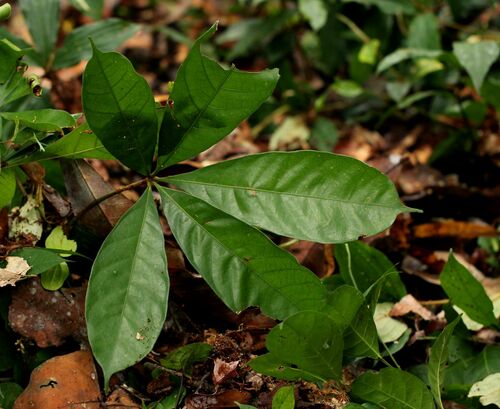
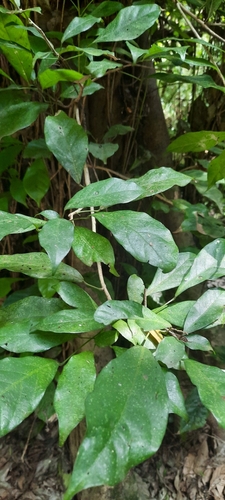
Gouania tiliifolia
Lam.
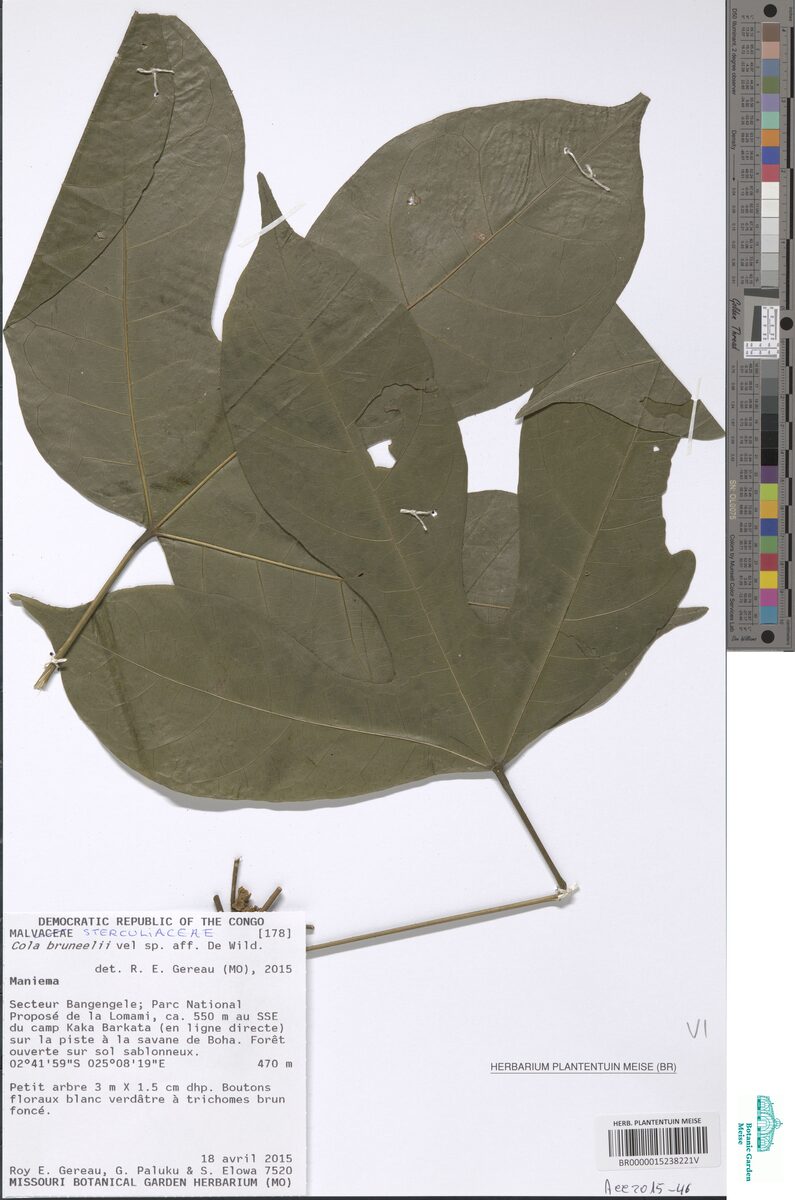
iNaturalist· cc-by-nc
(c) Bart Wursten, some rights reserved (CC BY-NC), uploaded by Bart Wursten
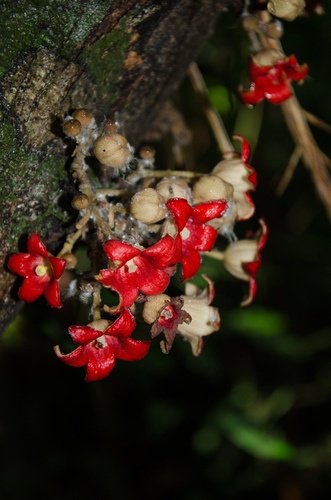
iNaturalist· cc-by-nc
(c) Bart Wursten, some rights reserved (CC BY-NC), uploaded by Bart Wursten
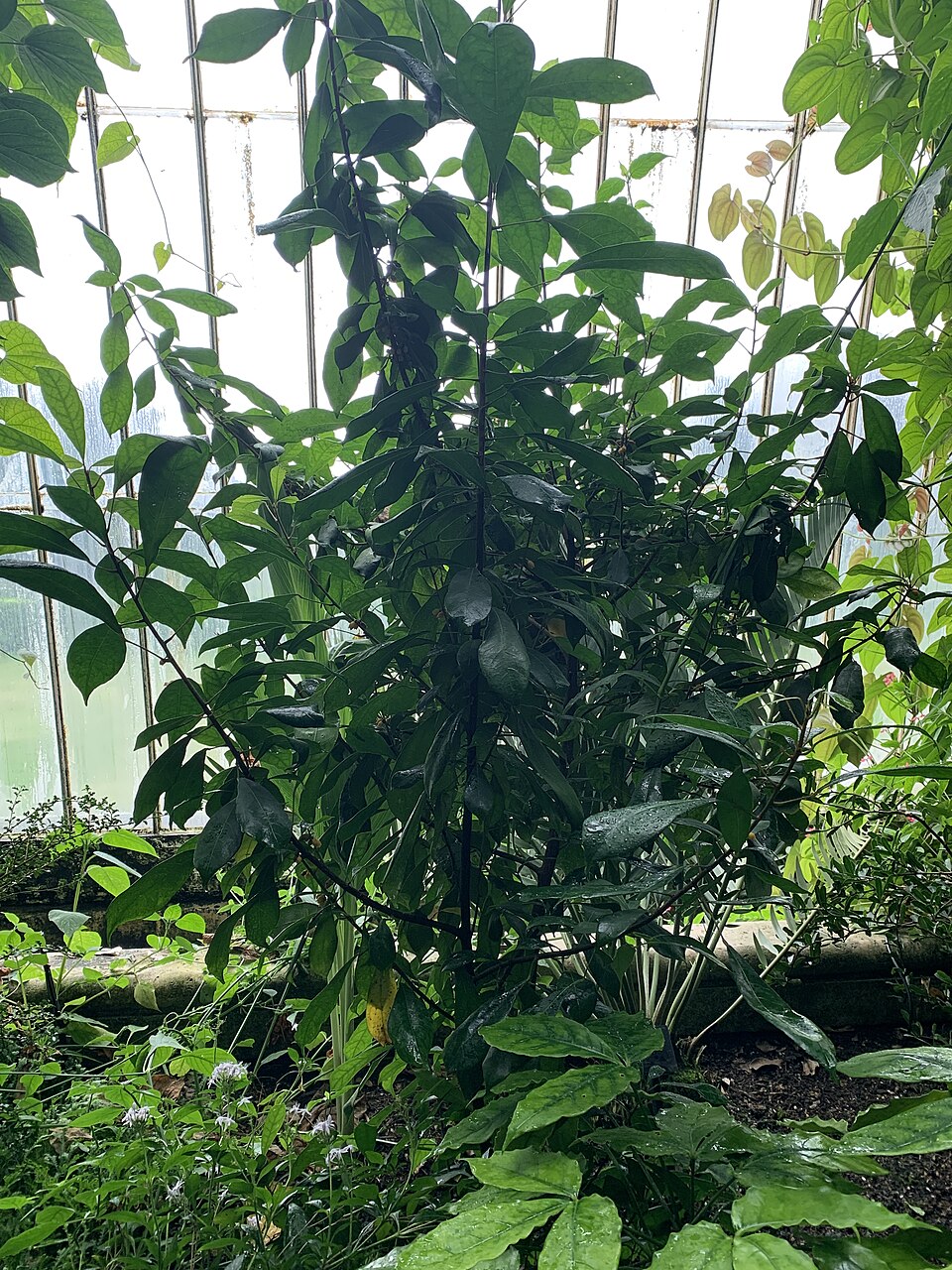
iNaturalist· cc-by-nc
(c) Bart Wursten, some rights reserved (CC BY-NC), uploaded by Bart Wursten
Description
A tropical shrub or creeper in the Malvaceae family, growing in humid places at 500-1,000 m elevation in Madagascar.
This description is brief — help expand it
Edible Uses
Young leaves are eaten as a vegetable.
Traditional Uses
Young leaves are eaten.
This uses section is brief — help expand it
Medicinal Uses
The leaves are used as medicine.
Known Hazards
The bark contains saponins and is used to stupefy fish in rivers. Although poisonous, saponins are poorly absorbed by the human body and so most pass through without harm. Saponins are quite bitter and can be found in many common foods such as some beans. They can be removed by carefully leaching in running water. Thorough cooking, and perhaps changing the cooking water once, will also normally remove most of them. However, it is not advisable to eat large quantities of food that contain saponins. Saponins are much more toxic to some creatures, such as fish, and hunting tribes have traditionally put large quantities of them in streams, lakes etc in order to stupefy or kill the fish.
Distribution
It is a tropical plant. It grows in humid places. It grows between 500-1,000 m above sea level in Madagascar.
Where It Grows
Africa, Asia, East Africa, Himalayas, India, Mauritius, Nepal, Northeastern India, Sikkim,
Other Uses
The root is used as a soap substitute. The bark is used as a hair shampoo.
Notes
Gouania tiliifolia Roxb. is a synonym of Gouania leptostachya DC. The leaves are used as medicine.
Synonyms
Also Known As
Batwasi, Bitkil-chand, Jermei-ja-main, Jwarpat, Kalalag, Khanta, Penki tiga, Rakta pitchali, Tung-cheongmonrik
References (2)
- Ambasta, S.P. (Ed.), 2000, The Useful Plants of India. CSIR India. p 247
- Savita, et al, 2006, Studies on wild edible plants of ethnic people in east Sikkim. Asian J. of Bio Sci. (2006) Vol. 1 No. 2 : 117-125