Gossypium hirsutum
L.
American cotton
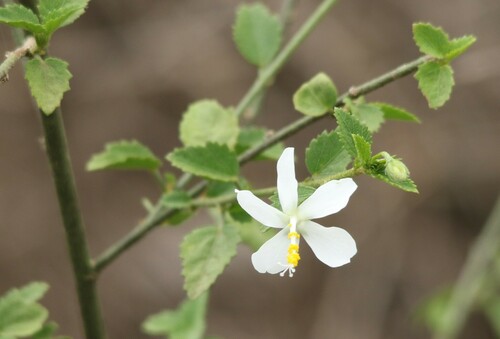
iNaturalist· cc-by-nc
(c) Riley Fortier, some rights reserved (CC BY-NC), uploaded by Riley Fortier
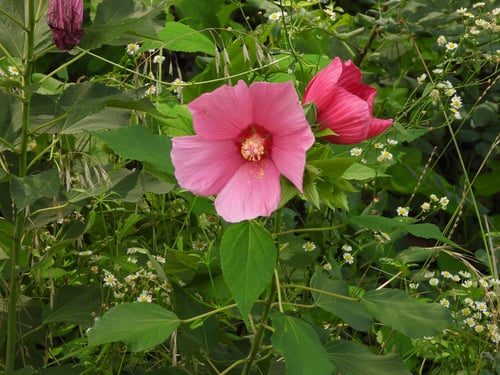
iNaturalist· cc-by-nc
(c) Pat Deacon, some rights reserved (CC BY-NC)
Summary
Source: WikipediaGossypium hirsutum, also known as upland cotton or Mexican cotton, is the most widely planted species of cotton in the world. Globally, about 90% of all cotton production is of cultivars derived from this species. In the United States, the world's largest exporter of cotton, it constitutes approximately 95% of all cotton production. It is native from Mexico to Ecuador and northeast Brazil, the Leeward Antilles in the Caribbean and the Pacific (Fiji, Marianas, Polynesia and Revillagigedo Islands). It is believed that gossypium hirsutum was created when wild Mexican cotton breeds mixed with gossypium herbaceum around 5-10 million years ago, producing a hybrid species with 26 pairs of chromosomes via polyploidy. Archeological evidence from the Tehuacan Valley in Mexico shows the cultivation of this species as long ago as 3,500 BC, although there is as yet no evidence as to exactly where it may have been first domesticated. This is the earliest evidence of cotton cultivation in the Americas found thus far. Gossypium hirsutum includes a number of varieties or cross-bred cultivars with varying fiber lengths and tolerances to a number of growing conditions. The longer length varieties are called "long staple upland" and the shorter length varieties are referred to as "short staple upland". The long staple varieties are the most widely cultivated in commercial production. Besides being fibre crops, Gossypium hirsutum and Gossypium herbaceum are the main species used to produce cottonseed oil. The Zuni people use this plant to make ceremonial garments, and the fuzz is made into cords and used ceremonially. This species shows extrafloral nectar production.
Description
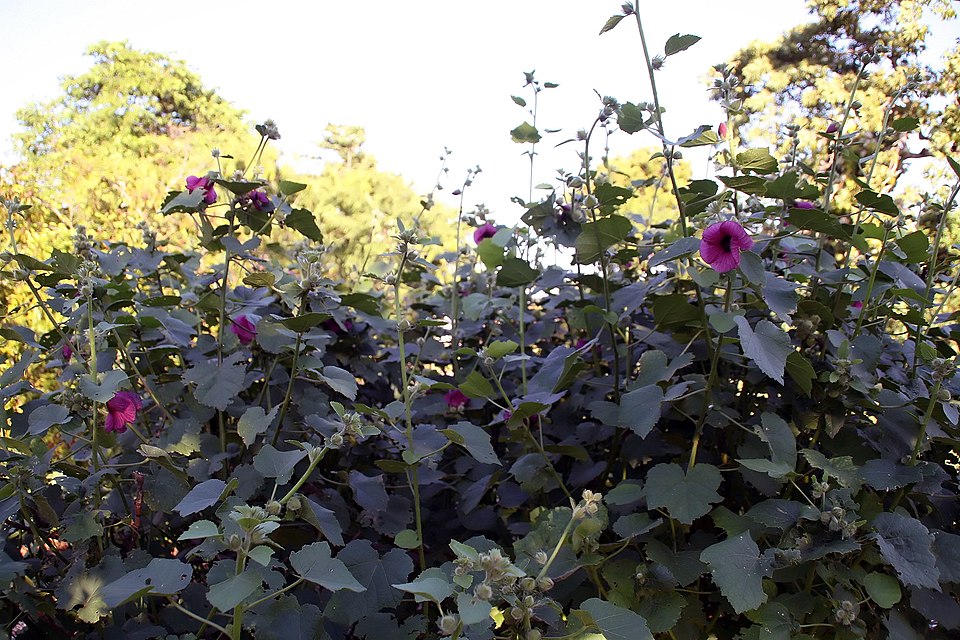
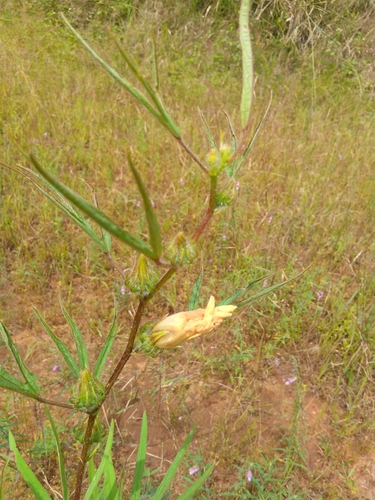
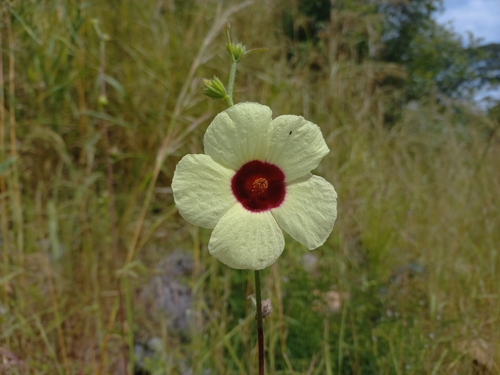
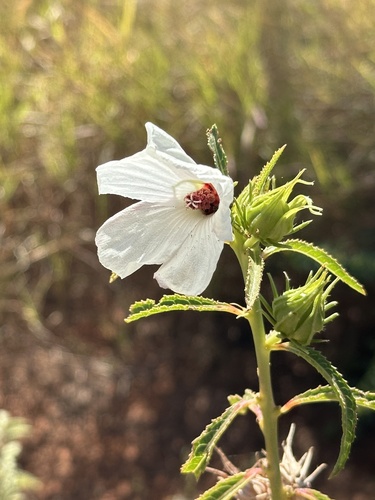
An annual herb. It grows 0.6-1.5 cm high. The leaf blade has 3 lobes. The leaf blade is 5-12 cm across. The lobes are broad and oval. The lobes are less than half the leaf length. The flowers occur singly in the axils of leaves. The flowers are white or yellow becoming red or purple. They are 2.5-3 cm across. The fruit is a capsule 3.5-5 cm across. It has 3-4 cells. The seeds are oval and white and woolly. The seeds are covered with very long seed hairs called cotton.
Edible Uses
The seeds contain up to 40% protein, have a nutty flavour when roasted, and can be eaten as a snack. They can also be boiled and used like rice in casseroles and soups, ground into a powder and added to flour for bread and cakes, or made into a spread similar to peanut butter. Some forms of this plant produce seeds containing the toxin gossypol, which must be removed before eating; seeds from glandless cultivars do not contain this toxin. Oil extracted from the seeds is used in salads, for cooking, and to make margarine. The plant is noted as a staple oil crop in carbon farming systems.
Traditional Uses
Oil is extracted from the seeds and used in cooking and salads. It is also used to make margarine. The seeds are use as food after the toxic substance gossypol is removed. Some kinds can be eaten without treatment. Young fruit are eaten.
Medicinal Uses
Boiled leaves are applied externally to skin rashes on children.
Known Hazards
Some forms of this plant contain the toxin gossypol - glandless cultivars are free of this toxin.
Distribution
It is a tropical plant. It is widely cultivated in China. It needs an average, well-drained soil. It needs full sun. It suits hardiness zones 9-12.
Where It Grows
Africa, American Samoa, Asia, Australia, Balkans, British Indian Ocean Terr., BIOT, Burkina Faso, Central America*, Central Asia, China, Colombia, Costa Rica, Dominican Republic, East Africa, Fiji, French Polynesia, Guiana, Guianas, Guinea, Guinée, Guinea-Bissau, Guyana, Haiti, Hispaniola, India, Jamaica, Macedonia, Mediterranean, Mexico, Mozambique, Myanmar, North America, Pacific, Pakistan, Peru, Puerto Rico, Samoa, Sao Tome and Principe, SE Asia, Senegal, Sierra Leone, Slovenia, South America, Suriname, Tajikistan, USA, Venezuela, West Africa, West Indies, Zambia, Zimbabwe,
Cultivation
It grows best in areas where annual daytime temperatures are within the range 22 - 36°c, but can tolerate 15 - 42°c. It prefers a mean annual rainfall in the range 750 - 1,200mm, but tolerates 450 - 1,500mm. Prefers a very sunny position in a light, fertile soil. Plants can tolerate a range of well-drained soils, including moderate levels of salt. Prefers a pH in the range 6 - 7.5, tolerating 5 - 9.5. Requires a position sheltered from strong winds. The plant is usually cultivated as an annual, taking 150 - 220 days to mature a crop. Seed-cotton yields vary between 0.8 - 3 tonnes/ha, or 0.2 - 1.1 tonnes/ha of fibre. Carbon Farming - Cultivation: regional crop. Management: standard, coppice. Perennial cotton has longer fibres and is considered superior to annual cottons. Perennial cottons are suited to arid and humid conditions while annual cottons were bred for colder climates and for mechanical harvesting. Perennial cottons are cultivated in the tropics on a smaller scale and include Gossypium arboreum burmanicum, Gossypium arboreum indicum, Gossypium arboreum soudanense, Gossypium barbadense braziliense, Gossypium barbadense darwinii, Gossypium herbaceum acerifolium, Gossypium herbaceum africanum, Gossypium hirsutum marie-galante, Gossypium hirsutum punctatum, Gossypium hirsutum taitense. Currently perennial cottons are harvested by hand. Researching perennial cottons varieties and production methods would help develop them as good carbon farming plants and help to alleviate the terrible problems caused by annual cottons.
Propagation
Propagate from seed. In zones 8–10 it can be sown directly after the last frost. In zones 5–7, treat like tomatoes. Seed germinates in 7–21 days at 70°F. Plant 18–30 inches apart in rows 5 feet apart. Plants begin flowering in mid-summer.
Other Uses
A good-quality fibre is obtained from the seed floss and used across a wide range of applications including clothing, rubber-tyre fabrics, pillow and cushion stuffing, surgical dressings, twine, ropes, and carpets. Oil from the seeds is also extracted; lower grades are used in the manufacture of soap, lubricants, sulphonated oils, and protective coatings. After oil extraction, low-grade seed cake is used as manure. Seed hulls and dry stalks are used as fuel. Suitable for carbon farming as an industrial fibre crop and for use in strip intercrop systems.
Notes
A tetraploid plant. There are 40 Gossypium species. They grow in the tropics and subtropics.
Synonyms
Also Known As
Algodao, Algodon, American upland cotton, Bourbon cotton, Dlakavi bombaževec, Ligue, Lu di mian, Mudonje, Mushinda, Utshinda, Vavae
References (28)
- Ambasta, S.P. (Ed.), 2000, The Useful Plants of India. CSIR India. p 245
- Blamey, M and Grey-Wilson, C., 2005, Wild flowers of the Mediterranean. A & C Black London. p 135
- Bremness, L., 1994, Herbs. Collins Eyewitness Handbooks. Harper Collins. p 105
- Facciola, S., 1998, Cornucopia 2: a Source Book of Edible Plants. Kampong Publications, p 147
- Flora of Pakistan. www.eFloras.org
Show all 28 references Hide references
- Fowler, D. G., 2007, Zambian Plants: Their Vernacular Names and Uses. Kew. p 45
- Hussey, B.M.J., Keighery, G.J., Cousens, R.D., Dodd, J., Lloyd, S.G., 1997, Western Weeds. A guide to the weeds of Western Australia. Plant Protection Society of Western Australia. p 174
- Hu, Shiu-ying, 2005, Food Plants of China. The Chinese University Press. p 539
- Kiple, K.F. & Ornelas, K.C., (eds), 2000, The Cambridge World History of Food. CUP p 1763
- Lazarides, M. & Hince, B., 1993, Handbook of Economic Plants of Australia, CSIRO. p 124
- Llamas, K.A., 2003, Tropical Flowering Plants. Timber Press. p 255
- Moerman, D. F., 2010, Native American Ethnobotany. Timber Press. p 251
- Omawale, 1973, Guyana's edible plants. Guyana University, Georgetown p 59
- Paczkowska, G. & Chapman, A.R., 2000, The Western Australian Flora. A Descriptive Catalogue. Western Australian Herbarium. p 288
- Parham, B. E. V., 1972, Plants of Samoa. New Zealand Department of Scientific and Industrial Research. Information Series. No. 85 p 148
- Plants of Haiti Smithsonian Institute http://botany.si.edu/antilles/West Indies
- Small, E., 2009, Top 100 Food Plants. The world's most important culinary crops. NRC Research Press. p 234
- Smith, A.C., 1981, Flora Vitiensis Nova, Lawaii, Kuai, Hawaii, Volume 2 p 429
- Sp. pl. ed. 2, 2:975. 1763
- Tanaka,
- Tang ya, Malvaceae. Flora of China. p
- Topp, J. M. W., 1988, An Annotated Check List of the Flora of Diego Garcia, British Ocean Territory. Atoll Research Bulletin No. 313
- van Wyk, B., 2005, Food Plants of the World. An illustrated guide. Timber press. p 204
- Wheeler, J.R.(ed.), 1992, Flora of the Kimberley Region. CALM, Western Australian Herbarium, p 210
- Wiersema, J. H. & Leon, B., 2013, World Economic Plants. A Standard Reference CRC Press. 2nd Ed. p 330
- World Checklist of Useful Plant Species 2020. Royal Botanic Gardens, Kew
- www.zimbabweflora.co.zw 2011
- Zaldivar, M. E., et al, 2002, Species Diversity of Edible Plants Grown in Homegardens of Chibehan Amerindians from Costa Rica. Human Ecology, Vol. 30, No. 3, pp. 301-316