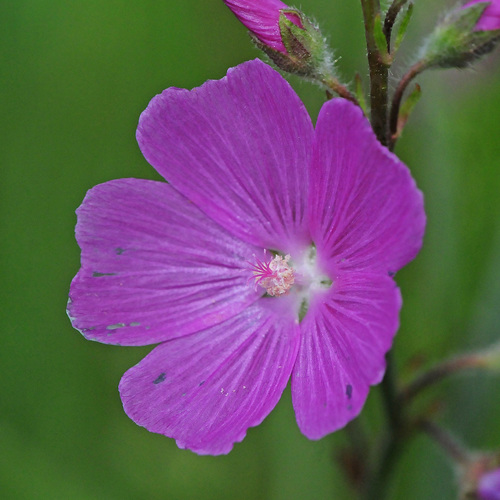
Gossypium herbaceum
L.
Short-staple cotton
iNaturalist· cc0
no rights reserved, uploaded by 葉子
iNaturalist· cc-by-nc
(c) James Kuria NDUNG’U, some rights reserved (CC BY-NC)
iNaturalist· cc-by-nc
(c) James Kuria NDUNG’U, some rights reserved (CC BY-NC)
Summary
Source: WikipediaGossypium herbaceum, commonly known as Levant cotton, is a species of cotton native to semi-arid regions of Southern Africa, as well as from Syria to Afghanistan, where it still grows perennially in the wild as a shrub.
Description
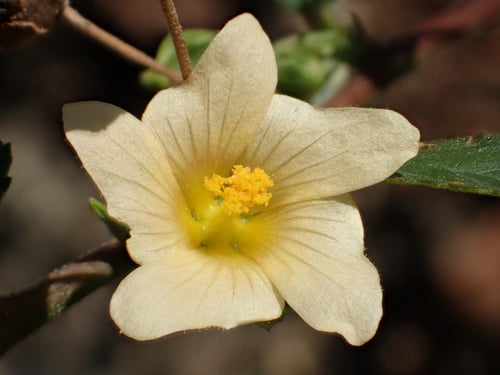
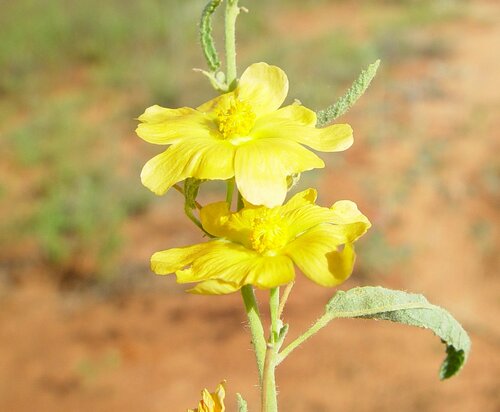
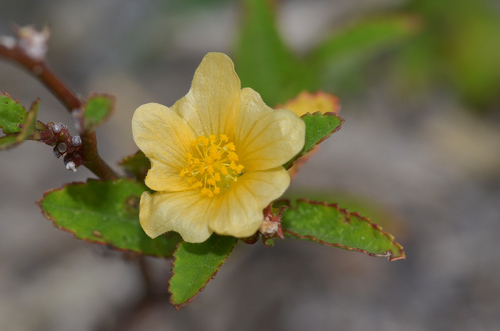
A shrub. It grows 2 m high. The leaf stalk is 2.5-8 cm long. The leaf blade is divided into 5 lobes like the fingers on a hand. The leaves are 5-10 cm across. The lobes are broad and oval and half the length of the leaf. The flowers occur singly in the axils of the leaves. The flowers are yellow and red or purple at the centre. The fruit is a capsule with 3-4 valves. It is about 3 cm across. The seeds are about 1 cm across. They are white and woolly.
Edible Uses
The seeds can be roasted and used as a coffee substitute. An oil extracted from the seeds is used in salads and as a cooking oil, and is also manufactured into margarines, vegetable shortenings, and lard substitutes. The oil contains gossypol, a substance believed to lower male fertility and cause infertility; this is usually removed before the oil is used for food. Leaves are also edible. The plant is noted as a staple oil crop in carbon farming systems.
Traditional Uses
The seeds yield a cotton oil used for salads. It is also used in cooking. The seed is roasted and used as a coffee substitute. The leaves are eaten.
Medicinal Uses
Cotton is an astringent, slightly acidic, aromatic herb that causes uterine contractions, depresses sperm production, lowers fever, reduces inflammation, soothes irritated tissue, and has antiviral and antibacterial actions. The root bark, which contains gossypol and flavonoids, has been used as a milder and safer alternative to ergot for inducing uterine contractions to speed difficult labour. It can induce abortion or the onset of a period, reduce total menstrual flow, and has been taken internally for painful menstruation. The root bark also encourages increased milk flow in nursing mothers and supports blood clotting. Roots are harvested at the end of the growing season, peeled, and dried. Seeds are taken internally to treat dysentery, intermittent fever, and fibroids, and applied externally for herpes, scabies, wounds, and orchitis. The gossypol in the seed oil lowers sperm production and may cause male infertility; it has been investigated as a potential male contraceptive and can reduce heavy menstrual flow and aid in treating endometriosis. Leaves are taken internally for gastroenteritis and applied externally to treat thrush, scalds, bruises, and sores; they are harvested as needed during the growing season.
Known Hazards
The main use of cotton lint is to produce textiles for clothing. The fibres are spun into yarns and these are woven into fabrics, in the farm or house or in factories. Cotton as a fabric is much appreciated because of its comfortable, breathable properties, its resistance and also because it is easily stained. The cotton plant itself has medicinal uses, and can be cultivated traditionally, in house backyards, for, e.g., women's menstrual cycle pains and irregular bleeding. It is also known to be used after birth to expel the placenta and to increase the lactation, as well as for gastrointestinal issues, such as hemorrhages and diarrhea, for nausea, fevers and headaches. In the Levant seeds of Gossypium herbaceum were also used for food, feed or oil extraction. Cotton seeds, containing up to 20% oil and 20% proteins, are potentially highly rich as food or feed. Nevertheless, small glands present in all the plant organs of the Gossypium species, except the roots, and especially abundant in the seeds, contain toxic chemicals, in particular the polyphenolic compound gossypol. The gossypol is highly toxic to animals and is an element of the plant direct defence system against herbivorous arthropods. It can cause severe growth and development disorders in humans as well as domestic animals, particularly monogastric animals, while polygastrics are more or less tolerant. For this reason, using oil or whole seeds for human nutrition is dependent upon some way of elimination of the gossypol, through heating or other treatment. The gossypol extracted from cotton seeds has a potential use as a male contraceptive but can cause irreversible infertility after repeated use. In lab rat studies, it has been able to stop early pregnancies.
Distribution
A tropical plant. It is cultivated in China. It needs a temperature above 13-18°C. In Sichuan and Yunnan.
Where It Grows
Afghanistan, Africa, Albania, Andaman Is., Angola, Asia, Australia, Bangladesh, Botswana, Brazil, Burkina Faso, Cambodia, Canary Is., Chad, Central Asia, China, Crete, Dominican Republic, East Africa, Egypt, Eswatini, Ethiopia, Greece, Guinea, Haiti, India, Indochina, Iran, Iraq, Kazakhstan, Lebanon, Maldives, Mauritania, Mediterranean, Middle East, Mozambique, Myanmar, Namibia, Niger, Nigeria, North America, Northeastern India, Oman, Pakistan, Romania, SE Asia, Senegal, Sicily, Somalia, South Africa, Southern Africa, Spain, St Helena, Sudan, Swaziland, Syria, Tajikistan, Thailand, Togo, Turkmenistan, USA, Uzbekistan, Vietnam, West Indies, Yemen, Zambia, Zimbabwe,
Cultivation
It grows best in areas where annual daytime temperatures are within the range 26 - 36c, but can tolerate 18 - 38c. It prefers a mean annual rainfall in the range 750 - 1,250mm, but tolerates 200 - 1,500mm. Prefers a very sunny position in a light, fertile soil. Plants can tolerate a range of well-drained soils, including moderate levels of salt. Prefers a pH in the range 6 - 7.2, tolerating 5.3 - 8.5. Requires a position sheltered from strong winds. Flowering Time: Late Spring/Early Summer Mid Summer Late Summer/Early Fall. Bloom Color: Bright Yellow. Spacing: 9-12 in. (22-30 cm). Carbon Farming - Cultivation: regional crop. Management: standard, coppice. Perennial cotton has longer fibres and is considered superior to annual cottons. Perennial cottons are suited to arid and humid conditions while annual cottons were bred for colder climates and for mechanical harvesting. Perennial cottons are cultivated in the tropics on a smaller scale and include Gossypium arboreum burmanicum, Gossypium arboreum indicum, Gossypium arboreum soudanense, Gossypium barbadense braziliense, Gossypium barbadense darwinii, Gossypium herbaceum acerifolium, Gossypium herbaceum africanum, Gossypium hirsutum marie-galante, Gossypium hirsutum punctatum, Gossypium hirsutum taitense. Currently perennial cottons are harvested by hand. Researching perennial cottons varieties and production methods would help develop them as good carbon farming plants and help to alleviate the terrible problems caused by annual cottons.
Propagation
Propagate from herbaceous stem cuttings or from seed sown indoors before the last frost. Allow seedheads to dry on the plant before removing and collecting seeds. Properly cleaned seed can be successfully stored.
Other Uses
The floss from the seedpod is used to make fibre for clothing and many other applications, including rubber-tyre fabrics, stuffing for pillows and cushions, surgical dressings, twine, ropes, and carpets. Plant stems can be used for papermaking. A semi-drying oil from the seeds is used to make soap, and the oil cake residue can be used as a fertilizer. Yellow and brown dyes are obtained from the petals. Suitable for carbon farming as an industrial fibre crop. Can be managed as coppice.
Other Information
It is cultivated.
Notes
A diploid plant. There are 40 Gossypium species. They grow in the tropics and subtropics. It has anticancer properties.
Nutrition
| Part | Moisture | kJ | kcal | Protein | Vit A | Vit C | Iron | Zinc |
|---|---|---|---|---|---|---|---|---|
| Seed oil | 0 | 3700 | 900 | 0 | 0 | 0 | 0 | 0 |
| Seed dried | 8 | 1827 | 437 | 20.2 | — | — | — | — |
Synonyms
Also Known As
Arabian cotton, Cao mian, Khun, Levant cotton, Maltese cotton, Wah
References (32)
- Ambasta, S.P. (Ed.), 2000, The Useful Plants of India. CSIR India. p 244
- Bianchini, F., Corbetta, F., and Pistoia, M., 1975, Fruits of the Earth. Cassell. p 238
- Blamey, M and Grey-Wilson, C., 2005, Wild flowers of the Mediterranean. A & C Black London. p 135
- Bodkin, F., 1991, Encyclopedia Botanica. Cornstalk publishing, p 505
- Brown, D., 2002, The Royal Horticultural Society encyclopedia of Herbs and their uses. DK Books. p 224
Show all 32 references Hide references
- Facciola, S., 1998, Cornucopia 2: a Source Book of Edible Plants. Kampong Publications, p 147
- Fowler, D. G., 2007, Zambian Plants: Their Vernacular Names and Uses. Kew. p 45
- Hedrick, U.P., 1919, (Ed.), Sturtevant's edible plants of the world. p 332
- Hu, Shiu-ying, 2005, Food Plants of China. The Chinese University Press. p 539
- Kew Plants of the World Online
- Kintzios, S. E., 2006, Terrestrial Plant-Derived Anticancer Agents and Plant Species Used in Anticancer research. Critical Reviews in Plant Sciences. 25: pp 79-113 (As G. herbaceum)
- Martin, F.W. & Ruberte, R.M., 1979, Edible Leaves of the Tropics. Antillian College Press, Mayaguez, Puerto Rico. p 203
- Medhi, P. & Borthakur, S. K., 2012, Phytoresources from North Cachur Hills of Assam -3: Edible plants sold at Hflong market. Indian Journal of Natural Products and Resources. 3(1) pp 84-109
- Menninger, E.A., 1977, Edible Nuts of the World. Horticultural Books. Florida p 148
- Molla, A., Ethiopian Plant Names. http://www.ethiopic.com/aplants.htm
- Pham-Hoang Ho, 1999, An Illustrated Flora of Vietnam. Nha Xuat Ban Tre. p 530
- Phillips, L.L., 1979, Cotton, in Simmonds N.W.,(ed), Crop Plant Evolution. Longmans. London. p 196
- Plants of Haiti Smithsonian Institute http://botany.si.edu/antilles/West Indies
- Purseglove, J.W., 1968, Tropical Crops Dicotyledons, Longmans. p 322
- Ruiters-Welcome, A. K., 2019, Food plants of southern Africa. Ph.D. thesis. Univ. of Johannesburg p 75
- Small, E., 2009, Top 100 Food Plants. The world's most important culinary crops. NRC Research Press. p 234
- Sp. pl. 2:693. 1753
- Swaziland's Flora Database http://www.sntc.org.sz/flora
- Tanaka,
- Tang ya, Malvaceae. Flora of China. p
- Uphof,
- van Wyk, B., 2005, Food Plants of the World. An illustrated guide. Timber press. p 204
- Vickery, M.L. and Vickery, B., 1979, Plant Products of Tropical Africa, Macmillan. p
- Welcome, A. K. & Van Wyk, B.-E., 2019, An inventory and analysis of the food plants of southern Africa. South African Journal of Botany 122 (2019) 136–179
- Wiersema, J. H. & Leon, B., 2013, World Economic Plants. A Standard Reference CRC Press. 2nd Ed. p 330
- World Checklist of Useful Plant Species 2020. Royal Botanic Gardens, Kew
- Zeven, A. C. & de West, J. M. J., 1982, Dictionary of cultivated plants and their regions of diversity. Wageningen. p 84, 99