Amaranthus palmeri
S. Watson
Palmer's Amaranth, Carelessweed
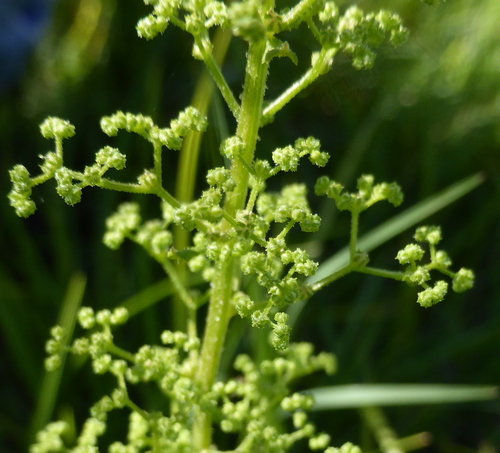
iNaturalist· cc-by-sa
(c) Douglas Goldman, some rights reserved (CC BY-SA), uploaded by Douglas Goldman
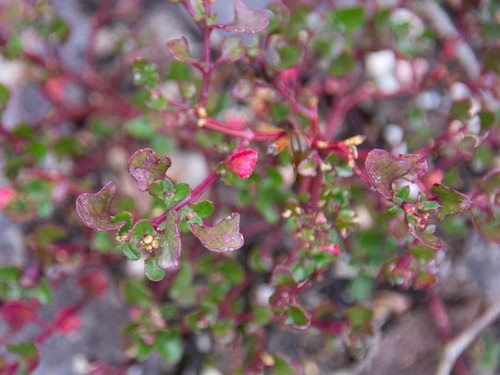
iNaturalist· cc-by-nc
(c) C. Mallory, some rights reserved (CC BY-NC), uploaded by C. Mallory
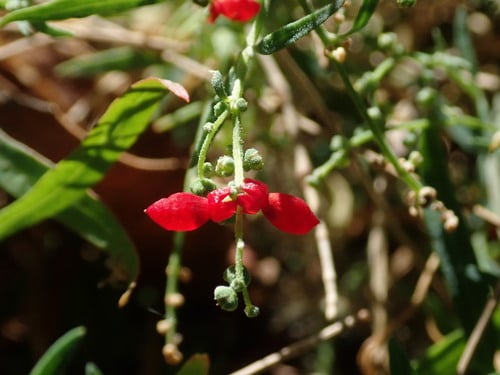
iNaturalist· cc-by-nc
(c) Lissa Martinez, some rights reserved (CC BY-NC), uploaded by Lissa Martinez
Summary
Source: WikipediaAmaranthus palmeri is a species of edible flowering plant in the amaranth genus. It has several common names, including carelessweed, dioecious amaranth, Palmer's amaranth, Palmer amaranth, and Palmer's pigweed. It is native to most of the southern half of North America. Populations in the eastern United States are probably naturalized. It has also been introduced to Europe, Australia, and other areas. The plant is fast-growing and highly competitive.
Description
An annual herb which grows to 90 cm high. The stems and leaves are smooth. Leaves have long leaf stalks. They are alternate arranged around the stem. Male and female flowers are on separate plants. The flowers are in cylinder shaped spikes 60 cm long.
Edible Uses
Palmer's amaranth is one of the most highly regarded wild amaranths, valued for both its leaves and seeds. The leaves, traditionally known as quelite (from the Nahuatl word for edible greens), are considered among the best-tasting wild leafy vegetables. Fresh leaves resemble spinach in flavor but with a distinct character of their own. Brief boiling enhances the flavor while preserving their vivid green color, yielding a soft but not mushy texture; the resulting broth is equally vivid and palatable. Leaves can also be dried for winter use. The seeds are outstanding in both nutrition and flavor — shiny, black, and very hard when raw, but softened by toasting or boiling. Toasted seeds pop lightly and develop a nutty, grain-like taste; boiled seeds form a hearty porridge in just 10–15 minutes. Seeds are highly nutritious, containing complete protein, and store well long-term. They can be ground into a powder and combined with cereal flours for porridge or bread. Cooked whole, they become very gelatinous, though it is difficult to crush all the small seeds in the mouth, meaning some will pass through the digestive system without being assimilated. Processing is relatively easy, though the spiny chaff requires gloves to handle. One plant can yield large quantities of seed, making Palmer's amaranth one of the best wild grain sources in arid lands.
Traditional Uses
The leaves and seeds are edible cooked. The leaves can be dried and used later in soups. The seeds are hard so should be crushed before using. CAUTION: This plant can accumulate nitrates if grown with high nitrogen inorganic fertilisers and these are poisonous.
Medicinal Uses
None known.
Known Hazards
The leaves, stems, and seeds of Palmer amaranth, like those of other amaranths, are edible and highly nutritious. Palmer amaranth was once widely cultivated and eaten by Native Americans across North America, both for its abundant seeds and as a cooked or dried green vegetable. Other related Amaranthus species have been grown as crops for their greens and seeds for thousands of years in Mexico, South America, the Caribbean, Africa, India, and China. The plant can be toxic to non-ruminant livestock animals due to the presence of nitrates in the leaves. Palmer amaranth has a tendency to absorb excess soil nitrogen, and if grown in overly fertilized soils, it can contain excessive levels of nitrates, even for humans. Like spinach and many other leafy greens, amaranth leaves also contain oxalic acid, which can be harmful to individuals with kidney problems if consumed in excess. Because of its toxicity to livestock, and scarce familiarity in the United States with the uses of amaranths as food, Palmer amaranth is rarely consumed as of 2020, despite its ubiquity and resistance to drought. Unlike the grain and leaf amaranths of other regions, it has not been cultivated or further improved by recent agricultural breeding. As a result, the primary economic importance of Palmer amaranth to American farmers has been as a noxious weed and a competitor to more marketable crops, rather than as a crop in its own right.
Distribution
It grows in tropical and temperate places. It grows naturally in waste places and fields at low elevations, also in interior valleys and deserts in California in South-western North America. It can grow in arid places.
Where It Grows
Africa, Argentina, Asia, Britain, Central America, Dominican Republic, Egypt, Europe, Georgia, Germany, Korea, Mexico, Micronesia, North Africa, North America, Pacific, Scandinavia, South America, Sweden, USA, West Indies,
Cultivation
We have very little information on this species and do not know how well it will grow in Britain, though it should succeed as a spring-sown annual. The following notes are based on the general needs of the genus. Prefers a well-drained fertile soil in a sunny position. Requires a hot sheltered position if it is to do well. Plants should not be given inorganic fertilizers, see notes above on toxicity. Most if not all members of this genus photosynthesize by a more efficient method than most plants. Called the 'C4 carbon-fixation pathway', this process is particularly efficient at high temperatures, in bright sunlight and under dry conditions.
Propagation
Sow seed in late spring in situ. An earlier sowing can be made in a greenhouse, with plants put out after the last expected frosts. Germination is usually rapid and good when the soil is warm, and a drop in temperature overnight aids germination. Cuttings of growing plants root easily.
Other Uses
Yellow and green dyes can be obtained from the whole plant. This species is also noted as a dynamic accumulator.
Notes
There are about 60 Amaranthus species.
Synonyms
Also Known As
Careless weed, Jijilaqhi
References (15)
- Beckstrom-Sternberg, Stephen M., and James A. Duke. "The Foodplant Database." http://probe.nalusda.gov:8300/cgi-bin/browse/foodplantdb.(ACEDB version 4.0 - data version July 1994)
- Bussman, R. W., et al, 2016, A comparative ethnobotany of Khevsureti, Samtskhe-Javakheti, Tusheti, Svaneti, and Racha-Lechkhumi, Republic of Georgia (Sakartvelo), Caucasus. Journal of Ethnobiology and Ethnomedicine (2016) 12:43
- Estrada-Castillon, E., et al, 2014, Ethnobotany in Rayones, Nuevo Leon, Mexico. Journal of Ethnobiology and Ethnomedicine, 10:62
- Felger, R. S. 1980, Vegetation and Flora of the Gran Desierti, Sonora, Mexico. Desert Plants 2(2). Arizona-Sonora Desert Museum. p 9
- https://www.fireflyforest.com/flowers/category/edible-plants/ Edible Plants – Southeastern Arizona Wildflowers and Plants
Show all 15 references Hide references
- INFOODSUpdatedFGU-list.xls
- Mapes, C. & Basurto, F., 2016, Biodiversity and Edible Plants of Mexico. Chapter 5 in R. Lira, et al. (eds.), Ethnobotany of Mexico, Ethnobiology, Springer. p 114
- Piedra-Malagón, E. M. et al, 2022, Edible native plants of the Gulf of Mexico Province. Biodiversity Data Journal 10: e80565 p 8
- Plants for a Future database, The Field, Penpol, Lostwithiel, Cornwall, PL22 0NG, UK. http://www.scs.leeds.ac.uk/pfaf/
- Proc. Amer. Acad. Arts 12:274. 1877
- Royal Botanic Gardens, Kew (1999). Survey of Economic Plants for Arid and Semi-Arid Lands (SEPASAL) database. Published on the Internet; http://www.rbgkew.org.uk/ceb/sepasal/internet [Accessed 24th March 2011]
- Saunders, C.F., 1948, Edible and Useful Wild Plants. Dover. New York. p 129
- Small, E., 2009, Top 100 Food Plants. The world's most important culinary crops. NRC Research Press. p 70
- Weche-Ebeling, P., et al, 1995, Value of Some Wild Amaranthus Species (Amaranthaceae) of Nuevo Leon, Mexico. Economic Botany 49(4): 423-430
- www.wildediblefood.com