Amaranthus tortuosus
Hornem.
Spleen amaranth
gbif· cc-by-sa
GBIF
Description
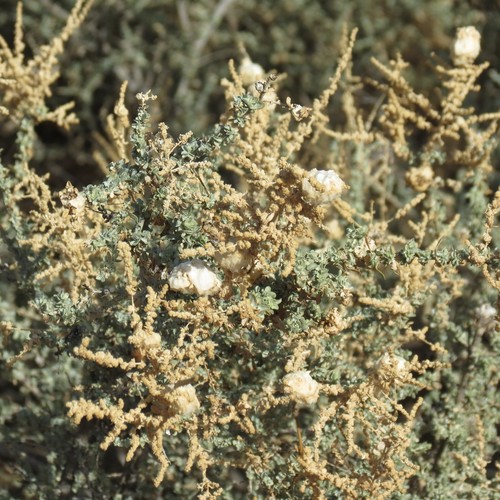
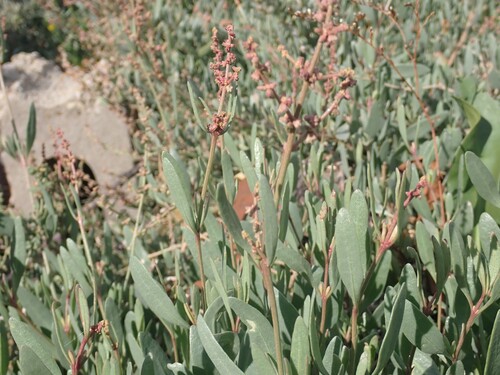
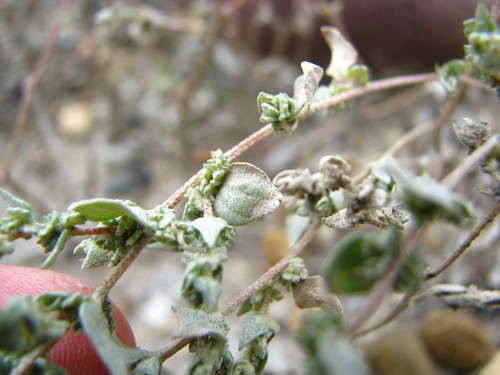
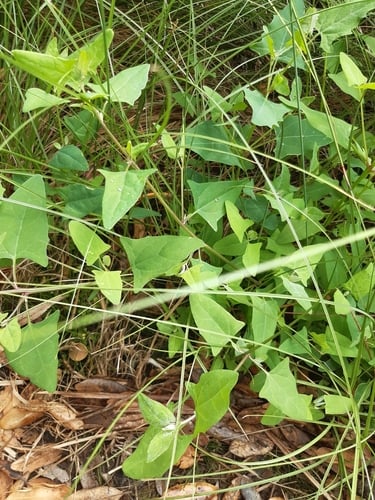
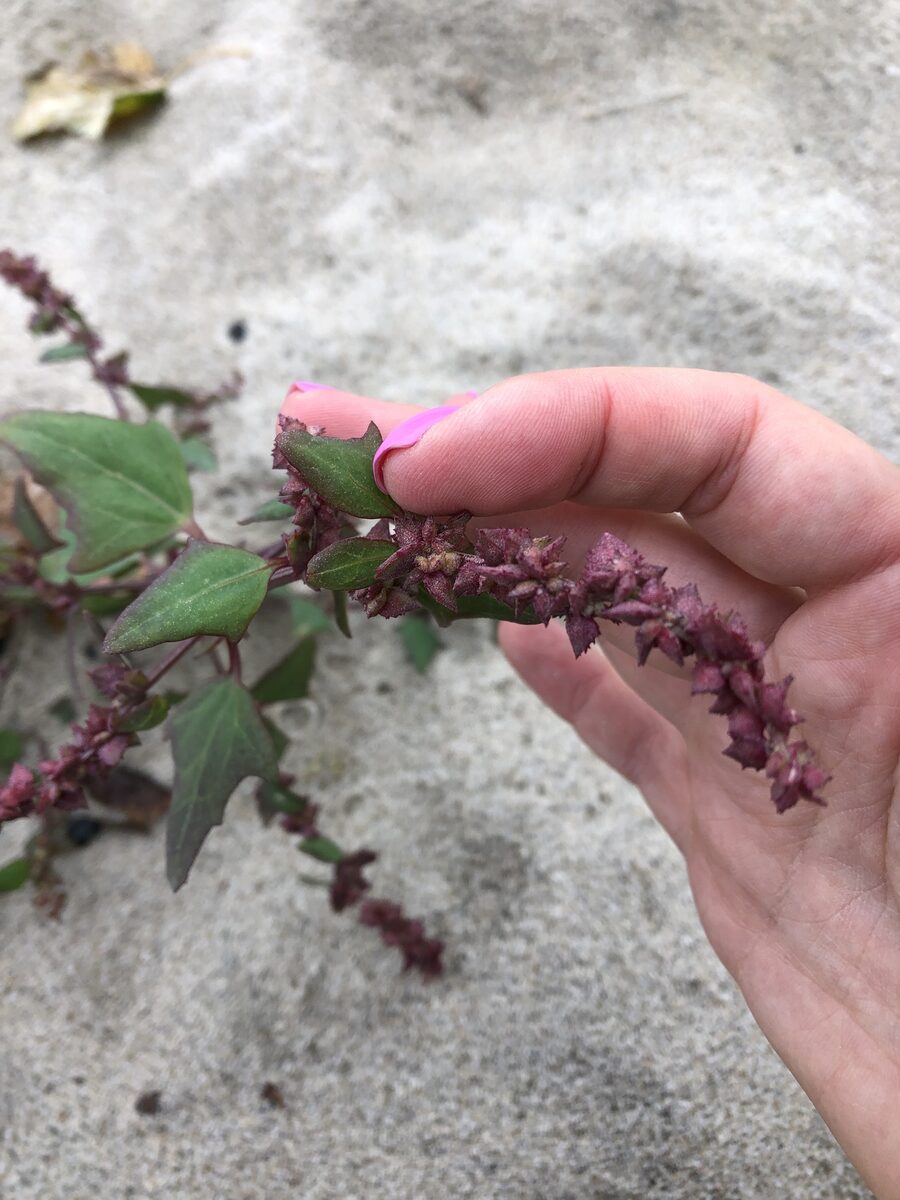
An annual herb plant. It is erect and grows up to 1.2 m tall. The stems are angular and the plant is often branched from the base upwards. Plants can be green or tinged purple. The leaves are 3-8 cm long by 2-5 cm wide. The leaf stalk is 1-5 cm long. Leaves can taper to a point at the tip and taper quickly towards the base. The flower clusters are in spikes on side branches and these can be branched. The flower stalks at the tip can be lax. The flower clusters can be 10-20 cm long and either stick upwards or bend over. Most of the flowers are female. Seed are 1-1.2 mm across and rather flat. Several types occur.
Edible Uses
The leaves and seeds are eaten cooked, often mixed with bitter leaf (Vernonia) or African eggplant. It is commercially cultivated and sold as a vegetable in local markets.
Traditional Uses
The leaves and seeds are eaten cooked. They are often mixed with bitter leaf (Vernonia) or African eggplant. CAUTION: This plant can accumulate nitrates if grown with high nitrogen inorganic fertilisers and these nitrates are poisonous.
Known Hazards
This plant can accumulate nitrates if grown with high nitrogen inorganic fertilisers, and these nitrates are poisonous.
Distribution
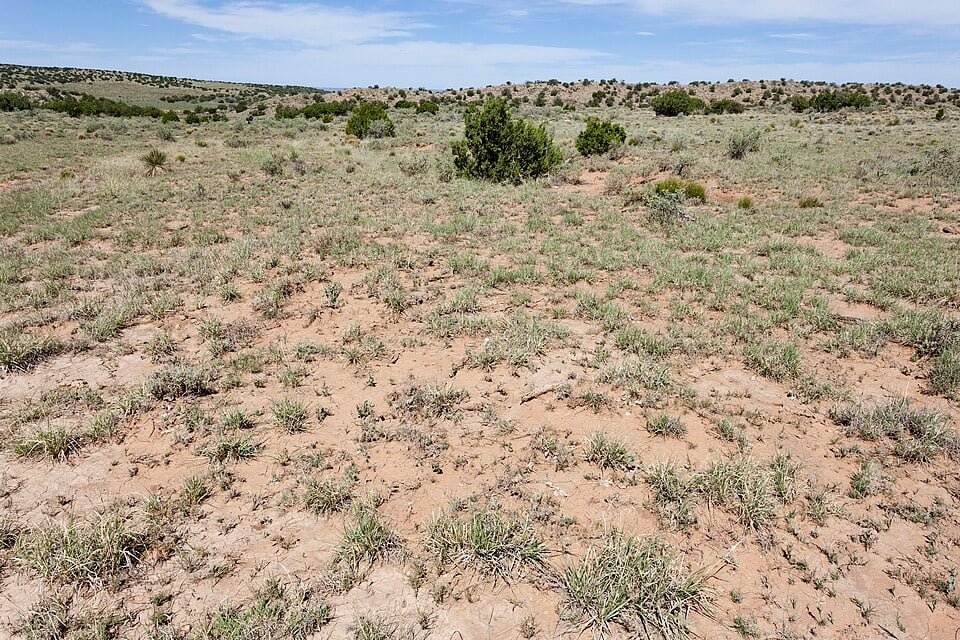
A tropical plant. It suits the tropical humid lowlands. It can grow in arid places. In Papua New Guinea it grows between sea level and 1,800 m altitude. It needs a night temperature above 15°C and preferably a day temperature above 25°C. It needs fertile, well-drained soil.
Where It Grows
Africa, Amazon, Argentina, Aruba, Asia, Bahamas, Bangladesh, Belize, Benin, Bolivia, Bu;garia, Burkina Faso, Burundi, Cameroon, Caribbean, Central Africa, Central African Republic, CAR, Central America, China, Colombia, Congo DR, Costa Rica, Cuba, Curacao, Dominica, Dominican Republic, East Africa, Ecuador, Eritrea, Ethiopia, Europe, Fiji, Ghana, Greater Antilles, French Guiana, Guianas, Guyana, Haiti, Hawaii, Honduras, India, Indonesia, Iraq, Ivory Coast, Jamaica, Kenya, Kiribati, Lesser Antilles, Madagascar, Malawi, Mauritius, Mediterranean, Mexico, Mozambique, Nauru, Nicaragua, Nigeria, North America, Oman, Pacific, Papua New Guinea, PNG, Peru, Philippines, Portugal, Puerto Rico, Rwanda, Sao Tome and Principe, SE Asia, Seychelles, Sierra Leone, Socotra, Solomon Islands, Somalia, South Africa, Southern Africa, South America, Sri Lanka, St Helena, Sudan, Suriname, Taiwan, Tanzania, Trinidad-Tobago, Uganda, USA, Venezuela, West Africa, West Indies, Zambia, Zimbabwe,
Cultivation
Plants can be grown from seed if the soil is warm. Seeds are small and grow easily. They can be broadcast in a nursery and then transplanted. Cuttings of growing plants root easily.
Production
Leaves are available throughout the year in humid places.
Other Information
It is a commercially cultivated vegetable. Leaves are sold in local markets.
Notes
There are about 60 Amaranthus species.
Nutrition
| Part | Moisture | kJ | kcal | Protein | Vit A | Vit C | Iron | Zinc |
|---|---|---|---|---|---|---|---|---|
| Stem | — | — | — | — | — | — | — | — |
| Leaves | 80.7 | — | — | 3.8 | — | — | 3.4 | 1.5 |
| Seed | — | — | — | — | — | — | — | — |
Synonyms
Also Known As
Anapatsavavy, Angews, Arakeerai, Atete, Bedegbele, Boa, Bukut, Bwache, Calalu, Cayo, Chow rai, Chowri, Claroen, Doodo, Eboga, Ekiliton, Epinard, Gbedebed, Ghedgbede, Handoukpo, Injewe, Kauntong, Khada sag, Kinione, Klaroen, Knoteshak, Libondwe, Lonenge, Maytse, M'boa, Misbredie, Muchicha, Ngelengbele, Sokoo, Sokusaku, Telele, Terere, Tete ve, Te uekeueke, Togba, Vowa, W'oa, Yonbita, Zergon
References (77)
- Achigan-Dako, E, et al (Eds), 2009, Catalogue of Traditional Vegetables in Benin. International Foundation for Science.
- Acipa, A. et al, 2013, Nutritional Profile of some Selected Food Plants of Otwal and Ngai Counties, Oyam District, Northern Uganda. African Journal or Food, Agriculture, Nutrition and Development. 13(2)
- Addis, G., et al, 2005, Ethnobotanical Study of Edible Wild Plants in Some Selected Districts of Ethiopia. Human Ecology, Vol. 33, No. 1, pp. 83-118
- Agea, J. G., et al 2011, Wild and Semi-wild Food Plants of Bunyoro-Kitara Kingdom of Uganda: etc. Environmental Research Journal 5(2) 74-86
- Ambasta S.P. (Ed.), 2000, The Useful Plants of India. CSIR India. p 33
Show all 77 references Hide references
- Bourke, R. M., Altitudinal limits of 230 economic crop species in Papua New Guinea. Terra australis 32.
- Burkill, H. M., 1985, The useful plants of west tropical Africa, Vol. 1. Kew.
- Dansi, A., et al, 2008, Traditional leafy vegetables and their use in the Benin Republic. Genet Resour Crop Evol (2008) 55:1239–1256
- Diaz-Betancourt, M., et al, 1999, Weeds as a future source for human consumption. Rev. Biol. Trop. 47(3):329-338)
- Diaz-Jose, J., et al, 2019, Traditional Knowledge of Edible Wild Plants Used by Indigenous Communities in Zongolica, Mexico. Ecology of Food and Nutrition.
- Facciola, S., 1998, Cornucopia 2: a Source Book of Edible Plants. Kampong Publications, p 8
- Fl. adv. Montpellier 203. 1912; P. F. A. Ascherson & K. O. R. P. P. Graebner, Syn. Mitteleur. Fl. 5(1):265. 1914
- Flora of the Guianas
- Fowler, D. G., 2007, Zambian Plants: Their Vernacular Names and Uses. Kew. p 6
- French, B., 1986, Food Plants of Papua New Guinea, Asia Pacific Science Foundation p 55
- Godfrey, J. et al, 2013, Harvesting, preparationand preservation of commonly consumed wild and semi-wild food plants in Bunyoro-Kitara Kingdom, Uganda. Int. J. Med. Arom. Plants. Vol.3 No.2 pp 262-282
- Godfrey, J., et al, 2013, Market Structure of Wild and Semi-Wild Food Plants Traded in Bunyoro-Kitara Kingdom, Uganda. Int. J. Med. Arom. Plants. Vol. 3 No. 2 pp 300-316
- Goode, P., 1989, Edible Plants of Uganda. FAO p 26
- Goode, P., 1989, Edible Plants of Uganda. FAO p 39
- Goode, P., 1989, Edible Plants of Uganda. FAO p 41
- Grivetti, L. E., 1980, Agricultural development: present and potential role of edible wild plants. Part 2: Sub-Saharan Africa, Report to the Department of State Agency for International Development. p 42
- Grubben, G.J.H., 2004. Amaranthus dubius Mart. ex Thell. [Internet] Record from Protabase. Grubben, G.J.H. & Denton, O.A. (Editors). PROTA (Plant Resources of Tropical Africa / Ressources végétales de l’Afrique tropicale), Wageningen, Netherlands. < http://database.prota.org/search.htm>. Accessed 13 October 2009.
- Grubben, G. J. H. and Denton, O. A. (eds), 2004, Plant Resources of Tropical Africa 2. Vegetables. PROTA, Wageningen, Netherlands. p 72
- Harkonen, M. & Vainio-Mattila, K., 1998, Some examples of Natural Products in the Eastern Arc Mountains. Journal of East African Natural History 87:265-278
- Hossain, U. & Rahman, A., 2018, Study and quantitative analysis of wild vegetable floral diversity available in Barisal district, Bangladesh. Asian J. Med. Biol. Res. 2018, 4 (4), 362-371
- Jardin, C., 1970, List of Foods Used In Africa, FAO Nutrition Information Document Series No 2.p 54
- Kanis, A in Womersley, J.S., (Ed), 1978, Handbooks of the Flora of Papua New Guinea. Melbourne University Press. Vol 1. p 24
- Katz, E., et al, 2012, No greens in the forest? Note on the limited consumption of greens in the Amazon. Acta Soc Bot Pol 81(4):283–293
- Kays, S. J., and Dias, J. C. S., 1995, Common Names of Commercially Cultivated Vegetables of the World in 15 languages. Economic Botany, Vol. 49, No. 2, pp. 115-152
- Kew Plants of the World Online
- Kidane, B., et al, 2014, Wild and semi-wild leafy vegetables used by the Maale and Ari ethnic communities in southern Ethiopia. Genetic Resour Crop Evol. Springer. p 8
- Koukou, E., et al, 2022, Local knowledge of agricultural biodiversity and food uses in two agroecological zones of southern Benin. Ethnobotany Research and Applications 23:29 (2022) p 6
- Latham, P. & Mbuta, A. K., 2017, Plants of Kongo Central Province, Democratic Republic of Congo. Volume 1. 3rd ed p 44
- Lulekal, E., et al, 2011, Wild edible plants in Ethiopia: a review on their potential to combat food insecurity. Afrika Focus - Vol. 24, No 2. pp 71-121
- Magwede, K., van Wyk, B.-E., & van Wyk, A. E., 2019, An inventory of Vhavenḓa useful plants. South African Journal of Botany 122 (2019) 57–89
- Malaisse, F., 1997, Se nourrir en floret claire africaine. Approche ecologique et nutritionnelle. CTA., p 57
- Malaisse, F., 2010, How to live and survive in Zambezian open forest (Miombo Ecoregion). Les Presses Agronomiques de Gembloux.
- Mapes, C. & Basurto, F., 2016, Biodiversity and Edible Plants of Mexico. Chapter 5 in R. Lira, et al. (eds.), Ethnobotany of Mexico, Ethnobiology, Springer. p 114
- Martin, F.W. & Ruberte, R.M., 1979, Edible Leaves of the Tropics. Antillian College Press, Mayaguez, Puerto Rico. p 79
- Maundu, P. et al, 1999, Traditional Food Plants of Kenya. National Museum of Kenya. p 58
- Mercy, N. A., et al, 2016, Survey of Wild Vegetables in the Lebialem Highlands of South Western Cameroon. Journal of Plant Sciences 4(6): 172-184
- Musinguzi, E., et al, 2006, Utilization of Indigenous Food Plants in Uganda: A Case Study of South-Western Uganda. AJFAND Vol. 6(2):
- Mutie, F. G., 2020, Conservation of Wild Food Plants and Their Potential for Combatting Food Insecurity in Kenya as Exemplified by the Drylands of Kitui County. Plants 2020, 9, 1017
- Mutie, F. M., et al, 2023, Important Medicinal and Food Taxa (Orders and Families) in Kenya, Based on Three Quantitative Approaches. Plants 2023, 12, 1145
- Nicholson, D. H., et al, 1991, Fora of Dominica, Part 2: Dicotyledoneae. Smithsonian Institution Press. Washington DC. p 20
- NYBG Herbarium "edible"
- Ojelel, S. & Kakudidi E. K., 2015, Wild edible plant species utilized by a subsistence farming community in the Obalanga sub-county, Amuria district, Uganda. Journal of Ethnobiology and Ethnomedicine. 11:7
- Omawale, 1973, Guyana's edible plants. Guyana University, Georgetown p 90
- Oomen, H.A.P.C., & Grubben, G.J.H., 1978, Tropical Leaf Vegetables in Human Nutrition, Communication 69, Department of Agricultural research, RTI Amsterdam, p 77
- Plants for a Future database, The Field, Penpol, Lostwithiel, Cornwall, PL22 0NG, UK. http://www.scs.leeds.ac.uk/pfaf/
- Plants of Haiti Smithsonian Institute http://botany.si.edu
- Ruiters-Welcome, A. K., 2019, Food plants of southern Africa. Ph.D. thesis. Univ. of Johannesburg p 10
- Royal Botanic Gardens, Kew (1999). Survey of Economic Plants for Arid and Semi-Arid Lands (SEPASAL) database. Published on the Internet; http://www.rbgkew.org.uk/ceb/sepasal/internet [Accessed 24th March 2011]
- Sharma, B.B., 2005, Growing fruits and vegetables. Publications Division. Ministry of Information and broadcasting. India. p 189
- Shumsky, S., et al, 2014, Institutional factors affecting wild edible plant (WEP) harvest and consumption in semi-arid Kenya. Land Use Policy 38(2014) 48-69
- Singh, A., 2009, Bioactivity of Famine Food Plants from the family: Amaranthaceae. University of Technology, Durban, South Africa. Masters Degree Thesis. pp 1-116
- Small, E., 2009, Top 100 Food Plants. The world's most important culinary crops. NRC Research Press. p 69
- Smith, A.C., 1981, Flora Vitiensis Nova, Lawaii, Kuai, Hawaii, Volume 2 p 288
- Staples, G.W. and Herbst, D.R., 2005, A tropical Garden Flora. Bishop Museum Press, Honolulu, Hawaii. p 101
- Tanno, T., 1981, Plant Utilization of the Mbuti Pygmies: With Special reference to their Material Culture and Use of Wild Vegetable Foods. Kyoto University Research. African Study Monographs 1:1-53
- Terashima, H., & Ichikawa, M., 2003, A comparative ethnobotany of the Mbuti and Efe hunter-gatherers in the Ituri Forest, Democratic Republic of Congo. African Study Monographs, 24 (1, 2): 1-168, March 2003
- Termote, C., et al, 2011, Eating from the wild: Turumbu, Mbole and Bali traditional knowledge of non-cultivated edible plants, District Tshopo, DRCongo, Gen Resourc Crop Evol. 58:585-618
- Termote, C., 2012, Wild edible plant use in Tshopo District, Democratic Republic of Congo. Universiteit Gent. p 69
- Termote, C., Van Damme, P. & Benoit D. D., Eating from the Wild: Turumbu Indigenous Knowledge on Non-Cultivated Edible Plants, Tshopo District, DRCongo.
- Terra, G.J.A., 1973, Tropical Vegetables. Communication 54e Royal Tropical Institute, Amsterdam, p 21
- Thaman, R. R., 1987, Plants of Kiribati: A listing and analysis of vernacular names. Atoll Research Bulletin No. 296
- Tindall, H.D., 1983, Vegetables in the tropics. Macmillan p. 37
- Tugume, P. & Nyakoojo, C., 2020, Traditional use of wild edible plants in the communities adjacent to Mabira Central Forest Reserve, Uganda. Ethnobotany Research & Applications 20:15 (2020)
- USDA, ARS, National Genetic Resources Program. Germplasm Resources Information Network - (GRIN). [Online Database] National Germplasm Resources Laboratory, Beltsville, Maryland. Available: www.ars-grin.gov/cgi-bin/npgs/html/econ.pl (10 April 2000)
- Vainio-Mattila, K., 2000, Wild vegetables used by the Sambaa in the Usumbara Mountains, NE Tanzania. Ann. Bot. Fennici 37:57-67
- Welcome, A. K. & Van Wyk, B.-E., 2019, An inventory and analysis of the food plants of southern Africa. South African Journal of Botany 122 (2019) 136–179
- Wiersema, J. H. & Leon, B., 2013, World Economic Plants. A Standard Reference CRC Press. 2nd Ed. p 44
- World Checklist of Useful Plant Species 2020. Royal Botanic Gardens, Kew
- www.eFloras.org Flora of China
- www.pngplants.org
- Yimer, A., et al, 2021, Ethnobotanical study of wild edible plants used by Meinit Ethnic Community at Bench-Maji Zone, Southwest Ethiopia. Research Square. p 5
- Zon, A.P.M. van der, Grubben, G.J.H., 1976, Les legumes-feuilles spontanes et cultives du Sud-Dahomey, Communication 65, Royal Tropical Institute, Amsterdam, p 27, 30