Amaranthus thunbergii
Moq.
Thunberg’s Pigweed, Thunberg's Amaranth
iNaturalist· cc-by-sa
(c) kevin koen, some rights reserved (CC BY-SA), uploaded by kevin koen
iNaturalist· cc-by-sa
(c) kevin koen, some rights reserved (CC BY-SA), uploaded by kevin koen
iNaturalist· cc-by-sa
(c) kevin koen, some rights reserved (CC BY-SA), uploaded by kevin koen
Summary
Source: WikipediaAmaranthus thunbergii, commonly known as Thunberg's amaranthus or Thunberg's pigweed, is found in Africa. The leaves are used as a flavouring or leafy vegetable.
Description
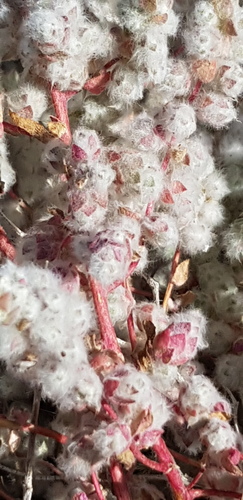
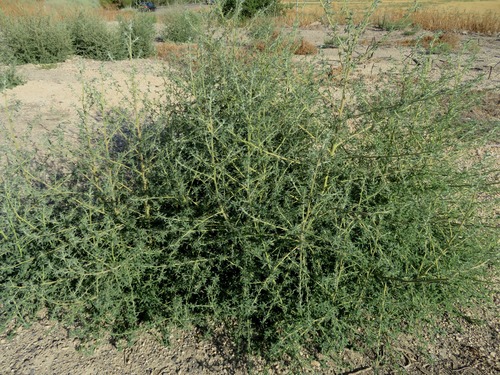
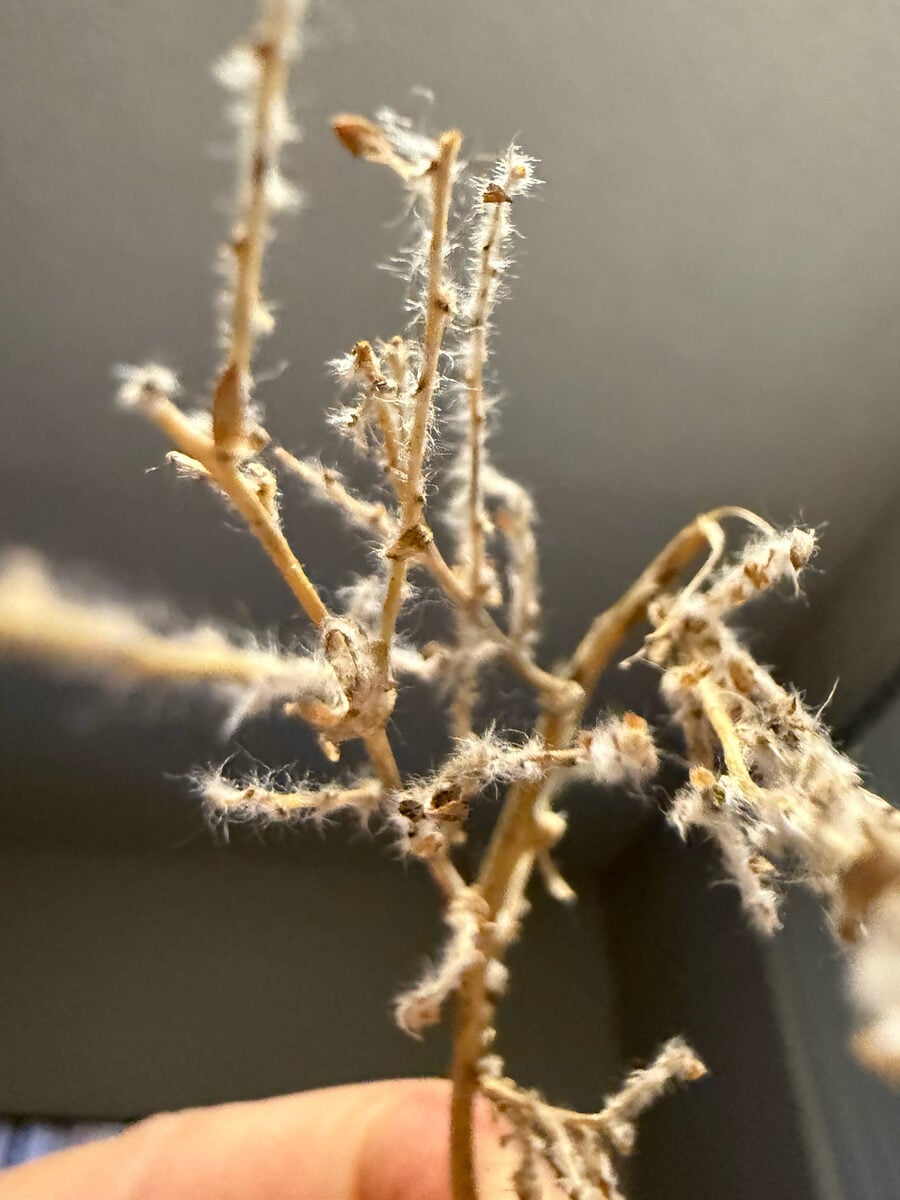
An annual herb growing 50 cm high. The plant usually sprawls along the ground. The leaves are simple and arranged in spirals. The leaf stalk is 4 cm long. The leaf blade is spoon shaped and 2-5 cm long by 1-3 cm wide. They are wedge shaped at the base. The flowering shoots are leafy. The flowers have prickly hair-like points. The flowers are green in clusters in the axils of leaves.
Edible Uses
Leaves are best cooked and used as a spinach. The seeds can also be cooked, though they are very small and fiddly. Despite being nutritious, cooking them whole makes them gelatinous, and because the tiny seeds are difficult to fully crush in the mouth, some will pass through the digestive system without being assimilated.
Traditional Uses
The leaves are edible cooked. They are also dried and stored. The seeds are ground into flour and cooked. CAUTION: This plant can accumulate nitrates if grown with high nitrogen inorganic fertilisers and these are poisonous.
Medicinal Uses
None known.
Known Hazards
No members of this genus are known to be poisonous, but when grown on nitrogen-rich soils they are known to concentrate nitrates in the leaves. This is especially noticeable on land where chemical fertilizers are used. Nitrates are implicated in stomach cancers, blue babies and some other health problems. It is inadvisable, therefore, to eat this plant if it is grown inorganically.
Distribution
A tropical plant. It suits hot and arid places. It is often in places with a marked dry season. In Zimbabwe it grows up to 1,400 m above sea level.
Where It Grows
Africa, Angola, Asia, Australia, Botswana, Central Africa, Congo, East Africa, Eritrea, Eswatini, Ethiopia, Kenya, Lesotho, Malawi, Mozambique, Namibia, Pakistan, Somalia, South Africa, Southern Africa, Swaziland, Tanzania, Uganda, Zambia, Zimbabwe,
Cultivation
We have very little information on this species but it should succeed as a spring-sown annual in Britain. The following notes are based on the general needs of the genus. Prefers a well-drained fertile soil in a sunny position. Requires a hot sheltered position if it is to do well. Plants should not be given inorganic fertilizers, see notes above on toxicity. Most if not all members of this genus photosynthesize by a more efficient method than most plants. Called the 'C4 carbon-fixation pathway', this process is particularly efficient at high temperatures, in bright sunlight and under dry conditions.
Propagation
Sow seed in late spring directly in situ. For an earlier start, sow in a greenhouse and transplant after the last expected frost. Germination is usually rapid and reliable in warm soil, and a drop in temperature overnight can help promote it. Cuttings from growing plants root easily.
Other Uses
Yellow and green dyes can be obtained from the whole plant. The plant is also used as a dynamic accumulator.
Other Information
It is commonly eaten in southern Africa. It is normally harvested from the wild.
Notes
There are about 60 Amaranthus species.
Nutrition
| Part | Moisture | kJ | kcal | Protein | Vit A | Vit C | Iron | Zinc |
|---|---|---|---|---|---|---|---|---|
| Leaves | 83.6 | 147 | — | 4.3 | — | — | 12.5 | 0.7 |
| Seeds | — | — | — | — | — | — | — | — |
Synonyms
Also Known As
Bonongwe, Cape pigweed, Hanekam, Hondebos, Imbuya, Indwabaza, Insheke, Kelp kukuy, Mberekete, Mbowa, Mbuya, Mchicha pori, Mowa, Imbuya, Ityuthu, Ptanya, Raafuu, Ranzakka, Theebe, Theepe, Thepe, Thyeke, Umbhida, Vowa
References (37)
- A. L. P. P. de Candolle, Prodr. 13(2):262. 1849
- Cunningham, 1985,
- Flyman, M. V. & Afolayan, A. J., 2006, A Survey of plants used as wild vegetables in four districts of Botswana. Ecology of Food and Nutrition, 45:405-415
- Fowler, D. G., 2007, Zambian Plants: Their Vernacular Names and Uses. Kew. p 7
- Fox, F. W. & Young, M. E. N., 1982, Food from the Veld. Delta Books. p 68
Show all 37 references Hide references
- Gemedo-Dalle, T., et al, 2005, Plant Biodiversity and Ethnobotany of Borana Pastoralists in Southern Oromia, Ethiopia. Economic Botany 59(1) pp. 43-65
- Grubben, G. J. H. and Denton, O. A. (eds), 2004, Plant Resources of Tropical Africa 2. Vegetables. PROTA, Wageningen, Netherlands. p 83
- Grubben, G.J.H., 2004. Amaranthus thunbergii Moq. [Internet] Record from Protabase. Grubben, G.J.H. & Denton, O.A. (Editors). PROTA (Plant Resources of Tropical Africa / Ressources végétales de l’Afrique tropicale), Wageningen, Netherlands. < http://database.prota.org/search.htm>. Accessed 13 October 2009.
- Guillarmod, J., 1966,
- Jardin, C., 1970, List of Foods Used In Africa, FAO Nutrition Information Document Series No 2.p 54
- Leger, S., 1997, A Description of Today's Use of Plants in West Bushmanland (Namibia). German Development Service. PO Box 220035, 14061 Berlin, Germany. http://www.sigridleger.de/book/
- Long, C., 2005, Swaziland's Flora - siSwati names and Uses http://www.sntc.org.sz/flora/
- Magwede, K., van Wyk, B.-E., & van Wyk, A. E., 2019, An inventory of Vhavenḓa useful plants. South African Journal of Botany 122 (2019) 57–89
- Martin, F.W. & Ruberte, R.M., 1979, Edible Leaves of the Tropics. Antillian College Press, Mayaguez, Puerto Rico. p 173
- Maroyi, A., 2011, The Gathering and Consumption of Wild Edible Plants in Nhema Communal Area, Midlands Province, Zimbabwe. Ecology of Food and Nutrition 50:6, 506-525
- Maroyi, A., 2013, Use of weeds as traditional vegetables in Shurugwi District, Zimbabwe. Journal of Ethnobiology and Ethnomedicine 9:60
- Msuya, T. S., et al, 2010, Availability, Preference and Consumption of Indigenous Foods in the Eastern Arc Mountains, Tanzania, Ecology of Food and Nutrition, 49:3, 208-227
- Mutie, F. M., et al, 2023, Important Medicinal and Food Taxa (Orders and Families) in Kenya, Based on Three Quantitative Approaches. Plants 2023, 12, 1145
- Neudeck, L. et al, 2012, The Contribution of Edible Wild Plants to Food Security, Dietary Diversity and Income of Households in Shorobe Village, Northern Botswana. Ethnobotany Research & Applications 10:449-462
- Peters, C. R., O'Brien, E. M., and Drummond, R.B., 1992, Edible Wild plants of Sub-saharan Africa. Kew. p 47
- Plants for a Future database, The Field, Penpol, Lostwithiel, Cornwall, PL22 0NG, UK. http://www.scs.leeds.ac.uk/pfaf/
- Plowes, N. J. & Taylor, F. W., 1997, The Processing of Indigenous Fruits and other Wildfoods of Southern Africa. in Smartt, L. & Haq. (Eds) Domestication, Production and Utilization of New Crops. ICUC p 185
- Rodin, R.J., The Ethnobotany of the Kwanyama Ovambos, Missouri Botanical Garden. p 146
- Scudder, 1962,
- Shackleton, S. E., et al, 1998, Use and Trading of Wild Edible Herbs in the Central Lowveld Savanna Region, South Africa. Economic Botany, Vol. 52, No. 3, pp. 251-259
- Shava, S., 2000, The Use of Indigenous Plants as Food by a Rural Community in the Eastern Cape: an Educational Exploration. Masters Thesis Rhodes University. p 63
- Smith, F. I. and Eyzaquirre, P., 2007, African leafy vegetables: Their role in the World Health Organization's global Fruit and Vegetables Initiative. AJFAND, Vol. 7 No. 3
- Termote, C., et al, 2014, Assessing the potential of wild foods to reduce the cost of a nutritionally adequate diet: An example from eastern Baringo District, Kenya. Food and Nutrition Bulletin, vol. 35, no. 4
- Terra, G.J.A., 1973, Tropical Vegetables. Communication 54e Royal Tropical Institute, Amsterdam, p 23
- Tredgold, M.H., 1986, Food Plants of Zimbabwe. Mambo Press. p 34
- Ullah, I, et al, 2017, Analysis of nutrients and minerals of some wild edible plants. International Journal of Fauna and Biological Studies. 2017; 4(6):35-39
- van Wyk, Be., & Gericke, N., 2007, People's plants. A Guide to Useful Plants of Southern Africa. Briza. p 64
- Vernon, R., 1983, Field Guide to Important Arable Weeds of Zambia. Dept of Agriculture, Chilanga, Zambia. p 26
- Welcome, A. K. & Van Wyk, B.-E., 2019, An inventory and analysis of the food plants of southern Africa. South African Journal of Botany 122 (2019) 136–179
- Williamson, J., 2005, Useful Plants of Malawi. 3rd. Edition. Mdadzi Book Trust. p 22
- World Checklist of Useful Plant Species 2020. Royal Botanic Gardens, Kew
- www.zimbabweflora.co.zw 2011