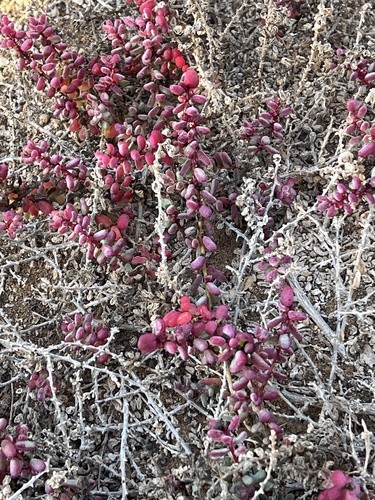
Amaranthus tricolor
L.
Chinese amaranth, Red amaranth
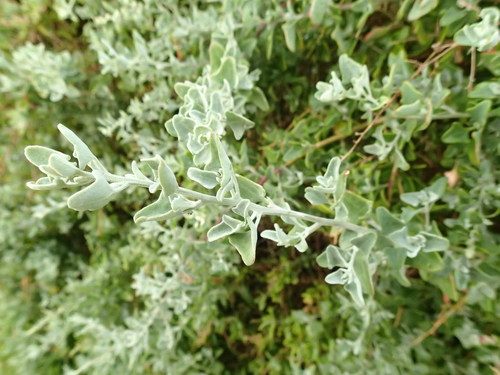
iNaturalist· cc0
no rights reserved, uploaded by 葉子
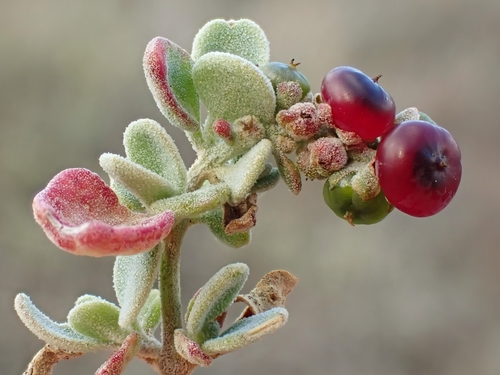
iNaturalist· cc0
no rights reserved, uploaded by 葉子
iNaturalist· cc-by-nc
(c) juanes0812, some rights reserved (CC BY-NC)
Summary
Source: WikipediaAmaranthus tricolor, known as edible amaranth, is a species of flowering plant in the genus Amaranthus, part of the family Amaranthaceae. The plant is often cultivated for ornamental and culinary purposes. It is known as bireum in Korea; tampala, tandaljo, or tandalja bhaji in India; callaloo in the Caribbean; and Joseph's coat in other areas, in reference to the Biblical story of Joseph and the coat of many colors. Although it is native to South and South-East Asia, A. tricolor is one of several species of amaranth cultivated in warm regions across the world. Cultivars have striking yellow, red, and green foliage.
Description
A herb about 1 m high and spreads 45 cm wide. A small annual leafy green. An upright, much branched annual with a thin membrane covering the stems. Sometimes the plant lies over. The stems are angular. The plant branches in the upper part of the plant. It is smooth and grows from seed each year. Leaves have long leaf stalks which can be 5-10 cm long. Leaves vary in shape, size and colour. The leaf blade can be 5-25 cm long by 2-6 cm wide. Leaves are dull purplish and the top leaves can be yellow or red. Some types have coloured leaves or patterns on the leaves. It has a clumpy seed head at the top. The flower spike at the top can be 30 cm long. The seed are 1-1.2 mm across and black.
Edible Uses
Leaves can be eaten raw or cooked as a spinach, and are frequently harvested at the young seedling stage. They have a very mild flavour and make an excellent hot-weather substitute for spinach. The leaves contain approximately 3.5% protein, 0.25% fat, 6.6% carbohydrate, 3.1% ash, 24mg iron and 464mg calcium per 100g, and are rich in vitamin A with a fair content of vitamins B1 and C. On a zero-moisture basis, 100g of leaves contains up to 2441mg calcium, 1008mg phosphorus, 51mg iron, 34mg sodium, 4475mg potassium, 37,623 micrograms beta-carotene equivalent, 0.68mg thiamine, 2.37mg riboflavin, 11.48mg niacin, and 730mg ascorbic acid. The crisp interior of large stems is also edible — raw or cooked as an asparagus substitute — and makes a tasty vegetable. Seeds can be cooked whole but are very small at around 1mm in diameter; when cooked whole they become gelatinous, and many seeds will pass through the digestive system unassimilated unless well crushed. The seed contains saponins, so it is advisable to either soak the seed for at least 12 hours and rinse thoroughly before cooking, or to give it a long, slow cook to destroy the saponins.
Traditional Uses
The young leaves and stems are cooked and eaten as a vegetable.
This uses section is brief — help expand it
Medicinal Uses
The whole plant is astringent. A decoction of the root combined with Cucurbita moschata is used to control haemorrhage following abortion. A decoction made from very old plants is taken internally to improve vision and strengthen the liver.
Known Hazards
No members of this genus are known to be poisonous, but when grown on nitrogen-rich soils they are known to concentrate nitrates in the leaves. This is especially noticeable on land where chemical fertilizers are used. Nitrates are implicated in stomach cancers, blue babies and some other health problems. It is inadvisable, therefore, to eat this plant if it is grown inorganically.
Distribution
A tropical and subtropical plant. It grows in many tropical and warm temperate places. Plants grow wild in waste places. Amaranths grow from sea level to 2400 m altitude in the equatorial tropics. It prefers well drained soils. It needs a sunny position to yield well. For amaranth seeds to germinate they need a temperature above 15°-17°C. In the higher areas of the equatorial highlands above 1800 m., temperatures on the average are probably below this during the cooler months. It may be more difficult to get amaranths started during these months. It can grow in arid places. It suits hardiness zones 8-11. In Yunnan.
Where It Grows
Africa, Asia, Australia, Bangladesh, Benin, Cambodia, Canada, Central Africa, Central America, China, Congo DR, Cuba, Dominican Republic, East Africa, East Timor, Egypt, Europe, Fiji, Guiana, Guianas, Haiti, Hawaii, Himalayas, India, Indochina, Indonesia, Israel, Italy, Japan, Jordan, Kenya, Korea, Laos, Madagascar, Malaysia, Marquesas, Mauritius, Mediterranean, Mexico, Middle East, Mozambique, Myanmar, Nauru, Nepal, Nigeria, Niue, North Africa, Northeastern India, North America, Pacific, Pakistan, Papua New Guinea, PNG, Philippines, Puerto Rico, Rotuma, Samoa, SE Asia, Sierra Leone, Singapore, Slovenia, Solomon Islands, South Africa, South America, Southern Africa, South America, Sri Lanka, Suriname, Taiwan, Tanzania, Tasmania, Thailand, Timor-Leste, Turkey, Türkiye, Tuvalu, Uganda, USA, Vanuatu, Vietnam, West Africa, West Indies, West Timor, Yemen,
Cultivation
The very small seeds of these plants are scattered over the ashes or fine soil in fertile ground. The seed are normally spread by rubbing the dry seed heads between the hands. Some types are self sown. These plants grow in most tropical countries. The soil must be fertile. If they are put in an old garden they will only grow very poorly. So they are either put in a new garden site when it is cleared from bush, or in build up the old ground by adding compost. The small gardens close to a house can often be built up to a good fertility by using the scraps and ashes and things that are left over near houses. Amaranths need high amounts of two nutrients, nitrogen and potash. The ashes from fires are high in potash so farmers scatter seeds of amaranth over areas where they have burnt. Amaranths are tropical plants grown in most tropical countries. Normally the hotter it is the better they grow. They also like plenty of sunlight and do not suit shaded places. The more sunlight the better they grow. They need to have water most of the time they are growing. In areas with a high rainfall this is mostly not a big problem.
Propagation
Sow seed in late spring directly in situ. For an earlier start, sow in a greenhouse and transplant after the last expected frost. A minimum soil temperature of 10°C is required for germination, with better results at temperatures above 20°C. A drop in temperature overnight can also help promote germination. Cuttings from growing plants root easily.
Other Uses
Yellow and green dyes can be obtained from the whole plant. The plant is also used as a dynamic accumulator and is suited to food forest systems.
Production
Plants can be harvested when small due to thinning out closely spaced plants. These can be either transplanted or eaten cooked. Plants can be harvested whole or have top leaves harvested several times. Harvesting begins after 4-7 weeks and can continue over 2 months.
Other Information
It is a commercially cultivated vegetable. Some species of amaranths occur in most parts of Papua New Guinea and they are one of the commonest cultivated greens. It is sold in local markets.
Notes
There are about 60 Amaranthus species. Chemical composition (Chinese sample): Protein = 3.5%. Fat = 0.24%. Carbohydrate = 6.6%. Reported rich in Vitamin A, with moderate amounts of Vitamins B1 and C. Chemical composition (after Hooper) (Green variety, April [Indian sample]): Water = 90.6% (fresh). Fat = 4.30% (dry). Albumenoids = 27.61% (dry). Fibre = 7.85% (dry). Ash = 23.98% (dry). Carbohydrates = 36.26% (dry). Nitrogen = 4.42% (dry). Phosphoric acid = 1.47% (dry). Silicates = 2.58% (dry). (Green variety, November): Water = 82.60% (fresh). Fat = 4.50% (dry). Albumenoids = 25.72% (dry). Carbohydrates = 36.84% (dry). Fibre = 11.89% (dry). Ash = 21.05% (dry). Nitrogen = 4.12% (dry). Phosphoric acid = 1.35% (dry). Silicates = 2.20%. (Red variety, April): Water (fresh) = 91.0%. Fat = 5.34% (dry). Albumenoids = 25.46% (dry). Carbohydrates = 34.71% (dry). Fibre = 6.96% (dry). Ash = 27. (dry). Nitrogen = 4.07% (dry). Phosphoric acid = 1.56% (dry). Silicates =1.97% (dry). (Red variety, November): Water = 84.5% (fresh). Fat = 3.77% (dry). Albumenoids = 24.75% (dry). Carbohydrates = 37.90% (dry). Fibre = 11.55% (dry). Ash = 22.03% (dry). Nitrogen = 3.96% (dry). Phosphoric acid = 1.53% (dry). Silicates = 1.57% (dry). It has 2.3 mg per 100 g dry weight and 1.2 mg fresh weight of alpha-tocopherol (Vitamin E).
Nutrition
| Part | Moisture | kJ | kcal | Protein | Vit A | Vit C | Iron | Zinc |
|---|---|---|---|---|---|---|---|---|
| Leaves | 91.7 | 96 | 23 | 2.5 | 292 | 43.3 | 2.3 | 0.9 |
| Stems | — | — | — | — | — | — | — | — |
| Seeds | — | — | — | — | — | — | — | — |
Synonyms
Also Known As
Anana, Anantarika, Anga-sag, Arai keerai, Ariki sira, Badi chaulai, Ban chaulai, Barichulai, Bathua, Bayam kadong, Bayam, Bayam, Bilikeere soppu, Bireum, Chantili, Chaulai sag, Chauraiya, Chengkruu, Chorie danga shak, Danta shak, Dantu, Datha, Den canh, Dengo, Dengua-sag, Dengua, Den tia, Driti-damudamu, Een choy, Espinaca, Gai heng, Gotala matala, Gurane, Han ts'oi, Harawi, Hijau, Hinn-choy, Hin-nu-nwe, Hiyuna, Jenso ara, Joseph’s coat, Kayyatota kura, Kpedekpede, Kupei keeray, Kutilis, Lal mat, Lal note, Lal shak, Lal-sag, Lalsak, Lalru, Latte, Marsa, Marshi, Mathla, Moea, Mo tuo qi pu, Notay sag, Notiya sag, Pa hong, Pak hom, Pak khom, Pirum, Ran math, Ranga sak, Rau den tia do, Ronga moricha, Sad amaranth, Salad amaranth, Sanse Xian, Taduljira, Tampala, Telele, Terere, Thandankeerai, Tota kura, Totoe, Tribarvni ščir, W'oa, Yubua, Urai-pula, Xian Cai, Zepina
References (135)
- Altschul, S.V.R., 1973, Drugs and Foods from Little-known Plants. Notes in Harvard University Herbaria. Harvard Univ. Press. Massachusetts. no. 894
- Anderson, E. F., 1993, Plants and people of the Golden Triangle. Dioscorides Press. p 202
- Ambasta S.P. (Ed.), 2000, The Useful Plants of India. CSIR India. p 33 (As Amaranthus gangeticus)
- Ara, R. I. T., 2015, Leafy Vegetables in Bangladesh. Photon eBooks. p 10 (As Amaranthus gangeticus)
- Arinathan, V., et al, 2007, Wild edibles used by Palliyars of the western Ghats, Tamil Nadu. Indian Journal of Traditional Knowledge. 6(1) pp 163-168
Show all 135 references Hide references
- Aryal, K. P., et al, 2018, Diversity and use of wild and non-cultivated edible plants in the Western Himalaya. Journal of Ethnobiology and Ethnomedicine (2018) 14:10
- Azam, F. M. S., et al, 2014, Are Famine Food Plants Also Ethnomedicinal Plants? An Ethnomedicinal Appraisal of Famine Food Plants of Two Districts of Bangladesh. Evidence-Based Complementary and Alternative Medicine Volume 2014, Article ID 741712, 28 pages
- Bandyopadhyay, S. et al, 2009, Wild edible plants of Koch Bihar district, West Bengal. Natural Products Radiance 8(1) 64-72
- Bao Bojian; Steve Clemants, Thomas Borsch, Amaranthaceae [Draft], Flora of China
- Barua, U., et al, 2007, Wild edible plants of Majuli island and Darrang districts of Assam. Indian Journal of Traditional Knowledge 6(1) pp 191-194 (As Amaranthus gangeticus)
- Bodkin, F., 1991, Encyclopedia Botanica. Cornstalk publishing, p 74
- Borrell, O.W., 1989, An Annotated Checklist of the Flora of Kairiru Island, New Guinea. Marcellin College, Victoria Australia. p 47
- Brickell, C. (Ed.), 1999, The Royal Horticultural Society A-Z Encyclopedia of Garden Plants. Convent Garden Books. p 106
- Burkill, I.H., 1966, A Dictionary of the Economic Products of the Malay Peninsula. Ministry of Agriculture and Cooperatives, Kuala Lumpur, Malaysia. Vol 1 (A-H) p 127 (As Amaranthus gangeticus)
- Burkill, H. M., 1985, The useful plants of west tropical Africa, Vol. 1. Kew.
- Burnie, G. (Ed.), 2003, Annuals and Bulbs. The Gardener's Handbooks. Fog City Press. p 118
- Cao, Y., et al, 2020, Ethnobotanical study on wild edible plants used by three trans-boundary ethnic groups in Jiangcheng County, Pu’er, Southwest China. Journal of Ethnobiology and Ethnomedicine (2020) 16:66
- Cent. pl. I:32. 1755 (Amoen. acad. 4:294. 1759) (As Amaranthus mangostanus)
- Chao, Pi-Yu, et al, 2014, Antioxidant Activity in Extracts of 27 Indigenous Taiwanese Vegetables. Nutrients 2014, 6, 2115-2130 (As Amaranthus mangostanus)
- Chin, H. F., 1999, Malaysian Vegetables in Colour. Tropical Press. p 16 (As Amaranthus gangeticus)
- Ching, L. S. & Mohamed, S., 2001, Alpha-Tocopherol Content in 62 Edible Tropical Plants. J. Agric. Food Chem. 2001, 49, 3101−3105 (As Amaranthus gangeticus)
- Chon, S. et al., 2009, Total Phenolics Level, Antioxidants Activity and Cytotoxicity of Young Sprouts of Some Traditional Korean Salad Plants. Plant Foods for Human Nutrition. 64:25-31 (As Amaranthus mangostanus)
- Chowdhury, M. & Mukherjee, R., 2012, Wild Edible Plants Consumed by Local Communities of Maldah of West Bengal, India. Indian J.Sci.Res.3(2) : 163-170
- Creasey, R., 2000, Edible Mexican Garden. Periplus. p 22 (Also as Amaranthus gangeticus)
- Cundall, P., (ed.), 2004, Gardening Australia: flora: the gardener's bible. ABC Books. p 144
- Dey, A. & Mukhererjee, A., 2015, Living and Survival Amidst Hunger: Wild Edible Botanicals as a Prime Forest Productivity in the Rural Purulia District, West Bengal, India from Colonial to Present. Research Journal of Forestry 9(3): 71-86 (As var. gangeticus)
- Dyani, S.K., & Sharma, R.V., 1987, Exploration of Socio-economic plant resources of Vyasi Valley in Tehri Garwhal. J. Econ. Tax. Bot. Vol. 9 No. 2 pp 299-310
- Facciola, S., 1998, Cornucopia 2: a Source Book of Edible Plants. Kampong Publications, p 8 (Also as Amaranthus gangeticus and Amaranthus mangostanus)
- Foo, J.T.S.(ed), 1996, A Guide to Common Vegetables. Singapore Science Foundation. p 10
- Franklin, J., Keppel, G., & Whistler, W., 2008, The vegetation and flora of Lakeba, Nayau and Aiwa Islands, Central Lau Group, Fiji. Micronesica 40(1/2): 169–225, 2008
- French, B., 1986, Food Plants of Papua New Guinea, Asia Pacific Science Foundation p 55
- French, B.R., 2010, Food Plants of Solomon Islands. A Compendium. Food Plants International Inc. p 65
- Gillaumin, R., 1954, Les Plantes utiles des Nouvelles-Hebrides (fin et complement) In: Journal d'agriculture tropicale et de botanique appliquee Vol. 1, No. 10-12 pp 453-460 (As Amaranthus gangeticus)
- Grubben, G. J. H. and Denton, O. A. (eds), 2004, Plant Resources of Tropical Africa 2. Vegetables. PROTA, Wageningen, Netherlands. p 86
- Grubben, G.J.H., 2004. Amaranthus tricolor L. [Internet] Record from Protabase. Grubben, G.J.H. & Denton, O.A. (Editors). PROTA (Plant Resources of Tropical Africa / Ressources végétales de l’Afrique tropicale), Wageningen, Netherlands. < http://database.prota.org/search.htm>. Accessed 13 October 2009.
- Hadfield, J., 2001, The A-Z of Vegetable Gardening in South Africa. Struik p 123 (As Amaranthus gangeticus)
- Harisha, R. P. & Padmavathy, S., 2013, Knowledge and Use of Wild Edible Plants in Two Communities in Malai Madeshwara Hills, Southern India. International Journal of Botany 9(2): 64-72. (As Amaranthus tristis)
- Harkonen, M. & Vainio-Mattila, K., 1998, Some examples of Natural Products in the Eastern Arc Mountains. Journal of East African Natural History 87:265-278
- Hedrick, U.P., 1919, (Ed.), Sturtevant's edible plants of the world. p 47 (As Amaranthus gangeticus)
- Heo, B., et al., 2009, Antiproliferative Activity of Korean Wild Vegetables on Different Human Tumor Cell Lines. Plant Foods for Human Nutrition. 64:257-263 (As Amaranthus mangostanus)
- Herklots, G. A. C., 1972, Vegetables in South-East Asia. Allen & Unwin. p 150 (As Amaranthus gangeticus)
- Hide, R., et al, 1979, A checklist of some plants in the territory of the Sinasina Nimai (Simbai Province, Papua New Guinea), with notes on their uses. Department Anthropology, University of Aukland
- HOOPER (As Amaranthus gangeticus and Amaranthus mangostanus)
- Hussey, B.M.J., Keighery, G.J., Cousens, R.D., Dodd, J., Lloyd, S.G., 1997, Western Weeds. A guide to the weeds of Western Australia. Plant Protection Society of Western Australia. p 80
- Hu, Shiu-ying, 2005, Food Plants of China. The Chinese University Press. p 382
- Jacquat, C., 1990, Plants from the Markets of Thailand. D.K. Book House p 59
- Jardin, C., 1970, List of Foods Used In Africa, FAO Nutrition Information Document Series No 2.p 54
- Japanese International Research Centre for Agricultural Science www.jircas.affrc.go.jp/project/value_addition/Vegetables
- Jha, P. K., et al, 1996, Plant genetic resources of Nepal: A guide for plant breeders of agricultural, horticultural and forestry crops. Euphytica 87:189-210
- Kanis, A in Womersley, J.S., (Ed), 1978, Handbooks of the Flora of Papua New Guinea. Melbourne University Press. Vol 1. p 27
- Kays, S. J., and Dias, J. C. S., 1995, Common Names of Commercially Cultivated Vegetables of the World in 15 languages. Economic Botany, Vol. 49, No. 2, pp. 115-152 (Also as Amaranthus mangostanus)
- Kiple, K.F. & Ornelas, K.C., (eds), 2000, The Cambridge World History of Food. CUP p 1754
- Kiran, K. C., et al, 2019, Diversity and Seasonal Availability of Potential Wild Edible Plants from Vidarbha Region of Maharashtra State, India. Int.J.Curr.Microbiol.App.Sci (2019) 8(2): 1434-1446
- Kumar, S. A., Manus, D. & Mallika, M., 2018, Impact of non-timber forest products on Forest and in Livelihood Economy of the People of Adjoining Areas of Jalpaiguri Forest Division, West Bengal, India. Int. J. of Life Sciences, 2018; 6 (2):365-385
- Kuo, W. H. J., (Ed.) Taiwan's Ethnobotanical Database (1900-2000), http://tk.agron.ntu.edu.tw/ethnobot/DB1.htm (As Amaranthus mangostanus)
- Lamberton, K (Ed.), 2004, The Australian gardening encyclodepia. Murdoch Books, NSW Australia. p 163
- Larkcom, J., 1991, Oriental Vegetables, John Murray, London, p 53 (As Amaranthus gangeticus)
- Li, D. et al, 2017, Ethnobotanical survey of herbal tea plants from the traditional markets in Chaoshan, China. Journal of Ethnopharmacology. 205 (2017) 195-206
- Liu, Yi-tao, & Long, Chun-Lin, 2002, Studies on Edible Flowers Consumed by Ethnic Groups in Yunnan. Acta Botanica Yunnanica. 24(1):41-56
- Luo, B., et al, 2019, Wild edible plants collected by Hani from terraced rice paddy agroecosystem in Honghe Prefecture, Yunnan, China. Journal of Ethnobiology and Ethnomedicine 15:56 (As Amaranthus lividus)
- Macmillan, H.F. (Revised Barlow, H.S., et al), 1991, Tropical Planting and Gardening. Sixth edition. Malayan Nature Society. Kuala Lumpur. p 356 (As Amaranthus gangeticus)
- Magwede, K., van Wyk, B.-E., & van Wyk, A. E., 2019, An inventory of Vhavenḓa useful plants. South African Journal of Botany 122 (2019) 57–89
- Maikhuri, R, K, and Gangwar, A. K., 1993, Ethnobiological Notes on the Khasi and Garo Tribes of Meghalaya, Northeast India, Economic Botany, Vol. 47, No. 4, pp. 345-357 (As Amaranthus gangeticus)
- Marandi, R. R. & Britto, S. J., 2015, Medicinal Properties of Edible Weeds of Crop Fields and Wild plants Eaten by Oraon Tribals of Latehar District, Jharkhand. International Journal of Life Science and Pharma Research. Vo. 5. (2) April 2015 (As Amaranthus gangeticus)
- Martin, F.W. & Ruberte, R.M., 1979, Edible Leaves of the Tropics. Antillian College Press, Mayaguez, Puerto Rico. p 17, 173 (Also as Amaranthus gangeticus and Amaranthus mangostanus)
- Medhi, P. & Borthakur, S. K., 2012, Phytoresources from North Cachur Hills of Assam -3: Edible plants sold at Hflong market. Indian Journal or Natural Products and Resources. 3(1) pp 84-109 (As Amaranthus gangeticus)
- Monsalud, M.R., Tongacan, A.L., Lopez, F.R., & Lagrimas, M.Q., 1966, Edible Wild Plants in Philippine Forests. Philippine Journal of Science. p 437
- Murtem, G. & Chaudhrey, P., 2016, An ethnobotanical note on wild edible plants of Upper Eastern Himalaya, India. Brazilian Journal of Biological Sciences, 2016, v. 3, no. 5, p. 63-81 (As Amaranthus gangeticus)
- Murakami, A. et al, 2014, Screening for the In Vitro Anti-tumor-promoting Activities of Edible Plants from Malaysia. Bioscience, Biotechnology, and Biochemistry, 64:1, 9-16. (Also as Amaranthus gangeticus)
- Mutie, F. M., et al, 2020, Conservation of Wild Food Plants and Their Potential for Combatting Food Insecurity in Kenya as Exemplified by the Drylands of Kitui County. Plants 2020, 9, 1017 (As Amaranthus dubius)
- Nakahara, K. et al, 2002, Antimutagenicity of Some Edible Thai Plants, and a Biocative Carbazole Alkaloid, Mahanine, Isolated from Micromelum minutum. Journal of Agricultural and Food Chemistry. 50: 4796-4892
- Norrington, L., & Campbell, C., 2001, Tropical Food Gardens. Bloomings Books. p 50 (As Amaranthus gangeticus)
- Ochse, J.J. et al, 1931, Vegetables of the Dutch East Indies. Asher reprint. p 21
- Oomen, H.A.P.C., & Grubben, G.J.H., 1978, Tropical Leaf Vegetables in Human Nutrition, Communication 69, Department of Agricultural research, RTI Amsterdam, p 36, 42, 66, 77, 128
- Paczkowska, G. & Chapman, A.R., 2000, The Western Australian Flora. A Descriptive Catalogue. Western Australian Herbarium. p 137
- Patiri, B. & Borah, A., 2007, Wild Edible Plants of Assam. Geethaki Publishers. p 109
- Peekel, P.G., 1984, (Translation E.E.Henty), Flora of the Bismarck Archipelago for Naturalists, Division of Botany, Lae, PNG. p 166, 167
- Pegu, R., et al, 2013, Ethnobotanical study of Wild Edible Plants in Poba Reserved Forest, Assam, India. Research Journal of Agriculture and Forestry Sciences 1(3):1-10
- Pemberton, R. W. & Lee, N. S., 1996, Wild Food Plants in South Korea: Market Presence, New Crops, and Exports to the United States. Economic Botany, Vol. 50, No. 1, pp. 57-70 (As Amaranthus mangostanus)
- Pham-Hoang Ho, 1999, An Illustrated Flora of Vietnam. Nha Xuat Ban Tre. p 728
- Pieroni, A., 2008, Local plant resources in the ethnobotany of Theth, a village in the Northern Albanian Alps. Genet Resour Crop Evol (2008) 55:1197–1214 (As Amaranthus lividus)
- Plants for a Future database, The Field, Penpol, Lostwithiel, Cornwall, PL22 0NG, UK. http://www.scs.leeds.ac.uk/pfaf/. (Also as Amaranthus mangostanus)
- Plants of Haiti Smithsonian Institute http://botany.si.edu
- Radha, B., et al, 2013, Wild Edible Plant Resources of the Lohba Range of Kedarnath Forest Division (KFD), Garhwal Himalaya, India. Int. Res J. Biological Sci. Vol. 2 (11), 65-73
- Rajkalkshmi, P. et al, 2001, Total carotenoid and beta-carotene contents of forest green leafy vegetables consumed by tribals of south India. Plant Foods for Human Nutrition 56:225-238 (As Amaranthus gangeticus)
- Rashid, H. E., 1977, Geography of Bangladesh. Westview. p 281 (As Amaranthus gangeticus) and (As Amaranthus mangostanus)
- READ (Also as Amaranthus gangeticus)
- Reddy, K. N., et al, 2006, Traditional knowledge on wild food plants in Andhra Pradesh. Indian Journal of Traditional Knowledge 6(1) pp 223-229
- Rodriguez-Amaya, D. B., 1999, Carotenoides y Prepracion de Alimentos. University Estadual de Campinas, Brasil, Ph.D. thesis. p 19 (As Amaranthus tristis)
- Royal Botanic Gardens, Kew (1999). Survey of Economic Plants for Arid and Semi-Arid Lands (SEPASAL) database. Published on the Internet; http://www.rbgkew.org.uk/ceb/sepasal/internet [Accessed 24th March 2011]
- Ruiters-Welcome, A. K., 2019, Food plants of southern Africa. Ph.D. thesis. Univ. of Johannesburg p 10
- Sasi, R. et al, 2011, Wild edible plant Diversity of Kotagiri Hills - a Part of Nilgiri Biosphere Reserve, Southern India. Journal of Research in Biology. Vol. 1 No. 2, pp 80-87
- Sawian, J. T., et al, 2007, Wild edible plants of Meghalaya, North-east India. Natural Product Radiance Vol. 6(5): p 413 (As Amaranthus gangeticus)
- Shah, S. K., 2014, Dietary contribution of underutilized minor crops and indigenous plants collected from uncultivated lands and forests in Nepal. in Promotion of Underutilized Indigenous Food Resources for Food Security and Nutrition in Asia and Pacific. FAO. Bangkok p 64 (As Amaranthus tristis)
- Shaheen, N., et al, 2013, Food Composition Table for Bangladesh. University of Daka. p 33 (As Amaranthus gangeticus)
- Sharma, B.B., 2005, Growing fruits and vegetables. Publications Division. Ministry of Information and broadcasting. India. p 189 (Also as Amaranthus mangostanus)
- SHORTT (As Amaranthus tristis)
- Sillitoe, P. 1995, An Ethnobotanical Account of the Plant Resources of the Wola Region, Southern Highlands Province, Papua New Guinea. J. Ethnobiol. 15(2): 201-235
- Singh, A. G., et al, 2012, Wild Plants Used as Vegetable in Rupandehi District of Nepal and Their Ethnomedicinal Importance. J. Nat. Hist. Mus. Vol. 26, 2012, 111-125 (As Amaranthus lividus)
- Singh, H.B., Arora R.K.,1978, Wild edible Plants of India. Indian Council of Agricultural Research, New Delhi. p17
- Singh, S.R. and Singh, N.I., 1985, A Preliminary Ethnobotanical studies on wild edible plants in the markets of Manipur - 1. J. Econ. Tax. Bot. Vol. 6 No. 3 pp 699-703 (As Amaranthus tristis)
- Small, E., 2009, Top 100 Food Plants. The world's most important culinary crops. NRC Research Press. p 69
- Smith, K., 1998. Growing Uncommon Fruits and Vegetables. New Holland. p 48
- Smith, A.C., 1981, Flora Vitiensis Nova: A New flora of Fiji, Hawai Botanical Gardens, USA Vol 2 p 286
- Solomon, C., 2001, Encyclopedia of Asian Food. New Holland. p 7 (As Amaranthus gangeticus)
- Somnasang, P., et al, 1998, Indigenous knowledge of wild food hunting and gathering in north-east Thailand. Food and Nutrition Bulletin vol. 19 No. 4 pp 359ff (As Amaranthus gangeticus)
- Somnasang, P., et al, 2000, Knowing gathering and eating: Knowledge and attitudes about wild food in an Isan Village in north eastern Thailand. Journal of Ethnobiology 20(2):197-216 (As Amaranthus gangeticus)
- Song, M., et al, 2013, Traditional knowledge of wild edible plants in Jeju Island, Korea. Indian Journal of Traditional Knowledge. 12(2) pp 177-194 (As Amaranthus mangostanus)
- Sp. pl. 2:989. 1753
- Sp. pl. 2:989. 1753 (As Amaranthus melancholicus)
- Staples, G.W. and Herbst, D.R., 2005, A tropical Garden Flora. Bishop Museum Press, Honolulu, Hawaii. p 101
- Stern, G., 1986, Australian Weeds. A Source of Food and Medicine. Harper & Row. p 16 (As Amaranthus melancholicus)
- Syst. nat. ed. 10, 2:1268. 1759 (As Amaranthus gangeticus)
- Tanaka, Y. & Van Ke, N., 2007, Edible Wild Plants of Vietnam: The bountiful garden. Orchid books. p 23
- Tanno, T., 1981, Plant Utilization of the Mbuti Pygmies: With Special reference to their Material Culture and Use of Wild Vegetable Foods. Kyoto University Research. African Study Monographs 1:1-53
- Terashima, H., & Ichikawa, M., 2003, A comparative ethnobotany of the Mbuti and Efe hunter-gatherers in the Ituri Forest, Democratic Republic of Congo. African Study Monographs, 24 (1, 2): 1-168, March 2003
- Terra, G.J.A., 1973, Tropical Vegetables. Communication 54e Royal Tropical Institute, Amsterdam, p 23 (Also as Amaranthus gangeticus) (Also as Amaranthus mangostanus and Amaranthus melancholicus and Amaranthus tristis)
- Thaman, R. R, 2016, The flora of Tuvalu. Atoll Research Bulletin No. 611. Smithsonian Institute p 61
- Thitiprasert, W., et al, 2007, Country report on the State of Plant Genetic Resources for Food and Agriculture in Thailand (1997-2004). FAO p 95
- Tindall, H.D., 1983, Vegetables in the tropics. Macmillan p. 38
- UPHOF. (As Amaranthus mangostanus)
- USDA, ARS, National Genetic Resources Program. Germplasm Resources Information Network - (GRIN). [Online Database] National Germplasm Resources Laboratory, Beltsville, Maryland. Available: www.ars-grin.gov/cgi-bin/npgs/html/econ.pl (10 April 2000)
- Vainio-Mattila, K., 2000, Wild vegetables used by the Sambaa in the Usumbara Mountains, NE Tanzania. Ann. Bot. Fennici 37:57-67
- Valder, P., 1999, The Garden Plants of China. Florilegium. p 350
- van Wyk, B., 2005, Food Plants of the World. An illustrated guide. Timber press. p 56
- van Wyk, Be., & Gericke, N., 2007, People's plants. A Guide to Useful Plants of Southern Africa. Briza. p 64
- Vartak, V.D. and Kulkarni, D.K., 1987, Monsoon wild leafy vegetables from hilly regions of Pune and neighbouring districts, Maharashtra state. J. Econ. Tax. Bot. Vol. 11 No. 2 pp 331-335
- Welcome, A. K. & Van Wyk, B.-E., 2019, An inventory and analysis of the food plants of southern Africa. South African Journal of Botany 122 (2019) 136–179
- Wiersema, J. H. & Leon, B., 2013, World Economic Plants. A Standard Reference CRC Press. 2nd Ed. p 45
- Woodward, P., 2000, Asian Herbs and Vegetables. Hyland House. p 20
- World Checklist of Useful Plant Species 2020. Royal Botanic Gardens, Kew
- www.eFloras.org Flora of China
- www.pngplants.org
- Zeven, A. C. & de West, J. M. J., 1982, Dictionary of cultivated plants and their regions of diversity. Wageningen. p 49 (As Amaranthus gangeticus & mangostanus),
- Zon, A.P.M. van der, Grubben, G.J.H., 1976, Les legumes-feuilles spontanes et cultives du Sud-Dahomey, Communication 65, Royal Tropical Institute, Amsterdam, p 27, 31