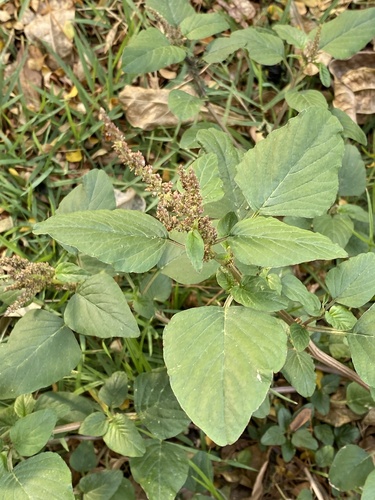
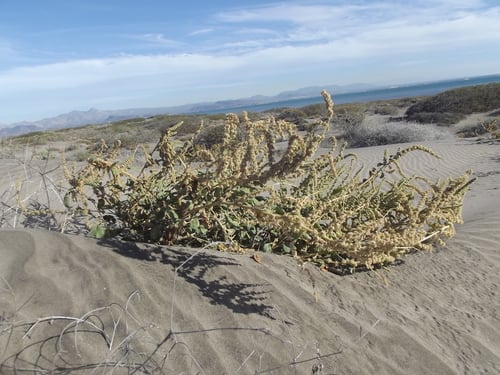
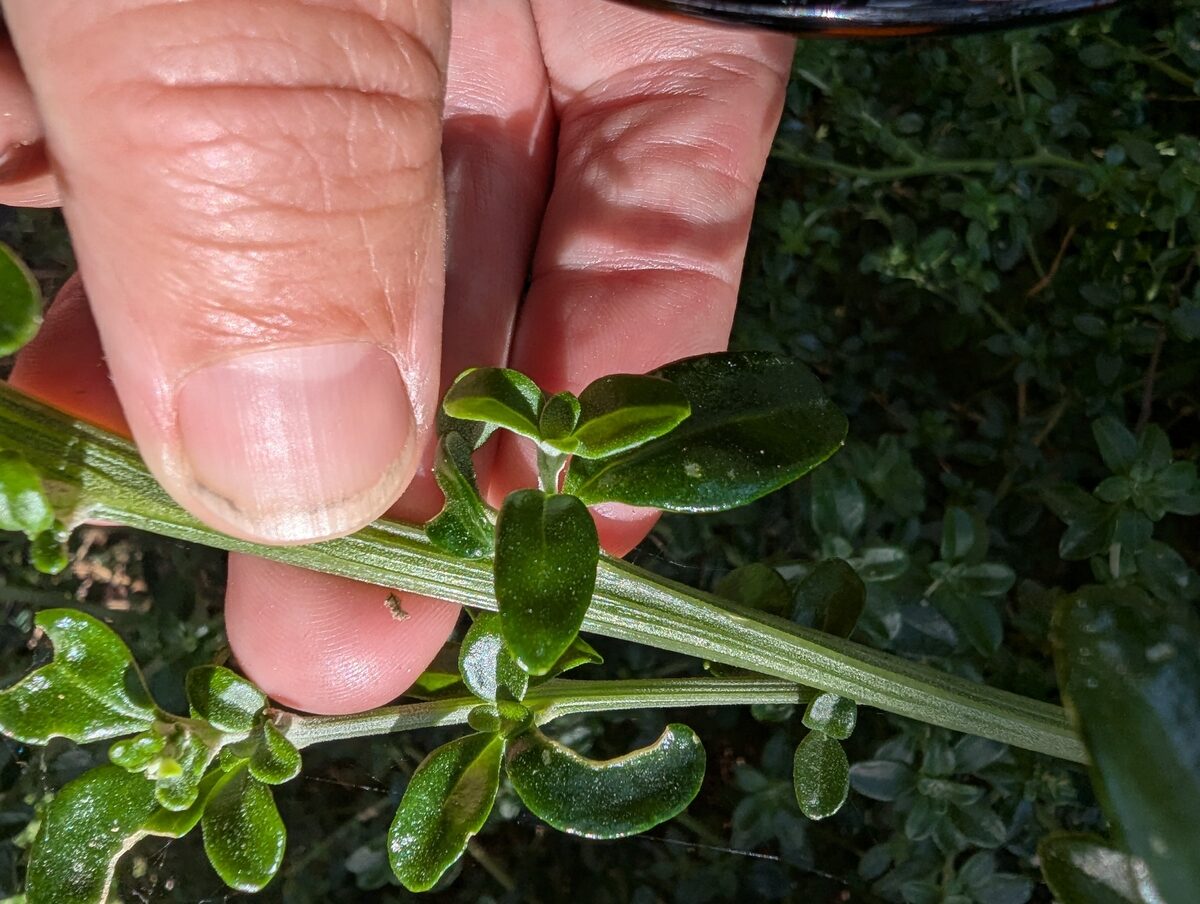
Amaranthus torreyi - (A.Gray.)Benth. ex Watson.
(A.Gray.)Benth. ex Watson.
Torrey's amaranthus
gbif· cc-by-nc
Dan Beckman
gbif· cc-by-nc
Dan Beckman
gbif· cc-by-nc
Dan Beckman
Description
Amaranthus torreyi is a ANNUAL growing to 0.8 m (2ft 7in) at a fast rate. See above for USDA hardiness. It is hardy to UK zone 7 and is frost tender. The species is monoecious (individual flowers are either male or female, but both sexes can be found on the same plant) and is pollinated by Wind. The plant is self-fertile. It is noted for attracting wildlife. Suitable for: light (sandy), medium (loamy) and heavy (clay) soils, prefers well-drained soil and can grow in nutritionally poor soil. Suitable pH: mildly acid, neutral and basic (mildly alkaline) soils. It cannot grow in the shade. It prefers moist soil and can tolerate drought.
Edible Uses
Torrey’s amaranth provides edible leaves and seeds, as with most species in the genus. The young leaves are tender and nutritious, suitable for cooking like spinach or used in mixed salads when fresh. Their flavor is typical of amaranths—mild and green, sometimes slightly bitter if older. Boiling improves texture and reduces any harshness. The seeds are the real value, as they are abundant and nutrient-dense. Small, shiny, and typically black, they can be toasted, boiled into porridge, ground into flour, or pressed into seed cakes. Like other amaranths, they are a complete protein source, making them especially valuable as a wild grain. Edibility Rating: 4/5 – A good wild edible, though less abundant than other weedy species like A. retroflexus or A. palmeri. Leaves - cooked. Used as a spinach. Seed - cooked. Very small and fiddly, but the seed is very nutritious. The seed can be cooked whole, and becomes very gelatinous like this, but it is rather difficult to crush all of the small seeds in the mouth and thus some of the seed will pass right through the digestive system without being assimilated.
Known Hazards
No members of this genus are known to be poisonous, but when grown on nitrogen-rich soils they are known to concentrate nitrates in the leaves. This is especially noticeable on land where chemical fertilizers are used. Nitrates are implicated in stomach cancers, blue babies and some other health problems. It is inadvisable, therefore, to eat this plant if it is grown inorganically.
Distribution
N. America - Nebraska to Nevada, south to Mexico.
Where It Grows
NORTHERN AMERICA: United States (New Mexico, Texas, Arizona (west), California (southeast)), Mexico (Chihuahua, Coahuila de Zaragoza, Durango, San Luis Potosí, Sonora, Baja California (Norte), Baja California Sur, Guanajuato, Jalisco, Michoacán de Ocampo)
Cultivation
We have very little information on this species but it should succeed as a spring-sown annual in Britain. The following notes are based on the general needs of the genus. Prefers a well-drained fertile soil in a sunny position. Requires a hot sheltered position if it is to do well. Plants should not be given inorganic fertilizers, see notes above on toxicity. Most if not all members of this genus photosynthesize by a more efficient method than most plants. Called the 'C4 carbon-fixation pathway', this process is particularly efficient at high temperatures, in bright sunlight and under dry conditions.
Propagation
Seed - sow late spring in situ. An earlier sowing can be made in a greenhouse and the plants put out after the last expected frosts. Germination is usually rapid and good if the soil is warm. A drop in temperature overnight aids germination. Cuttings of growing plants root easily.
Other Uses
Dye. Yellow and green dyes can be obtained from the whole plant.
Synonyms
Also Known As
Torrey’s Amaranth (Amaranthus torreyi)