Amaranthus hypochondriacus
L.
Amaranth, Velvet flower
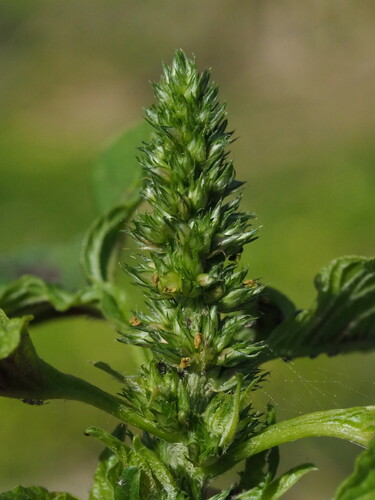
iNaturalist· cc-by-sa
(c) Karelj, some rights reserved (CC BY-SA)
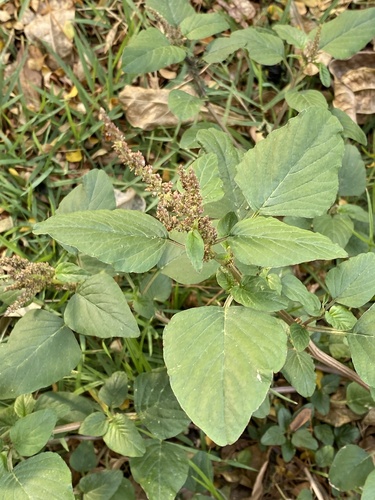
iNaturalist· cc-by-sa
(c) Magnus Manske, some rights reserved (CC BY-SA)
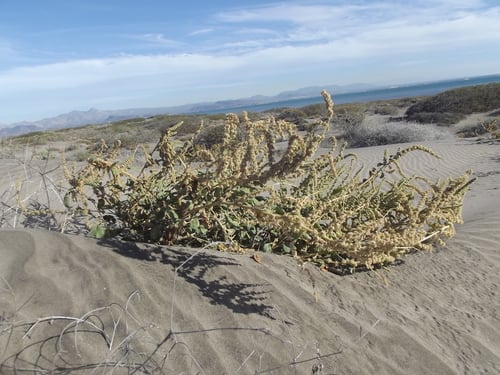
iNaturalist· cc-by-nc
(c) Juan Carlos López Domínguez, some rights reserved (CC BY-NC), uploaded by Juan Carlos López Domínguez
Summary
Source: WikipediaAmaranthus hypochondriacus is an ornamental plant commonly known as Prince-of-Wales feather or prince's-feather. It is called quelite, bledo and quintonil in Spanish.
Description
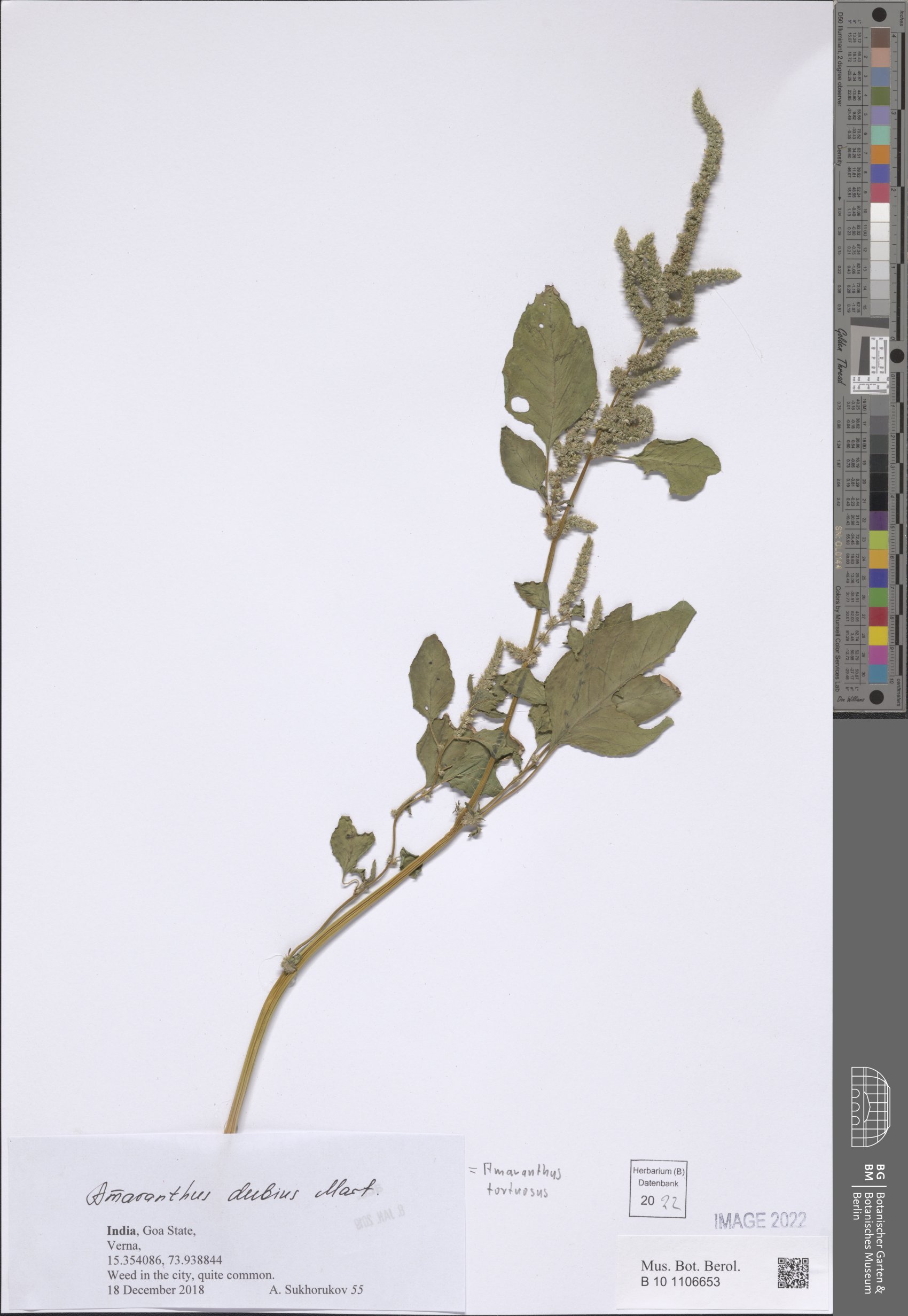
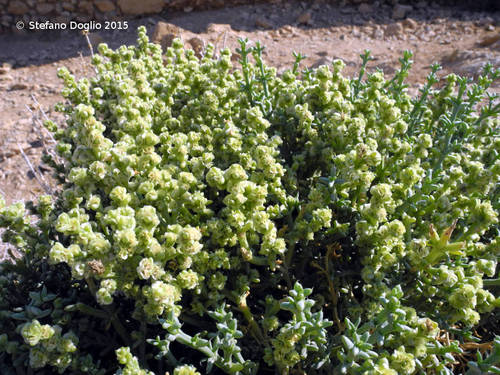
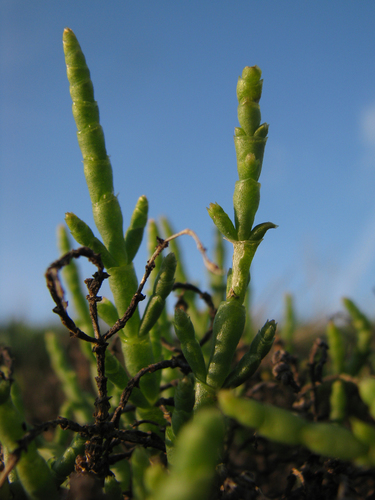
An annual herb. It grows to 1.2 m high and 50 cm across. The leaves are oblong or sword shaped and purple-green. They are 15 cm long. The flowers are more erect than Amaranthus cruentus. They are large and thick. The pointed bracts give a prickly appearance. The flower clusters can be 15 cm long or more. The seed is usually pale.
Edible Uses
Young leaves are cooked as a spinach and are rich in vitamins and minerals with a mild flavour. The seeds can be eaten raw or cooked as a cereal substitute, and can also be popped in much the same way as popcorn. Alternatively, seeds can be soaked for 12 hours in warm water, allowed to sprout for around 11 days, and then added to salads. Very small but easy to harvest and highly nutritious, the seeds become very gelatinous when cooked whole, though because they are difficult to crush completely in the mouth, some will pass through the digestive system without being fully assimilated. A red pigment extracted from the plant is used as a food colouring.
Traditional Uses
The seeds are eaten cooked. They are made into tortillas and chapaties. The leaves are eaten cooked. The seeds can be sprouted and the sprouts eaten. The red pigment is used to colour foods.
Medicinal Uses
The whole plant contains tannin and is astringent. It is used internally to treat diarrhoea and excessive menstruation. It can be used as a gargle to soothe inflammation of the pharynx and to support healing of ulcerated mouths, and applied externally to treat vaginal discharges, nosebleeds, and wounds. The plant can be used fresh or harvested when coming into flower and dried for later use.
Known Hazards
No members of this genus are known to be poisonous, but when grown on nitrogen-rich soils they are known to concentrate nitrates in the leaves. This is especially noticeable on land where chemical fertilizers are used. Nitrates are implicated in stomach cancers, blue babies and some other health problems. It is inadvisable, therefore, to eat this plant if it is grown inorganically.
Distribution
It will grow in tropical, subtropical and temperate places. Plants do best under high light, warm conditions and dry conditions. It is best with a temperature above 25°C. They need a well drained soil. It tolerates a pH in the range 5.2 to 7.5. It is grown especially in the tropics. It suits hardiness zones 8-11.
Where It Grows
Africa, Asia, Australia, Canada, Central America, China, East Africa, Europe, Guatemala, Himalayas, India, Kenya, Madagascar, Mexico*, Nauru, North America, Pacific, Slovenia, South Africa, Southern Africa, Tibet, Turkey, Türkiye, Tuvalu, Uganda, USA,
Cultivation
Prefers a well-drained fertile soil in a sunny position. Requires a hot sheltered position if it is to do well. Tolerates a pH in the range 5.2 to 7.5. Plants should not be given inorganic fertilizers, see notes above on toxicity. Often cultivated, especially in tropical areas, for its edible leaves and seeds, there are many named varieties. This is the most robust and highest yielding of the grain amaranths, though it is late maturing and therefore less suitable for northern areas. Most if not all members of this genus photosynthesize by a more efficient method than most plants. Called the 'C4 carbon-fixation pathway', this process is particularly efficient at high temperatures, in bright sunlight and under dry conditions. In garden design, as well as the above-ground architecture of a plant, root structure considerations help in choosing plants that work together for their optimal soil requirements including nutrients and water. The predictable growth behaviour makes it easier to maintain without having to apply containment methods.
Propagation
Sow seed in late spring directly in situ. For an earlier start, sow in a greenhouse and transplant after the last expected frosts. Germination is usually rapid and good when the soil is warm, and a drop in temperature overnight aids the process. Cuttings of growing plants root easily.
Other Uses
Yellow and green dyes can be obtained from the whole plant. A red dye from the plant is also used as a colouring in foods and medicines. The plant is noted as a dynamic accumulator and has a role in food forest systems.
Other Information
It is sold in local markets.
Notes
There are about 60 Amaranthus species. The seeds are 15% protein.
Nutrition
| Part | Moisture | kJ | kcal | Protein | Vit A | Vit C | Iron | Zinc |
|---|---|---|---|---|---|---|---|---|
| Seeds | 12.7 | 1551 | 375 | 15.8 | — | — | — | — |
| Leaves | 84 | 176 | 42 | 4.6 | — | — | 8.9 | — |
| Sprouts | — | — | — | — | — | — | — | — |
Synonyms
Also Known As
Amaranto, Bledo, Doodo, Guegui, Hoya de amaranto, Kimoaembazaha, Mercado grain amaranth, Poong keeray, Prince's feather, Quintonil, Rajgira, Ramdana, Tola kura, Yani, žitni ščir
References (45)
- Andabati, B., & Muyonga, J., 2014, Phenolic content and antioxidant activity of selected Ugandian traditional medicinal foods. African Journal of Food Science. 8(8), pp 427-434
- Bao Bojian; Steve Clemants, Thomas Borsch, Amaranthaceae [Draft], Flora of China
- Bircher, A. G. & Bircher, W. H., 2000, Encyclopedia of Fruit Trees and Edible Flowering Plants in Egypt and the Subtropics. AUC Press. p 22 (As Amaranthus frumentaceus)
- Bodkin, F., 1991, Encyclopedia Botanica. Cornstalk publishing, p 74
- Brouk, B., 1975, Plants Consumed by Man. Academic Press, London. p 34 (As Amaranthus leucocarpus)
Show all 45 references Hide references
- Brown, D., 2002, The Royal Horticultural Society encyclopedia of Herbs and their uses. DK Books. p 117
- Creasey, R., 2000, Edible Mexican Garden. Periplus. p 22
- Cundall, P., (ed.), 2004, Gardening Australia: flora: the gardener's bible. ABC Books. p 144
- Facciola, S., 1998, Cornucopia 2: a Source Book of Edible Plants. Kampong Publications, p 8
- FAO, 1993, Valor Nutritivo Y Usis en Alimantacion humana de Algunis Cultivos Autoctonos Subexplotados de Mesoamerica. FAO, Santiago, Chile. p 107
- Fl. ind. ed. 1832, 3:609. 1832 (As Amaranthus frumentaceus)
- Grivetti, L. E., 1980, Agricultural development: present and potential role of edible wild plants. Part 2: Sub-Saharan Africa, Report to the Department of State Agency for International Development. p 44
- Grubben, G. J. H. and Denton, O. A. (eds), 2004, Plant Resources of Tropical Africa 2. Vegetables. PROTA, Wageningen, Netherlands. p 78
- Hermandez Bermejo, J.E., and Leon, J. (Eds.), 1994, Neglected Crops. 1492 from a different perspective. FAO Plant Production and Protection Series No 26. FAO, Rome. p 12, 93
- Jansen, P.C.M., 2004. Amaranthus hypochondriacus L. [Internet] Record from Protabase. Grubben, G.J.H. & Denton, O.A. (Editors). PROTA (Plant Resources of Tropical Africa / Ressources végétales de l’Afrique tropicale), Wageningen, Netherlands. < http://database.prota.org/search.htm>. Accessed 13 October 2009.
- Ju, Y., et al, 2013, Eating from the wild: diversity of wild edible plants used by Tibetans in Shangri-la region, Yunnan, China, Journal of Ethnobiology and Ethno medicine 9:28
- Kiple, K.F. & Ornelas, K.C., (eds), 2000, The Cambridge World History of Food. CUP p 1717
- Manzanero-Medina, G. I., et al, 2020, Ethnobotany of food plants (quelites) sold in two traditional markets of Oaxaca, Mexico. South African Journal of Botany. 130 (2020) 215-223
- Mapes, C. & Basurto, F., 2016, Biodiversity and Edible Plants of Mexico. Chapter 5 in R. Lira, et al. (eds.), Ethnobotany of Mexico, Ethnobiology, Springer. p 114
- Martin, F.W. & Ruberte, R.M., 1979, Edible Leaves of the Tropics. Antillian College Press, Mayaguez, Puerto Rico. p 173 (As Amaranthus frumentaceus)
- Maundu, P. et al, 1999, Traditional Food Plants of Kenya. National Museum of Kenya. p 61
- Norrington, L., & Campbell, C., 2001, Tropical Food Gardens. Bloomings Books. p 50
- Pena, F. B., et al, 1998, Los quelites de la Sierra Norte de Puebla, Mexico: Inventory Y Formas de Preparacion. Bol. Soc. Bot. Mexico 62:49-62
- Piedra-Malagón, E. M. et al, 2022, Edible native plants of the Gulf of Mexico Province. Biodiversity Data Journal 10: e80565 p 8
- Plants for a Future database, The Field, Penpol, Lostwithiel, Cornwall, PL22 0NG, UK. http://www.scs.leeds.ac.uk/pfaf/
- Plants for a Future database, The Field, Penpol, Lostwithiel, Cornwall, PL22 0NG, UK. http://www.scs.leeds.ac.uk/pfaf/ (As Amaranthus frumentaceus)
- Plants for a Future database, The Field, Penpol, Lostwithiel, Cornwall, PL22 0NG, UK (As Amaranthus leucocarpus)
- Proc. Amer. Acad. Arts 10:347. 1875 (As Amaranthus leucocarpus)
- PROSEA (Plant Resources of South East Asia) handbook Volume 10 Cereals. p 75
- Purseglove, J.W., 1968, Tropical Crops Dicotyledons, Longmans. p 624 (As Amaranthus leucocarpus)
- Saur, J.D., Grain amaranths, in Simmonds, N.W., (Ed.), 1979, Evolution of Crop Plants. Longman. p 4
- Sharma, B.B., 2005, Growing fruits and vegetables. Publications Division. Ministry of Information and broadcasting. India. p 189
- SHORTT (As Amaranthus frumentaceus)
- Singh, A., 2009, Bioactivity of Famine Food Plants from the family: Amaranthaceae. University of Technology, Durban, South Africa. Masters Degree Thesis. pp 1-116
- Small, E., 2009, Top 100 Food Plants. The world's most important culinary crops. NRC Research Press. p 69
- Smith, K., 1998. Growing Uncommon Fruits and Vegetables. New Holland. p 25
- Sp. pl. 2:991. 1753 "hypocondriacus"
- Terra, G.J.A., 1973, Tropical Vegetables. Communication 54e Royal Tropical Institute, Amsterdam, p 21 (As Amaranthus frumentaceus)
- Tindall, H.D., 1983, Vegetables in the tropics. Macmillan p. 38
- USDA, ARS, National Genetic Resources Program. Germplasm Resources Information Network - (GRIN). [Online Database] National Germplasm Resources Laboratory, Beltsville, Maryland. Available: www.ars-grin.gov/cgi-bin/npgs/html/econ.pl (10 April 2000)
- van Wyk, B., 2005, Food Plants of the World. An illustrated guide. Timber press. p 55
- van Wyk, Be., & Gericke, N., 2007, People's plants. A Guide to Useful Plants of Southern Africa. Briza. p 64
- Wiersema, J. H. & Leon, B., 2013, World Economic Plants. A Standard Reference CRC Press. 2nd Ed. p 44
- Wilson, J.M. & Witcombe, J.R., Crops for Arid lands, in Wickens, G.E., Goodin, J.R., and Field, D.V.,(Eds.) 1985, Plants for Arid Lands. Unwin Hyman, London, p 45
- World Checklist of Useful Plant Species 2020. Royal Botanic Gardens, Kew