Allophylus cobbe
(L.) Raeusch
Threeleaf allophyllus
iNaturalist· cc-by-nc-sa
(c) Satish Nikam, some rights reserved (CC BY-NC-SA)
iNaturalist· cc-by
(c) pbsg, some rights reserved (CC BY), uploaded by pbsg
iNaturalist· cc-by-sa
(c) Steve Fitzgerald, some rights reserved (CC BY-SA), uploaded by Steve Fitzgerald
Summary
Source: WikipediaAllophylus cobbe, commonly known as titberry or Indian allophylus, is a pantropical shrub in the family Sapindaceae with many uses in traditional medicine. It has a highly variable morphology throughout its range and may prove to be more than one species.
Description
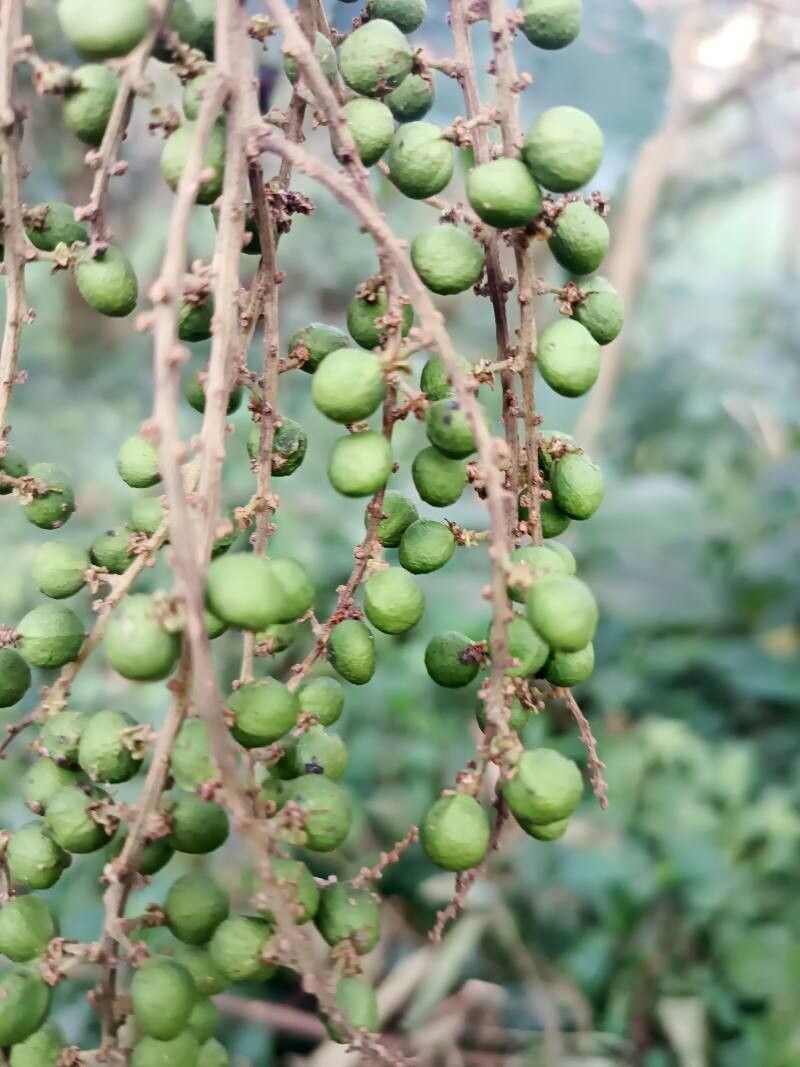
A small tree which grows up to 3-5 m tall. It spreads 1-4 m across. The young shoots are covered with woolly hairs. The flush of new leaves are pinkish. The leaves have 3 leaflets. The leaflets are 5-10 cm long by 2-4 cm wide. The leaves are oval and with coarse teeth around the edge. They are smooth on top and hairy underneath. The flower bunch have flowers around a common stalk. These are 5-10 cm long. The flowers are 0.2 cm across. The flowers are greenish. The fruit is a berry about 0.5 cm across. It is orange. It is a very variable plant.
Edible Uses
Fruit - raw. A bit sour. Somewhat fleshy. The red, globular fruits, mostly with only one mericarp developed, are 45 - 125mm long and 35 - 80mm wide.
Traditional Uses
The fruit are sour but are eaten.
This uses section is brief — help expand it
Medicinal Uses
The pulped leaves, or an extraction or decoction of them, as well as a decoction of the roots and the bark, are used in the treatment of stomach-aches and fevers. A disease inside the mouths of children is also treated with it. The scraped bark is applied to rigid abdomen, the bark to burns.
Known Hazards
The fruits are used as a fish poison.
Distribution
A tropical plant. It occurs in coastal places in the tropics in rainforests. It suits humid locations. Plants are very frost tender. Plants require a protected site in a well drained soil. It grows from sea level to 1,300 m above sea level.
Where It Grows
Africa, Andamans, Asia, Australia, Bangladesh, Brunei, Cambodia, China, Christmas Island, East Africa, India, Indochina, Indonesia, Laos, Madagascar, Malaysia, Maldives, Myanmar, North America, Pacific, Papua New Guinea, PNG, Sarawak, SE Asia, South America, Sri Lanka, Timor, Vietnam,
Cultivation
Plants are grown from seed. Seed should be sown while fresh. They can also be grown by sections of the root.
Other Uses
The wood is reported to be very hard but not very durable: it is mainly used as a timber for temporary structures and indoors, e.g. for rafters. Canes and hilts are made from the wood, as well as beaters for the cotton fruits (Mindoro). In the Bismarck Archipelago, poles and branches are used for floats of outrigger canoes and for marking the location of fish traps. The wood is used for fuel.
Other Information
It is not known if it is used for food in Papua New Guinea.
Notes
There are 200 Allophyllus species. Some say there is just one widely variable species. The synonym list is shorter in The Plant List.
Synonyms
Also Known As
Amalai, Balaro, Bonbongan, Buah penancang, Dhonmoosa, Embuakat, Eravalu, Eruala, Gamperut, Ising, Kalasi, Kelampu, Kerimbau, Khondokoli, Mambahino, Mata kucing, Mukkanamperu, Naimaram, Pohon asa-asa, Rakhalphul, Sasah, Sidisale, Sisipen pelandok, Tipani, Titberry, Togaratti, Tukil-tukil, Zaung-gale
References (25)
- Ambasta S.P. (Ed.), 2000, The Useful Plants of India. CSIR India. p 28
- Bircher, A. G. & Bircher, W. H., 2000, Encyclopedia of Fruit Trees and Edible Flowering Plants in Egypt and the Subtropics. AUC Press. p 20
- Borrell, O.W., 1989, An Annotated Checklist of the Flora of Kairiru Island, New Guinea. Marcellin College, Victoria Australia. p 132
- Burkill, I.H., 1966, A Dictionary of the Economic Products of the Malay Peninsula. Ministry of Agriculture and Cooperatives, Kuala Lumpur, Malaysia. Vol 1 (A-H) p 105
- Chai, P. P. K. (Ed), et al, 2000, A checklist of Flora, Fauna, Food and Medicinal Plants. Lanjak Entimau Wildlife Sanctuary, Sarawak. Forestry Malaysia & ITTO. p 170
Show all 25 references Hide references
- Cooper, W. and Cooper, W., 2004, Fruits of the Australian Tropical Rainforest. Nokomis Editions, Victoria, Australia. p 477
- Cowie, I, 2006, A Survey of Flora and vegetation of the proposed Jaco-Tutuala-Lore National Park. Timor-Lests (East Timor) www.territorystories.nt/gov.au p 52
- Elliot, W.R., & Jones, D.L., 1982, Encyclopedia of Australian Plants suitable for cultivation. Vol 2. Lothian. p 174
- Grandtner, M. M., 2008, World Dictionary of Trees. Wood and Forest Science Department. Laval University, Quebec, Qc Canada. (Internet database http://www.WDT.QC.ca)
- Grandtner, M. M. & Chevrette, J., 2013, Dictionary of Trees, Volume 2: South America: Nomenclature, Taxonomy and Ecology. Academic Press p 24
- Hedrick, U.P., 1919, (Ed.), Sturtevant's edible plants of the world. p 44
- Jackes, B.R., 2001, Plants of the Tropics. Rainforest to Heath. An Identification Guide. James Cook University. p 80
- Martin, M.A., 1971, Introduction L'Ethnobotanique du Cambodge. Centre National de la Recherche Scientifique. Paris. (As Allophylus serrulatus)
- Nomencl. bot. ed. 3, 108. 1797
- Pasha, M. K. & Uddin, S. B., 2019, Minor Edible Fruits of Bangladesh. Bangladesh J. Plant Taxon. 26(2): 299–313 (As var. villosa)
- Phon, P., 2000, Plants used in Cambodia. © Pauline Dy Phon, Phnom Penh, Cambodia. p 25 (As Allophylus serrulatus)
- Schatz, G.E., 2001, Generic Tree Flora of Madagascar. Royal Botanical Gardens, Kew and Missouri Botanical Garden. p 362 (Genus)
- Selvam, V., 2007, Trees and shrubs of the Maldives. RAP Publication No. 2007/12
- Slik, F., www.asianplant.net
- Soepadmo, E. and Wong, K. M. and Saw, L. G., 1996, Tree Flora of Sabah and Sarawak. Forestry Malaysia. Volume Two. p 274
- Sujanapal, P., & Sankaran, K. V., 2016, Common Plants of Maldives. FAO & Kerala FRI, p 25
- Townsend, K., 1994, Across the Top. Gardening with Australian Plants in the tropics. Society for Growing Australian Plants, Townsville Branch Inc. p 75
- WATT
- Whistler, W.A., 2004, Rainforest Trees of Samoa. Isle Botanica Honolulu, Hawaii. p 147
- World Checklist of Useful Plant Species 2020. Royal Botanic Gardens, Kew
More from Sapindaceae
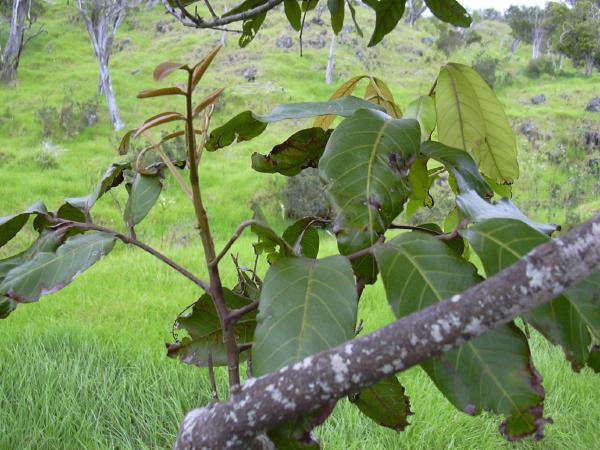
Alectryon macrococcum
Mahoe
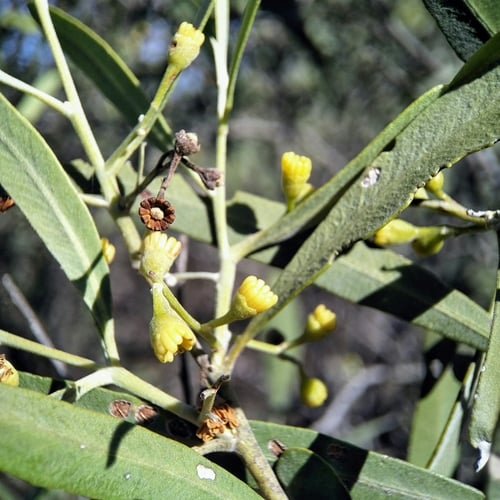
Alectryon oleifolius
Bullocky bush, Boonaree, Rosewood, Western Rosewood, Boonery
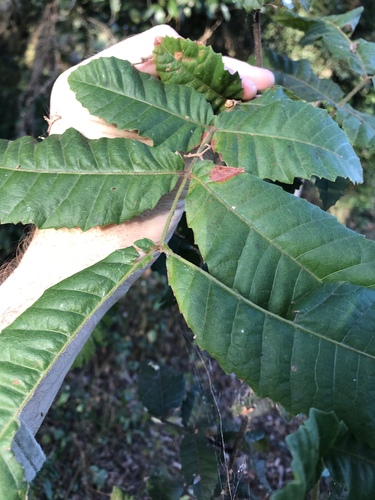
Alectryon tomentosus
Woolly rambutan, Red Jacket, Hairy Bird's eye
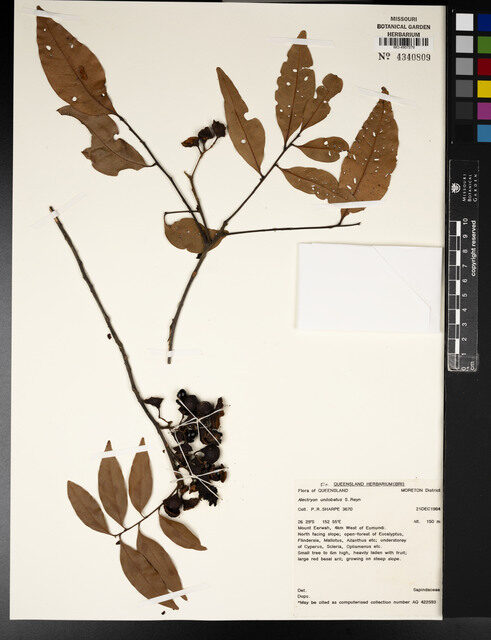
Alectryon unilobatus
Allophylus abyssinicus
Forest velvet false-currant
Allophylus africanus
African allophylus, African false-raisin