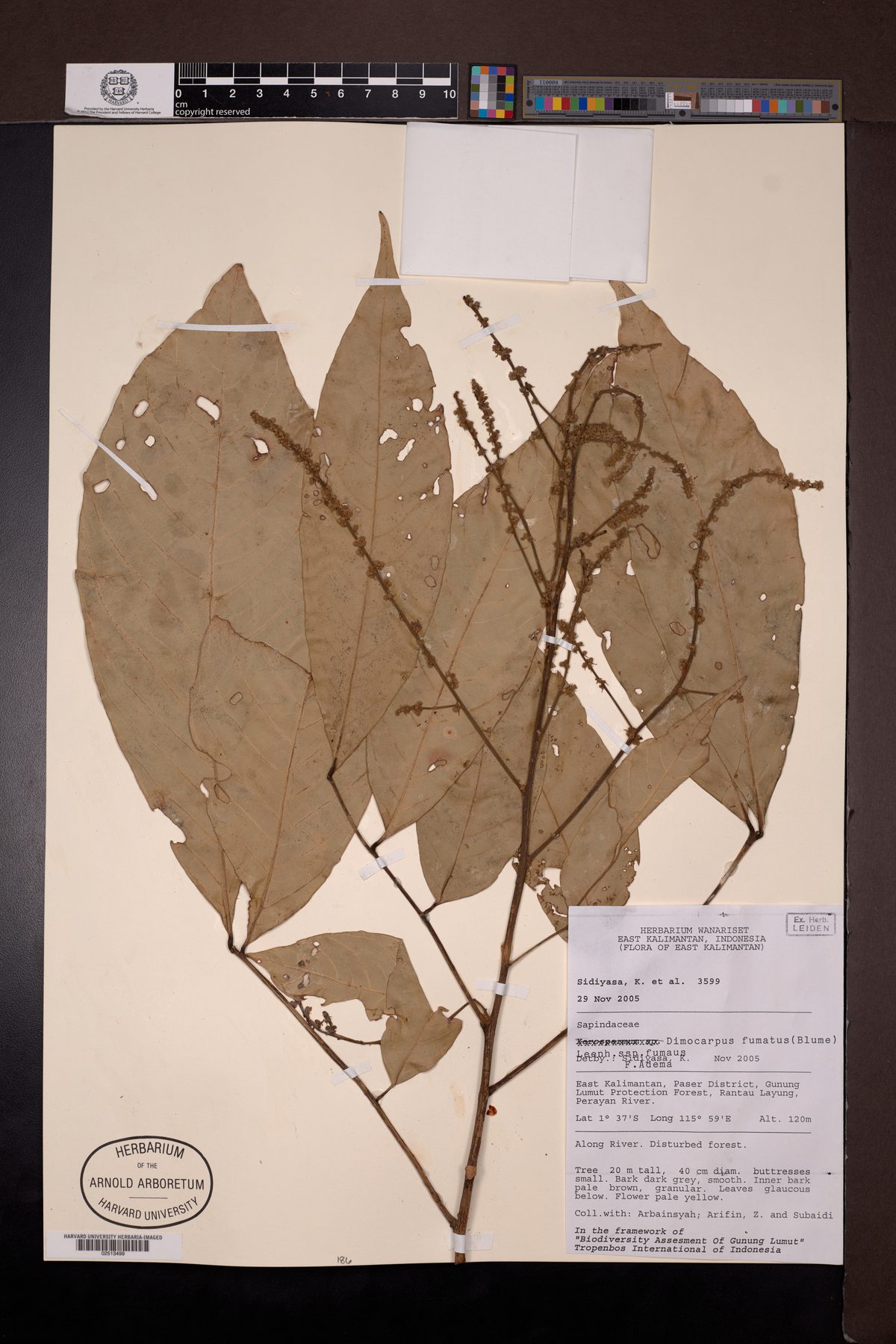
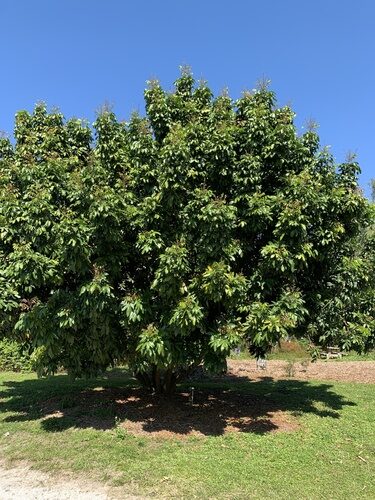
Deinbollia oblongifolia
(E. Mey. ex Arn.) Radlk.
Soap berry, Dune soap-berry
iNaturalist· cc-by-nc
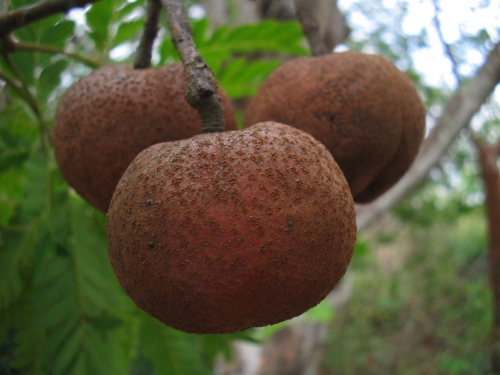
(c) Peter Vos, some rights reserved (CC BY-NC), uploaded by Peter Vos
iNaturalist· cc-by-sa
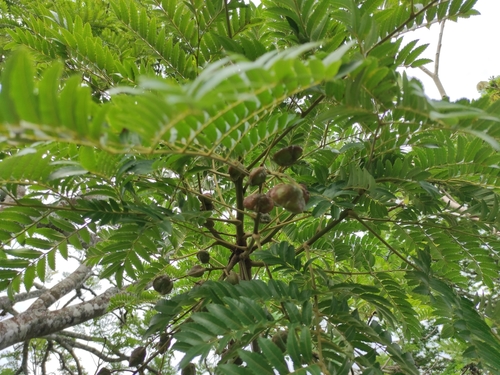
(c) Dylan Leonard, some rights reserved (CC BY-SA)
iNaturalist· cc-by-nc
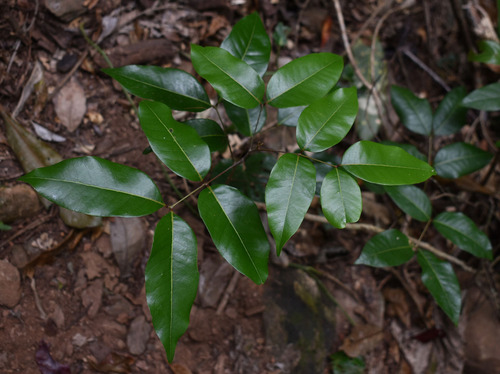
(c) Peter Vos, some rights reserved (CC BY-NC)
Summary
Source: WikipediaDeinbollia oblongifolia is a shrub or small tree in the family Sapindaceae. It is commonly known as the dune soap-berry and is found in coastal vegetation from the Eastern Cape of South Africa, through KwaZulu-Natal to southern Mozambique and Eswatini. It is named after Peter Vogelius Deinboll (1783–1876), a Danish botanist and plant collector.
Description
A small tree. It is often 3-6 m tall but can be 9 m tall. It has deep roots. The trunk can be 30 cm across. The leaves are large and compound. They are crowded at the ends of branches. They are from 15-46 cm long. The leaflets are smooth and thin. They are in about 5-10 pairs. They are 5-13 cm long by 2.5-5 cm wide. They are oblong but narrow to both ends. The leaflets can vary in shape. The flowers buds are brown and furry. The flowers are white and flask-shaped. The are packed tightly together in small clusters. Male and female flowers can be on separate trees or this can vary with seasons. The fruit are made up of 3 parts. These are grape like and round. The fruit are 1.3 cm across. They are yellow when mature. The fruit are edible. There is a single seed covered with a white material used as a soap substitute.
Edible Uses
The fruit is eaten by people. The leaves can be eaten as spinach, and the seeds can be lathered in water and used as soap (hence the name "soap-berry"). The roots are used in traditional Zulu medicine for stomach complaints. These shrubs are also valuable garden plants, especially in wildlife gardens.
Traditional Uses
The fruit are eaten raw.
This uses section is brief — help expand it
Distribution
A tropical plant. It grows in coastal open woodland, dune bush and forest. It is damaged by frost. It needs well drained soil and plenty of compost.
Where It Grows
Africa, East Africa, Eswatini, Mozambique, South Africa, Southern Africa, Swaziland,
Cultivation
Plants can be grown from seeds. Seed should be collected from fruit starting to dry on the tree. The seed should be cleaned and sown shallowly into the soil in a nursery bed. Seeds germinate in 3-12 weeks. Seedlings are transplanted when the first adult leaf appears.
Production
Seedlings grow slowly at first but more quickly later.
Other Information
The fruit are eaten especially by children. The leaves are a famine food.
Synonyms
Also Known As
Idololenkau, Igololenkawu, Iphengulula, Kumbuta, Masibele, Muaka, Si'rangelanguva, Tiica-mahcimo, Tirangelangwa
References (12)
- Cunningham, 1985,
- Fox, F. W. & Young, M. E. N., 1982, Food from the Veld. Delta Books. p 332
- Joffe, P., 2007, Creative Gardening with Indigenous Plants. A South African Guide. Briza. p 69
- Long, C., 2005, Swaziland's Flora - siSwati names and Uses http://www.sntc.org.sz/flora/
- Palgrave, K.C., 1996, Trees of Southern Africa. Struik Publishers. p 529
Show all 12 references Hide references
- Palmer, E and Pitman, N., 1972, Trees of Southern Africa. Vol. 2. A.A. Balkema, Cape Town p 1351
- Peters, C. R., O'Brien, E. M., and Drummond, R.B., 1992, Edible Wild plants of Sub-saharan Africa. Kew. p 180
- Ruiters-Welcome, A. K., 2019, Food plants of southern Africa. Ph.D. thesis. Univ. of Johannesburg p 100
- Schmidt, E., Lotter, M., & McCleland, W., 2007, Trees and shrubs of Mpumalanga and Kruger National Park. Jacana Media p 370
- Swaziland's Flora Database http://www.sntc.org.sz/flora
- Venter, F & J., 2009, Making the most of Indigenous Trees. Briza. p 122
- Welcome, A. K. & Van Wyk, B.-E., 2019, An inventory and analysis of the food plants of southern Africa. South African Journal of Botany 122 (2019) 136–179