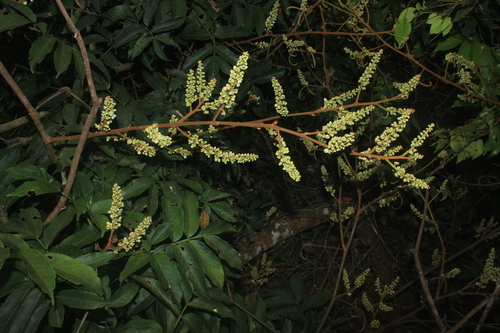
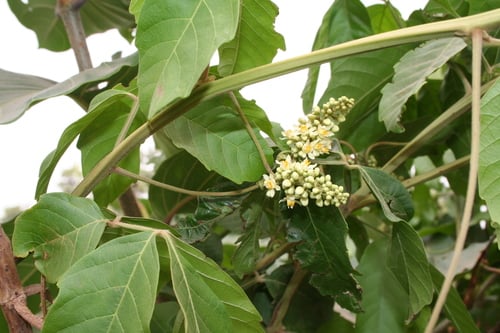
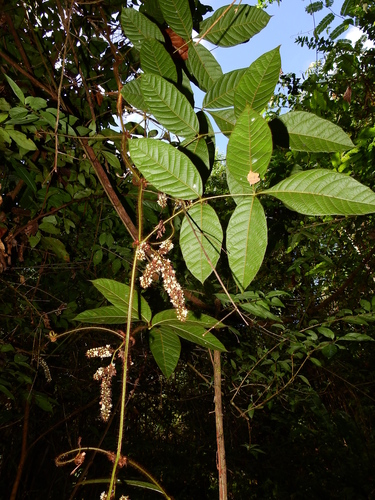
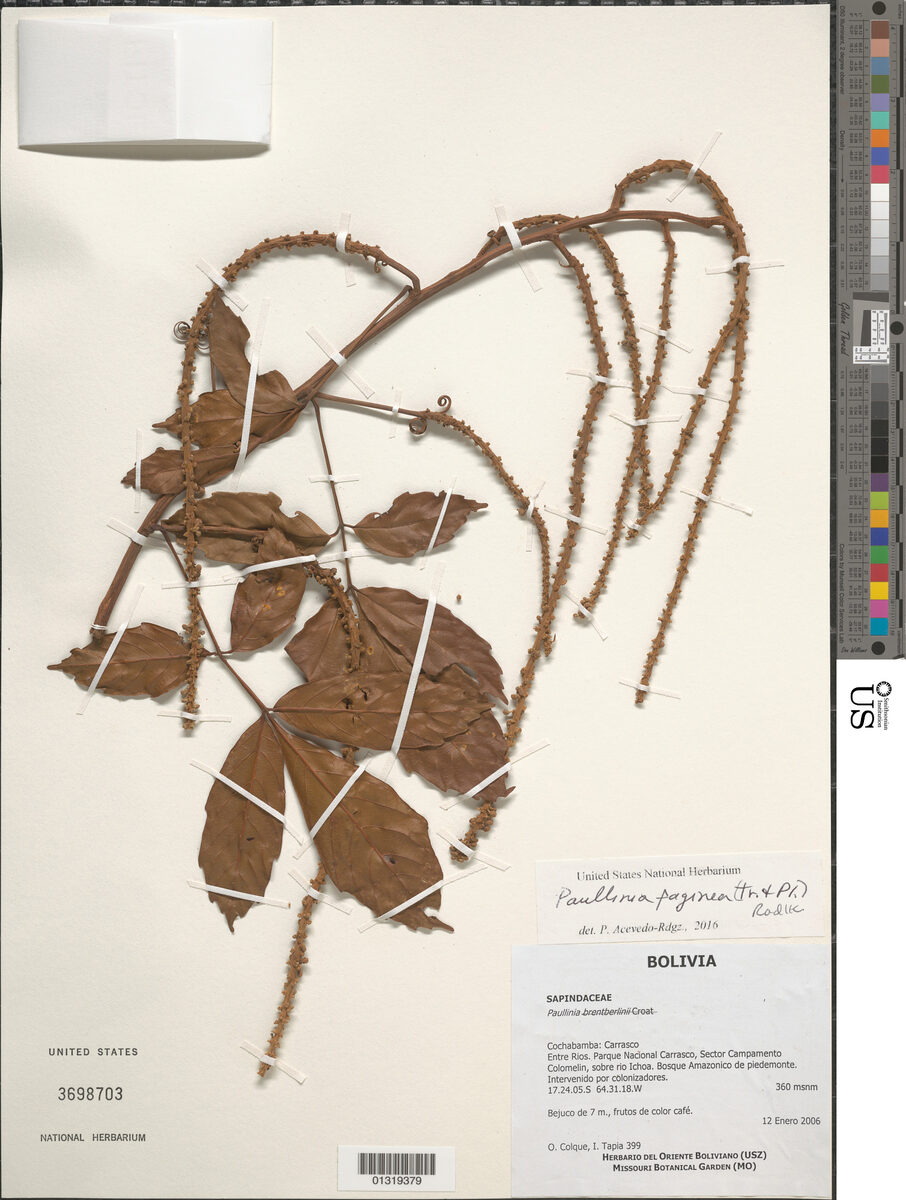
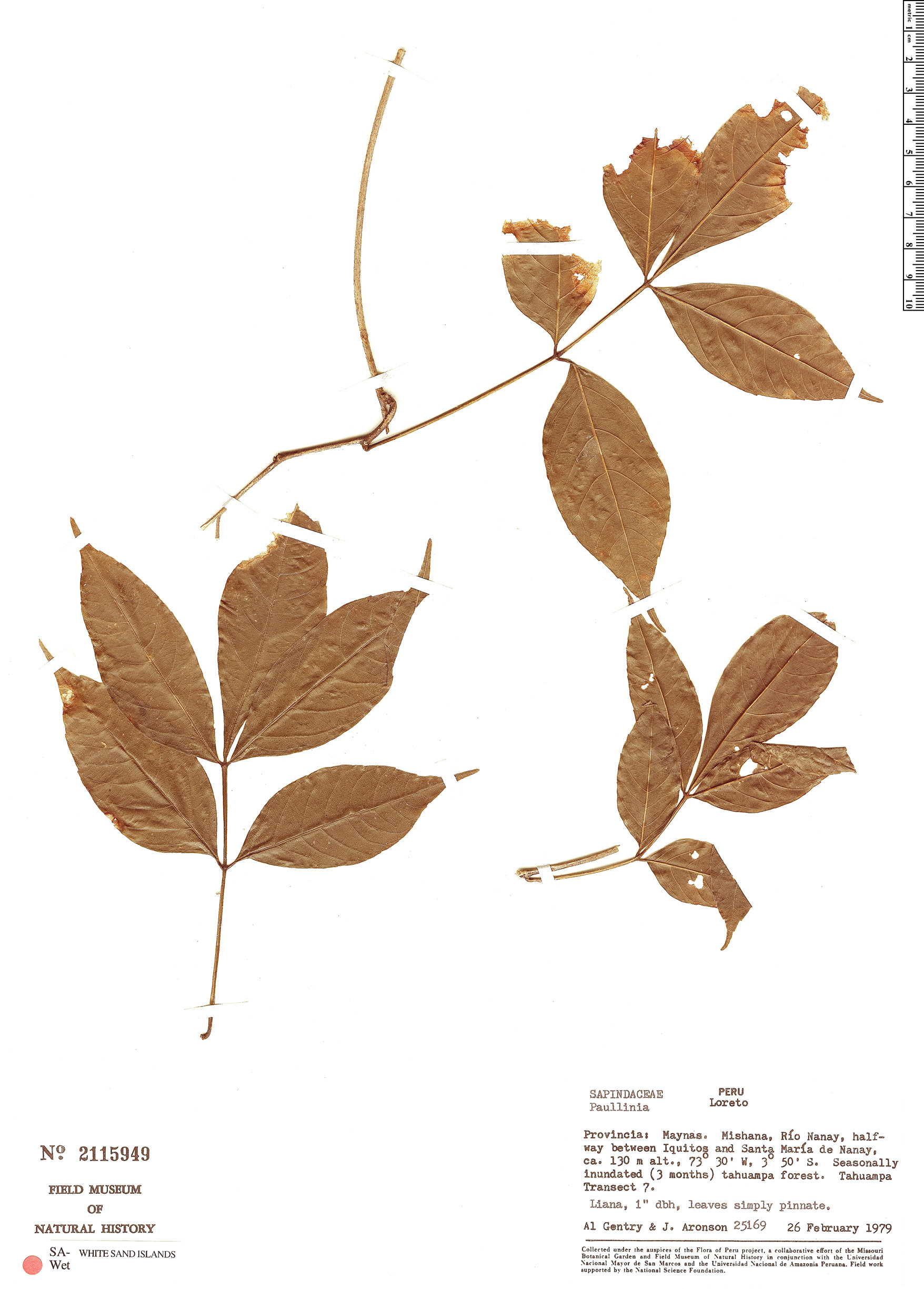
Deinbollia pinnata
(Poir.) Schum. et Thonn
iNaturalist· cc-by-nc-sa
(c) Marco Schmidt, some rights reserved (CC BY-NC-SA), uploaded by Marco Schmidt
iNaturalist· cc-by-nc-sa
(c) Marco Schmidt, some rights reserved (CC BY-NC-SA)
Description
A tropical shrub or small tree reaching 5 m high, found on grassy savannah and jungle edges. It is commonly used as food in Ivory Coast.
This description is brief — help expand it
Edible Uses
The fruit and leaves are edible. The slimy layer around the seeds is traditionally sucked.
Traditional Uses
The slimy layer around the seeds is sucked.
This uses section is brief — help expand it
Distribution
It is a tropical plant. It grows on grassy savannah and on the edges of the jungle.
Where It Grows
Africa, Benin, Côte d'Ivoire, Ghana, Guinea, Guinée, Ivory Coast, Liberia, Mali, Nigeria, Sierra Leone, Togo, West Africa,
Production
It produces fruit during the wet season.
Other Information
It is a commonly used food in Ivory Coast.
Synonyms
Also Known As
Asikoto, Dula tiama, Grepo, Kpekolopekolo, Sokwe, Tupupuni
References (15)
- Achigan-Dako, E, et al (Eds), 2009, Catalogue of Traditional Vegetables in Benin. International Foundation for Science.
- Ambe, G., 2001, Les fruits sauvages comestibles des savanes guinéennes de Côte-d’Ivoire : état de la connaissance par une population locale, les Malinké. Biotechnol. Agron. Soc. Environ. 5(1), 43-48 (As Deinbollia leptophylla)
- Assogbadjo, A. E. et al, 2013, Specific Richness and Cultural Importance of Wild Edible Trees in Benin. Acta Hort. 979, ISHS 2013
- Atato, A., et al, 2010, Diversity of Edible Wild Fruit Tree Species of Togo. Global Science Books.
- Boateng, S. K., et al, 2007, Wet Season of Edible Wild Fruits in Three Regions of Ghana. Journal of Plant Sciences 2(3): 353-357
Show all 15 references Hide references
- Boedecker, J., et al, 2014, Dietary contribution of Wild Edible Plants to women’s diets in the buffer zone around the Lama forest, Benin – an underutilized potential. Food Sec. 6:833–849
- Burkill, H. M., 1985, The useful plants of west tropical Africa, Vol. 5. Kew.
- Busson, 1965
- Codjia, J. T. C., et al, 2003, Diversity and local valorisation of vegetal edible products in Benin. Cahiers Agricultures 12:1-12
- Dalziel, J. M., 1937, The Useful plants of west tropical Africa. Crown Agents for the Colonies London.
- Dansi, A., et al, 2008, Traditional leafy vegetables and their use in the Benin Republic. Genet Resour Crop Evol (2008) 55:1239–1256
- Jardin, C., 1970, List of Foods Used In Africa, FAO Nutrition Information Document Series No 2.p 132
- N'Danikou, S. et al, 2010, Eliciting Local Values of Wild Edible Plants in Southern Bénin to Identify Priority Species for Conservation. Economic Botany, 20(10), 2011, pp. 1–15.
- Peters, C. R., O'Brien, E. M., and Drummond, R.B., 1992, Edible Wild plants of Sub-saharan Africa. Kew. p 180
- World Checklist of Useful Plant Species 2020. Royal Botanic Gardens, Kew