Deinbollia kilimandscharica
Taub.
iNaturalist· cc-by-nc-nd
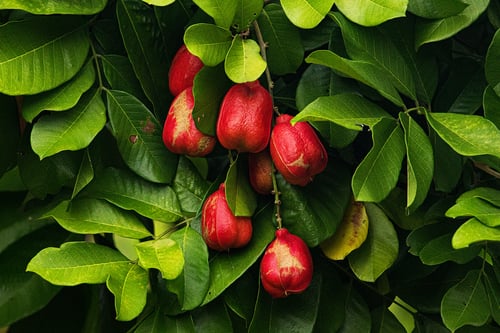
(c) Gerald Koech, some rights reserved (CC BY-NC-ND), uploaded by Gerald Koech
iNaturalist· cc-by-nc
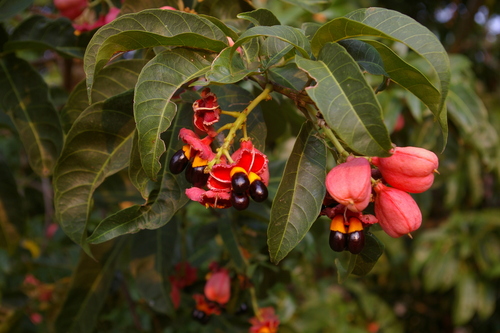
(c) Elliot Kinsey, some rights reserved (CC BY-NC)
wikimedia· cc-by
Wikimedia Commons - The Trustees of the Royal Botanic Gardens, Kew
Description
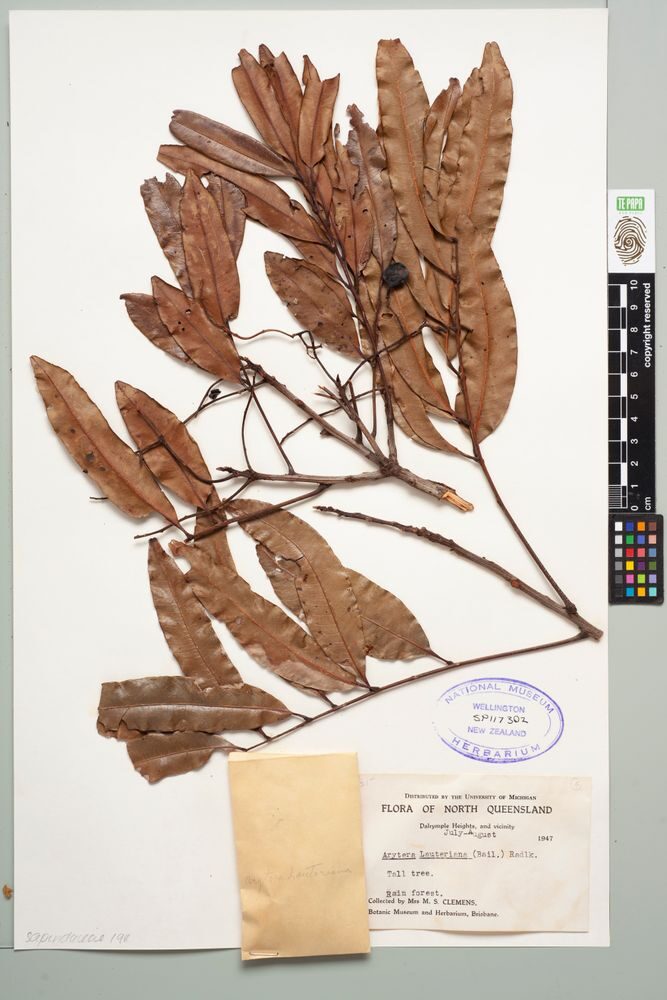
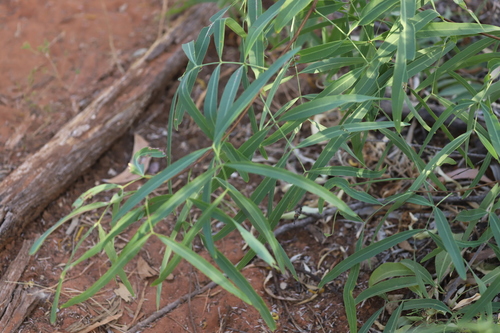
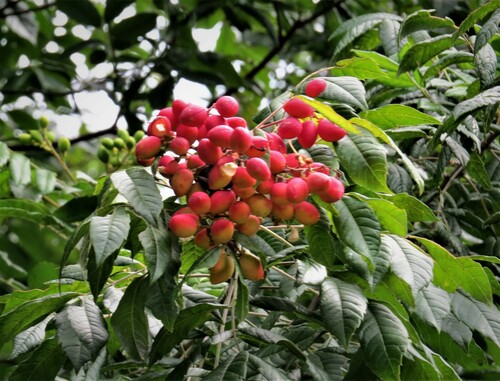
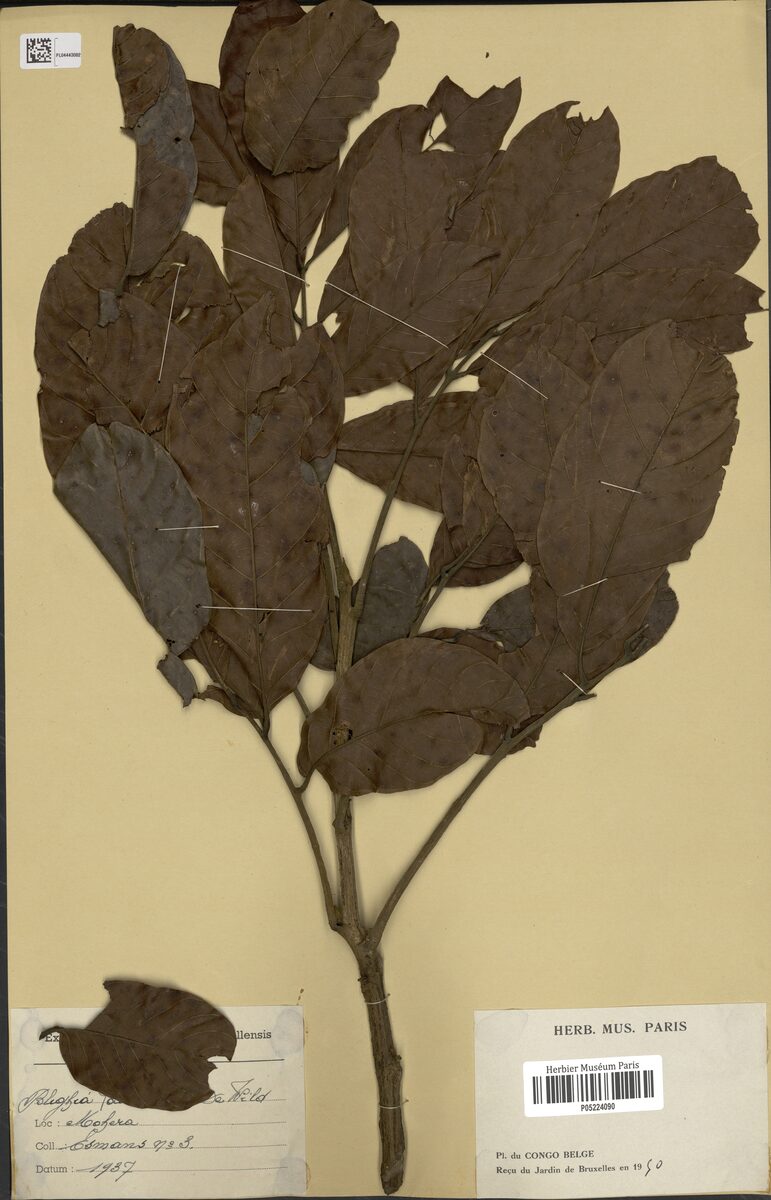
A small tree. It grows 2-6 m tall. It can be 10 m tall. It has a single trunk. The bark is grey brown. The leaves have an even number of leaflets. There are 8-12 leaflets along the stalk. The flowers are in groups 9-30 cm long. The flower are small and white or cream. The fruit is round and 1.5 cm long by 1.8 cm wide. There are 2 varieties.
Edible Uses
The ripe fruit are eaten raw as a snack, particularly by children.
Traditional Uses
The ripe fruit are eaten raw as a snack.
This uses section is brief — help expand it
Medicinal Uses
The roots are purgative, They are used as medicine for treating stomach-ache and intestinal worms, and for cleaning the bowels.
Distribution
It is a tropical plant. It grows in the undergrowth in mountain rainforest. It suits humid locations. In Tanzania it grows between 1,100-2,300 m above sea level.
Where It Grows
Africa, Central Africa, Congo, East Africa, Ethiopia, Kenya, Malawi, Tanzania,
Cultivation
Plants can be grown from seeds.
Other Uses
The wood is white and not durable. It is used to make spoons. The wood is used for fuel and to make charcoal.
Production
In Tanzania fruit are collected from October to December.
Other Information
The fruit are eaten especially by children.
Also Known As
Mkunguma, Mkwakabwaka, Mmoyomoyo, Mtambakuzimu, Mucuura
References (9)
- Glover, 1967,
- Lovett, J. C. et al, Field Guide to the Moist Forest Trees of Tanzania. p 153
- Msuya, T. S., et al, 2010, Availability, Preference and Consumption of Indigenous Foods in the Eastern Arc Mountains, Tanzania, Ecology of Food and Nutrition, 49:3, 208-227
- Mutie, F. M., et al, 2023, Important Medicinal and Food Taxa (Orders and Families) in Kenya, Based on Three Quantitative Approaches. Plants 2023, 12, 1145
- Peters, C. R., O'Brien, E. M., and Drummond, R.B., 1992, Edible Wild plants of Sub-saharan Africa. Kew. p 180
Show all 9 references Hide references
- Ruffo, C. K., Birnie, A. & Tengnas, B., 2002, Edible Wild Plants of Tanzania. RELMA p 260
- Shumsky, S., et al, 2014, Institutional factors affecting wild edible plant (WEP) harvest and consumption in semi-arid Kenya. Land Use Policy 38(2014) 48-69
- White, F., Dowsett-Lemaire, F. and Chapman, J. D., 2001, Evergreen Forest Flora of Malawi. Kew. p 529
- World Checklist of Useful Plant Species 2020. Royal Botanic Gardens, Kew