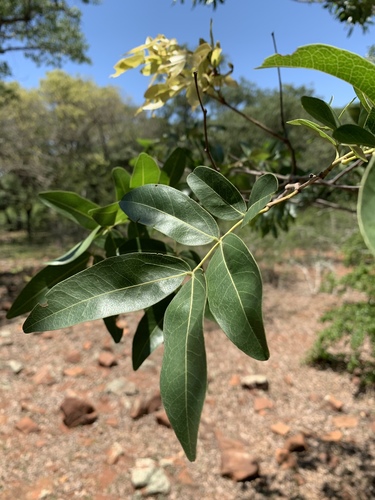
Acacia dunnii
(Maiden) Turrill
Elephant Ear Wattle, Dunn’s Wattle
iNaturalist· cc-by-nc
(c) Michael Hains, some rights reserved (CC BY-NC), uploaded by Michael Hains
iNaturalist· cc-by-nc
(c) Ian McMaster, some rights reserved (CC BY-NC), uploaded by Ian McMaster
iNaturalist· cc-by-nc-sa
(c) Arthur Chapman, some rights reserved (CC BY-NC-SA), uploaded by Arthur Chapman
Summary
Source: WikipediaAcacia dunnii, commonly known as Dunn's wattle or elephant ear wattle is a species of flowering plant in the family Fabaceae and is endemic to northern Australia. It is a shrub or tree covered with a fine, white powdery bloom, elliptic to egg-shaped phyllodes, spherical heads of golden yellow flowers and narrowly oblong, more or less woody pods. The Jamindjung, Ngaliwurru people and Nungali people know the plant as bawaya, and the Ngarinyman as barrawi.
Description
A shrub or small tree. It grows 5 m tall. There are prickles along the stem. The leaves are twice divided and there are 8-18 pairs of pinnae. There are up to 50 pairs of pinnules on each pinnae. The flowers are yellow. They are in large clusters at the ends of branches. The pods are flattened.
Edible Uses
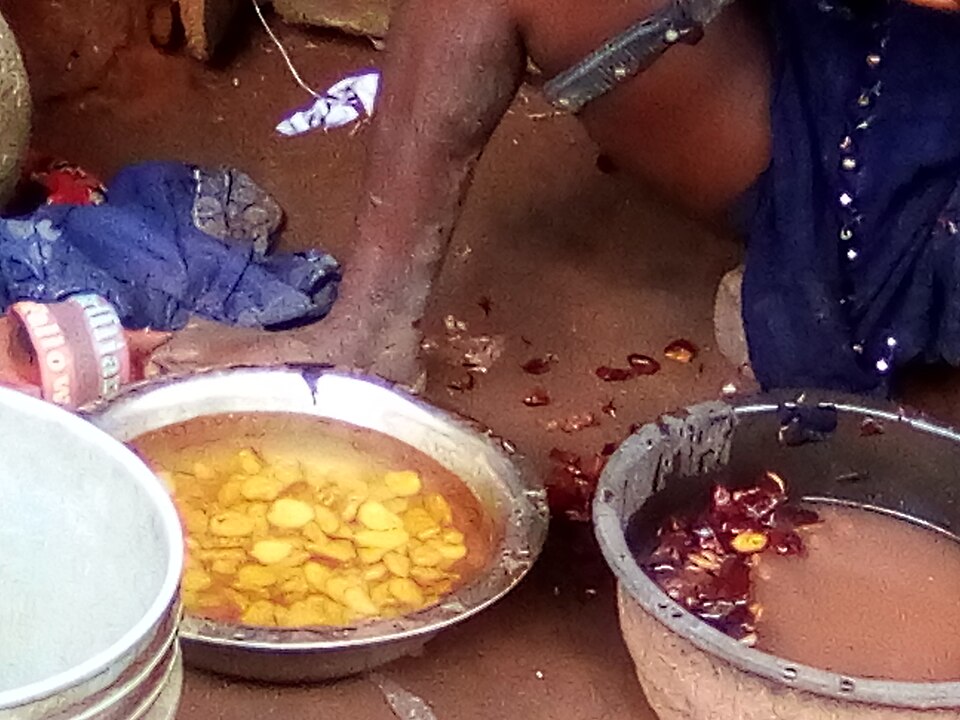
The leaves have been used for wrapping food.
Traditional Uses
Food use needs checking.
This uses section is brief — help expand it
Distribution
It occurs in northern Australia. It is a tropical plant. It does best in light well drained soil. An open sunny position suits it. It is drought resistant. It is sensitive to cold. It suits hardiness zones 9-11.
Where It Grows
Australia*,
Cultivation
It is grown from seed. The seed need treatment to break the hard seed coat. Normally this is by putting the seeds in very hot water and letting the water cool down overnight then planting the seeds immediately. The seeds germinate rapidly after treatment.
Production
The tree grows quickly. Flower blossom occurs in flushes throughout the year. The tree may only last 5 or 6 years.
Notes
There are about 1,350 Acacia species. Over 1,000 occur in Australia. The leaves have been used for wrapping food. Also as Mimosaceae.
References (13)
- Barwick, M., 2004, Tropical and Subtropical Trees. A Worldwide Encyclopedic Guide. Thames and Hudson p 3
- Bodkin, F., 1991, Encyclopedia Botanica. Cornstalk publishing, p 16
- Brock, J., 1993, Native Plants of Northern Australia, Reed. p 60
- Bull. Misc. Inform. Kew 1922:299. 1922
- Cundall, P., (ed.), 2004, Gardening Australia: flora: the gardener's bible. ABC Books. p 73
Show all 13 references Hide references
- Dunlop, C.R., Leach, G.J. & Cowie, I.D., 1995, Flora of the Darwin Region. Vol 2. Northern Territory Botanical Bulletin No 20. p 8
- Elliot, W.R., & Jones, D.L., 1982, Encyclopedia of Australian Plants suitable for cultivation. Vol 2. Lothian. p 45
- Hearne, D.A., & Rance, S.J., 1975, Trees for Darwin and Northern Australia. AGPS, Canberra p 10, Pl 1, & Colour Pl 1
- Lazarides, M. & Hince, B., 1993, Handbook of Economic Plants of Australia, CSIRO. p 3
- Paczkowska, G . & Chapman, A.R., 2000, The Western Australian Flora. A Descriptive Catalogue. Western Australian Herbarium. p 305
- Petheram, R.J. and Kok, B., 2003, Plants of the Kimberley Region of Western Australia. UWA Press p 271
- Townsend, K., 1994, Across the Top. Gardening with Australian Plants in the tropics. Society for Growing Australian Plants, Townsville Branch Inc. p 53
- Wheeler, J.R.(ed.), 1992, Flora of the Kimberley Region. CALM, Western Australian Herbarium, p 301