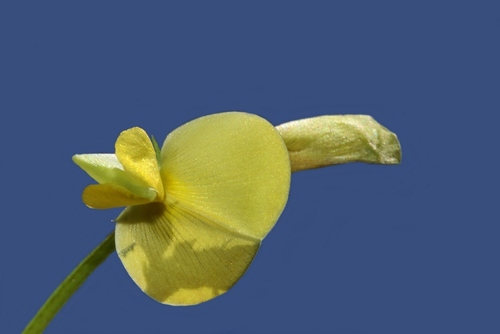
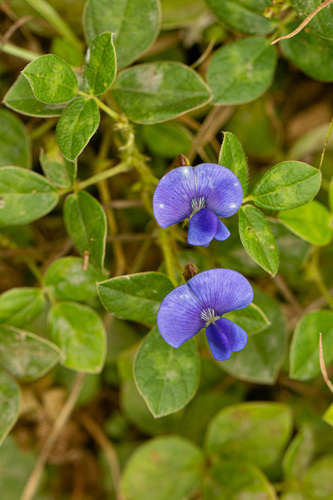
Chamaecrista absus
(L.) H.S. Irwin & Barneby
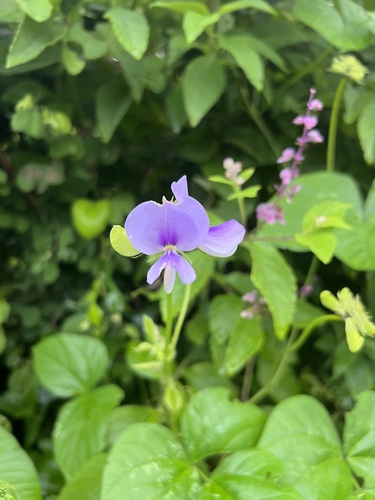
iNaturalist· cc-by-nc
(c) Riana Fourie, some rights reserved (CC BY-NC), uploaded by Riana Fourie
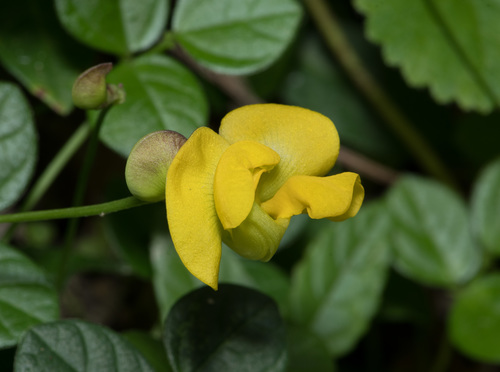
iNaturalist· cc-by-nc
(c) jrebman, some rights reserved (CC BY-NC), uploaded by jrebman
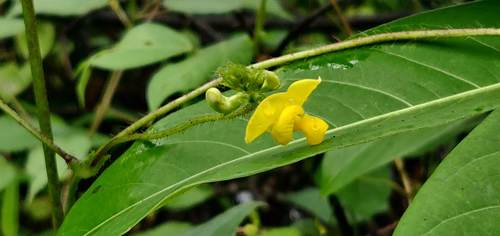
iNaturalist· cc-by-nc
(c) jrebman, some rights reserved (CC BY-NC), uploaded by jrebman
Summary
Source: WikipediaChamaecrista absus (syn. Cassia absus), the pig's senna or tropical sensitive pea, is a species of flowering plant in the family Fabaceae, with a worldwide distribution in the tropics and subtropics. An annual herb reaching 60 cm (24 in), it is a common weed of cultivated and waste places, and its seeds are regularly harvested and sold for use in traditional medicine in Africa and Asia.
Description
An evergreen shrub. It grows 5 m high and spreads 3 m wide. The stem is slender and erect. The branches are spreading. The leaves are alternate and have 4 triangle shaped leaflets. They are 2.5 cm long. The flowers are yellow. They are in clusters at the ends of branches. The fruit are long, flat, pointed pods.
Edible Uses
The raw pods are eaten fresh. The pods, leaves, seeds, and fruit are all edible portions.
Traditional Uses
The raw pods are eaten fresh.
This uses section is brief — help expand it
Medicinal Uses
Pig's ear is often used in traditional medicine in both Africa and Asia. Research has shown the presence of several medically active compounds including alkaloids, anthraquinones and flavonoids. All parts of the plant contain the alkaloids chaksine and isochaksine. Chaksine has antifungal, hypotensive and antibacterial activity, suppresses the respiratory, vasomotor and heat-regulating centres and inhibits muscle activity and the sense of balance. Isochaksine has similar activities to chaksine but in general at higher dose. The anthraquinones chrysophanol and emodin, found in the roots, have laxative activities. Flavonoids in the seeds have shown anti-tumour activities in vitro, and some also in vivo. Sugars in the seed include galactomannan, which induces the mucilaginous properties of the endosperm. The dried and powdered leaves, a leaf extract or occasionally the pounded ripe fruits are widely applied to eczema, ringworm, wounds, sores, abscesses, ulcers and venereal inflammations. The fresh plant is pounded and mixed with butter for use as a suppository against haemorrhoids. A tea of the leaves is considered depurative. Mixed with Heterotis rotundifolia, the leaves are pulped and diluted with palm wine to promote conception in women. In part the mix is ingested, and in part it is rubbed on the underbelly. In many parts of Africa and Asia the powdered seeds or seed extracts are sprinkled on the eye to treat eye diseases such as conjunctivitis and cataracts. The powdered seeds are also taken to treat diabetes and chlorosis. A decoction of the roots, combined with palm wine and chillies, is used as a purgative to expel worms. An infusion of the roots is taken to treat stomach-ache299]. Different plant parts are also taken in infusion as an aphrodisiac.
Distribution
A tropical plant. It will grow in most soils. They need to be well-drained. It is damaged by frost or drought.
Where It Grows
Africa, Asia, Australia, Botswana, Burkina Faso, East Africa, Guinea, Guinée, Guinea-Bissau, India, Mozambique, North Africa*, Pakistan, Sierra Leone, Uganda, West Africa,
Cultivation
Plants are grown from seeds. The seeds need treatment before planting.
Propagation
Seed - to increase germination nicking or abrasion of the seeds is recommended. A temperature of 24°C is optimum for germination. Seed - it has a hard seedcoat and may benefit from scarification before sowing in order to speed up and improve germination. This can usually be done by pouring a small amount of nearly boiling water on the seeds (being careful not to cook them!) and then soaking them for 12 - 24 hours in warm water. By this time they should have imbibed moisture and swollen - if they have not, then carefully make a nick in the seedcoat (being careful not to damage the embryo) and soak for a further 12 hours before sowing.
Other Uses
The leaves yield a weak yellow dye. The plant is sometimes grown as a green manure in maize.
Notes
There are 100 Cassia species. This group has been revised to a smaller more consistent group of about 30 species. Also as Caesalpinaceae.
Synonyms
Also Known As
Chaksi, Chaksu, Chanupala vittulu, Chimar, Inhambane, Karinkolla, Kattukanam, Manica, Maputo, Mulaippal-virai, Piri musuri ara, Sofala, Supal vel, Tete
References (10)
- Ambasta S.P. (Ed.), 2000, The Useful Plants of India. CSIR India. p 109 (As Cassia absus)
- Arinathan, V., et al, 2007, Wild edibles used by Palliyars of the western Ghats, Tamil Nadu. Indian Journal of Traditional Knowledge. 6(1) pp 163-168
- Bodkin, F., 1991, Encyclopedia Botanica. Cornstalk publishing, p 219 (As Cassia absus)
- Dey, A. & Mukhererjee, A., 2015, Living and Survival Amidst Hunger: Wild Edible Botanicals as a Prime Forest Productivity in the Rural Purulia District, West Bengal, India from Colonial to Present. Research Journal of Forestry 9(3): 71-86
- Dobriyal, M. J. R. & Dobriyal, R., 2014, Non Wood Forest Produce an Option for Ethnic Food and Nutritional Security in India. Int. J. of Usuf. Mngt. 15(1):17-37 (As Cassia absus)
Show all 10 references Hide references
- Goode, P., 1989, Edible Plants of Uganda. FAO p 30 (As Cassia absus)
- Rubaihayo, E. B., Conservation and use of traditional vegetables in Uganda. Bioversity International. (As Cassia absus)
- Sharma, B.D., & Lakshminarasimhan, P., 1986, Ethnobotanical Studies on the Tribals of Nasik District (Maharashtra). J. Econ. Tax. Bot. Vol. 8 No. 2 pp 439-446 (As Cassia absus)
- Sp. pl. 1:537. 1753 (As Cassia absus)
- World Checklist of Useful Plant Species 2020. Royal Botanic Gardens, Kew