Cercis canadensis
L.
Redbud, Judas tree, Eastern redbud
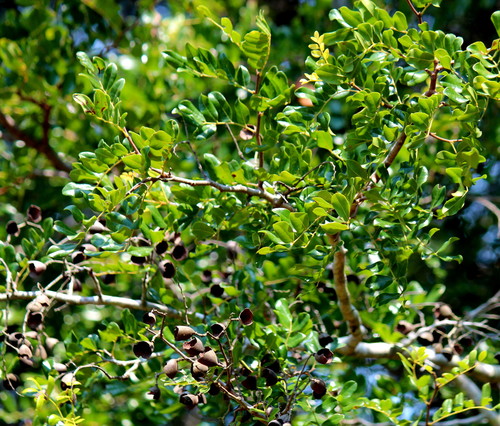
iNaturalist· cc-by-nc
(c) Eric Cormier, some rights reserved (CC BY-NC), uploaded by Eric Cormier
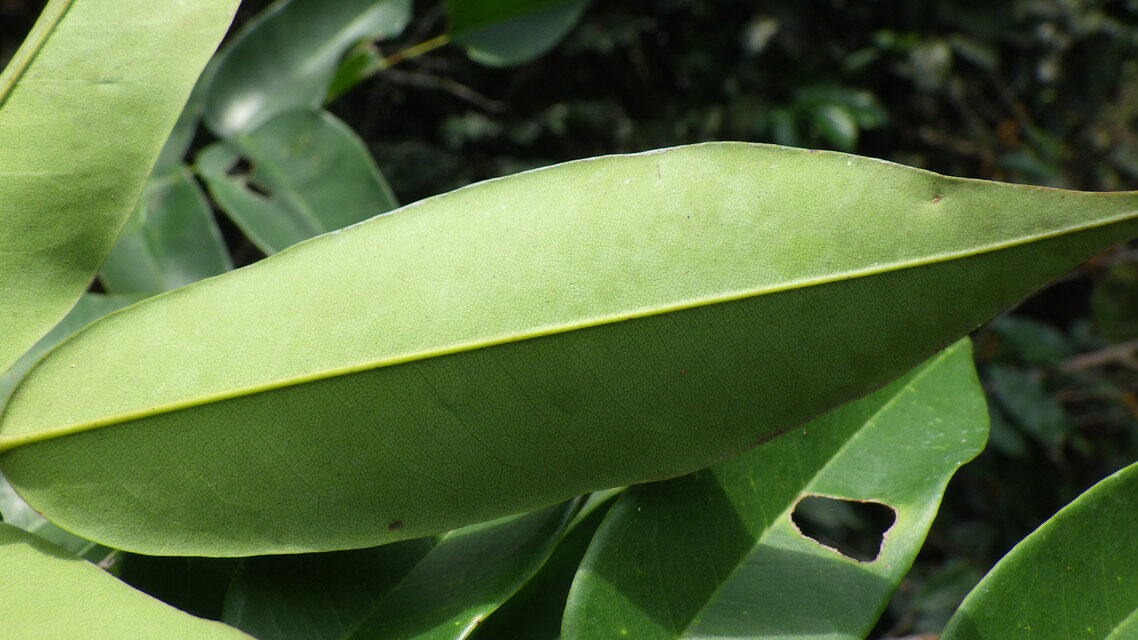
iNaturalist· cc-by-nc
(c) synthmoth, some rights reserved (CC BY-NC)
iNaturalist· cc-by-nc-sa
(c) J.R.M., some rights reserved (CC BY-NC-SA)
Summary
Source: WikipediaCercis canadensis, the eastern redbud, is a large deciduous shrub or small tree, native to eastern North America from southern Michigan south to central Mexico, west to New Mexico, but able to thrive as far west as California and as far north as southern Ontario. It is the state tree of Oklahoma and the official city tree of Huntington Beach. The prevalence of the so-called "Columbus strain" has seen the residents of Columbus, Wisconsin, embrace the plant in their city's identity. Known as the "Redbud City," the town hosts "Redbud Day" annually the Saturday before Mother's Day, organizing a variety of themed events to recognize the tree.
Description
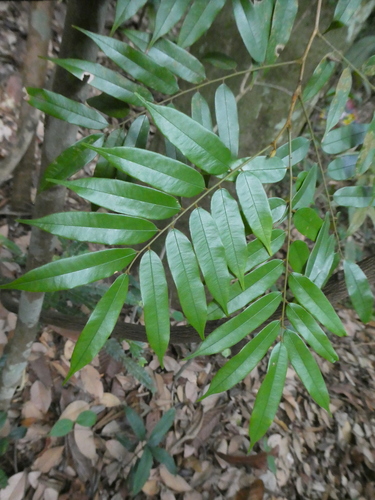
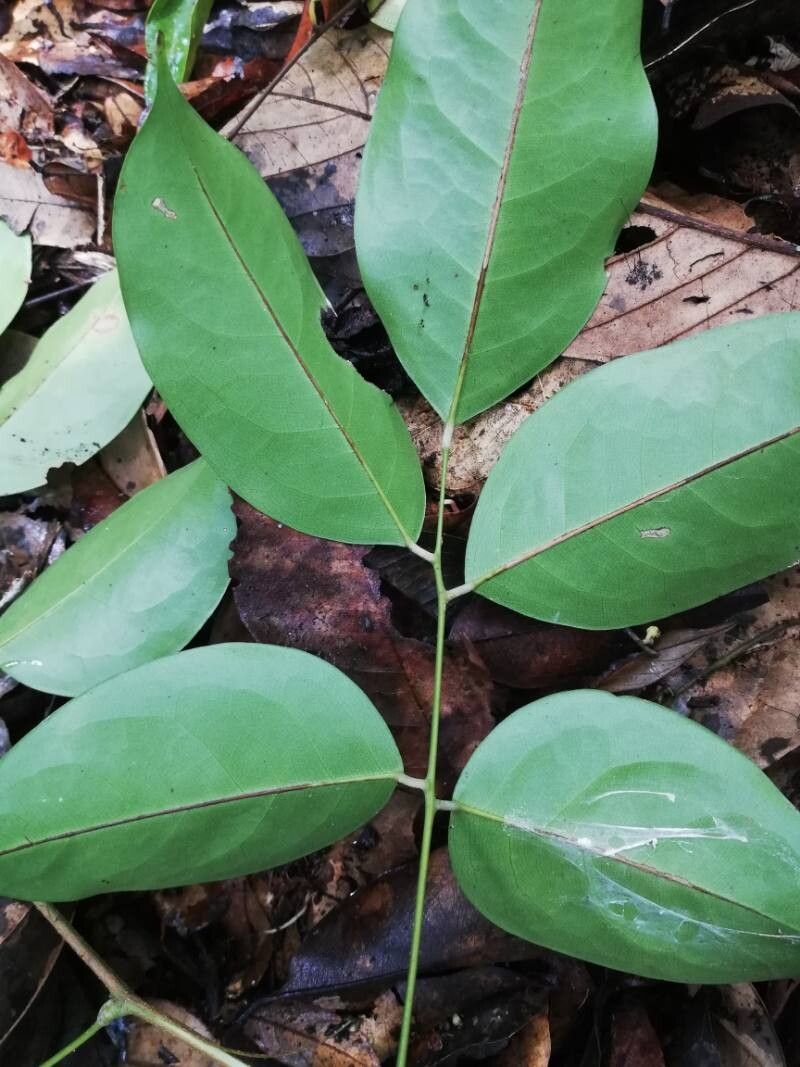
A deciduous shrub or small tree. It grows 10 m tall. It is a broadly spreading tree. The bark is dark grey-brown to black. The leaves are rounded and 10 cm long by 12 cm wide. They are heart shaped at the base. They are bronze when young and become bright green and smooth. Sometimes they turn yellow in the autumn. The flowers are pea-like. The are 1 cm long and pink. They occur in clusters on old shoots. They can also be on the main trunk and branches. The fruit is a flattened pod. It is 7.5 cm long and is green but becomes brown when ripe.
Edible Uses
Flowers are edible raw or pickled and have a pleasant, refreshing acid taste; they are rich in vitamin C and make a good addition to salads and can also be used as a condiment. Unopened flower buds are pickled or used as a caper substitute. On a zero-moisture basis, the seed contains 22.9–27.5% protein, 7.7–8.8% fat, and 3% ash, though it is not confirmed whether the seed itself is eaten. There is some evidence that young seed pods can be eaten like snow peas and that young leaves are also edible.
Traditional Uses
The flowers are used in salads. They are also fried. The unopened buds are pickled in vinegar and used as a caper substitute. The buds, flowers and young pods are sauteed in butter or fried into fritters.
Medicinal Uses
A tea made from the inner bark is highly astringent and is used in the treatment of fevers, diarrhoea, and dysentery; it is also a folk remedy for leukaemia. A cold infusion of the roots and inner bark has been used to treat various chest complaints, including whooping cough and congestion.
Known Hazards
The plant is reported to contain a toxic saponin. Although toxic, saponins are poorly absorbed by the body and most pass straight through without any problem. They are also broken down to a large extent in the cooking process. Saponins are found in many foods, such as some beans. Saponins are much more toxic to some creatures, such as fish, and hunting tribes have traditionally put large quantities of them in streams, lakes etc in order to stupefy or kill the fish.
Distribution
It is a temperate plant. It is native to North America. It grows in moist woods. It suits full sun or dappled shade. It is best in fertile soil. It should be deep and moist but well-drained. In Mexico it grows between 1,000-2,250 m above sea level. It suits hardiness zones 5-9. National Arboretum Canberra.
Where It Grows
Argentina, Australia, Britain, Canada*, Central America, Europe, Mexico, New Zealand, North America, South America, USA,
Cultivation
Succeeds in most soils and pH types, but dislikes growing in wet soils, especially when these are of clay. Prefers a deep sandy loam and a very sunny position. Succeeds in light shade. Dislikes drought. Although the dormant plant is cold-hardy, the young growth in spring, even on mature plants, is frost-tender and so it is best to grow the plants in a position sheltered from the early morning sun. A fast-growing but short-lived tree in the wild. It does not flower freely in Britain. There is at least one named form, selected for its ornamental value. This spcies is the state tree of Oklahoma. The flowers are produced on the branches of the previous or earlier years, and also on the trunk of the plant. Plants are susceptible to coral spot fungus, especially when growing in areas with cooler summers where the wood is not fully ripened. Plants in this genus are notably resistant to honey fungus. A good bee plant. Resents root disturbance, plants should be planted into their permanent positions as soon as possible, preferably in May, and should be kept well watered until established. This species is one of the few members of the family Leguminosae that do not fix atmospheric nitrogen.
Propagation
Seed is best sown as soon as it is ripe in a cold frame. Stored seed should be pre-soaked for 24 hours in warm water, then cold-stratified for 3 months before sowing in spring in a greenhouse. Prick seedlings out into individual pots once large enough to handle, and grow them on in a greenhouse for their first winter. Plant out into permanent positions in late spring or early summer after the last expected frosts. Plants resent root disturbance and should be moved to their permanent positions as soon as possible. Cuttings of half-ripe wood can be taken in July or August in a frame.
Other Uses
The bark of young shoots is used in basket making. The wood is heavy, hard, not particularly strong, and close-grained, taking a very fine polish; it weighs 40 lb per cubic foot.
Notes
There are about 6 Cercis species. It is the state tree of Oklahoma. Also as Caesalpinaceae.
Nutrition
| Part | Moisture | kJ | kcal | Protein | Vit A | Vit C | Iron | Zinc |
|---|---|---|---|---|---|---|---|---|
| Flowers | — | — | — | — | 82 | — | — | — |
| Flower buds | — | — | — | — | — | — | — | — |
| Pods | — | — | — | — | — | — | — | — |
Synonyms
Also Known As
Curesma, Duraznillo, Palo de judas, Palo de rosa, Pata de cabra, Pata de vaca
References (20)
- Bodkin, F., 1991, Encyclopedia Botanica. Cornstalk publishing, p 240
- Coombes, A.J., 2000, Trees. Dorling Kindersley Handbooks. p 192
- Cundall, P., (ed.), 2004, Gardening Australia: flora: the gardener's bible. ABC Books. p 360
- Etherington, K., & Imwold, D., (Eds), 2001, Botanica's Trees & Shrubs. The illustrated A-Z of over 8500 trees and shrubs. Random House, Australia. p 200
- Facciola, S., 1998, Cornucopia 2: a Source Book of Edible Plants. Kampong Publications, p 67
Show all 20 references Hide references
- Gonzalez-Espinosa, M. et al, 2011, The Red List of Mexican Cloud Forest Trees. Flora and Fauna International, Cambridge. p 30
- Grandtner, M. M., 2008, World Dictionary of Trees. Wood and Forest Science Department. Laval University, Quebec, Qc Canada. (Internet database http://www.WDT.QC.ca)
- Hedrick, U.P., 1919, (Ed.), Sturtevant's edible plants of the world. p 180
- Hibbert, M., 2002, The Aussie Plant Finder 2002, Florilegium. p 63
- ILDIS Legumes of the World http:www:ildis.org/Legume/Web
- Illustrated Flora of Central Texas p 640
- Jackes, D. A., Edible Forest Gardens
- Little, E.L., 1980, National Audubon Society Field Guide to North American Trees. Alfred A. Knopf. p 518
- Loughmiller, C & L., 1985, Texas Wildflowers. A Field Guide. University of Texas, Austin. p 125
- Marinelli, J. (Ed), 2004, Plant. DK. p 98
- Piedra-Malagón, E. M., et al, 2022, Edible native plants of the Gulf of Mexico Province. Biodiversity Data Journal 10: e80565 p 21
- Ryan, S., 2008, Dicksonia. Rare Plants Manual. Hyland House. p 14
- Segura, S., et al, 2018, The edible fruit species in Mexico. Genet Resour Crop Evol (2018) 65:1767–1793
- Sp. pl. 1:374. 1753
- World Checklist of Useful Plant Species 2020. Royal Botanic Gardens, Kew