Hibiscus palmatus
Forssk.
iNaturalist· cc-by-nc
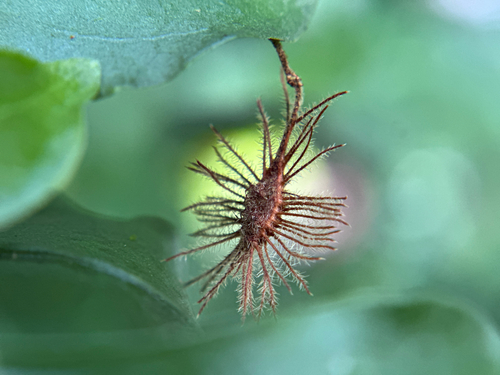
(c) Ratiya Sarman, some rights reserved (CC BY-NC), uploaded by Ratiya Sarman
iNaturalist· cc-by
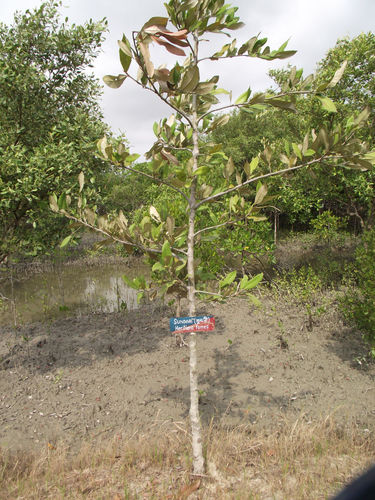
(c) Wynand Uys, some rights reserved (CC BY), uploaded by Wynand Uys
iNaturalist· cc-by-nc
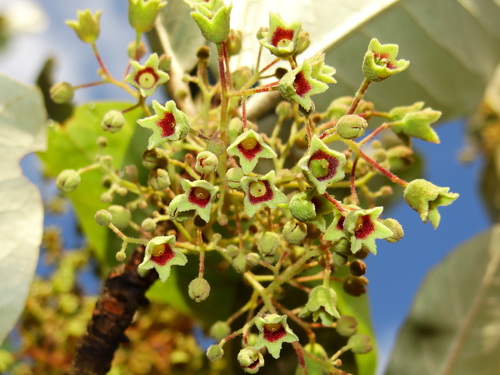
(c) Ratiya Sarman, some rights reserved (CC BY-NC), uploaded by Ratiya Sarman
Description
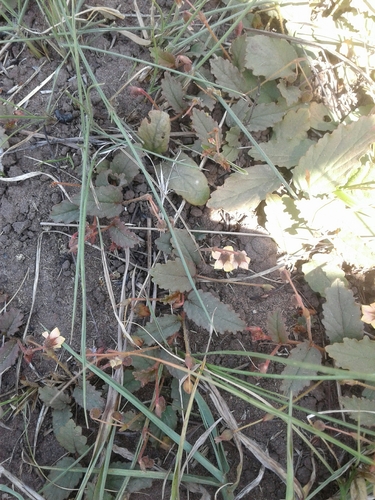
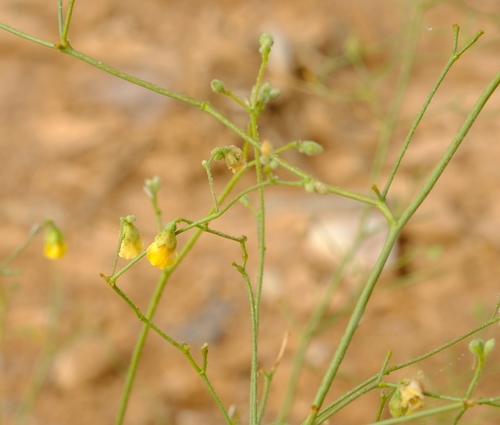
A shrub. It has a woody rootstock and keeps growing from year to year. The branches are long, slender and straggling. The stems are rough and have hairs. The leaf blades have 3-5 deep lobes. The leaves are heart shaped at the base. The middle lobe is 1.5 cm wide. The flowers are yellow. They are 4 cm long.
Edible Uses
The leaves are eaten as a vegetable, though the plant is noted as being of average palatability.
Distribution
A tropical plant. It is rare in Swaziland.
Where It Grows
Africa, Arabia, East Africa, Eswatini, India, Kenya, Middle East, Mozambique, South Africa, Southern Africa, Swaziland, Tanzania, Zimbabwe,
Other Information
It is of average palatability.
Notes
There are about 220 Hibiscus species.
Synonyms
References (5)
- Grivetti, L. E., 1980, Agricultural development: present and potential role of edible wild plants. Part 2: Sub-Saharan Africa, Report to the Department of State Agency for International Development. p 49 (As Hibiscus intermedius)
- Jardin, C., 1970, List of Foods Used In Africa, FAO Nutrition Information Document Series No 2.p 81
- Mutie, F. M., et al, 2023, Important Medicinal and Food Taxa (Orders and Families) in Kenya, Based on Three Quantitative Approaches. Plants 2023, 12, 1145
- Swaziland's Flora Database http://www.sntc.org.sz/flora
- Terra, G.J.A., 1973, Tropical Vegetables. Communication 54e Royal Tropical Institute, Amsterdam, p 50 (As Hibiscus intermedius)