Brachychiton populneus
(Schott. & Endl.) R. Br.
Black kurrajong
iNaturalist· cc-by-nc-sa
(c) Salomé Bielsa, some rights reserved (CC BY-NC-SA)
iNaturalist· cc-by
(c) Lucas Christofides, some rights reserved (CC BY)
Summary
Source: WikipediaBrachychiton populneus, commonly known as the kurrajong, is a small to medium-sized tree found naturally in Australia in a diversity of habitats from wetter coastal districts to semi-arid interiors of Victoria, New South Wales and Queensland. Carrejun and carrejan were the indigenous names of trees in the foothills of the Blue Mountains near Sydney, and the bark was used for twine and fishing lines.
Description
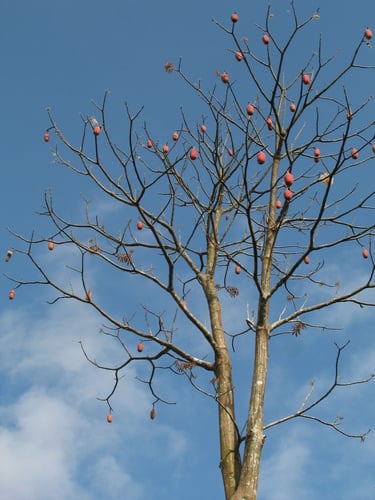
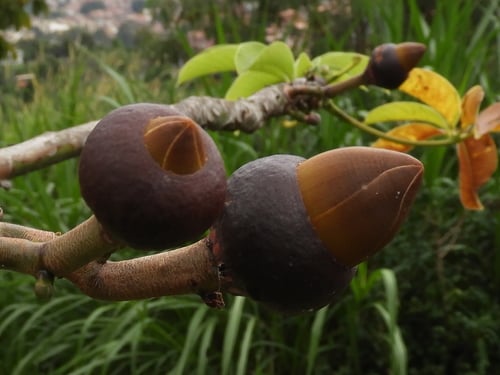
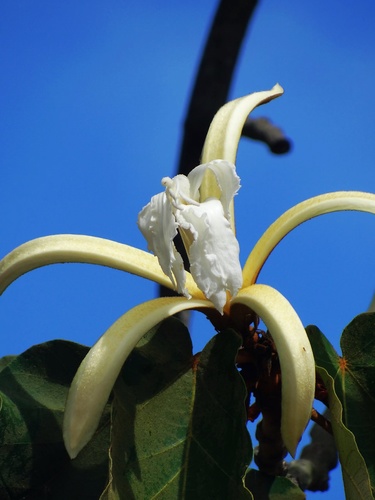
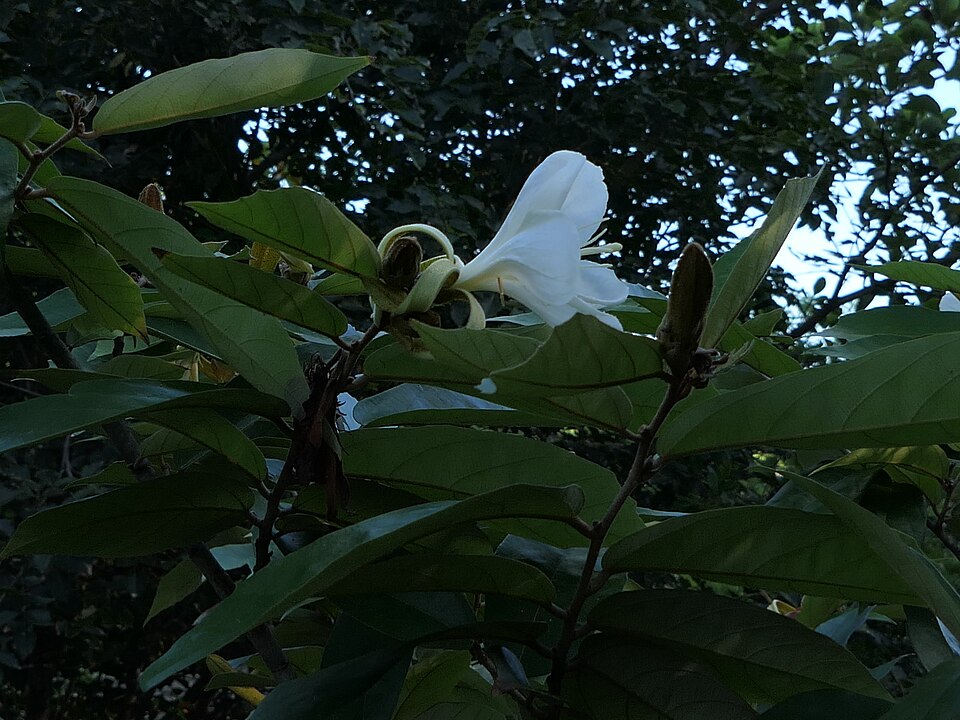
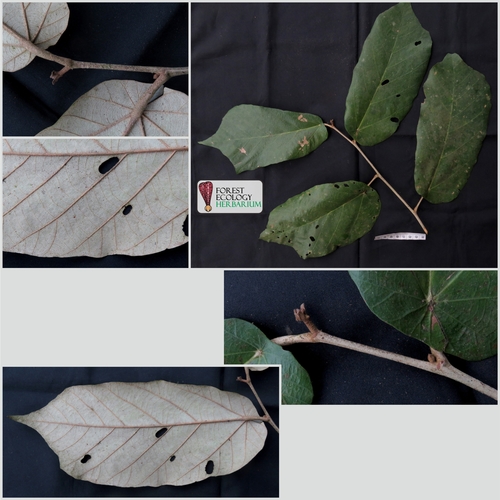
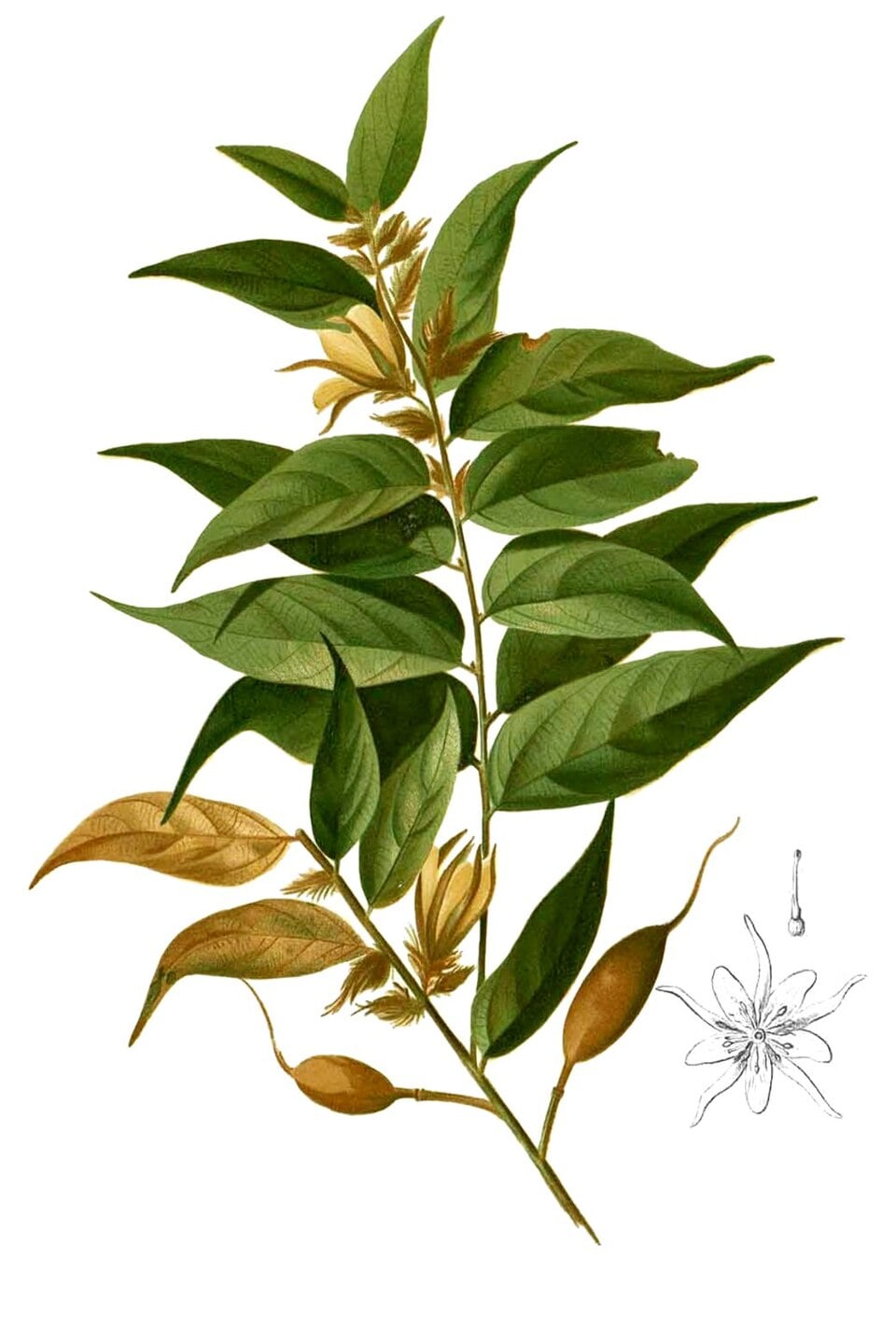
A medium sized tree. It grows 10-20 m tall. It can spread 5-12 m wide. The trunk is stout. The young leaves have 3 lobes. The adult leaves are oval with a long point. They are shiny green on top and dull underneath. The leaves are 5-10 cm long by 2-4 cm wide. The flowers are separately male and female. They are bell shaped and are cream in the centre with red flecks. They are 1-2 cm long. They occur in small clusters. The fruit is a boat shaped follicle. It is leathery and 3-7 cm long. There are 12 or more seeds in a pod. The seeds are 8 mm long by 5 mm wide. The seeds have yellow prickly hairs.
Edible Uses
Edible Parts: Root Seed Edible Uses: Coffee Seed - raw or roasted. A popular Aboriginal food, they are also acceptable to western palates, especially when roasted. Very nutritious, containing about 18% protein, 25% fat plus high levels of zinc and magnesium. The roasted seed is used as a coffee substitute. Root - yam-like. A popular food item with the Australian Aborigines. The root of very young trees is used. References More on Edible Uses Composition Figures in grams (g) or miligrams (mg) per 100g of food. Seed (Fresh weight) 0 Calories per 100g Water : 0% Protein: 18g; Fat: 25g; Carbohydrate: 0g; Fibre: 0g; Ash: 0g; Minerals - Calcium: 0mg; Phosphorus: 0mg; Iron: 0mg; Magnesium: 0mg; Sodium: 0mg; Potassium: 0mg; Zinc: 0mg; Vitamins - A: 0mg; Thiamine (B1): 0mg; Riboflavin (B2): 0mg; Niacin: 0mg; B6: 0mg; C: 0mg; Reference: Notes:
Traditional Uses
Caution. The fine irritant hairs need to be removed during harvesting. The seeds are eaten raw or roasted. They can be ground into flour and used for dampers or scones. They are also made into a coffee-like drink. They are roasted and ground then used to brew coffee. The young roots are boiled and eaten.
Medicinal Uses
None known
Known Hazards
The seed capsule contains irritant, glochid-like, hairs and should only be handled when wearing gloves.
Distribution
A tropical plant. It is native to E. Australia. It grows in temperate and semiarid places. It will grow in a range of soil and climate conditions. It grows naturally on rocky hillsides. It needs well-drained soil. It will grow on limestone soils. It can stand heavy frosts. It can grow in coastal conditions. It grows in areas with an annual rainfall between 300-880 mm. It grows between 200-780 m above sea level. It can grow in arid places. In the Inland Botanical Gardens Mildura. National Arboretum Canberra. It suits hardiness zones 8-11. Arboretum Tasmania.
Where It Grows
Africa, Asia, Australia, Chile, China, East Africa, Egypt, Europe, France, Iraq, Kenya, Lebanon, Malawi, Mediterranean, Middle East, Mozambique, North Africa, Colombia, North America, Pakistan, Slovenia, Somalia, South Africa, South America, Southern Africa, Sudan, Taiwan, Tanzania, Tasmania, Turkey, Türkiye, USA, Zambia, Zimbabwe,
Cultivation
Plants can be grown from seed. Young plants can be transplanted easily.
Propagation
Seed - we have no details for this species but suggest sowing the seed in spring in a greenhouse. When they are large enough to handle, prick the seedlings out into individual pots and grow them on in the greenhouse for at least their first winter. Plant them out into their permanent positions in late spring or early summer, after the last expected frosts. Cuttings of mature wood of the current season's growth.
Other Uses
Fibre A fibre is obtained from the inner bark - it is used for making cordage, nets and dilly bags. Special Uses
Notes
The leaves are often used to feed animals in dry seasons. There are about 30 Brachychiton species. Most are in Australia. Also put in the family Sterculiaceae.
Nutrition
| Part | Moisture | kJ | kcal | Protein | Vit A | Vit C | Iron | Zinc |
|---|---|---|---|---|---|---|---|---|
| Seed | 5.6 | 1455 | 348 | 18.1 | — | — | 2.1 | 5.4 |
| Roots | — | — | — | — | — | — | — | — |
| Sap | — | — | — | — | — | — | — | — |
Synonyms
Also Known As
Nangkata, Nhimin, Nhungga, Plameneče drevo
References (53)
- Anon., 2003, Native Plants for the Fitzroy basin. Society for Growing Australian Plants Inc. (Rockhampton Branch)
- Barwick, M., 2004, Tropical and Subtropical Trees. A Worldwide Encyclopedic Guide. Thames and Hudson p 58
- J. J. Bennett & R. Brown, Pl. jav. rar. 234. 1844
- Bircher, A. G. & Bircher, W. H., 2000, Encyclopedia of Fruit Trees and Edible Flowering Plants in Egypt and the Subtropics. AUC Press. p 63
- Bodkin, F., 1991, Encyclopedia Botanica. Cornstalk publishing, p 164 (Also as Brachychiton populneus subsp. populneus)
Show all 53 references Hide references
- Brickell, C. (Ed.), 1999, The Royal Horticultural Society A-Z Encyclopedia of Garden Plants. Convent Garden Books. p 186
- Caton, J.M. & Hardwick, R. J., 2016, Field Guide to Useful Native Plants from Temperate Australia. Harbour Publishing House. p 330
- Cherikoff V. & Isaacs, J., The Bush Food Handbook. How to gather, grow, process and cook Australian Wild Foods. Ti Tree Press, Australia p 57, 194 Also p 189 (As Brachychiton populneus subsp. populneus)
- Cribb, A.B. & J.W., 1976, Wild Food in Australia, Fontana. p 81, 138, 173
- Cronin, L., 1989, The Concise Australian Flora. Reed. p 170 (As Brachychiton populneus subsp. populneus)
- Cundall, P., (ed.), 2004, Gardening Australia: flora: the gardener's bible. ABC Books. p 250
- Edible and Useful Native Plants (off internet)
- Elliot, W.R., & Jones, D.L., 1982, Encyclopedia of Australian Plants suitable for cultivation. Vol 2. Lothian. p 366 (As Brachychiton populneus subsp. populneus)
- Etherington, K., & Imwold, D., (Eds), 2001, Botanica's Trees & Shrubs. The illustrated A-Z of over 8500 trees and shrubs. Random House, Australia. p 139
- Flora of Pakistan. www.eFloras.org (As populneum)
- Gen. hist. 1:516. 1831 (As Sterculia diversifolia G. Don)
- Hardwick, G., 2001, Economically Useful Plants for Northern Australia: Master Species List. Crusader eBooks.
- Hardwick, R.J., 2000, Nature's Larder. A Field Guide to the Native Food Plants of the NSW South Coast. Homosapien Books. p 75
- Hall, N. et al, 1972, The Use of Trees and Shrubs in the Dry Country of Australia, AGPS, Canberra. p 355
- Hearne, D.A., & Rance, S.J., 1975, Trees for Darwin and Northern Australia. AGPS, Canberra p 35, Pl 10
- Hedrick, U.P., 1919, (Ed.), Sturtevant's edible plants of the world. p 634 (As Sterculia diversifolia G. Don)
- Hibbert, M., 2002, The Aussie Plant Finder 2002, Florilegium. p 45
- Holliday, I., 1989, A Field Guide to Australian Trees. Hamlyn. p 82
- Hunter, J. T. & Sheringham, P., 2006, Vegetation and Floristics of Melville Range Nature Reserve. A Report to the New South Wales Parks and Wildlife Service. p 165
- Hunter, J., 2015, Vegetation and flora of Naree and Yantabulla. A Draft Report to the Bush Heritage Australia
- Hunter, J.T., 2017, Is there a relationship between contemporary high Aboriginal plant resource locations and mapped vegetation communities? Cunninghamia 17:27-34. The Royal Botanic Garden Sydney. ISSN 2200 - 405X
- Hussey, B.M.J., Keighery, G.J., Cousens, R.D., Dodd, J., Lloyd, S.G., 1997, Western Weeds. A guide to the weeds of Western Australia. Plant Protection Society of Western Australia. p 224 (As Brachychiton populneus subsp. populneus)
- Lazarides, M. & Hince, B., 1993, Handbook of Economic Plants of Australia, CSIRO. p 36 (As Brachychiton populneus subsp. populneus)
- Lim, T. K., 2015, Edible Medicinal and Non Medicinal Plants. Volume 9, Modified Stems, Roots, Bulbs. Springer p 17
- Lord, E.E., & Willis, J.H., 1999, Shrubs and Trees for Australian gardens. Lothian. p 13 (As Brachychiton populneus subsp. populneus)
- Low, T., 1991, Wild Food Plants of Australia. Australian Nature FieldGuide, Angus & Robertson. p 183 (As Brachychiton populneus subsp. populneus)
- Low, T., 1992, Bush Tucker. Australia’s Wild Food Harvest. Angus & Robertson. p 27, 87 (As Brachychiton populneus subsp. populneus)
- McKerney, M. & White, H., 2011, Bush Tucker, Boomerangs & Bandages. Border River-Gwyder Catchment Management Authority p 71
- Menninger, E.A., 1977, Edible Nuts of the World. Horticultural Books. Florida p 43 (As Sterculia diversifolia G. Don)
- Molyneux, B & Forrester, S., 1997, The Austraflora A-Z of Australian Plants. Reed. p 57
- Nash, D., 2004, Aboriginal Plant Use in south-eastern Australia. Australian National Botanic Gardens. p 9
- Paczkowska, G . & Chapman, A.R., 2000, The Western Australian Flora. A Descriptive Catalogue. Western Australian Herbarium. p 538
- Plants for a Future database, The Field, Penpol, Lostwithiel, Cornwall, PL22 0NG, UK. http://www.scs.leeds.ac.uk/pfaf/ (As Brachychiton populneus subsp. populneus)
- Recher, P, 2001, Fruit Spirit Botanical Gardens Plant Index. www.nrg.com.au/~recher/ seedlist.html p 1
- Robins, J., 1996, Wild Lime. Cooking from the Bush food garden. Allen & Unwin p 172 (As Brachychiton populneus subsp. populneus)
- Royal Botanic Gardens, Kew (1999). Survey of Economic Plants for Arid and Semi-Arid Lands (SEPASAL) database. Published on the Internet; http://www.rbgkew.org.uk/ceb/sepasal/internet [Accessed 11th June 2011]
- Ryan, M. (Ed.), 2003, Wild Plants of Greater Brisbane. Queensland Museum. p 136
- Self, M., 199, Phoenix Seeds catalogue. p 16 (As Brachychiton populneus subsp. populneus)
- Steenbeeke, Greg as part of the Plants Directory project. List of plant species from northern NSW that may be used as food plants p 11
- Townsend, K., 1994, Across the Top. Gardening with Australian Plants in the tropics. Society for Growing Australian Plants, Townsville Branch Inc. p 105
- Wickens, G.E., 1995, Edible Nuts. FAO Non-wood forest products. FAO, Rome. p155 (As Sterculia diversifolia G. Don)
- Williams, J.B., Harden, G.J., and McDonald, W.J.F., 1984, Trees and shrubs in rainforests of New South Wales and Southern Queensland. Univ. of New England, Armidale. p 62
- Williams, J.B., Harden, G.J., and McDonald, W.J.F., 1984, Trees and shrubs in rainforests of New South Wales and Southern Queensland. Univ. of New England, Armidale. p 98 (As Brachychiton populneus subsp. populneus)
- Williams, K.A.W., 1999, Native Plants of Queensland Volume 4. Keith A.W. Williams North Ipswich, Australia. p 78
- Williams A. & Sides, T., 2008, Wiradjuri Plant Use in the Murrumbidgee Catchment. Murrumbidgee Catchment Management Authority. Wagga Wagga, p 23
- www.ceres.org/au/bushfood catalogue
- Young, J., (Ed.), 2001, Botanica's Pocket Trees and Shrubs. Random House. p 146
- Zola, N., & Gott, B., 1992, Koorie Plants Koorie People. Koorie Heritage Trust. p 36