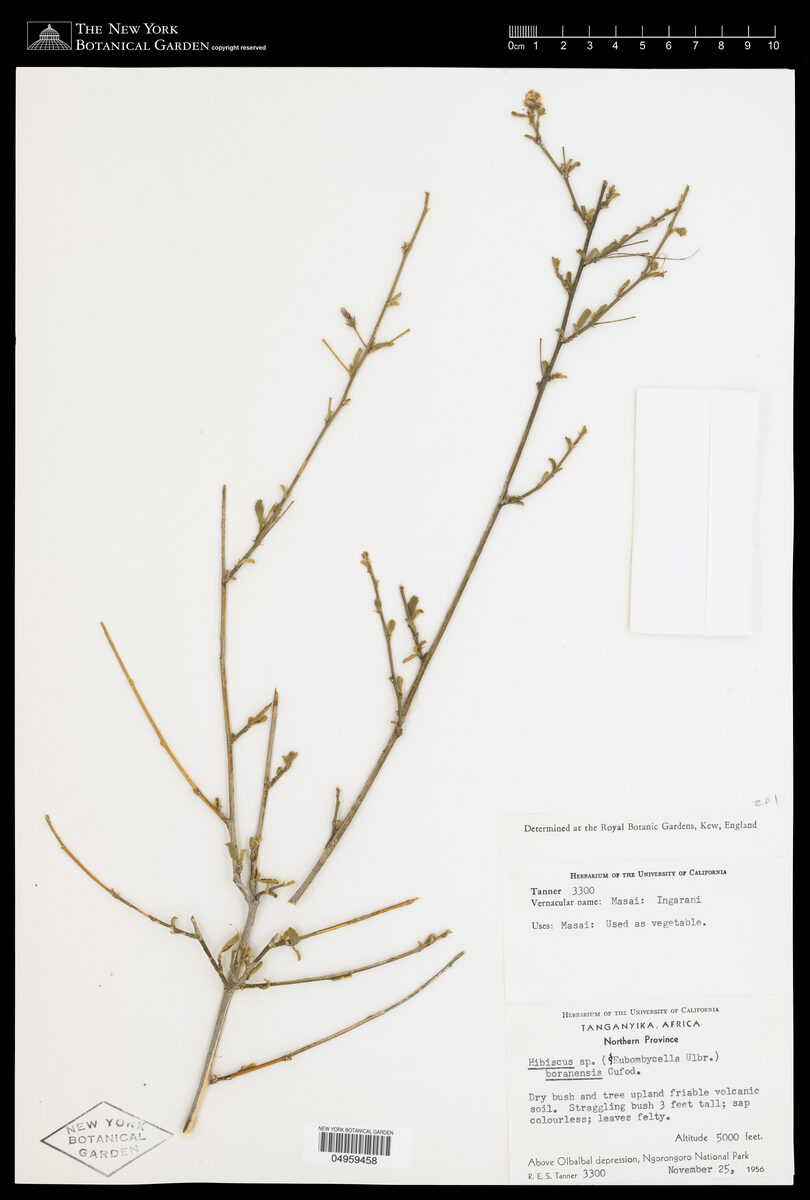
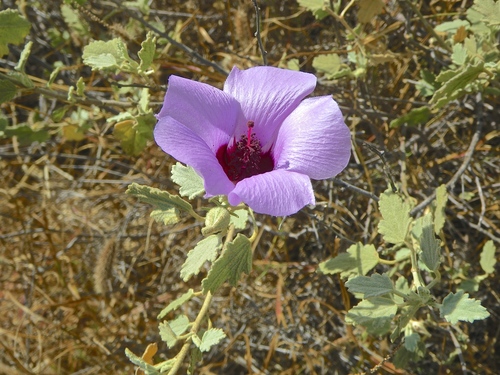
Brachychiton paradoxus
Schott & Endl.
Red Kurrajong, Red-flowered Kurrajong
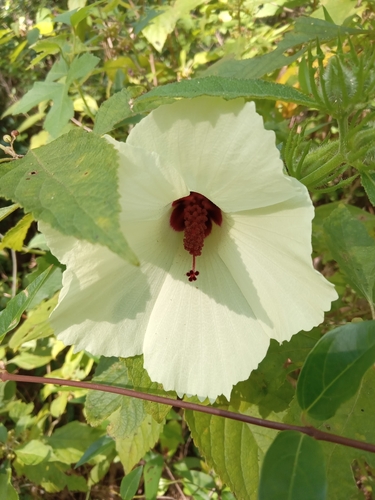
iNaturalist· cc-by-nc-nd
(c) eyeweed, some rights reserved (CC BY-NC-ND)
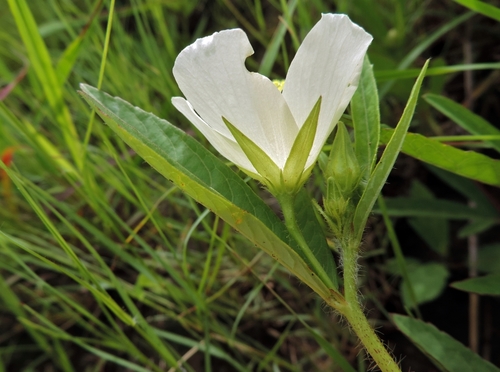
iNaturalist· cc-by-sa
(c) Karl Tattersall, some rights reserved (CC BY-SA)
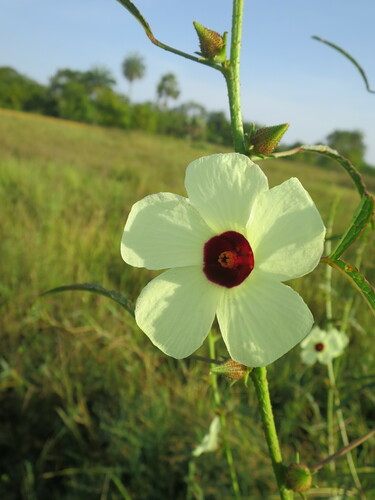
iNaturalist· cc-by-sa
(c) Karl Tattersall, some rights reserved (CC BY-SA)
Summary
Source: WikipediaBrachychiton paradoxus, commonly known as the red-flowered kurrajong, is a small tree of the genus Brachychiton found in northern Australia. It was originally classified in the family Sterculiaceae, which is now within Malvaceae. The tree was first described in 1832 by Heinrich Wilhelm Schott and Stephan Endlicher.
Description
A small tree. It grows 2-3 m high. The bark is rough. It loses its leaves during the year. The leaves are large and hairy. They are almost round and 3-5 lobed. The blade is 11-30 cm long by 13.5-25 cm wide. New leaves are the largest. The flowers are red and bell shaped. They are 3-4 cm across in clusters. They grow along the branches. They appear when the tree is without leaves. The fruit is a hard woody capsule. It is about 8-12 cm long by 3-4 cm wide. It has bristly hairs over it. It splits open and has many hairy yellow seeds.
Edible Uses
The seeds are eaten raw or cooked. The swollen roots of young plants are eaten cooked. The gum is edible after softening and can be used in drinks or sweets.
Traditional Uses
The seeds are eaten raw or cooked. The swollen roots of young plants are eaten cooked. The gum is edible after softening and used for drinks or sweets.
Medicinal Uses
No information provided.
Known Hazards
No information provided.
Distribution
A tropical plant. It is an understorey plant in open forest. It needs sunny well-drained sites. It suits hardiness zones 11-12.
Where It Grows
Australia*,
Cultivation
Plants can be grown from seed.
Notes
There are about 30 Brachychiton species. Most are in Australia. Also put in the family Sterculiaceae. Sterculia ramiflora (R. Br.) Benth. - This species has been recorded in Peru, Brazil and Bolivia. Also has synonym Clompanus paradoxa Kuntze; Has been confused with Brachychiton megaphyllus;
Nutrition
| Part | Moisture | kJ | kcal | Protein | Vit A | Vit C | Iron | Zinc |
|---|---|---|---|---|---|---|---|---|
| Seed | 10.4 | 1514 | 362 | 17.6 | — | — | 10.7 | 7.9 |
| Root | — | — | — | — | — | — | — | — |
| Sap | — | — | — | — | — | — | — | — |
Synonyms
Also Known As
An-Ji-Ur, Daranggal
References (20)
- Bodkin, F., 1991, Encyclopedia Botanica. Cornstalk publishing, p 164
- Brock, J., 1993, Native Plants of Northern Australia, Reed. p 101
- Cherikoff V. & Isaacs, J., The Bush Food Handbook. How to gather, grow, process and cook Australian Wild Foods. Ti Tree Press, Australia p 198
- Cooper, W. and Cooper, W., 2004, Fruits of the Australian Tropical Rainforest. Nokomis Editions, Victoria, Australia. p 530
- Crawford, I. M., 1982, Traditional Aboriginal Plant Resources in the Kalumburu Area: Aspects in Ethno-economics. Records of the Western Australian Museum Supplement No. 15
Show all 20 references Hide references
- Cundall, P., (ed.), 2004, Gardening Australia: flora: the gardener's bible. ABC Books. p 250
- Etherington, K., & Imwold, D., (Eds), 2001, Botanica's Trees & Shrubs. The illustrated A-Z of over 8500 trees and shrubs. Random House, Australia. p 139
- Fl. austral. 1:227. 1863 (As Sterculia ramiflora)
- Hearne, D.A., & Rance, S.J., 1975, Trees for Darwin and Northern Australia. AGPS, Canberra p 35, Colour Pl 3
- Hibbert, M., 2002, The Aussie Plant Finder 2002, Florilegium. p 45
- Hiddins, L., 1999, Explore Wild Australia with the Bush Tucker Man. Penguin Books/ABC Books. p 147
- Isaacs, J., 1987, Bush Food, Aboriginal Food and Herbal Medicine. Weldons. p 88
- Lord, E.E., & Willis, J.H., 1999, Shrubs and Trees for Australian gardens. Lothian. p 13
- Low, T., 1991, Wild Food Plants of Australia. Australian Nature FieldGuide, Angus & Robertson. p 183
- Melet. bot. 34. 1832
- Menninger, E.A., 1977, Edible Nuts of the World. Horticultural Books. Florida p 43 (As Sterculia ramiflora)
- Milson, J., 2000, Trees and Shrubs of north-west Queensland. DPI p 294
- Townsend, K., 1994, Across the Top. Gardening with Australian Plants in the tropics. Society for Growing Australian Plants, Townsville Branch Inc. p 105
- Wightman, Glenn et al. 1994, Gurindji Ethnobotany: Aboriginal Plant Use from Daguragu Northern Australia. Northern Territory Botanical Bulletin No 18. Parks and Wildlife Commission of the Northern Territory. p. 13, 11
- Yunupinu Banjgul, Laklak Yunupinu-Marika, et al. 1995, Rirratjinu Ethnobotany: Aboriginal Plant Use from Yirrkala, Arnhem Land, Australia. Northern Territory Botanical Bulletin No 21. Parks and Wildlife Commission of the Northern Territory. p 22, 23