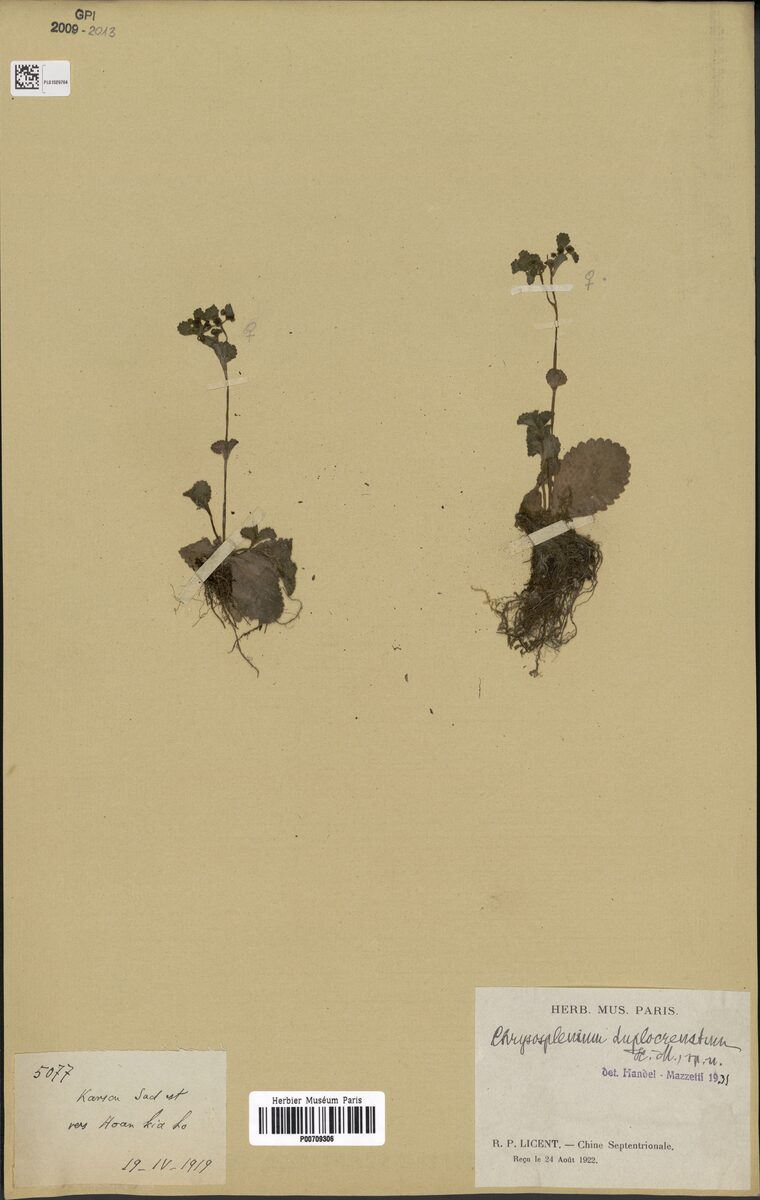
Heuchera cylindrica
Douglas ex Hook.
Alum root
iNaturalist· cc-by-nc
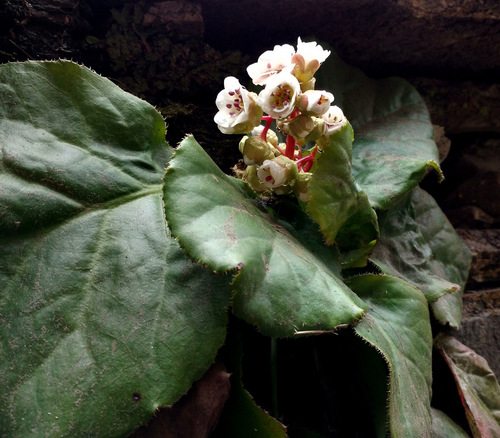
(c) Stefan, some rights reserved (CC BY-NC), uploaded by Stefan
iNaturalist· cc-by-nc
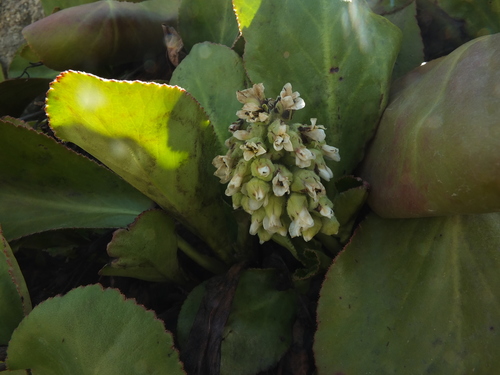
(c) Jason Headley, some rights reserved (CC BY-NC), uploaded by Jason Headley
iNaturalist· cc-by-nc
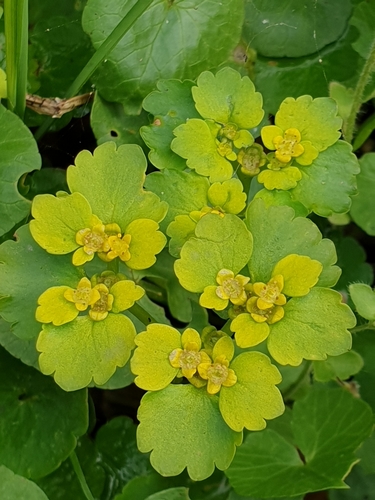
(c) Tulipifera-ike, some rights reserved (CC BY-NC), uploaded by Tulipifera-ike
Summary
Source: WikipediaHeuchera cylindrica is a species of perennial flowering plant in the saxifrage family known by the common names poker alumroot, roundleaf alumroot, and coral bells. It is native to western North America, where it is found from British Columbia to California, and east to Wyoming and Montana.
Description
A small plant. It forms mounds. It grows 30-50 cm high and spreads 30 cm wide. It keeps growing from year to year. The leaves are dark green. They are broadly oval and have deep round lobes. The leaves are often hairy. They are 2.5-8 cm long. The edges are scalloped and there are metallic paler green mottles on the leaves. The flowers are greenish or pink. They occur on leafless stems in summer. The flower panicles are 15 cm long.
Edible Uses
Leaves are edible when cooked.
Traditional Uses
The leaves are used to make a tea drink.
This uses section is brief — help expand it
Medicinal Uses
The whole plant, and the roots in particular, are astringent. A decoction of the roots is used to treat diarrhoea and stomach cramps. Applied externally, the same decoction can be used as a wash for aching joints. A poultice made from mashed, peeled roots treats rashes, sores, and cuts. When combined with puffball spores, the root has been used as a salve for nappy rash.
Distribution
It is a temperate plant. It grows in mountains. It is frost hardy.
Where It Grows
Australia, Canada, North America*, Tasmania, USA,
Cultivation
Succeeds in any good sweet garden soil that does not dry out in spring. Prefers full sun but tolerates partial shade. Prefers a well-drained fairly rich and not too heavy soil. Plants are hardy to about -20°c. Closely related to H. chlorantha, it is apt to hybridize with other members of this genus. A very ornamental plant, a number of named forms have been selected for their ornamental value. The subspecies H. cylindrica glabella has been specifically mentioned for its use as a mordant.
Propagation
Sow seed in early spring in a warm greenhouse, barely covering it. Germination is usually fairly rapid. Prick seedlings into individual pots when large enough and plant out into permanent positions in late spring or early summer. Seed can also be sown in an outdoor seedbed in mid-spring for early summer planting, or in mid-summer for planting out the following spring. Divide plants in March or October, though August or early September is ideal. Ensure the woody roots are planted deeply with only the foliage crown above ground.
Other Uses
The root can serve as an alum substitute and mordant for fixing dyes; its high tannin content is thought to be the active component. The plant also makes a good ground cover for the woodland garden, with plants spaced approximately 30cm apart in each direction.
Notes
There are 50 Heucheria species. They grow in North America.
References (4)
- Cormack, R. G. H., 1967, Wild Flowers of Alberta. Commercial Printers Edmonton, Canada. p 135
- Hibbert, M., 2002, The Aussie Plant Finder 2002, Florilegium. p 138
- Plants for a Future database, The Field, Penpol, Lostwithiel, Cornwall, PL22 0NG, UK. http://www.scs.leeds.ac.uk/pfaf/
- Turner, N., 1997, Food Plants of Interior First Peoples. Royal BC Museum Handbook p 169