Rodgersia podophylla
A. Gray
iNaturalist· cc-by-nc
(c) 空猫 T. N, some rights reserved (CC BY-NC), uploaded by 空猫 T. N
iNaturalist· cc-by-nc
(c) konstantin_m, some rights reserved (CC BY-NC)
iNaturalist· cc-by-nc
(c) Paul Tavares, some rights reserved (CC BY-NC)
Summary
Source: WikipediaRodgersia podophylla is a species of flowering plant in the saxifrage family native to Japan and Korea. Growing to 2 m (6.6 ft) tall and broad, it is a herbaceous perennial with handsome spiky leaves, and occasional creamy-white flower panicles in June and July. It is extensively grown for ornamental use in gardens where it prefers damp shady positions on neutral to acid soils. Though hardy to −20 °C (−4 °F) it enjoys a sheltered location. It is chosen primarily for its clumps of large 5- or 7-toothed palmate leaves, which open bronze, turning green in summer and bronze-red in autumn. It can spread by underground rhizomes, eventually covering a large area. The compact cultivar 'Rotlaub' has gained the Royal Horticultural Society's Award of Garden Merit.
Description
A perennial plant. It grows 90-150 cm high and 90-180 cm wide. The leaves are made up of 5 wedge shaped jagged leaflets. They are splayed out like fingers on a hand. They are 30 cm long and wide. The leaves are bronzed when young. The leaves turn red in autumn. The flowers are white and in heads 30 cm across.
Edible Uses
Young leaves are edible, though no further preparation details are given.
Medicinal Uses
None known
Distribution
It is a temperate plant. It suits moist, peaty soils and shelter from the wind. It is frost hardy. It suits hardiness zones 6-9.
Where It Grows
Asia, Australia, Canada, China, Japan, Korea, North America,
Cultivation
Succeeds in most soils, preferring a moist to wet but well-drained humus-rich soil in a shady position or a cool sunny place by water but sheltered from hot drying winds. Plants can be grown in quite coarse grass, which can be cut annually in the autumn. Hardy to at least -20°c. Plants spread slowly by means of a stout creeping rhizome, eventually forming large clumps. Hybridizes with other members of this genus.
Propagation
Sow seed in spring in a cold frame. Prick seedlings out into individual pots when large enough to handle and grow on in the cold frame through their first winter, then plant out in late spring or early summer after the last expected frosts. Divide in early spring — larger divisions can go directly into permanent positions, while smaller divisions are best potted up and grown on in light shade in a cold frame until well established before planting out in late spring or early summer.
Other Uses
Plants can be used for ground cover when spaced approximately 1 metre apart in each direction.
Notes
There are 6 Rodgersia species.
Synonyms
References (7)
- Cundall, P., (ed.), 2004, Gardening Australia: flora: the gardener's bible. ABC Books. p 1210
- Flora of China @ efloras.org Volume 8
- Hibbert, M., 2002, The Aussie Plant Finder 2002, Florilegium. p 252
- Joyce, D., 1998, The Garden Plant Selector. Ryland, Peters and Small. p 264
- Mem. Am. Acad. N. S. 6:389. 1859
Show all 7 references Hide references
- Plants for a Future database, The Field, Penpol, Lostwithiel, Cornwall, PL22 0NG, UK. http://www.scs.leeds.ac.uk/pfaf/
- Slocum, P.D. & Robinson, P., 1999, Water Gardening. Water Lilies and Lotuses. Timber Press. p 134
More from Saxifragaceae
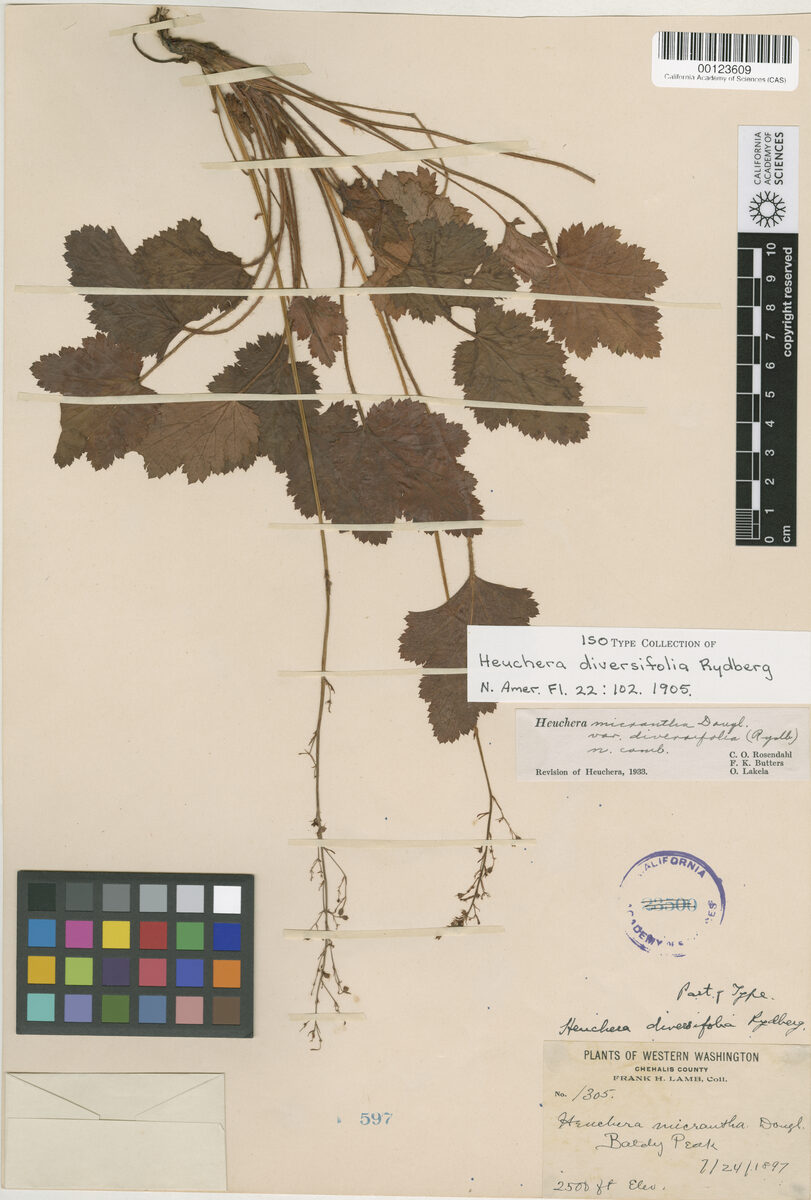
Heuchera diversifolia
Alum Root, Crevice alumroot
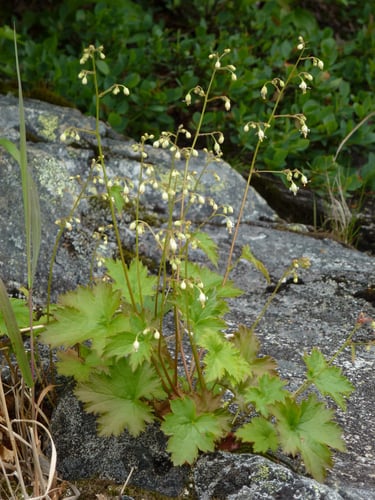
Heuchera glabra
Alpine heuchera, Alpine Alumroot
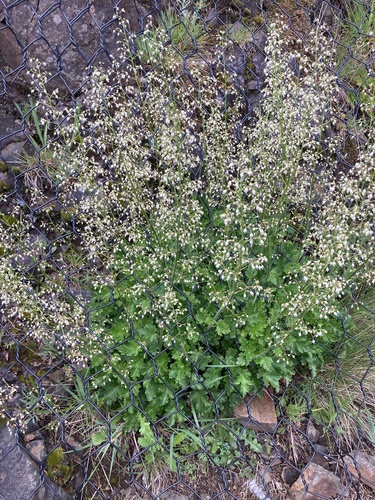
Heuchera micrantha
Small-flowered alum root
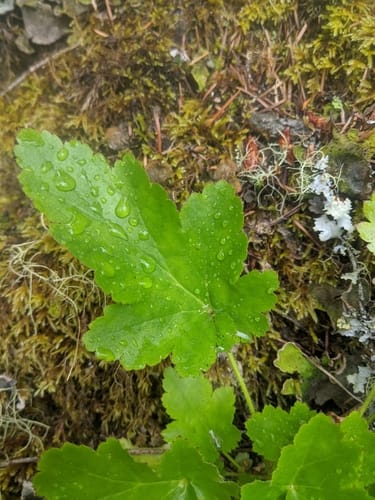
Heuchera micrantha var. diversifolia
Alum root
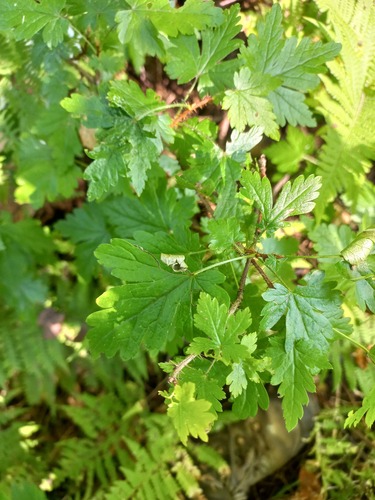
Limnobotrya lacustris
Prickly blackcurrant, Swamp gooseberry, Swamp currant
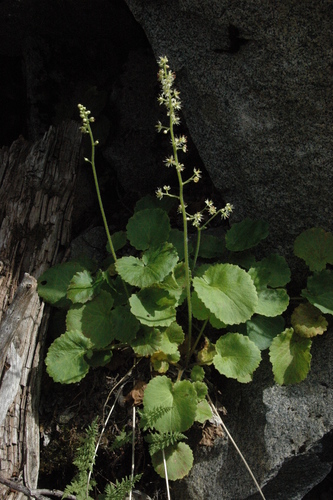
Micranthes spicata
Spiked saxifrage