Heritiera fomes
Lam.
Sundri
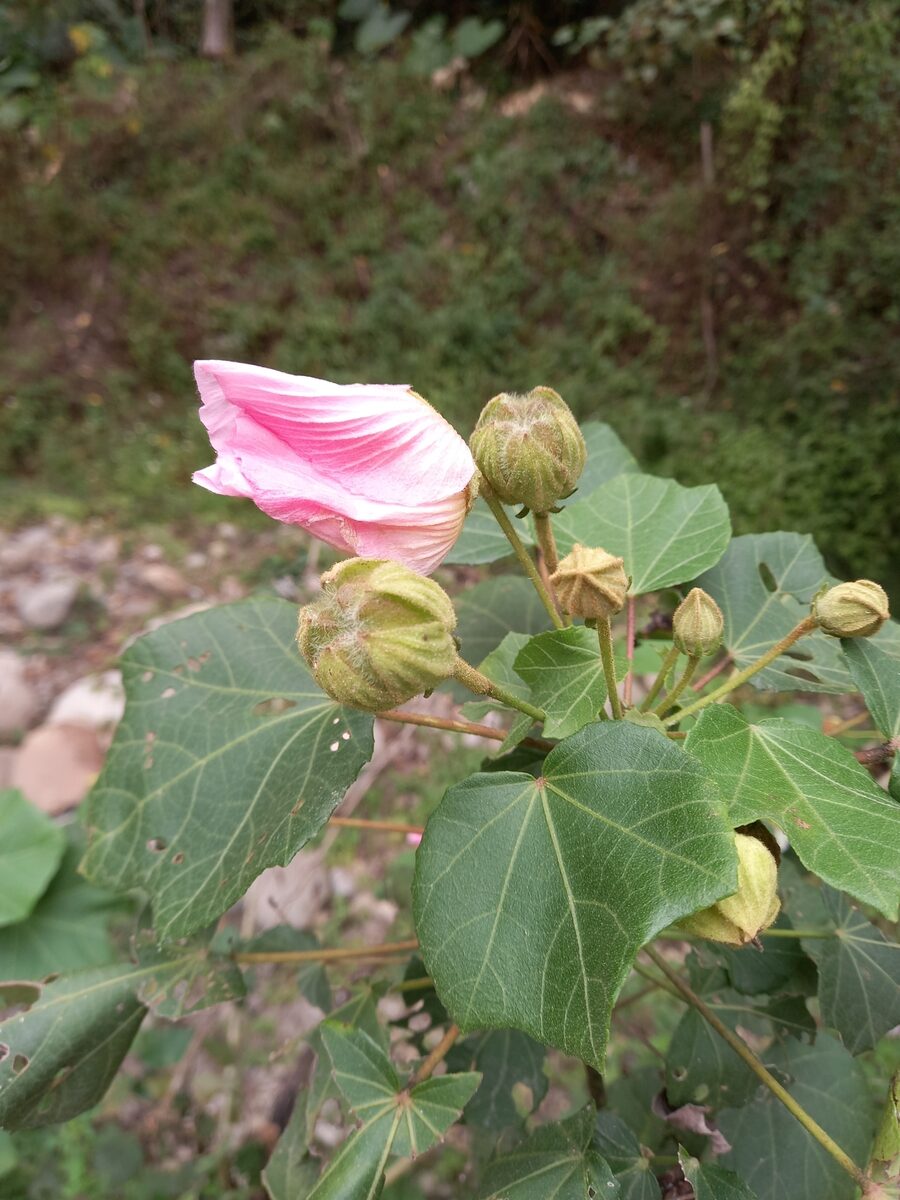
iNaturalist· cc-by-nc
(c) M. A. Naturalist, some rights reserved (CC BY-NC), uploaded by M. A. Naturalist
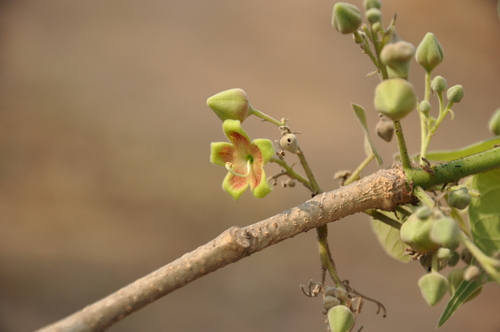
iNaturalist· cc-by-nc
(c) Dr. Purab Chowdhury, some rights reserved (CC BY-NC)
Summary
Source: WikipediaHeritiera fomes is a species of mangrove tree in the family Malvaceae. Its common names include sunder, sundri, jekanazo and pinlekanazo. It is the dominant mangrove tree species of the Sundarbans of Bangladesh and India, and comprises about 70% of the trees in the area. H. fomes is a major timber-producing tree. It is threatened by over-harvesting, water diversions in the Ganges Basin, fluctuations in salinity due to upstream and coastal development and top dying disease. The International Union for Conservation of Nature has assessed it as being "endangered".
Description
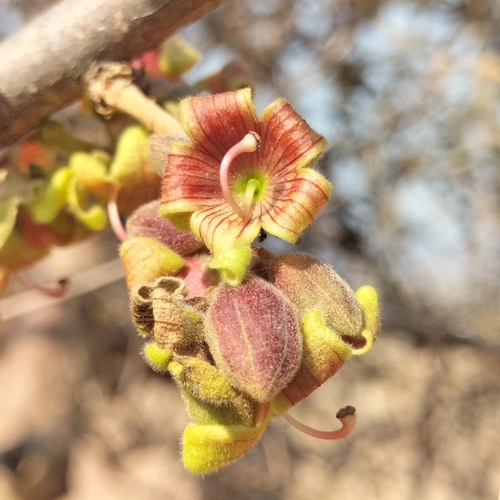
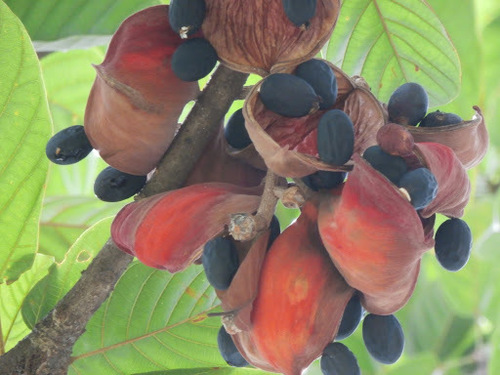
A medium sized tree. It keeps its leaves throughput the year. It grows 15-25 m tall. The roots are shallow and spreading and send up breathing roots. The trunk has buttresses. The bark is cracked along its length. The tree has few branches and an open canopy. The leaves are oval and leathery and are usually clustered near the ends of twigs. The flowers are bell shaped and pink or orange. They are 5 mm across. They are in groups. The fruit or seed bearing structures are 5 cm long by 4 cm wide.
Edible Uses
Seed - rich in starch, it is eaten in times of food shortage. The seed contains tannins and is very astringent unless these are first removed by leeching the seeds in cold water. Two common methods around the world for removing tannins are:- A quick method of removing them is to cook the seeds in several changes of water until the cook water is either free of bitterness, or the bitterness has been reduced to acceptable levels. A more traditional, and slower, method is to leach the tannins by thoroughly washing the seed in running water, though many minerals will also be lost. Either the whole seed can be used, or the seed can be dried and ground it into a powder. It can take several days or even weeks to properly leach whole seeds, one method was to wrap them in a cloth bag and place them in a stream. Leaching the powder is quicker. A simple taste test can tell when the tannins have been leached sufficiently.
Known Hazards
Timber produced from Heritiera fomes is hard, fine-grained, tough and elastic. The heartwood is dark red or reddish brown and the sapwood is a paler reddish brown. The timber has many uses; in bridge building, house construction, boat building and joinery, as utility poles and tool handles, making hardboard and as firewood. The tree is grown commercially in plantations. The bark of H. fomes is rich in procyanidins. The ethanol extract has been shown to have antioxidant properties. It also shows antimicrobial activities against Kocuria rhizophila, Staphylococcus aureus, Bacillus subtilis and Pseudomonas aeruginosa and is non-toxic in brine shrimp toxicity tests.
Distribution
A tropical plant. It grows in mangroves. It grows in less salty areas and on drier ground. It does well on clay soil that are only occasionally flooded.
Where It Grows
Asia, Bangladesh, India, Indochina, Indo-malesia, Malaysia, Myanmar, Pacific, SE Asia, Thailand,
Cultivation
Plants can be grown by seed.
Other Uses
Tannins are obtained from the bark and seed. The heartwood is brownish to dark red, sometimes faintly streaked with black; the sapwood is a pale reddish-brown. The texture is fine; the grain close and even, and somewhat interlocked; there is no characteristic odour or taste. The wood is very hard, heavy, elastic and durable. It is used for construction. The wood is a good source of fuel, and makes a good quality charcoal.
Other Information
It is a famine food. It grows in large stands in Bangladesh.
Notes
There are about 35 Heritiera species. Also put in the family Sterculiaceae.
Synonyms
Also Known As
Jekanazo, Kamazo, Pinlekanazo, Sunder, Sundri, Ye-kanazo
References (6)
- Ambasta, S.P. (Ed.), 2000, The Useful Plants of India. CSIR India. p 263 (As Heritiera minor)
- Hosen, M. Z., et al, 2020, Comparison of Physicochemical and Antioxidant Properties of Edible Fruits in the Sundarbans' Mangrove Forest, Bangladesh. Bangladesh J. Bot. 49(3): 671-678
- Martin, F.W. & Ruberte, R.M., 1979, Edible Leaves of the Tropics. Antillian College Press, Mayaguez, Puerto Rico. p 221 (As Heritiera minor)
- Menninger, E.A., 1977, Edible Nuts of the World. Horticultural Books. Florida p 41 (As Heritiera minor)
- Wickens, G.E., 1995, Edible Nuts. FAO Non-wood forest products. FAO, Rome. p155
Show all 6 references Hide references
- World Checklist of Useful Plant Species 2020. Royal Botanic Gardens, Kew