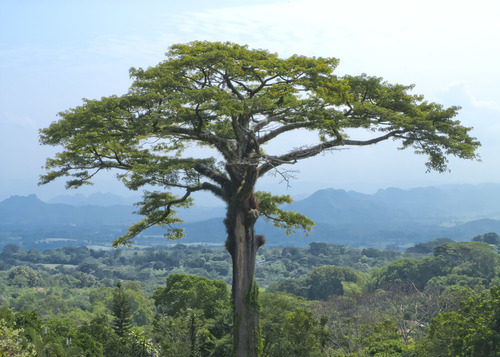
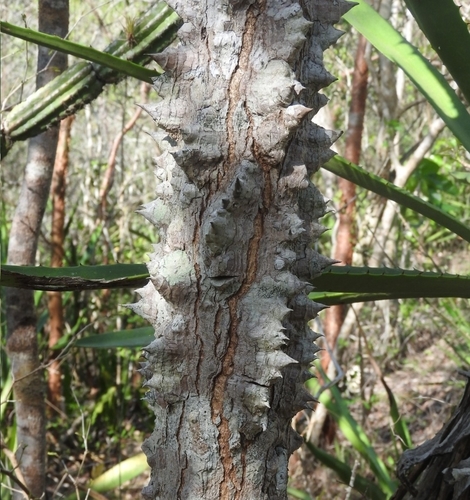
Ceiba aesculifolia
(Kunth) Britton & Baker f.
Ceibillo, Pochotte ceiba
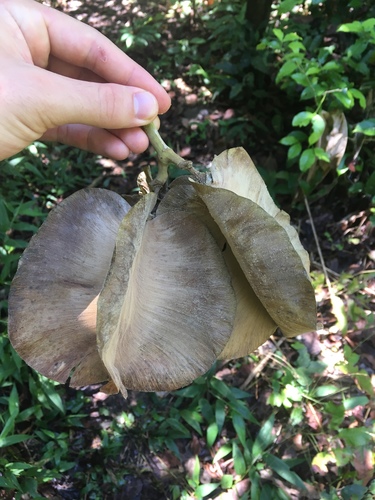
iNaturalist· cc-by
(c) Matt Muir, some rights reserved (CC BY), uploaded by Matt Muir
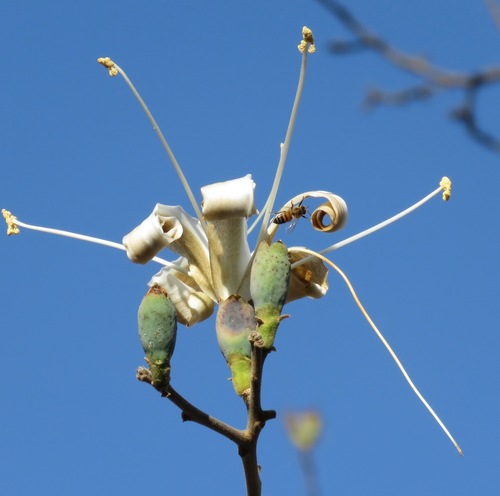
iNaturalist· cc-by-nc
(c) Carlos Domínguez-Rodríguez, some rights reserved (CC BY-NC), uploaded by Carlos Domínguez-Rodríguez
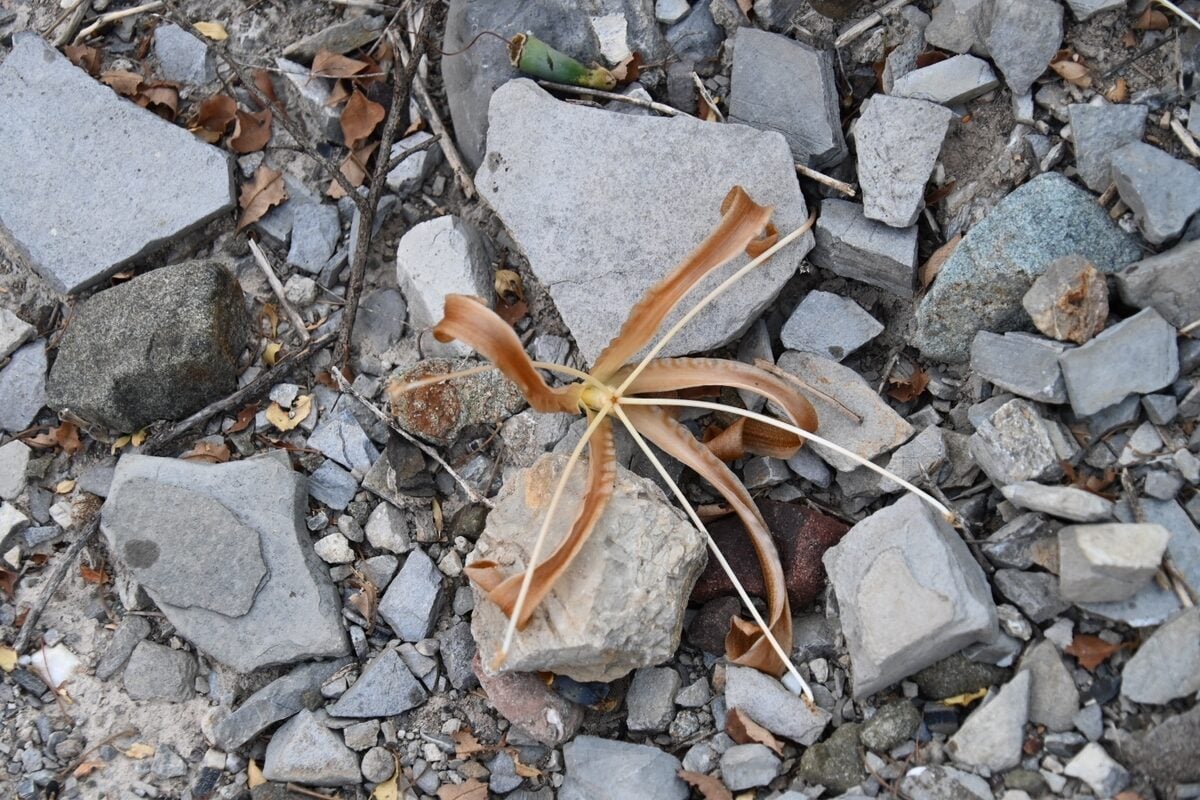
iNaturalist· cc-by-nc
(c) Azul B.M, some rights reserved (CC BY-NC), uploaded by Azul B.M
Summary
Source: WikipediaCeiba aesculifolia is a tree belonging to the Malvaceae family. It can reach up to 30 m (98 ft) in height and has a thick trunk. In its juvenile stages, the trunk is covered with large, conical thorns. The fruit is a giant capsule that encloses its seeds in a thick layer of soft, white, silky fiber. This fiber has been used to stuff mattresses. Handicrafts are made from the bark and thorns. The tree has medicinal properties. It is the sacred tree of the Mayans. It is also known as ceiba and pochote.
Description
A tree. It loses its leaves during the year. It grows 25 m tall. The trunk has stout prickles.
This description is brief — help expand it
Edible Uses
Young leaves are eaten cooked. Ripe fruits are eaten stewed, and young tender fruits are sometimes cooked and eaten as well. Seeds are roasted before eating.
Traditional Uses
The young fruit and ripe seeds are eaten after roasting. The ripe fruit are also eaten.
This uses section is brief — help expand it
Medicinal Uses
The plant is recommended for digestive disorders. In the State of Mexico it is used as both a purgative and an emetic, while in Quintana Roo it is used only as an emetic. In Yucatan, fermented bark is used as a treatment for sunstroke.
Distribution
It is a tropical plant. It grows in the hills up to 1,800 m above sea level.
Where It Grows
Central America, Costa Rica, El Salvador, Guatemala, Honduras, Mexico, Nicaragua, North America,
Cultivation
Succeeds in poor, dry soils.
Propagation
Grow from seed.
Other Uses
The seedpods contain an abundant floss with a wide range of traditional and modern uses. Traditionally it serves as stuffing for pillows, cushions, and toys; as tinder for starting fires; and for making candle wicks. The Maya historically wove covers from it. More recently the floss has been found to be highly effective as an insulating material in refrigerators.
Notes
Also put in the family Bombacaceae. In the subfamily Bombacoideae.
Synonyms
Also Known As
Pochota, Pochote
References (13)
- Casas, A., et al, 1996, Plant Management Among the Nahua and the Mixtec in the Balsas River Basin, Mexico: An Ethnobotanical Approach to the Study of Plant Domestication. Human Ecology, Vol. 24, No. 4 pp. 455-478
- Casas, A., et al, 2016, Ethnobotany for Sustainable Ecosystem Management: A Regional Perspective in the Tehuacán Valley. In Lira, R.,et al (eds.) Ethnobotany of Mexico. Springer Chp. 8 p 199
- Cruz, I. M., et al, 2015, Edible fruits and seeds in the State of Mexico. Revista Mexicana de Ciencias Agricolas. Vol. 6. Num. 2 pp 331-346
- Facciola, S., 1998, Cornucopia 2: a Source Book of Edible Plants. Kampong Publications, p 50
- Ferns, Useful Tropical Plants.
Show all 13 references Hide references
- Grandtner, M. M., 2008, World Dictionary of Trees. Wood and Forest Science Department. Laval University, Quebec, Qc Canada. (Internet database http://www.WDT.QC.ca)
- Kermath, B. M., et al, 2014, Food Plants in the Americas: A survey of the domesticated, cultivated and wild plants used for Human food in North, Central and South America and the Caribbean. On line draft. p 203
- Kew Plants of the World onLine
- J. Bot. 34:175. 1896
- Martin, F. W., et al, 1987, Perennial Edible Fruits of the Tropics. USDA Handbook 642 p 83 (As Eriodendron aesculifolium)
- Piedra-Malagón, E. M., et al, 2022, Edible native plants of the Gulf of Mexico Province. Biodiversity Data Journal 10: e80565 p 24
- Steggerda, M., Some Ethnological Data Concerning One Hundred Yucatan Plants. Smithsonian Institution Anthropological Papers, No. 29
- Uphof,