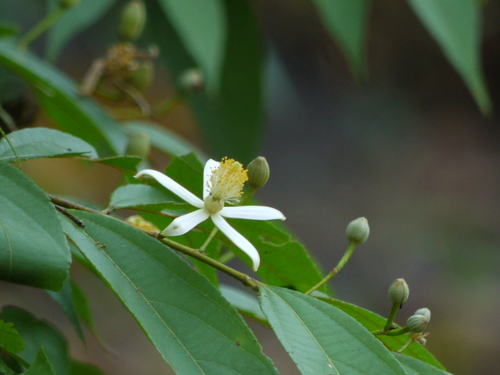
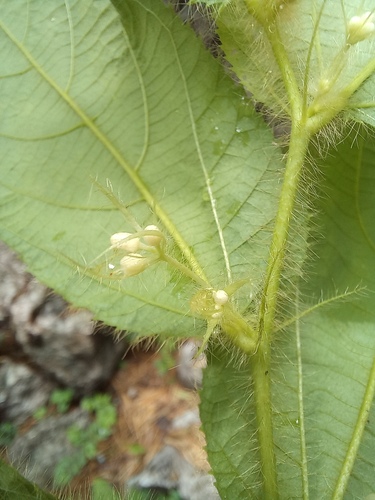
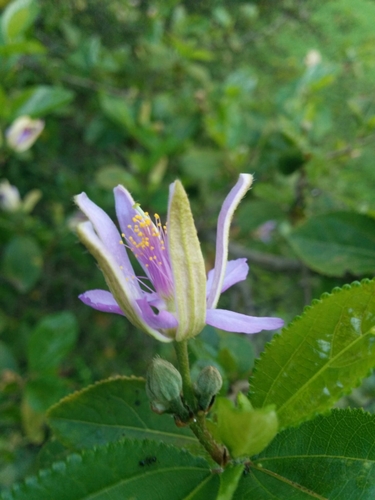
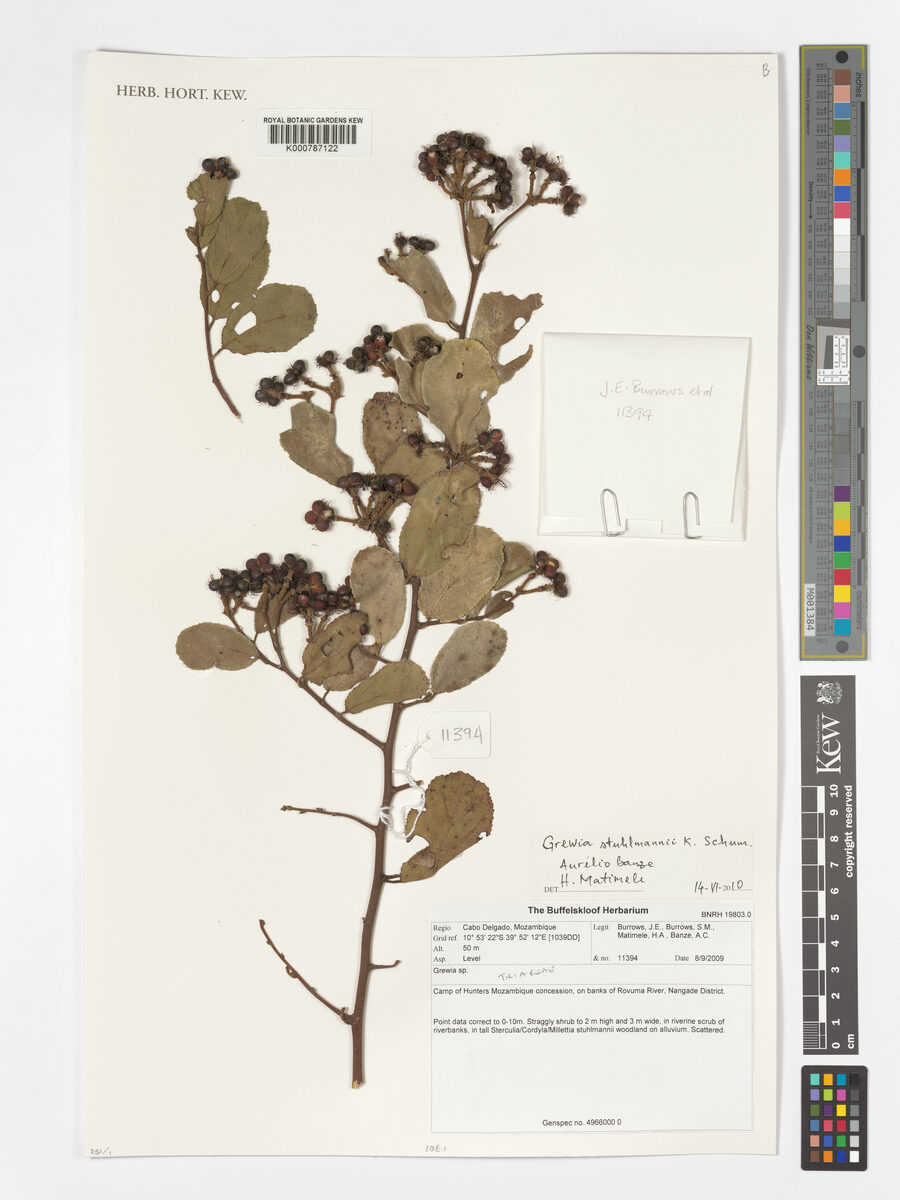
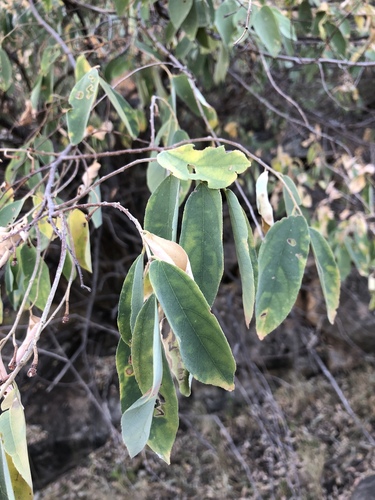
Ceiba aesculifolia subsp. parvifolia
(Rose) P. E. Gibbs & Semir
Pochote
gbif· cc-by-nc
Joey Santore
gbif· cc-by-nc
Joey Santore
gbif· cc-by-nc
Joey Santore
Summary
Source: WikipediaCeiba aesculifolia is a tree belonging to the Malvaceae family. It can reach up to 30 m (98 ft) in height and has a thick trunk. In its juvenile stages, the trunk is covered with large, conical thorns. The fruit is a giant capsule that encloses its seeds in a thick layer of soft, white, silky fiber. This fiber has been used to stuff mattresses. Handicrafts are made from the bark and thorns. The tree has medicinal properties. It is the sacred tree of the Mayans. It is also known as ceiba and pochote.
Description
A tropical tree in the Malvaceae family that grows in arid places, with edible roots and seeds.
This description is brief — help expand it
Edible Uses
The roots are eaten raw. The seeds are eaten raw, put into stews, or fried.
Traditional Uses
The roots are eaten raw. The seeds are eaten raw or put into stews or fried.
This uses section is brief — help expand it
Distribution
It is a tropical plant. It grows in arid places.
Where It Grows
Central America, Mexico, North America,
Production
Trees take 5-10 years before fruiting.
Notes
There are 4-15 Ceiba species. Also put in the family Bombacaceae. In the subfamily Bombacoideae.
References (8)
- Arellanes, Y., et al, 2013, Influence of traditional markets on plant management in the Tehuacan Valley. Journal of Ethnobiology and Ethnomedicine 9:38
- Casas, A., et al, 1996, Plant Management Among the Nahua and the Mixtec in the Balsas River Basin, Mexico: An Ethnobotanical Approach to the Study of Plant Domestication. Human Ecology, Vol. 24, No. 4 pp. 455-478 (As Ceiba parvifolia)
- Casas, A., et al, 2016, Evolutionary Ethnobotanical Studies of Incipient Domestication of Plants in Mesoamerica. In Lira, R., et al, (eds.) Ethnobotany of Mexico, Ethnobiology. Springer p 266
- Contr. U.S. Natl. Herb. 8:320. 1905
- Gonzalez-Insuasti, M. S. and Caballero, J., 2007, Managing Plants Resources: How Intensive Can it be? Human Ecology, 35:303-314 (As Ceiba parvifolia)
Show all 8 references Hide references
- Gonzalez-Insuasti, M. S., et al, 2011, Intra-cultural Differences in the Importance of Plant Resources and Their Impact on Management Intensificaton in the Tehuacan Vallet, Mexico. Human Ecology 39:191-202 (As Ceiba parvifolia)
- Nabhan, G.P. & Felger, R.S., Wild desert relatives of crops: their direct uses as food in Wickens, G.E., Goodin, J.R., and Field, D.V.,(Eds.) 1985, Plants for Arid Lands. Unwin Hyman, London, p 25 (As Ceiba parvifolia)
- Segura, S., et al, 2018, The edible fruit species in Mexico. Genet Resour Crop Evol (2018) 65:1767–1793