Grewia schinzii
K. Schum.
Zambezi raisin, Shaggy grewia
iNaturalist· cc-by-nc
(c) Peter Erb, some rights reserved (CC BY-NC), uploaded by Peter Erb
iNaturalist· cc-by-nc
(c) Peter Erb, some rights reserved (CC BY-NC)
Description
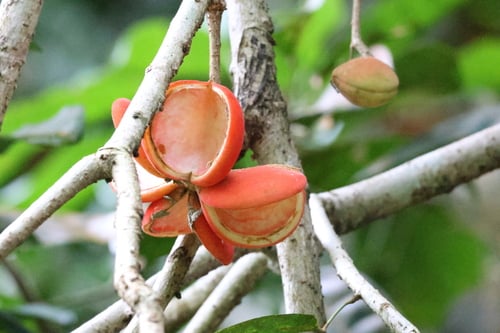
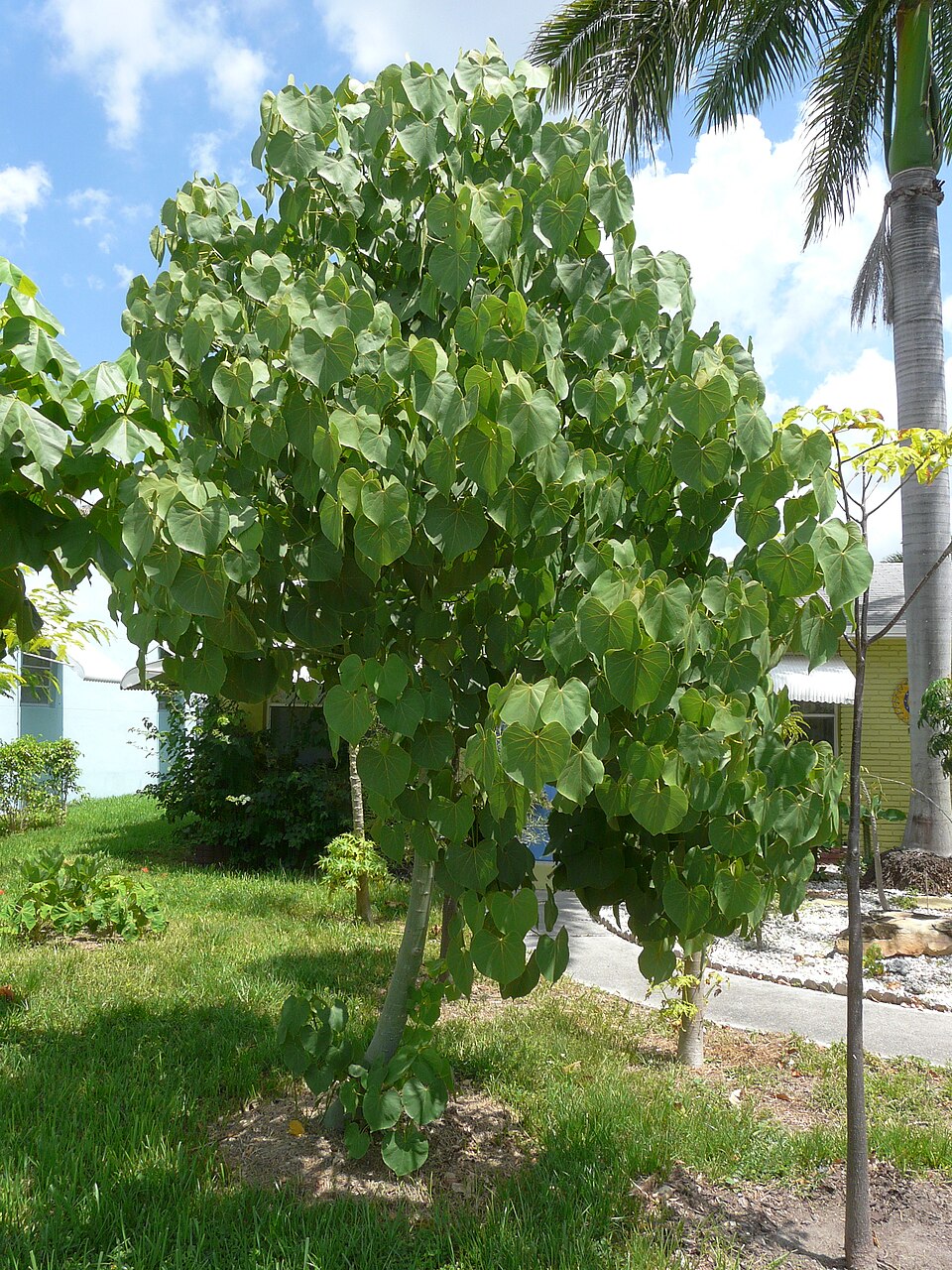
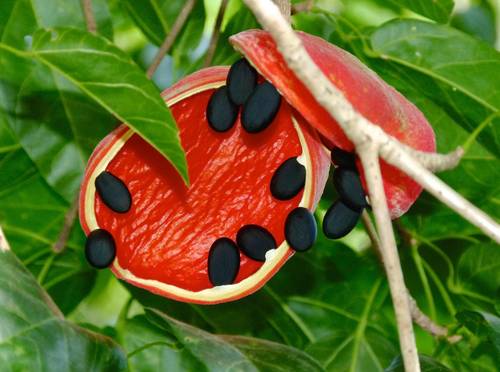
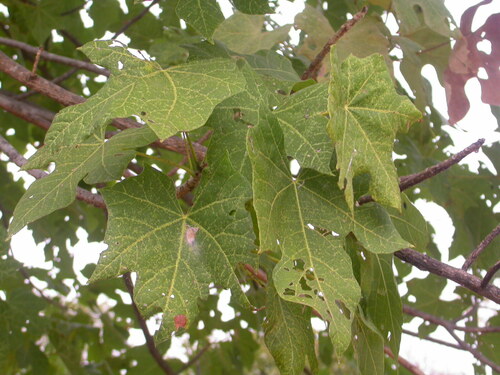
A shrub or small tree. They grow to 5 m tall. The crown is rounded. There are many branches growing from the base. The young branches are covered with red hairs. The leaves are large. They are 5-14 cm long and 2.5-9 cm wide. The base is heart-shaped or notched. There are irregular teeth along the edge. The leaves are green and covered with short, star-shaped hairs. The flowers have round yellow petals. Flowers occur as 2-3 together on red hairy stalks in the axils of leaves. The fruit is round and deeply two lobed. They are 7 mm wide. They are hairy and yellow. Fruit are edible.
Edible Uses
The round, hairy, yellow fruit are eaten fresh though they are somewhat dry and bitter, and are also used to make drinks.
Traditional Uses
The fruit are eaten. They are somewhat dry and bitter. They are also used for drinks.
This uses section is brief — help expand it
Distribution
A tropical plant. It grows in woodland often near rivers. It grows in areas with an annual rainfall between 150-900 mm. It grows between 945-1,000 m above sea level. It can grow in arid places.
Where It Grows
Africa, Angola, Botswana, Central Africa, East Africa, Namibia, South Africa, Southern Africa, Zambia, Zimbabwe,
Notes
There are about 200 Grewia species. They are mostly tropical. The fruit of most may be edible. These were in the Sparrmanniaceae and the Tiliaceae.
Nutrition
| Part | Moisture | kJ | kcal | Protein | Vit A | Vit C | Iron | Zinc |
|---|---|---|---|---|---|---|---|---|
| Fruit | 69.6 | 458 | 110 | 2.4 | — | — | 0.9 | — |
Synonyms
Also Known As
Notu grewia, Omushe, Shaggy raisin
References (17)
- Bot. Jahrb. Syst. 15:124. 1892
- Cheikhyoussef, A & Embashu, W., 2013, Ethnobotanical knowledge on Indigenous fruits in Ohangwena and Oshito regions in Northern Namibia. Journal of Ethnobiology and Ethnomedicine 9:34
- Fowler, D. G., 2007, Zambian Plants: Their Vernacular Names and Uses. Kew. p 45
- INFOODS:FAO/INFOODS Databases
- Malan & Owen-Smith, 1974,
Show all 17 references Hide references
- Mannheimer, C. A. & Curtis. B.A. (eds), 2009, Le Roux and Muller's Field Guide to the Trees and Shrubs of Namibia. Windhoek: Macmillan Education Namibia. p 324
- Maroyi, A. & Cheikhyoussef, A., 2017, Traditional knowledge of wild edible fruit in southern Africa: A comparative use patterns in Namibia and Zimbabwe. Indian Journal of Traditional Knowledge. 16(3): 385-392
- Palgrave, K.C., 1996, Trees of Southern Africa. Struik Publishers. p 579
- Palmer, E and Pitman, N., 1972, Trees of Southern Africa. Vol. 2. A.A. Balkema, Cape Town p 1442
- Peters, C. R., O'Brien, E. M., and Drummond, R.B., 1992, Edible Wild plants of Sub-saharan Africa. Kew. p 193
- Roodt, V., 1998, Trees & Shrubs of the Okavango Delta. Medicinal Uses and Nutritional value. The Shell Field Guide Series: Part 1. Shell Botswana. p 197
- Royal Botanic Gardens, Kew (1999). Survey of Economic Plants for Arid and Semi-Arid Lands (SEPASAL) database. Published on the Internet; http://www.rbgkew.org.uk/ceb/sepasal/internet [Accessed 11th June 2011]
- Ruiters-Welcome, A. K., 2019, Food plants of southern Africa. Ph.D. thesis. Univ. of Johannesburg p 76
- van Wyk, Be., & Gericke, N., 2007, People's plants. A Guide to Useful Plants of Southern Africa. Briza. p 44
- Wehmeyer, A. S, 1986, Edible Wild Plants of Southern Africa. Data on the Nutrient Contents of over 300 species
- Welcome, A. K. & Van Wyk, B.-E., 2019, An inventory and analysis of the food plants of southern Africa. South African Journal of Botany 122 (2019) 136–179
- World Checklist of Useful Plant Species 2020. Royal Botanic Gardens, Kew