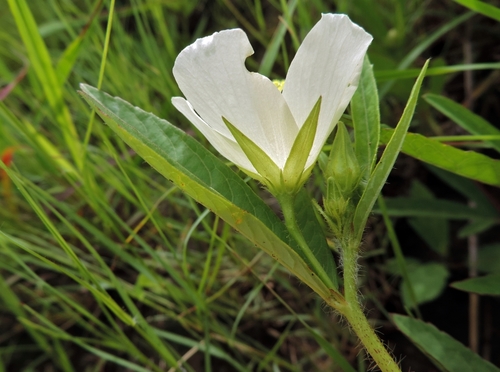
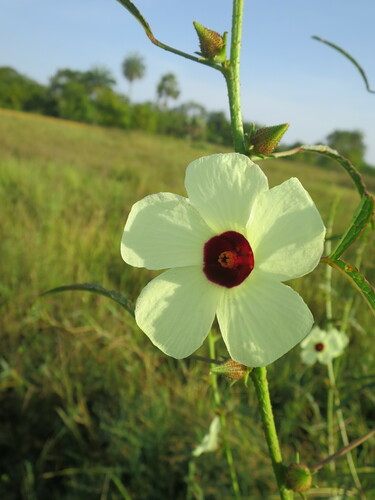
Talipariti elatum
(Sw.) Fryxell
Tall talipariti, Blue mahoe
iNaturalist· cc-by-nc
(c) camilacolon, some rights reserved (CC BY-NC)
iNaturalist· cc-by-nc
(c) camilacolon, some rights reserved (CC BY-NC)
iNaturalist· cc-by-nc
(c) Carol Mullen, some rights reserved (CC BY-NC)
Summary
Source: WikipediaEvergreen tree reaching 25m tall with equal spread, growing at a fast rate. Tolerates light sandy, medium loamy, and heavy clay soils with good drainage. Adapts to mildly acidic, neutral, and basic pH levels. Requires full sun and can handle dry or moist conditions. Resists strong winds but not maritime exposure. Hardy to UK zone 10.
Description
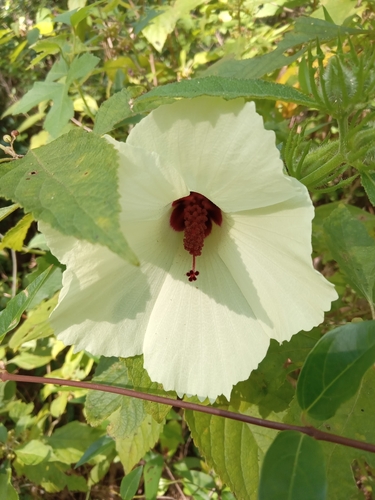
A tree. It can be 25 m tall. The leaves are heart shaped at the base. The flowers are large and yellow.
This description is brief — help expand it
Edible Uses
None known
Medicinal Uses
An infusion of the mucilaginous leaves and young shoots is used to treat dysentery.
Distribution
It is a tropical plant. It will grow in a range of soils.
Where It Grows
Africa, Belize, Central America, Cuba, Guadeloupe, Guianas, Guyana, Haiti, Jamaica, Martinique, Nicaragua, Pacific, Panama Puerto Rico, South America, Suriname, Trinidad & Tobago, West Indies*,
Cultivation
Talipariti elatum is a tree of the lowland tropics. It is not well suited to areas with a mean annual rainfall less than 1,500mm. Grows in the wild in a wide range of soils. A very wind-resistant species, capable of withstanding hurricanes. Trees can flower and produce fruit all year round. A fast-growing tree.
Propagation
Seed.
Other Uses
The bark is clear in colour and relatively soft, consisting of many separable layers. The inner bark is used to make rope and cord, which is reported to be highly durable in salt and brackish water; fibres from the bark of young trees are particularly good for rope-making. The lace-like inner bark was once known as Cuba bark, used for tying bundles of Havana cigars. The heartwood is typically greyish-brown to olive, often richly variegated with streaks of purple, metallic blue, and olive, or broken by plain olive patches — the finest forms resemble dark-green variegated marble when polished. The sapwood is narrow and nearly white. The grain is fairly straight with a medium to somewhat coarse texture; the surface is lustrous with no distinctive odour or taste in seasoned wood. The wood is moderately heavy, very hard (though not as hard as rosewood, Amyris balsamifera), tough, and very durable. It is also highly flexible and said to share the best qualities of European ash while being more durable and longer in the fibre. The wood works easily but requires particular care to achieve a good polish. Well-coloured wood is used in cabinetwork and furniture, and is widely used locally for construction, carriage and cart work, railway sleepers, shingles, gun-stocks, carriage poles, ships' knees, and fishing rods.
Notes
The flowers are used in medicine. They contain flavonoids that are antioxidants.
Synonyms
References (3)
- Gonzalez, J. et al, 2016, Pharmacognostical and phytochemical studies of flowers from Talipariti elatum. International Journal of Engineering Research & Science. 2(6)
- Grandtner, M. M., 2008, World Dictionary of Trees. Wood and Forest Science Department. Laval University, Quebec, Qc Canada. (Internet database http://www.wdt.qc.ca)
- Plants of Haiti Smithsonian Institute http://botany.si.edu/antilles/West Indies